Coinfection with Enteric Pathogens in East African Children with Acute Gastroenteritis-Associations and Interpretations
- PMID: 29692296
- PMCID: PMC6086148
- DOI: 10.4269/ajtmh.17-0473
Coinfection with Enteric Pathogens in East African Children with Acute Gastroenteritis-Associations and Interpretations
Abstract
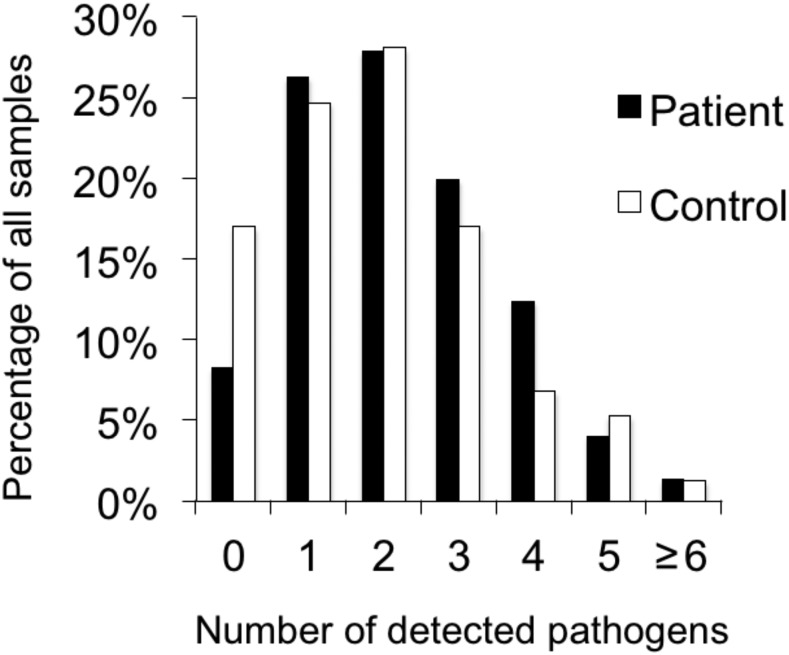
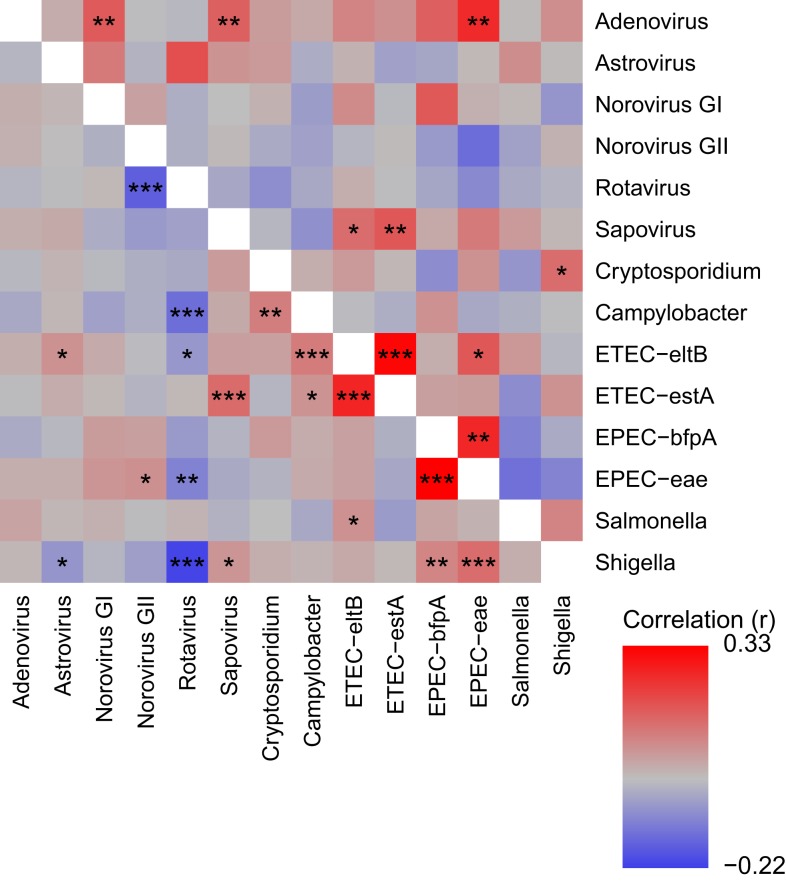
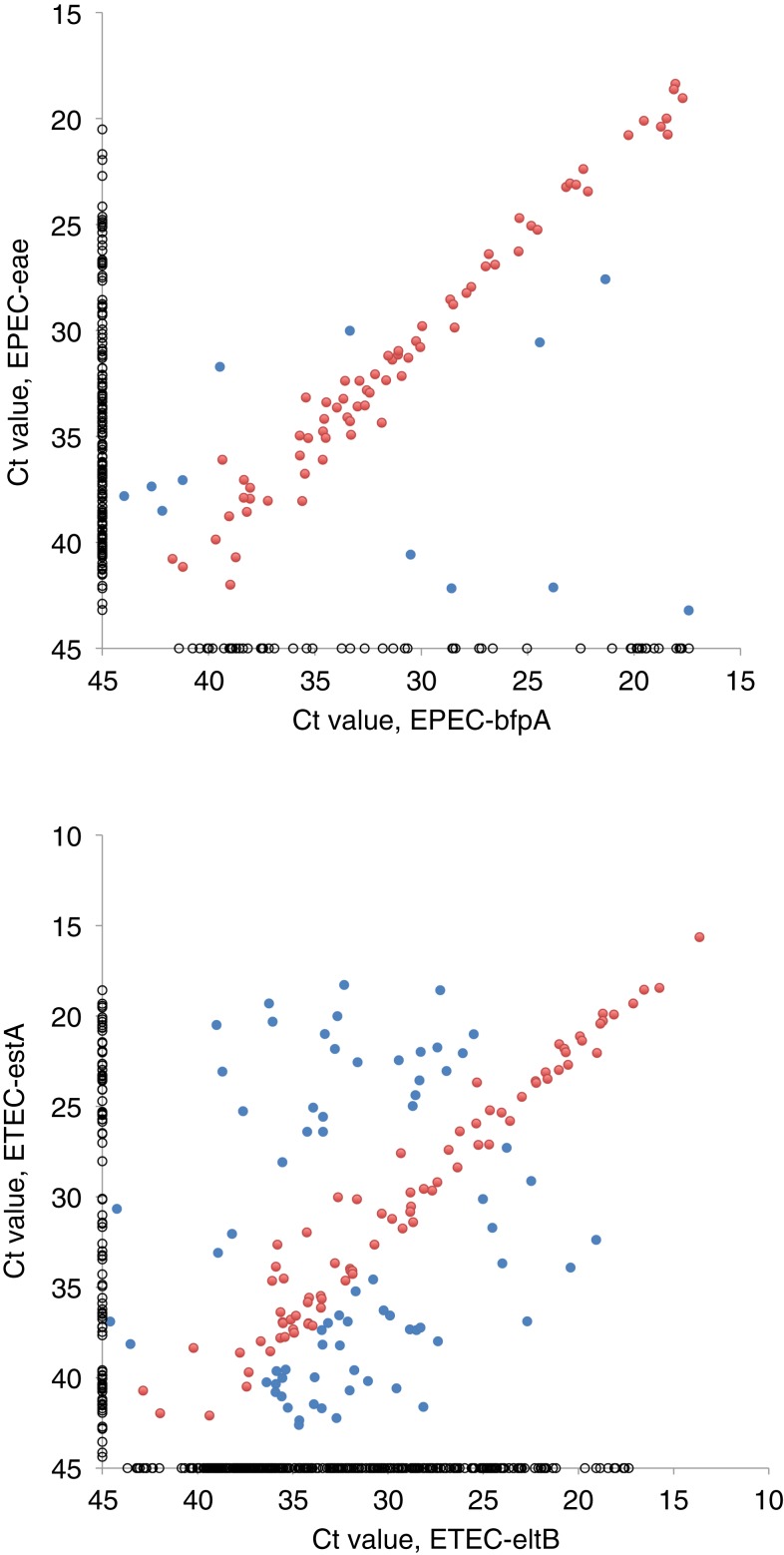
Enteric coinfections among children in low-income countries are very common, but it is not well known if specific pathogen combinations are associated or have clinical importance. In this analysis, feces samples from children in Rwanda and Zanzibar less than 5 years of age, with (N = 994) or without (N = 324) acute diarrhea, were analyzed by real-time polymerase chain reaction targeting a wide range of pathogens. Associations were investigated by comparing co-detection and mono-detection frequencies for all pairwise pathogen combinations. More than one pathogen was detected in 840 samples (65%). A negative association (coinfections being less common than expected from probability) was observed for rotavirus in combination with Shigella, Campylobacter, or norovirus genogroup II, but only in patients, which is statistically expected for agents that independently cause diarrhea. A positive correlation was observed, in both patients and controls, between Ct (threshold cycle) values for certain virulence factor genes in enteropathogenic Escherichia coli (EPEC) (eae and bfpA) and toxin genes in enterotoxigenic E. coli (eltB and estA), allowing estimation of how often these genes were present in the same bacteria. A significant positive association in patients only was observed for Shigella and EPEC-eae, suggesting that this coinfection might interact in a manner that enhances symptoms. Although interaction between pathogens that affect symptoms is rare, this work emphasizes the importance and difference in interpretation of coinfections depending on whether they are positively or negatively associated.
Figures
References
-
- Kotloff KL, et al. 2013. Burden and aetiology of diarrhoeal disease in infants and young children in developing countries (the Global Enteric Multicenter Study, GEMS): a prospective, case-control study. Lancet 382: 209–222. - PubMed
-
- Liu J, et al. 2014. Development and assessment of molecular diagnostic tests for 15 enteropathogens causing childhood diarrhoea: a multicentre study. Lancet Infect Dis 14: 716–724. - PubMed
Publication types
MeSH terms
LinkOut - more resources
Full Text Sources
Other Literature Sources
Medical