


Seminal fluid metabolome and epididymal changes after antibiotic treatment in mice
- PMID: 29692359
- PMCID: PMC6668019
- DOI: 10.1530/REP-18-0072
Seminal fluid metabolome and epididymal changes after antibiotic treatment in mice
Abstract
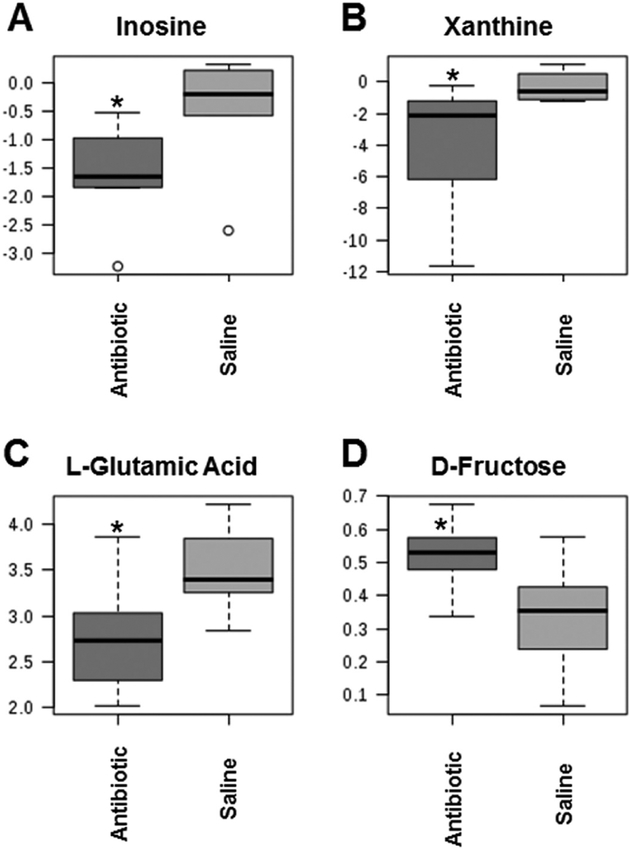
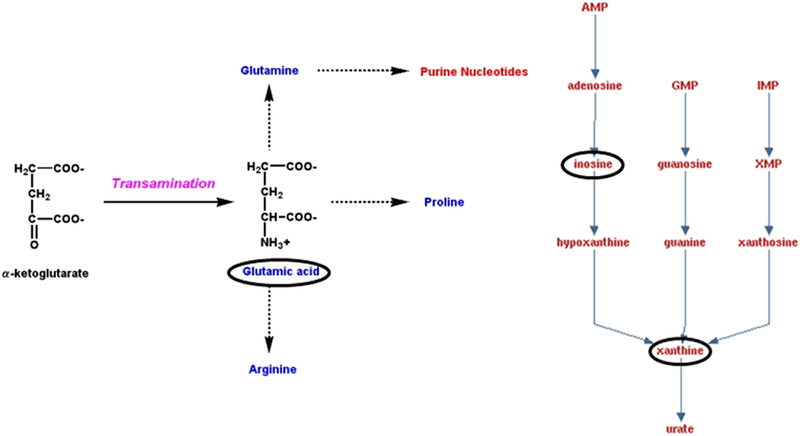
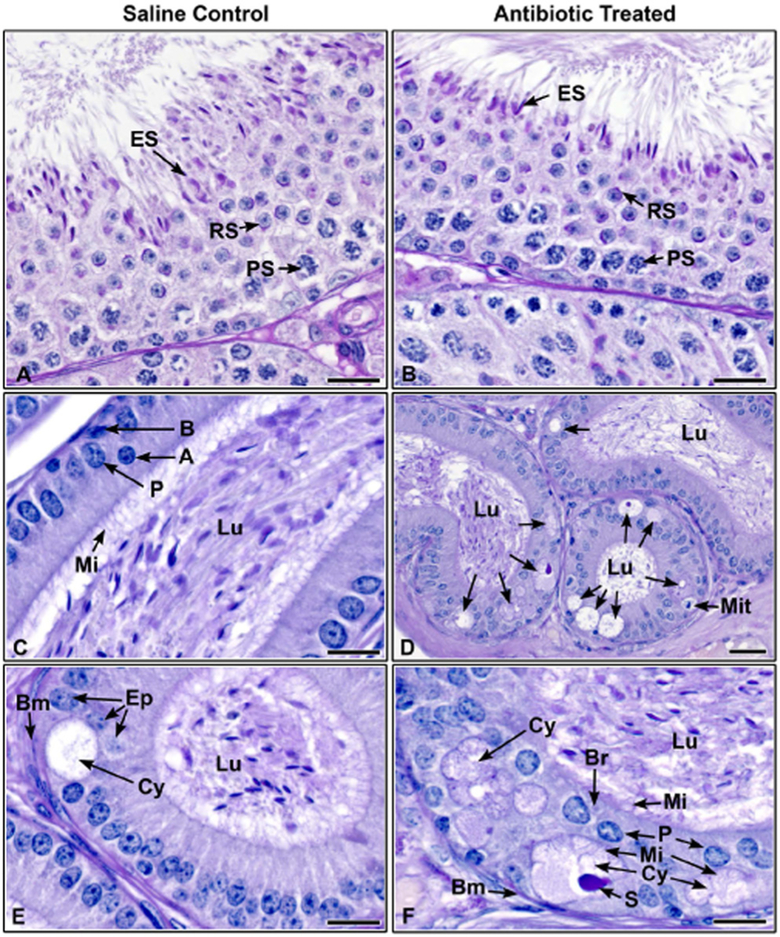
Paternal environment can induce detrimental developmental origins of health and disease (DOHaD) effects in resulting offspring and even future descendants. Such paternal-induced DOHaD effects might originate from alterations in a possible seminal fluid microbiome (SFM) and composite metabolome. Seminal vesicles secrete a slightly basic product enriched with fructose and other carbohydrates, providing an ideal habitat for microorganisms. Past studies confirm the existence of a SFM that is influenced by genetic and nutritional status. Herein, we sought to determine whether treatment of male mice with a combination of antibiotics designed to target SFM induces metabolic alterations in seminal vesicle gland secretions (seminal fluid) and histopathological changes in testes and epididymides. Adult (10- to 12-week-old) National Institutes of Health (NIH) Swiss males (n = 10 per group) were treated with Clindamycin 0.06 mg/kg day, Unasyn (ampicillin/sulbactam) 40 mg/kg day and Baytril (enrofloxacin) 50 mg/kg day designed to target the primary bacteria within the SFM or saline vehicle alone. Fourteen-day antibiotic treatment of males induced metabolomic changes in seminal vesicles with inosine, xanthine and l-glutamic acid decreased but d-fructose increased in glandular secretions. While spermatogenesis was not affected in treated males, increased number of epididymal tubules showed cribriform growth in this group (7 antibiotic-treated males: 3 saline control males; P = 0.01). Antibiotic-treated males showed more severe cribriform cysts. Current findings suggest antibiotic treatment of male mice results in seminal fluid metabolome and epididymal histopathological alterations. It remains to be determined whether such changes compromise male reproductive function or lead to DOHaD effects in resulting offspring.
© 2018 Society for Reproduction and Fertility.
Conflict of interest statement
Declaration of interest
The authors declare that there is no conflict of interest that could be perceived as prejudicing the impartiality of the research reported.
Figures
References
-
- Alp H, Cirit U, Tas M, Rifaioglu MM, Hatipoglu NK, Aytekin I, Yucel M, Firat U, Ozmen MF, Seker U & Eren LB 2012. Effects of sildenafil citrate, isoniazid, and streptomycin on testicular tissue and epididymal semen quality in rats. Urology 80 953.e9–953.e14. ( 10.1016/j.urology.2012.05.016) - DOI - PubMed
-
- Antohi E, Gales C & Nechifor M 2011. Pharmacological agents that affect sperm motility. Revista Medico-Chirurgicala a Societatii De Medici Si Naturalisti Din Iasi 115 1183–1188. - PubMed
Publication types
MeSH terms
Substances
Grants and funding
LinkOut - more resources
Full Text Sources
Other Literature Sources
Medical
Molecular Biology Databases
Miscellaneous
