


Conventional Versus Giant Basal Cell Carcinoma, a Review of 57 Cases: Histologic Differences Contributing to Excessive Growth
- PMID: 29692457
- PMCID: PMC5903045
- DOI: 10.4103/ijd.IJD_165_17
Conventional Versus Giant Basal Cell Carcinoma, a Review of 57 Cases: Histologic Differences Contributing to Excessive Growth
Abstract
Background: Giant basal cell carcinoma (GBCC) is defined as a basal cell carcinoma (BCC) exceeding 5 cm in size. While these tumors impart significant morbidity due to local tissue destruction and have a higher rate of metastatic disease than their conventional (smaller) counterparts, reasons for their large size remain unclear. While theories relating to neglect or faster growth rate are often invoked; to date, there has not been a comprehensive evaluation of the histologic features of these large tumors that may contribute to their size.
Methods: Histologic features of GBCCs (n = 29) were evaluated and compared to those of conventional BCC (n = 28). Available clinical demographic data were also reviewed.
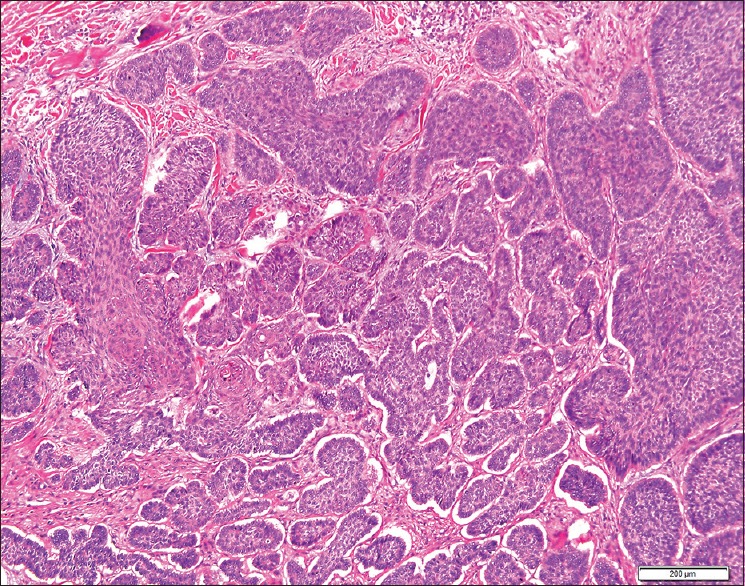
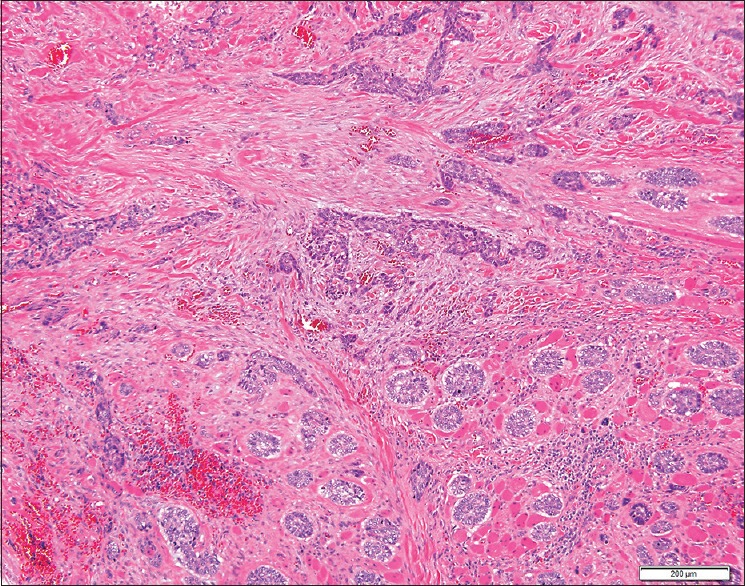
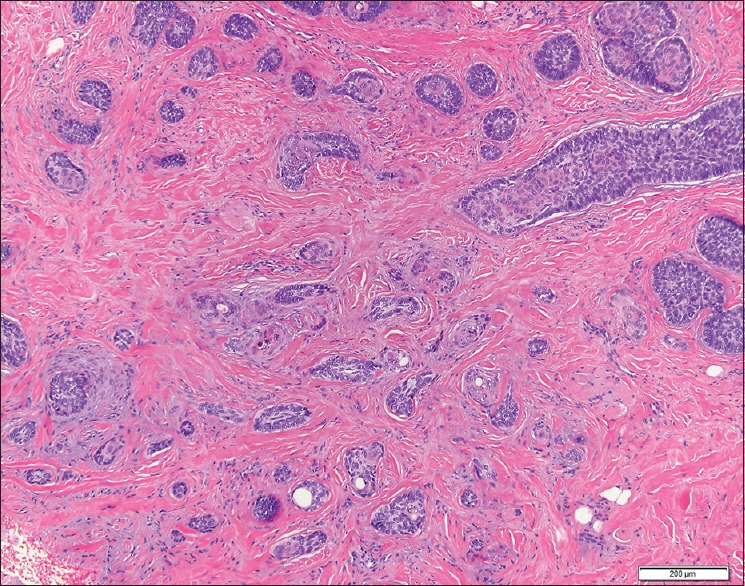
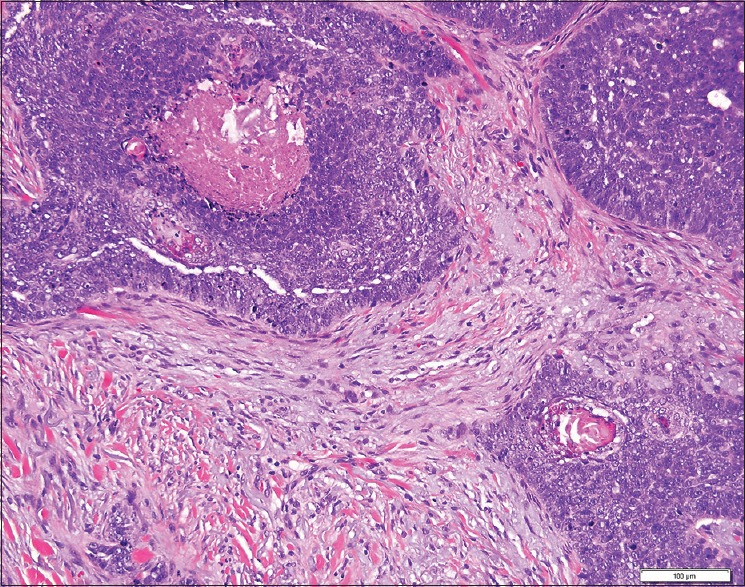
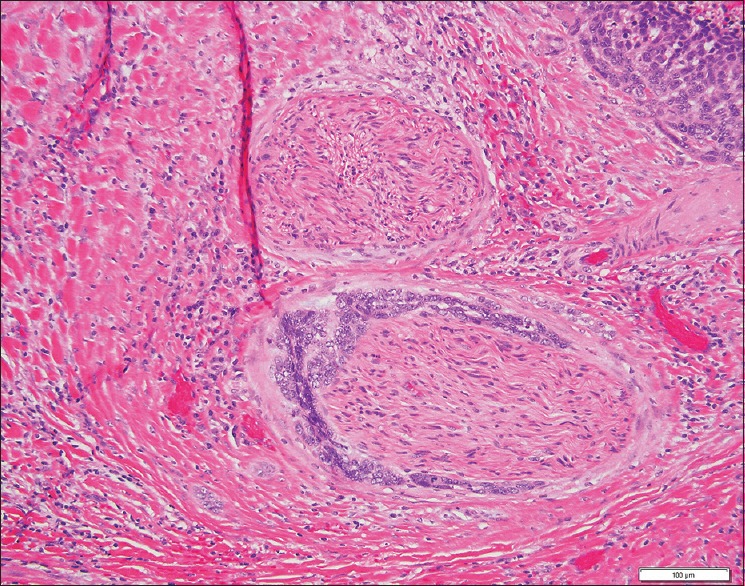
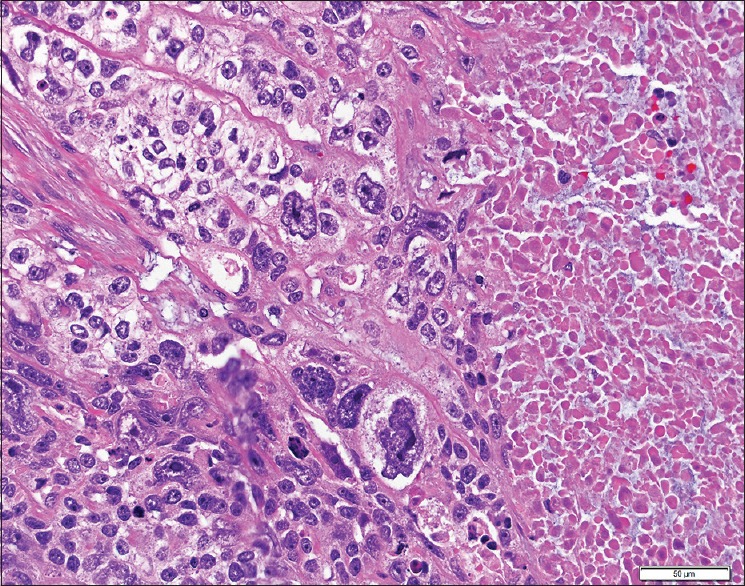
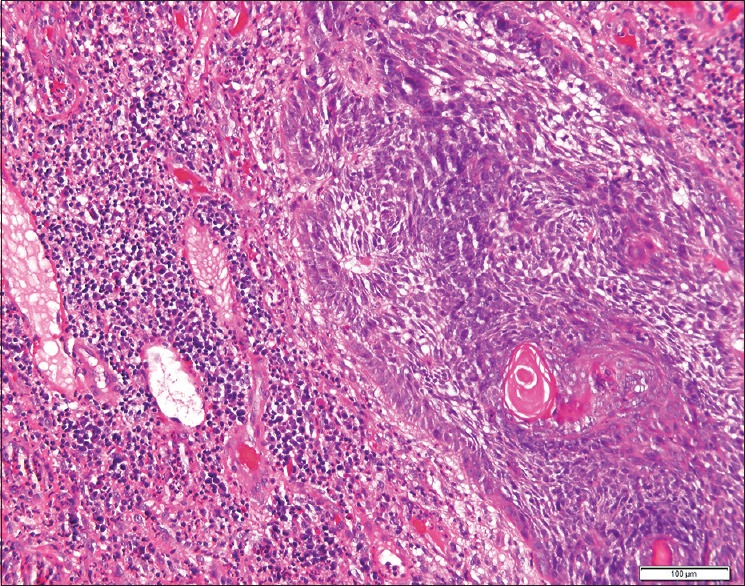
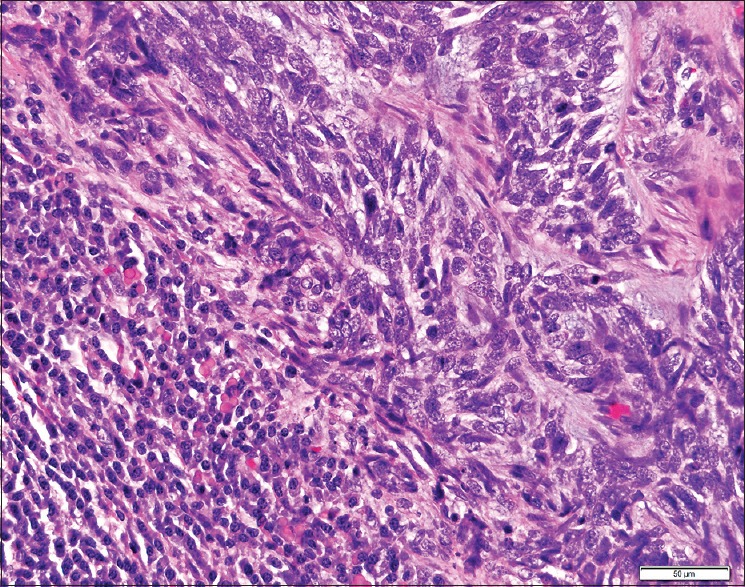
Results: GBCCs, in addition to overall larger size, more often were thicker, displayed ulceration, and showed a more infiltrative growth pattern than their conventional counterparts. These rare tumors also displayed an insignificant increased propensity for a brisk host immune response, and the infiltrate significantly more often included clusters of plasma cells.
Conclusions: Most histologic features seen in GBCCs likely reflect their large size. Histologic features alone are unlikely to explain the size of these rare tumors. The possibility of an altered host immune response contributing to the growth of these tumors requires further investigation.
Keywords: Basal cell carcinoma; giant basal cell carcinoma; host immune response; plasma cells.
Conflict of interest statement
There are no conflicts of interest. What is new? The histologic features of giant basal cell carcinoma reflect their large size, with increased overall size, tumor depth, and ulceration compared to conventional BCC.Tumor microenvironment may provide clues to giant BCC capacity for large size.
Figures
References
-
- Archontaki M, Stavrianos SD, Korkolis DP, Arnogiannaki N, Vassiliadis V, Liapakis IE, et al. Giant basal cell carcinoma: Clinicopathological analysis of 51 cases and review of the literature. Anticancer Res. 2009;29:2655–63. - PubMed
-
- Nasser N, Nasser Filho N, Trauczynski Neto B, Silva LM. Giant basal cell carcinoma. An Bras Dermatol. 2012;87:469–71. - PubMed
-
- Randle HW, Roenigk RK, Brodland DG. Giant basal cell carcinoma (T3). Who is at risk? Cancer. 1993;72:1624–30. - PubMed
-
- Anwar U, Al Ghazal SK, Ahmad M, Sharpe DT. Horrifying basal cell carcinoma forearm lesion leading to shoulder disarticulation. Plast Reconstr Surg. 2006;117:6e–9e. - PubMed
-
- Randle HW. Basal cell carcinoma. Identification and treatment of the high-risk patient. Dermatol Surg. 1996;22:255–61. - PubMed
LinkOut - more resources
Full Text Sources