


NOACs replace VKA as preferred oral anticoagulant among new patients: a drug utilization study in 560 pharmacies in The Netherlands
- PMID: 29692686
- PMCID: PMC5905161
- DOI: 10.1186/s12959-017-0156-y
NOACs replace VKA as preferred oral anticoagulant among new patients: a drug utilization study in 560 pharmacies in The Netherlands
Abstract
Background: In 2012, around 400.000 patients in the Netherlands were treated with Vitamin K Antagonists (VKA) for thromboembolic diseases. Since 2011, non-VKA oral anticoagulants (NOACs) are available. NOACs do not require frequent INR monitoring which benefits patients, but also imposes a risk of reduced therapy adherence. The objective of this study is to describe uptake and patient adherence of NOACs in The Netherlands until October 2016.
Methods: Prescription data for 247.927 patients across 560 pharmacies were used to describe patient profiles, uptake of NOACs among new naive patients and switch between VKA and NOACs, and calculate therapy adherence as the Proportion of Days Covered (PDC).
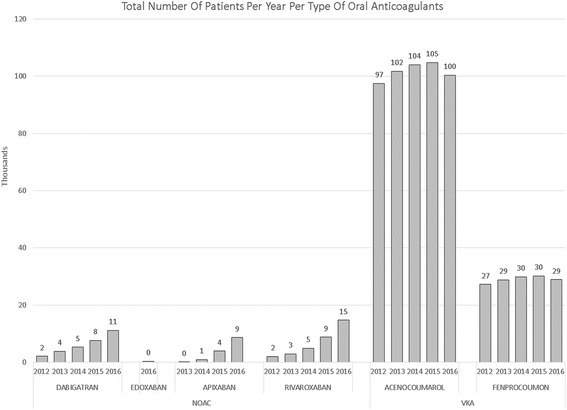
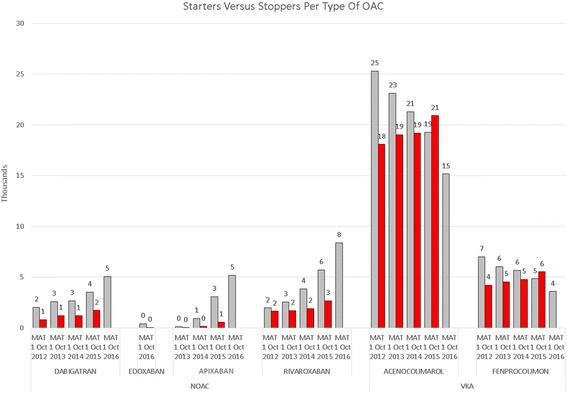
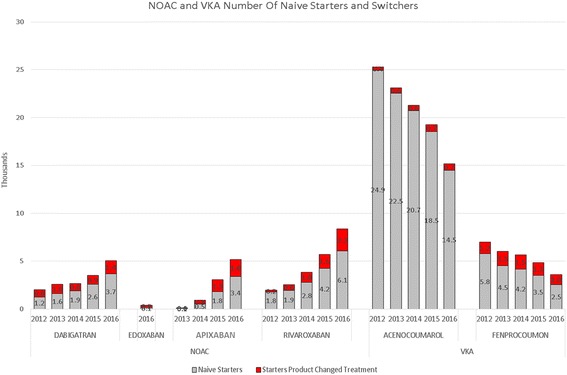
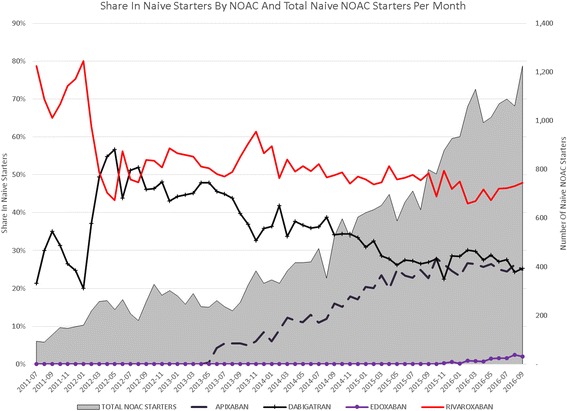
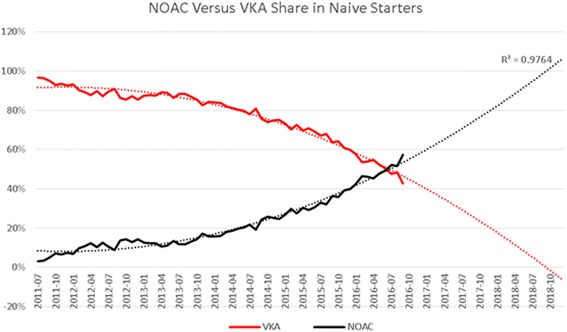
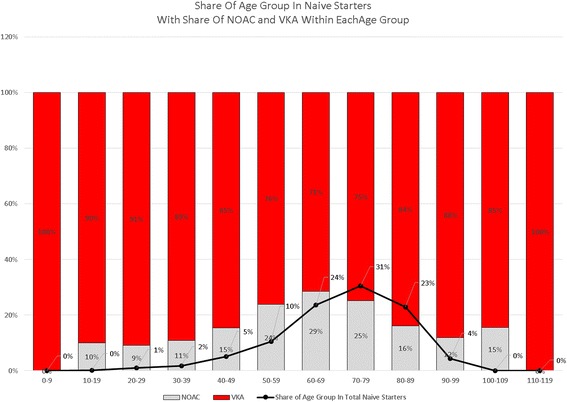
Results: During the studied period the share of NOACs in oral anticoagulants has grown to 57% of prescriptions to new patients. More than 70% of new NOAC users were new naive patients and around 26% switched from VKA. The overall share of NOACs among starters is largest in the group of patients of 50-80 years. Calculated compliance rate for NOAC patients shows that 88% of all users are adherent with a PDC higher than 80%.
Conclusions: NOAC have overtaken VKA as the major treatment prescribed to new oral anticoagulant patients, and the number of starters on VKA is decreasing. Patients are generally adherent to NOACs during the implementation phase, the period that the medication is used. Fear for inadherence by itself does not need to be a reason for not prescribing NOACs instead of VKA.
Conflict of interest statement
For this study, data from the NControl database were obtained. Our dataset contains data of 544 pharmacies, spread across The Netherlands. Since 2011, the NControl database contains data related to over 557 million prescriptions and 7.2 million patients. Patients in the database cannot be identified, but can be tracked over time across pharmacies in the NControl database. Prescribers are anonymized and cannot be identified nor tracked over time. NControl is allowed to use these prescription data for research purposes. NControl adheres to data protection and privacy regulations, as established in amongst others the Personal Data Protection Act in The Netherlands as well as the NEN 7510 standard, related to information protection in healthcare, which is derived from ISO 27001 and 27,002.See aboveThe authors declare that they have no competing interests.Springer Nature remains neutral with regard to jurisdictional claims in published maps and institutional affiliations.
Figures
References
-
- Riley R, Tiddwell A. An introduction to Thromboembolic disease. 1st ed. Richmond, VA: Virginia Commonwealth University; 2016. [cited 1 Mar 2016]. Available from: https://pdfs.semanticscholar.org/5a93/304bbcf7e995ef14d006b8a44bc55d6474....
-
- Ansell J, Hirsh J, Hylek E, et al. Pharmacology and Management of the Vitamin K Antagonists: American College of Chest Physicians Evidence-Based Clinical Practice Guidelines (8th edition). 10.1378/chest.08-0670. - PubMed
-
- Bruni-Fitzgerald K. Venous thromboembolism: an overview. J Vasc Nurs. 2015;33:95–9. 10.1016/j.jvn.2015.02.001. - PubMed
-
- Health Council of the Netherlands. New Anticoagulants: A well-dosed introduction. The Hague: Health Council of the Netherlands; 2012. publication no. 2012/07E. ISBN 978-90-5549-940-3.
-
- Farmacotherapeutisch Kompas. bladeren-volgens-boek/inleidingen/inl-overige-anticoagulantia. 2016 [cited 1 Mar 2016]. Available from: https://www.farmacotherapeutischkompas.nl/bladeren/indicatieteksten/trom....
LinkOut - more resources
Full Text Sources
Other Literature Sources
