


Phenotypic and molecular characterization of Klebsiella spp. isolates causing community-acquired infections
- PMID: 29692906
- PMCID: PMC5913063
- DOI: 10.1016/j.nmni.2018.02.002
Phenotypic and molecular characterization of Klebsiella spp. isolates causing community-acquired infections
Abstract
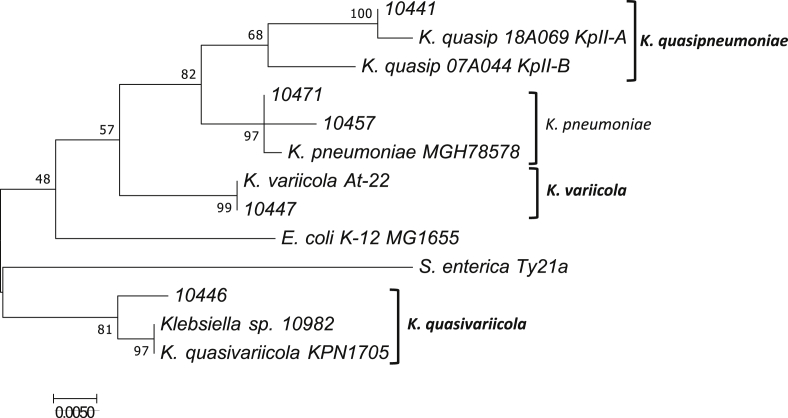
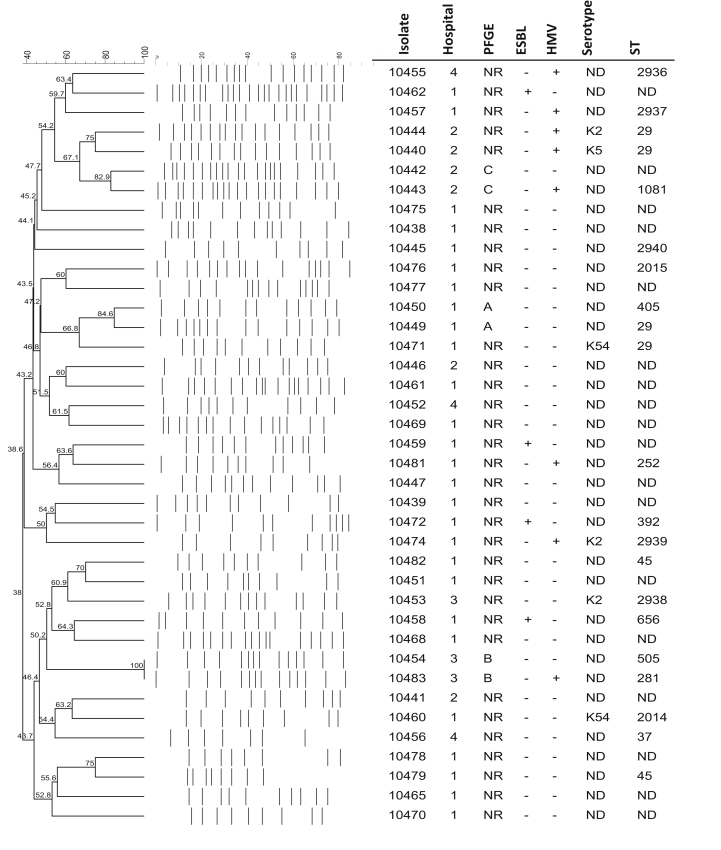
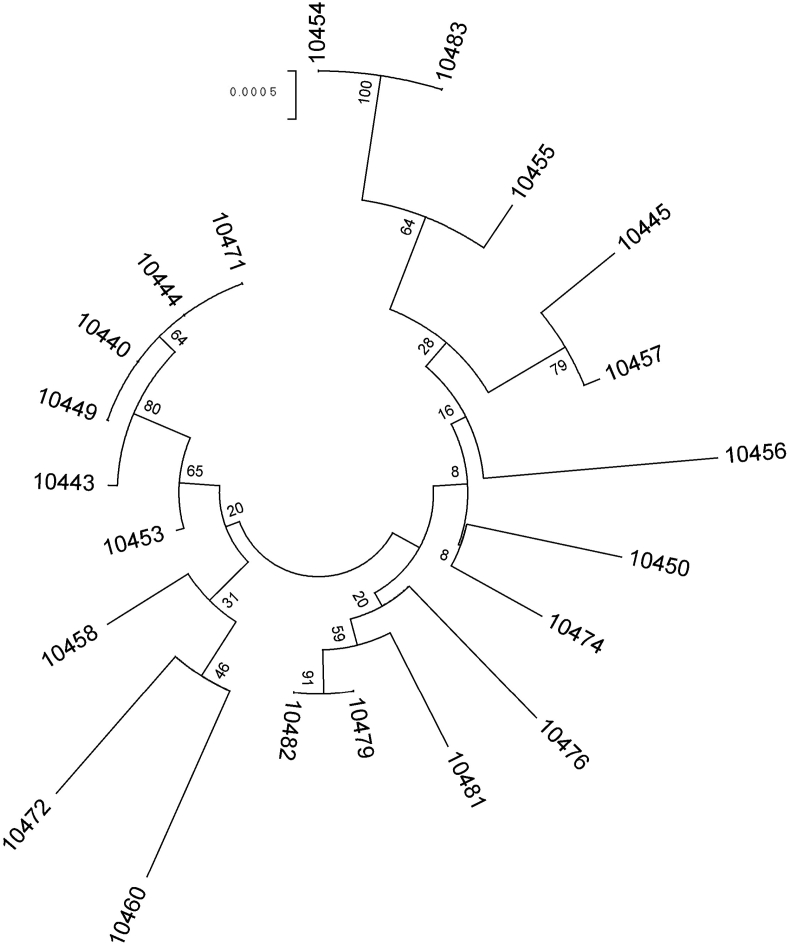
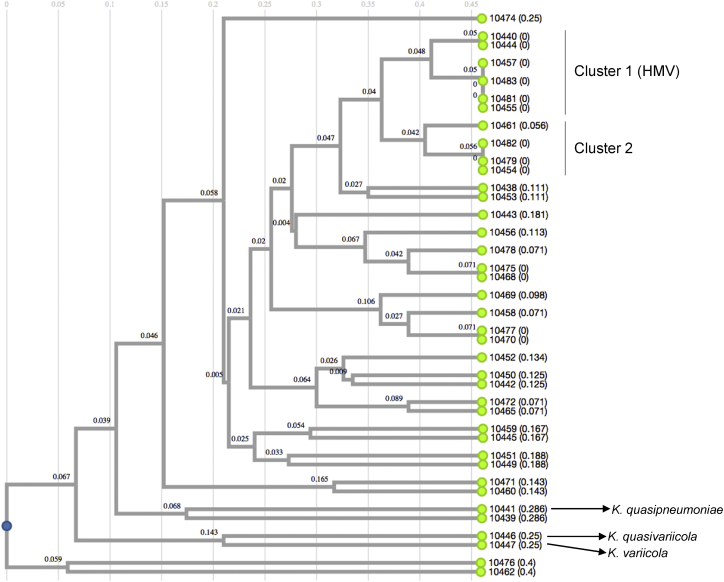
Klebsiella spp. isolates from community-acquired infections were characterized. A total of 39 Klebsiella spp. isolates were obtained from outpatients at four rural hospitals in Mexico (2013-2014). The biochemical tests identified all as being K. pneumoniae. The molecular multiplex-PCR test identified 36 (92.4%) K. pneumoniae isolates and one (2.5%) K. variicola isolate, and phylogenetic analysis of the rpoB gene identified two isolates (5.1%) belonging to K. quasipneumoniae subsp. quasipneumoniae and K. quasivariicola. The last one was confirmed by phylogenetic analysis of six-loci concatenated genes. Mostly the isolates were multidrug resistant; however, a minority were extended-spectrum β-lactamase producing (10.2%). The extended-spectrum β-lactamase CTX-M-15 gene was identified in these isolates. Analysis of biofilm production and the hypermucoviscosity phenotype showed a total of 35 (92.3%) and seven (17.9%) of the isolates were positive for these phenotypes respectively. The K2 (4/39, 10.2%), K5 (2/39, 5.1%) and K54 (1/39, 2.5%) serotypes were identified in seven (17.9%) of the isolates, and only 28.5% (2/7) hypermucoviscous isolates were positive for the K2 and K5 serotypes. In general, the sequence type (ST) analysis and phylogenetic analysis of seven multilocus sequence typing loci were heterogeneous; however, ST29 was the most prevalent ST in the analysed isolates, accounting for 19% (4/21) of the total isolates. Two of the four ST29 isolates had the hypermucoviscosity phenotype. The virulence factors for fimbriae were the most prevalent, followed by siderophores. Community-acquired infections are caused by various species from Klebsiella genus, with different profiles of antibiotic resistance and heterogeneous virulence factors.
Keywords: Antimicrobial susceptibility; Bacterial resistance; Cephalosporin resistance; Community infection; ESBL; Hypermucoviscosity.
Figures
References
-
- Brisse S., Passet V., Grimont P.A. Description of Klebsiella quasipneumoniae sp. nov., isolated from human infections, with two subspecies, Klebsiella quasipneumoniae subsp. quasipneumoniae subsp. nov. and Klebsiella quasipneumoniae subsp. similipneumoniae subsp. nov., and demonstration that Klebsiella singaporensis is a junior heterotypic synonym of Klebsiella variicola. Int J Syst Evol Microbiol. 2014;64(Pt 9):3146–3152. - PubMed
-
- Rosenblueth M., Martinez L., Silva J., Martinez-Romero E. Klebsiella variicola, a novel species with clinical and plant-associated isolates. Syst Appl Microbiol. 2004;27:27–35. - PubMed
LinkOut - more resources
Full Text Sources
Other Literature Sources
Research Materials
Miscellaneous