. 2018 Apr 26;8(1):92.
doi: 10.1038/s41398-018-0141-7.

Therapeutic endocannabinoid augmentation for mood and anxiety disorders: comparative profiling of FAAH, MAGL and dual inhibitors

Affiliations

Therapeutic endocannabinoid augmentation for mood and anxiety disorders: comparative profiling of FAAH, MAGL and dual inhibitors

Gaurav Bedse et al. Transl Psychiatry. .

Abstract

Recent studies have demonstrated anxiolytic potential of pharmacological endocannabinoid (eCB) augmentation approaches in a variety of preclinical models. Pharmacological inhibition of endocannabinoid-degrading enzymes, such as fatty acid amide hydrolase (FAAH) and monoacylglycerol lipase (MAGL), elicit promising anxiolytic effects in rodent models with limited adverse behavioral effects, however, the efficacy of dual FAAH/MAGL inhibition has not been investigated. In the present study, we compared the effects of FAAH (PF-3845), MAGL (JZL184) and dual FAAH/MAGL (JZL195) inhibitors on (1) anxiety-like behaviors under non-stressed and stressed conditions, (2) locomotor activity and body temperature, (3) lipid levels in the brain and (4) cognitive functions. Behavioral analysis showed that PF-3845 or JZL184, but not JZL195, was able to prevent restraint stress-induced anxiety in the light-dark box assay when administered before stress exposure. Moreover, JZL195 treatment was not able to reverse foot shock-induced anxiety-like behavior in the elevated zero maze or light-dark box. JZL195, but not PF-3845 or JZL184, decreased body temperature and increased anxiety-like behavior in the open-field test. Overall, JZL195 did not show anxiolytic efficacy and the effects of JZL184 were more robust than that of PF-3845 in the models examined. These results showed that increasing either endogenous AEA or 2-AG separately produces anti-anxiety effects under stressful conditions but the same effects are not obtained from simultaneously increasing both AEA and 2-AG.


Conflict of interest statement

Parts of this work were supported by H. Lundbeck A/S under a research contract with Vanderbilt University Medical Center (VUMC53005) to S.P. and L.J.M. N.P. is an employee of H. Lundbeck A/S. The remaining authors declare that they have no conflict of interest.

Figures
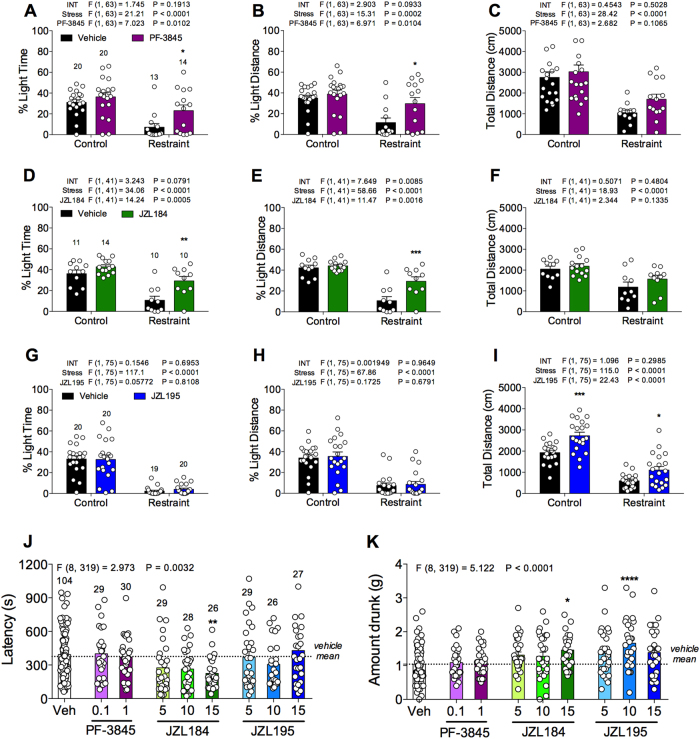
Fig. 1
Fig. 1. Comparative effects of PF-3845, JZL184 and JZL195 on restraint stress-induced anxiety-like behavior in the light–dark box or novelty-induced anxiety-like behavior in the NIH assay.
The effects of a-c selective FAAH inhibitor PF-3845 (1 mg kg–1), d-f selective MAGL inhibitor JZL184 (10 mg kg–1) and g-i dual FAAH/MAGL inhibitor JZL195 (10 mg kg–1) systemic administration on the percent light time, percent light distance and total distance traveled in 10 min in the light–dark box assay. The effects of PF-3845 (0.1 and 1 mg kg–1), JZL184 (5, 10 and 15 mg kg–1) and JZL195 (5, 10 and 15 mg kg–1) on the novel cage j latencies and k consumptions in NIH assay. Significant F and P-values from one-way and two-way analysis of variance noted above bar graphs; *P < 0.05, **P < 0.01, ***P < 0.001, vs. respective vehicle-treated group by Holm–Sidak post hoc multiple comparisons test in bar graphs. Data are presented as means ± SEM. NIH novelty-induced hypophagia
Fig. 2
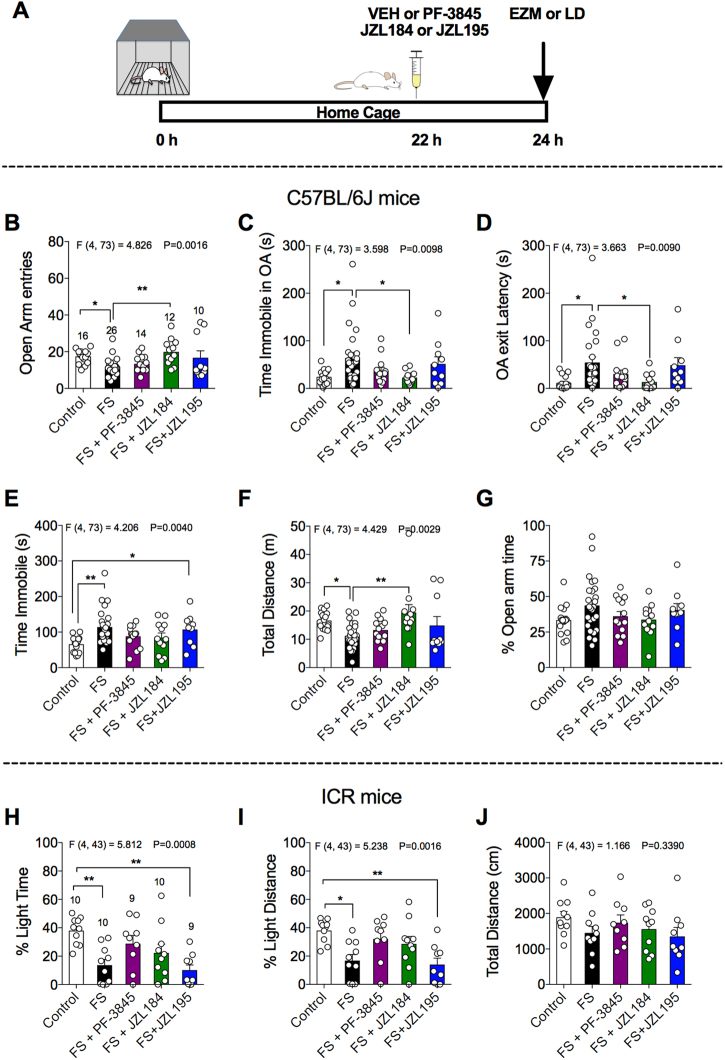
Fig. 2. Comparative effects of PF-3845, JZL184 and JZL195 on foot shock-induced anxiety-like behavior in the elevated zero maze or light–dark box.
a Schematic diagram depicts the timeline of the experiment. The effects of PF-3845 (1 mg kg–1), JZL184 (10 mg kg–1) and JZL195 (10 mg kg–1) systemic administration on the b open arm entries, c time immobile in open arm, d open arm exit latency, e total time immobile, f total distance and g % open arm time in the EZM. The effects of PF-3845 (1 mg kg–1), JZL184 (10 mg kg–1) and JZL195 (10 mg kg–1) systemic administration on the h percent light time, i percent light distance and j total distance traveled in 10 min in the light–dark box assay. Significant F and P-values from one-way analysis of variance noted above bar graphs; *P < 0.05, **P < 0.01, vs. stress group by Holm–Sidak post hoc multiple comparisons test in bar graphs. Data are presented as means ± SEM. EZM elevated zero maze, LD light–dark box, FS foot shock
Fig. 3
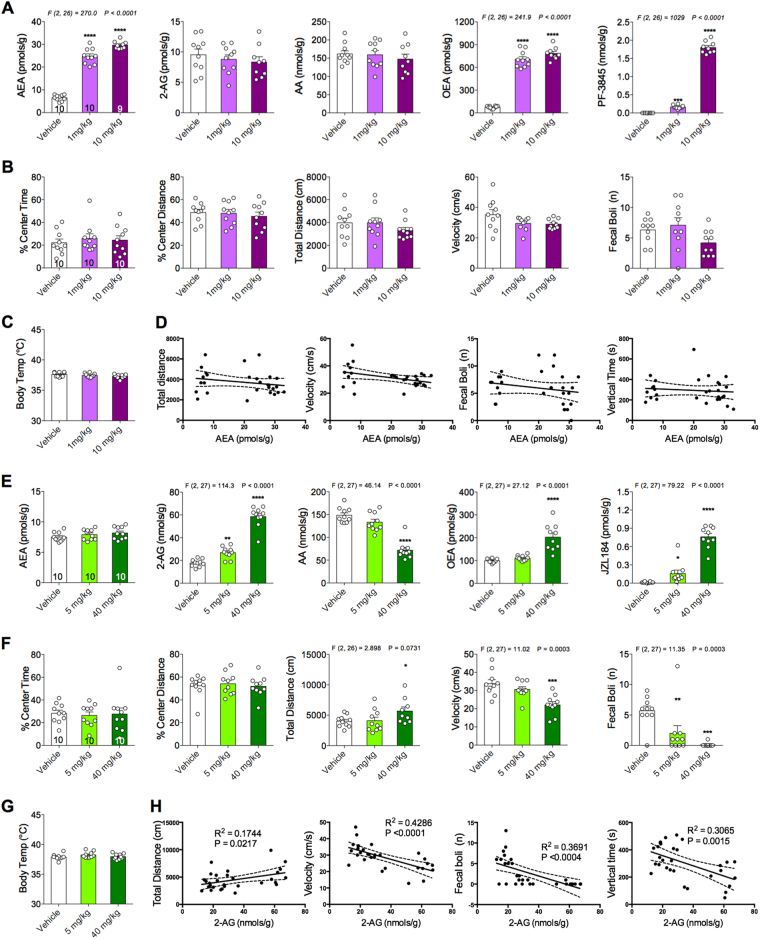
Fig. 3. Effects of PF-3845 and JZL184 on brain endocannabinoid levels, locomotor activity, anxiety-like behavior and body temperature.
a Acute fatty acid amide hydrolase inhibition (PF-3845) effects on brain N-arachidonylethanolamine (AEA), 2-arachidonoylglycerol (2-AG), arachidonic acid (AA) and oleoylethanolamine (OEA) levels. b Effects of PF-3845 on % center time, % center distance, total distance, average velocity and number of fecal boli in the open-field test. c PF-3845 treatment did not affect body temperature. d Brain AEA correlations with various behavioral parameters. e Acute monoacylglycerol lipase inhibition (JZL184) effects on brain AEA, 2-AG, arachidonic acid (AA) and oleoylethanolamine (OEA) levels. f Effects of JZL184 on % center time, % center distance, total distance, average velocity and number of fecal boli in the open-field test. g JZL184 treatment did not affect body temperature. h Brain 2-AG correlations with various behavioral parameters. Significant F and P-values from one-way analysis of variance noted above bar graphs; *P < 0.05, **P < 0.01, ***P < 0.001, ****P < 0.0001 vs vehicle group by Holm–Sidak post hoc multiple comparisons test in bar graphs. Linear regression (solid line) with 95% confidence intervals (dashed lines) shown in figures. Data are presented as means ± SEM
Fig. 4
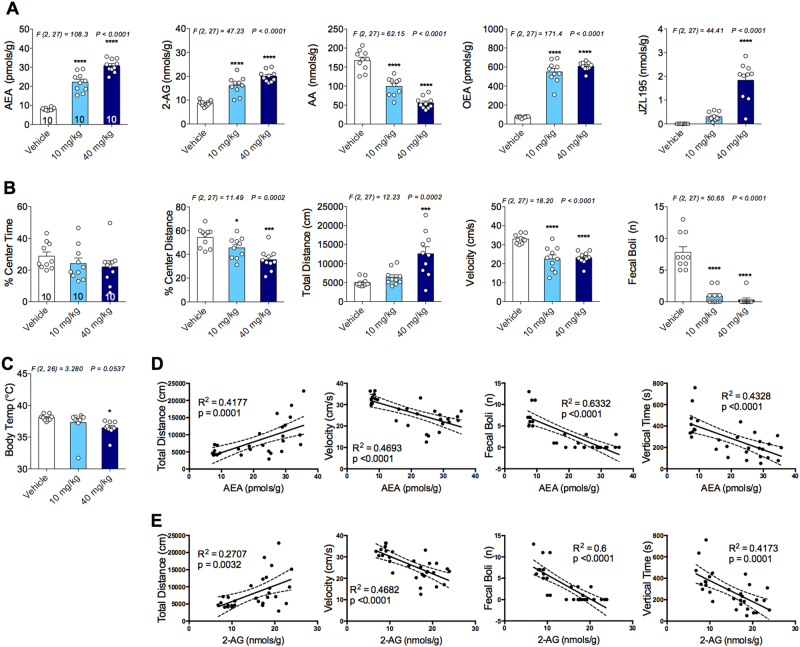
Fig. 4. Effects of JZL195 on brain endocannabinoid levels, locomotor activity, anxiety-like behavior in the open-field test and body temperature.
a Dual fatty acid amide hydrolase and monoacylglycerol lipase inhibition effects on brain N-arachidonylethanolamine (AEA), 2-arachidonoylglycerol (2-AG), arachidonic acid (AA) and oleoylethanolamine (OEA) levels. b Effects of JZL195 on % center time, % center distance, total distance, average velocity and number of fecal boli in the open-field test. c JZL195 treatment dose-dependently lowered body temperature. d Brain AEA and e 2-AG correlations with various behavioral parameters. Significant F and P-values from one-way analysis of variance noted above bar graphs; *P < 0.05, ***P < 0.001, ****P < 0.0001 vs vehicle group by Holm–Sidak post hoc multiple comparisons test in bar graphs. Linear regression (solid line) with 95% confidence intervals (dashed lines) shown in figures. Data are presented as means ± SEM
Fig. 5
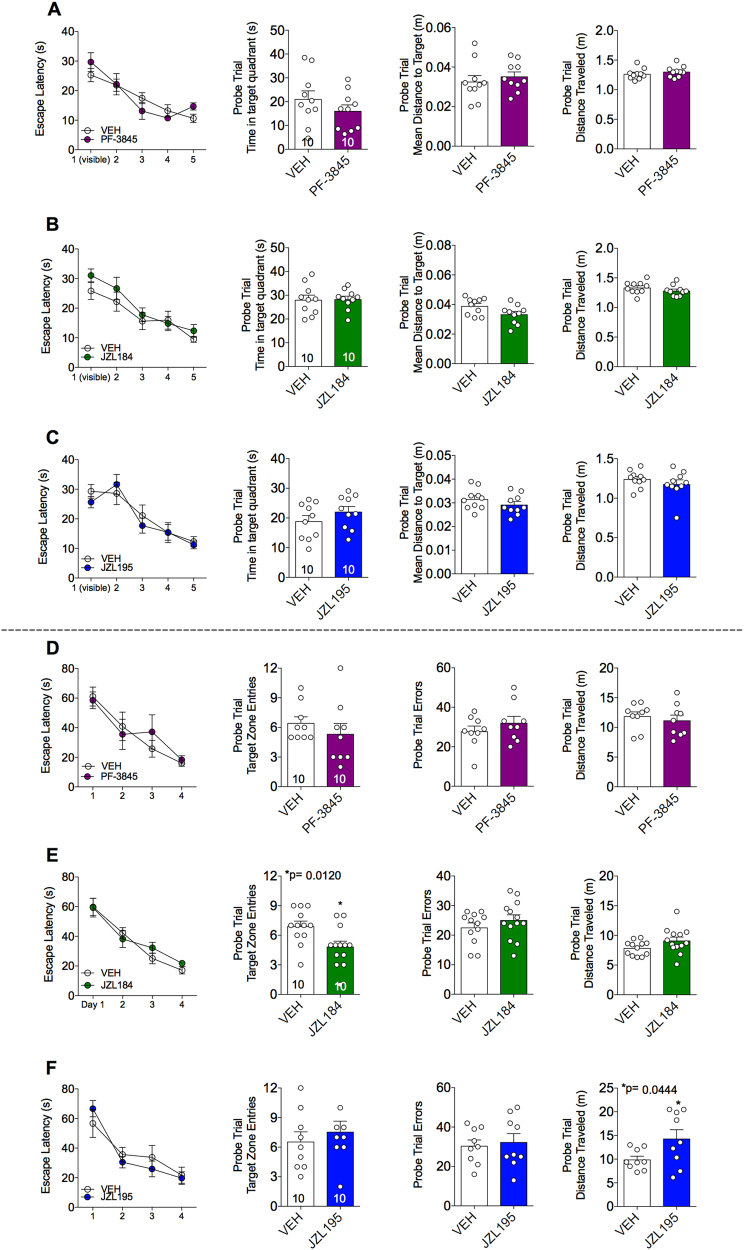
Fig. 5. Comparative effects of PF-3845, JZL184 and JZL195 on Morris water maze or Barnes-maze performance.
The effects of a PF-3845 (1 mg kg–1), b JZL184 (8 mg kg–1) and c JZL195 (10 mg kg–1) on escape latency during training days, time spent in target quadrant, mean distance to target and total distance traveled in Morris water maze test. The effects of d PF-3845 (1 mg kg–1), e JZL184 (8 mg kg–1) and f JZL195 (10 mg kg–1) on escape latency during training days, target zone entries, probe trial errors and total distance traveled in the Barnes-maze test. Significant P-values from t-test noted above bar graphs; *P < 0.05, vs vehicle group by unpaired t-test in bar graphs. Data are presented as means ± SEM

References

    1. Griebel G, Holmes A. 50 years of hurdles and hope in anxiolytic drug discovery. Nat. Rev. Drug Discov. 2013;12:667–687. doi: 10.1038/nrd4075. - DOI - PMC - PubMed
    1. Dale E, Bang-Andersen B, Sanchez C. Emerging mechanisms and treatments for depression beyond SSRIs and SNRIs. Biochem Pharmacol. 2015;95:81–97. doi: 10.1016/j.bcp.2015.03.011. - DOI - PubMed
    1. Nakafero G, Sanders RD, Nguyen-Van-Tam JS, Myles PR. Association between benzodiazepine use and exacerbations and mortality in patients with asthma: a matched case-control and survival analysis using the United Kingdom Clinical Practice Research Datalink. Pharmacoepidemiol Drug Saf. 2015;24:793–802. doi: 10.1002/pds.3799. - DOI - PubMed
    1. Henter ID, et al. Mood therapeutics: novel pharmacological approaches for treating depression. Expert Rev. Clin. Pharmacol. 2017;10:153–166. doi: 10.1080/17512433.2017.1253472. - DOI - PMC - PubMed
    1. Henry MS, Gendron L, Tremblay ME, Drolet G. Enkephalins: endogenous analgesics with an emerging role in stress resilience. Neural Plast. 2017;2017:1546125. doi: 10.1155/2017/1546125. - DOI - PMC - PubMed

Publication types

MeSH terms