


Complex interrelations between self-reported oral health attitudes and behaviors, the oral health status, and oral health-related quality of life
- PMID: 29695896
- PMCID: PMC5905524
- DOI: 10.2147/PPA.S159621
Complex interrelations between self-reported oral health attitudes and behaviors, the oral health status, and oral health-related quality of life
Abstract
Purpose: The purpose of this study was to develop and test a moderated mediation model that was able to describe the relationships between oral health-related attitudes and behaviors, oral health status (OHS), and oral health-related quality of life. The hypothesized relations corresponded to research questions such as "is a person's oral health predicted by the actions that person takes in order to prevent oral health conditions?" and "do individuals with better oral health also have higher levels of oral health-related quality of life?".
Materials and methods: A cross-sectional correlational study with selected predictor variables was conducted in Cluj-Napoca, Romania, among 191 participants, enrolled in the fourth and sixth years of study at the Dentistry School of the Medicine and Pharmacology, University of Cluj-Napoca. Participants completed the Hiroshima University Dental Behavior Inventory (HUDBI) questionnaire targeting specific behavior and attitude with respect to their dental self-care, Oral Health Impact Profile (OHIP) short questionnaire for measuring oral health-related quality of life, and the current OHS was assessed objectively using Decayed, Missing, Filled Teeth/Surfaces (DMFT) index. Statistical analyses were done using structural equation modeling software.
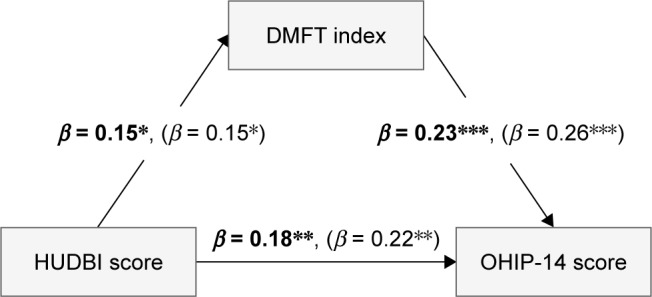
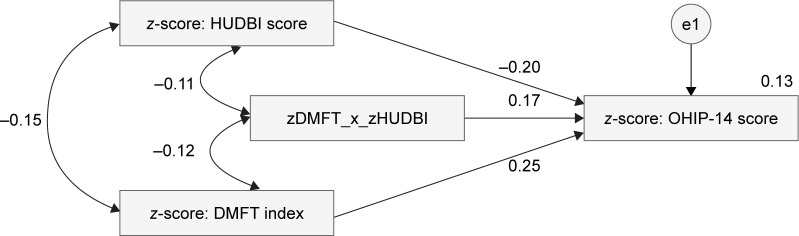
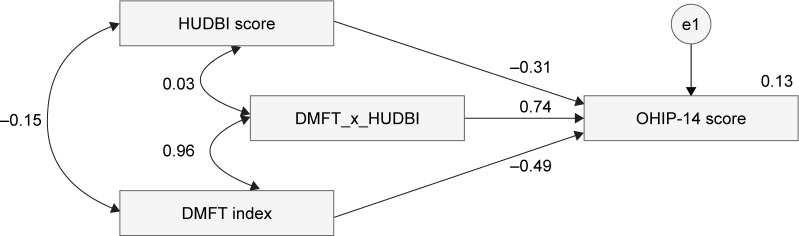
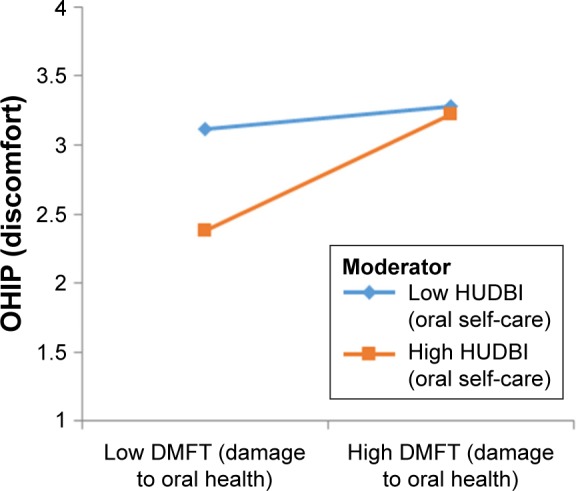
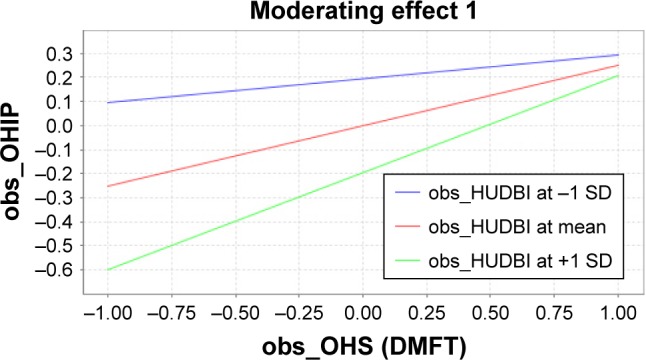
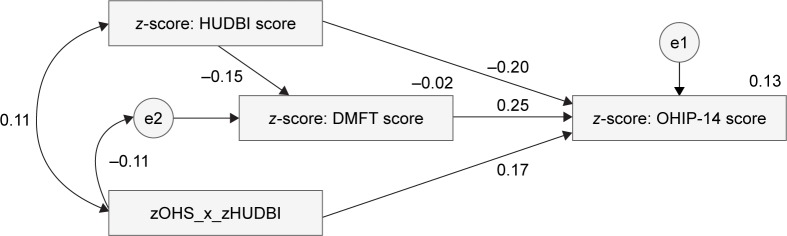
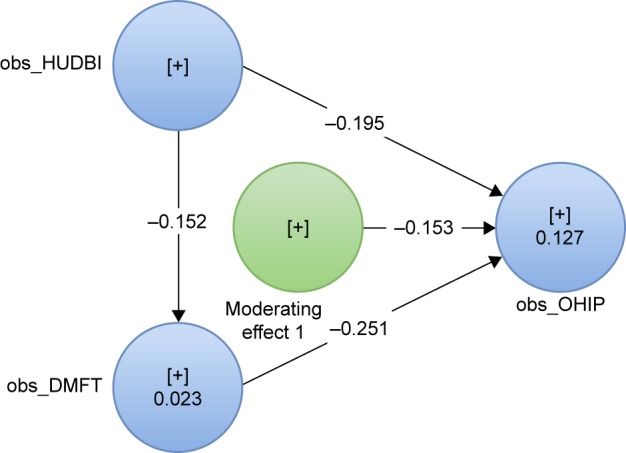
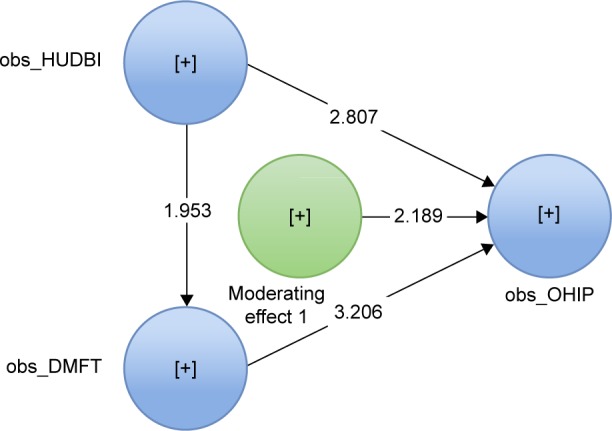
Results: Our research showed relevant associations between HUDBI, DMFT, and OHIP. The relationship between HUDBI and OHIP was mediated by DMFT. Furthermore, HUDBI worked as a moderator between DMFT and OHIP. Thus, our study revealed a case for moderated mediation, which is usually ignored in similar research.
Conclusion: The "straightforward" causality between oral health-related behavior and the actual OHS must be considered with caution, as well as their impact on the oral health-related quality of life. Further research is needed to investigate the interaction between variables, the strength of the interrelations and the magnitude of their interactions, and the confidence that can be placed in these measurements, with respect to the general population and/or those lacking domain-specific education.
Keywords: DMFT; HUDBI; moderated mediation; oral health; oral health-related quality of life.
Conflict of interest statement
Disclosure The authors report no conflicts of interest in this work.
Figures
References
-
- Kawamura M. The relationship between perceptions of oral health and oral status in adults. J Hiroshima Univ Dent Soc. 1988;20:273–286. - PubMed
-
- Slade GD. Derivation and validation of a short-form oral health impact profile. Community Dent Oral Epidemiol. 1997;25(4):284–290. - PubMed
-
- World Health Organization . Oral Health Surveys: Basic Methods. Geneva: World Health Organization; 2013.
-
- FDI World Dental Federation Oral Health and the United Nations Political Declaration on NCDs. A Guide to Advocacy. 2011. [Accessed March 17, 2018]. Available from: https://www.fdiworlddental.org/sites/default/files/media/images/oral_hea....
-
- Petersen PE. Priorities for research for oral health in the 21st century-the approach of the WHO Global Oral Health Programme. Community Dent Health. 2005;22(2):71–74. - PubMed
LinkOut - more resources
Full Text Sources
Other Literature Sources
