


Blood Pressure and Metabolic Effects of Acetyl-l-Carnitine in Type 2 Diabetes: DIABASI Randomized Controlled Trial
- PMID: 29696241
- PMCID: PMC5912091
- DOI: 10.1210/js.2017-00426
Blood Pressure and Metabolic Effects of Acetyl-l-Carnitine in Type 2 Diabetes: DIABASI Randomized Controlled Trial
Abstract
Context: Acetyl-l-carnitine (ALC), a mitochondrial carrier involved in lipid oxidation and glucose metabolism, decreased systolic blood pressure (SBP), and ameliorated insulin sensitivity in hypertensive nondiabetic subjects at high cardiovascular risk.
Objective: To assess the effects of ALC on SBP and glycemic and lipid control in patients with hypertension, type 2 diabetes mellitus (T2D), and dyslipidemia on background statin therapy.
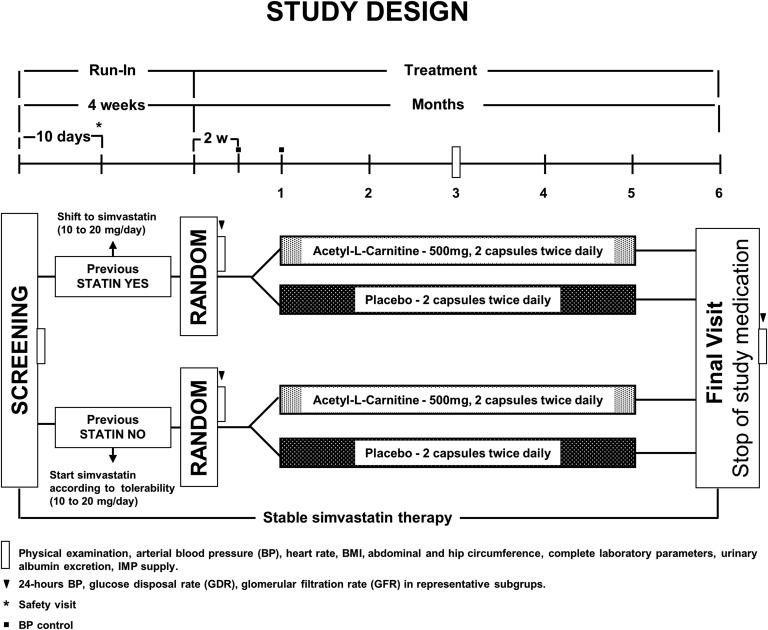
Design: After 4-week run-in period and stratification according to previous statin therapy, patients were randomized to 6-month, double-blind treatment with ALC or placebo added-on simvastatin.
Setting: Five diabetology units and one clinical research center in Italy.
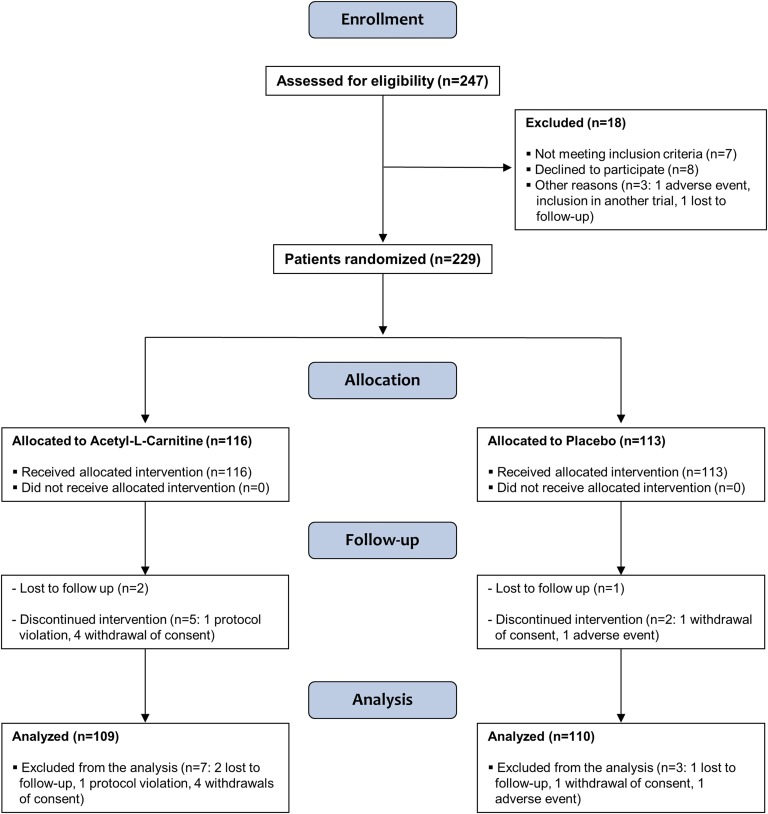
Patients: Two hundred twenty-nine patients with hypertension and dyslipidemic T2D >40 years with stable background antihypertensive, hypoglycemic, and statin therapy and serum creatinine <1.5 mg/dL.
Interventions: Oral ALC 1000 mg or placebo twice daily on top of stable simvastatin therapy.
Outcome and measures: Primary outcome was SBP. Secondary outcomes included lipid and glycemic profiles. Total-body glucose disposal rate and glomerular filtration rate were measured in subgroups by hyperinsulinemic-euglycemic clamp and iohexol plasma clearance, respectively.
Results: SBP did not significantly change after 6-month treatment with ALC compared with placebo (-2.09 mm Hg vs -3.57 mm Hg, P = 0.9539). Serum cholesterol, triglycerides, and lipoprotein(a), as well as blood glucose, glycated hemoglobin, fasting insulin levels, homeostatic model assessment of insulin resistance index, glucose disposal rate, and glomerular filtration rate did not significantly differ between treatments. Adverse events were comparable between groups.
Conclusions: Six-month oral ALC supplementation did not affect blood pressure, lipid and glycemic control, insulin sensitivity and kidney function in hypertensive normoalbuminuric and microalbuminuric T2D patients on background statin therapy.
Keywords: acetyl-l-carnitine; blood pressure; dyslipidemia; insulin-resistance; statin; type 2 diabetes mellitus.
Conflict of interest statement
The authors have nothing to disclose.
Figures
References
-
- Ruggenenti P, Perna A, Ganeva M, Ene-Iordache B, Remuzzi G; BENEDICT Study Group . Impact of blood pressure control and angiotensin-converting enzyme inhibitor therapy on new-onset microalbuminuria in type 2 diabetes: a post hoc analysis of the BENEDICT trial. J Am Soc Nephrol. 2006;17(12):3472–3481. - PubMed
-
- Boutitie F, Gueyffier F, Pocock S, Fagard R, Boissel JP; INDANA Project Steering Committee. INdividual Data ANalysis of Antihypertensive intervention . J-shaped relationship between blood pressure and mortality in hypertensive patients: new insights from a meta-analysis of individual-patient data. Ann Intern Med. 2002;136(6):438–448. - PubMed
LinkOut - more resources
Full Text Sources
Other Literature Sources