


The Effect of a Text Messaging Based HIV Prevention Program on Sexual Minority Male Youths: A National Evaluation of Information, Motivation and Behavioral Skills in a Randomized Controlled Trial of Guy2Guy
- PMID: 29696403
- PMCID: PMC6483371
- DOI: 10.1007/s10461-018-2118-1
The Effect of a Text Messaging Based HIV Prevention Program on Sexual Minority Male Youths: A National Evaluation of Information, Motivation and Behavioral Skills in a Randomized Controlled Trial of Guy2Guy
Abstract
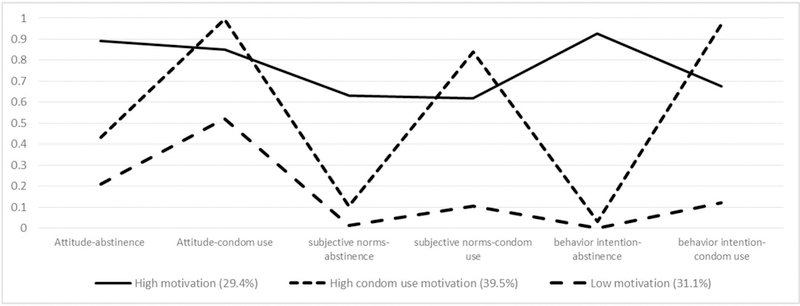
There is a paucity of literature documenting how the constructs of the Information-Motivation-Behavioral Skills (IMB) model are affected by exposure to technology-based HIV prevention programs. Guy2Guy, based on the IMB model, is the first comprehensive HIV prevention program delivered via text messaging and tested nationally among sexual minority adolescent males. Between June and November 2014, 302 14-18 year old gay, bisexual, and/or queer cisgender males were recruited across the US on Facebook and enrolled in a randomized controlled trial testing Guy2Guy versus an attention-matched control program. Among sexually inexperienced youth, those in the intervention were more than three times as likely to be in the "High motivation" group at follow-up as control youth (aOR = 3.13; P value = 0.04). The intervention effect was not significant when examined separately for those who were sexually active. HIV information did not significantly vary by experimental arm at 3 months post-intervention end, nor did behavioral skills for condom use or abstinence vary. The increase in motivation to engage in HIV preventive behavior for adolescent males with no prior sexual experience is promising, highlighting the need to tailor HIV prevention according to past sexual experience. The behavioral skills that were measured may not have reflected those most emphasized in the content (e.g., how to use lubrication to reduce risk and increase pleasure), which may explain the lack of detected intervention impact.
Clinical trial registration: ClinicalTrials.gov ID# NCT02113956.
Keywords: Adolescence; HIV prevention; Information–Motivation–Behavioral model; LGBT; MSM; Sexual minority; mHealth.
Conflict of interest statement
Figures
References
-
- Centers for Disease Control and Prevention. HIV Among Youth Atlanta, GA: U.S. Department of Health & Human Services; 2015. http://www.cdc.gov/hiv/group/age/youth/index.html. Accessed January 12, 2016.
-
- Centers for Disease Control and Prevention. HIV Surveillance Report, 2013 Atlanta, GA: U.S. Department of Health & Human Services; 2015. http://www.cdc.gov/hiv/pdf/library/reports/surveillance/cdc-hiv-surveill.... Accessed August 24, 2016.
-
- Johnson WD, Diaz RM, Flanders WD, et al. Behavioral interventions to reduce risk for sexual transmission of HIV among men who have sex with men. Cochrane Database Syst Rev 2008(3):CD001230. - PubMed
-
- Teens Lenhart A., social media, & technology overview 2015. Washington, DC: Pew Internet & American Life Project; 2015. http://www.pewinternet.org/2015/04/09/teens-social-media-technology-2015/. Accessed May 28, 2015.
Publication types
MeSH terms
Associated data
Grants and funding
LinkOut - more resources
Full Text Sources
Other Literature Sources
Medical
Miscellaneous
