Review
. 2011 Aug 13;11(1):37-47.
doi: 10.1007/s12522-011-0105-6. eCollection 2012 Jan.

Heat stress on reproductive function and fertility in mammals

Affiliations
Review

Heat stress on reproductive function and fertility in mammals

Masashi Takahashi. Reprod Med Biol. .

Abstract

In most mammalian species including cattle, heat stress has deleterious effects on nutritional, physiological and reproductive functions. Exposure of animals to a hot environment causes an increase in body temperature in mammals, including domestic animals. High ambient temperature also causes a decrease in the length and intensity of estrus by disturbing ovarian function as well as decreasing pregnancy rate after artificial insemination. Therefore, it is important to understand the effects of heat stress on reproductive function in order to improve the production of domestic animals. Heat stress decreases appetite, weight gain, and milk yield in dairy cattle. It also adversely affects the reproductive performance of both sexes. In males, it reduces spermatogenic activity, while in females it adversely impacts oogenesis, oocyte maturation, fertilization development and implantation rate. Detection and evaluation of the deteriorating effects of heat stress on reproductive organs and cells can help to design measures to prevent them and improve reproductive functions. In this review, we discuss the impacts of heat stress on reproductive functions.

Keywords: Heat stress; Livestock animal; Mammal; Oxidative stress; Reproductive function.


Figures
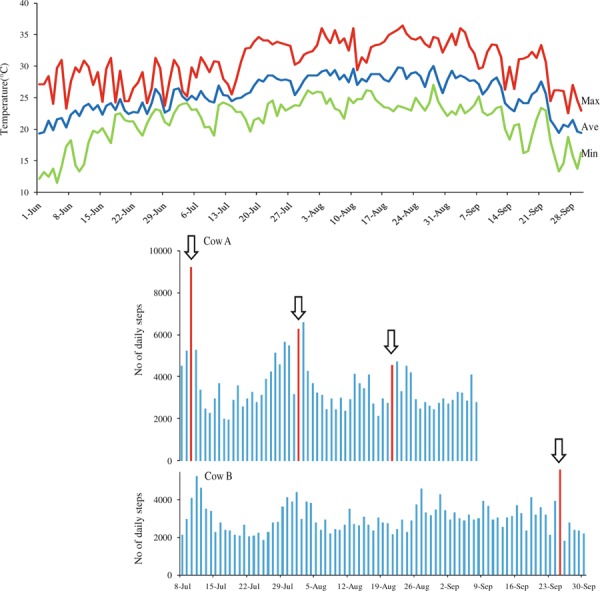
Figure 1
Figure 1
Disturbance of estrus behavior of cows in summer season (June–September, 2010). Upper Temperature and humidity at Kumamoto Japan in summer. Lower Number of daily steps of individual cow. Red bars show the number of daily steps on the day in which the cows showed standing estrus (arrows)
Figure 2
Figure 2
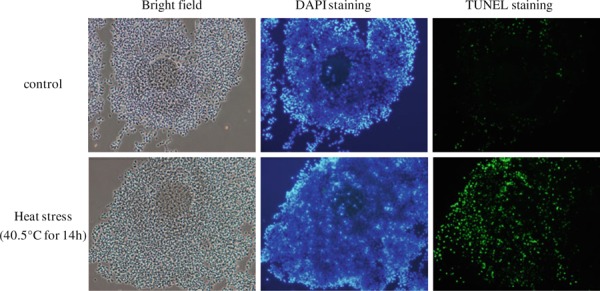
Heat stress‐induced apoptosis in bovine matured cumulus–oocyte complexes (COCs). After COCs were collected from follicles, they were matured for 20 h in maturation medium. COCs were exposed to 40.5°C for the latter 14 h followed by fixation and TUNEL staining
Figure 3
Figure 3
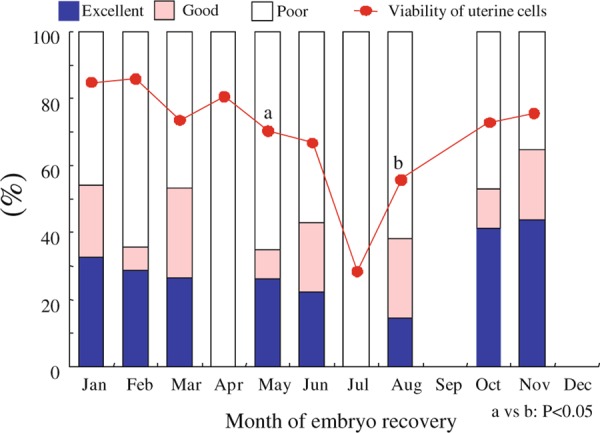
Seasonal changes of embryo quality and viability of uterine epithelial cells recovered on day 7 from Japanese black cows. Uterine epithelial cell clots were recovered from uterine flushing at the time of embryo collection in beef cows. After enzymatic dispersion, cell viability was determined by trypan blue staining
Figure 4
Figure 4
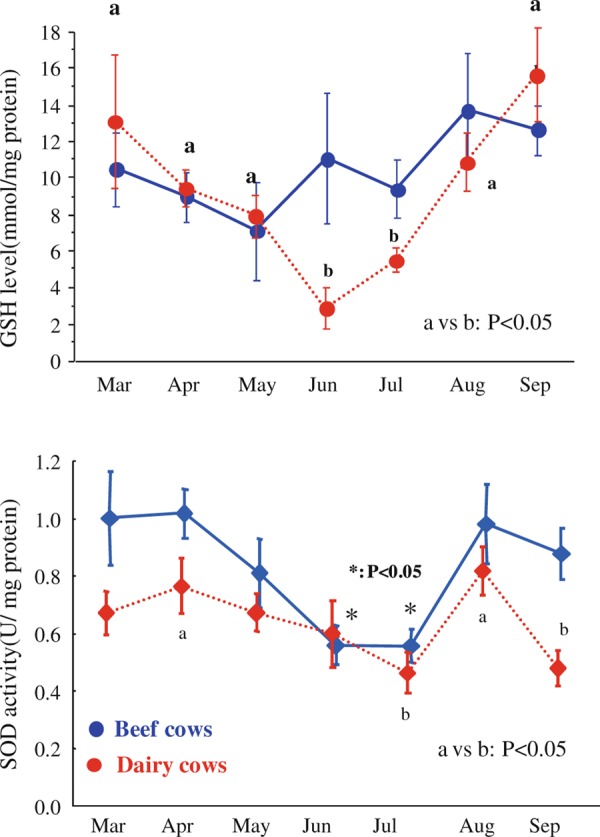
Seasonal changes of GSH levels and SOD activity in oviductal fluids collected from beef and dairy cows. Oviducts were collected from slaughtered dairy and beef cows from March to September. After trimming, oviducts were flushed with 0.5 ml PBS. Collected flushing was centrifuged to remove the cell clots. GSH levels and SOD activities were then measured. Measured GSH and SOD levels were normalized to total protein concentration in the oviductal flushing
Figure 5
Figure 5
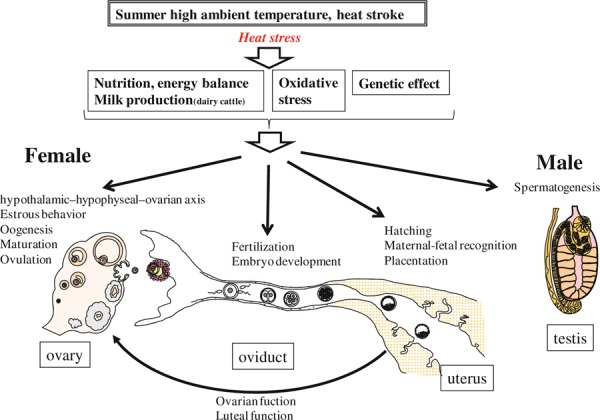
Schematic diagram of the effects of heat stress on reproductive functions in male and female mammals

References

    1. Prosser CL, Heath JE Prosser CL. Temperature. Comparative animal physiology, environmental and metabolic animal physiology, 1991. 4 New York: Wiley; 109–166
    1. Berman A, Folman Y, Kaim M, Mamen M, Herz Z, Wolfenson D, Arieli A, Graber Y. Upper critical temperatures and forced ventilation effects for high‐yielding dairy cows in a subtropical climate. J Dairy Sci, 1985, 68, 1488–1495 - DOI - PubMed
    1. Sartori R, Sartor‐Bergfelt R, Mertens SA, Guenther JN, Parrish JJ, Wiltbank MC. Fertilization and early embryonic development in heifers and lactating cows in summer and lactating and dry cows in winter. J Dairy Sci, 2002, 85, 2803–2812 - DOI - PubMed
    1. Bohmanova J, Misztal I, Cole JB. Temperature‐humidity indices as indicators of milk production losses due to heat stress. J Dairy Sci, 2007, 90, 1947–1956 - DOI - PubMed
    1. Ravagnolo O, Misztal I, Hoogenboom G. Genetic component of heat stress in dairy cattle, development of heat index function. J Dairy Sci, 2000, 83, 2120–2125 - DOI - PubMed