


In-flight angina pectoris; an unusual presentation
- PMID: 29699500
- PMCID: PMC5921980
- DOI: 10.1186/s12872-018-0797-1
In-flight angina pectoris; an unusual presentation
Abstract
Background: An unusual case of typical angina which occurred on a long haul flight is presented. This case is notable as this was the index presentation, with no previous symptoms prior to this. Physiological changes at altitude can be marked, and include hypoxia, tachycardia and an increase in cardiac output. These changes were enough to expose underlying angina in our patient.
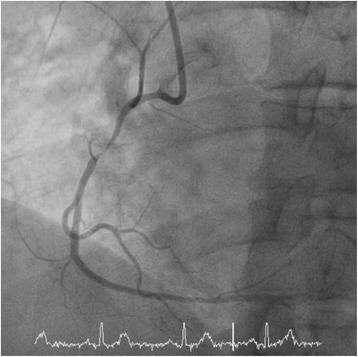
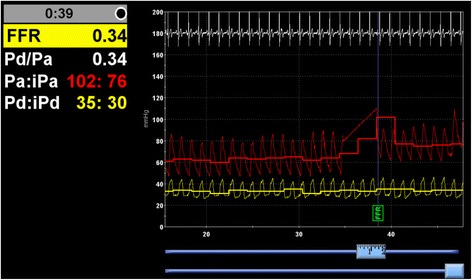
Case presentation: A 68 year old man presented with typical cardiac chest pain on a long haul flight. His symptoms first started 10-15 min after take-off and resolved on landing. This was his index presentation, and there were no similar symptoms in the past. Background history included hypercholesterolaemia and benign prostatic hypertrophy only. He led a rather sedentary lifestyle. A CT coronary angiogram showed significant disease in the proximal left anterior descending artery and proximal right coronary artery. He went on to have a coronary angiogram with invasive physiological measurements, which determined both lesions were physiologically significant. Both arteries were treated with drug eluting stents. Since treatment, he once again embarked on a long haul flight, and was completely asymptomatic.
Conclusion: The presentation of symptoms in this individual was rather unusual, but clearly caused by significant coronary artery disease. Potentially his sedentary lifestyle was not enough in day-to-day activities to promote anginal symptoms. When his cardiovascular system was physiologically stressed during flight, brought about by hypoxia, raised sympathetic tone and increased cardiac output, symptoms emerged. In turn, when landing, with atmospheric conditions normalised, physiological stress was removed, and symptoms resolved. Clinically therefore, one should not exclude symptoms that occur with differing physiological states, such as stress and altitude, as they are also potential triggers for myocardial ischaemia, despite absence of day-to-day symptoms.
Keywords: Angina; Coronary artery disease; Flight; Fractional flow reserve; Pressure wire.
Conflict of interest statement
Ethics approval and consent to participate
Procedures conducted were part of standard medical practice, and hence no formal ethical approval was sought.
Consent for publication
Full consent was obtained in written form from the patient for publication of relevant data, images, and medical history.
Competing interests
The authors declare that they have no competing interests.
Publisher’s Note
Springer Nature remains neutral with regard to jurisdictional claims in published maps and institutional affiliations.
Figures

References
-
- Chest pain of recent onset: assessment and diagnosis. (NICE Guideline CG95). National Institute for Health and Care Excellence (2010, Updated 2016). https://www.nice.org.uk/guidance/cg95. Accessed 20 Jan 2018. - PubMed
-
- Cottrell JJ. Altitude exposures during aircraft flight: flying higher. Chest. 1992;92:81–84. - PubMed
Publication types
MeSH terms
LinkOut - more resources
Full Text Sources
Other Literature Sources
Medical
Miscellaneous
