


Case of convulsive seizure developing during electroretinographic recordings: a case report
- PMID: 29699513
- PMCID: PMC5921440
- DOI: 10.1186/s12883-018-1051-2
Case of convulsive seizure developing during electroretinographic recordings: a case report
Abstract
Background: To present our findings in a case of convulsive seizures and loss of consciousness that developed during recording electroretinograms (ERG).
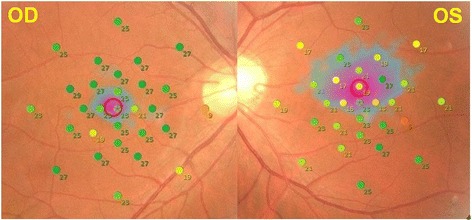
Case presentation: A 34-year-old man had reduced vision in his left eye for about 15 years, and night blindness for about two years. His visual acuity was 20/15 in the right eye and 20/50 in the left eye. The fundus was normal but the sensitivity in the macular region of the left eye was decreased. Optical coherence tomography (OCT) showed partial loss of the interdigitation zone. Upon completion of the flicker ERG recording, a paralysis developed in both upper limbs, then convulsions of the lower limbs followed by a loss of consciousness. The convulsions disappeared after an intravenous injection of diazepam. After that incident, he reported that he had had previous conscious-loss seizures.
Conclusions: Photosensitive epileptic seizures can occur with the light stimuli used for conventional ERG recordings. We recommended that clinicians request information on any prior seizure episodes of the patients and their family members before ERG recordings.
Keywords: Electroretinogram (ERG); Epilepsy; Photosensitivity; Seizure.
Conflict of interest statement
Ethics approval and consent to participate
Not applicable.
Consent for publication
Written informed consent was obtained from the patient for publication of this case report.
Competing interests
The authors declare that they have no competing interests.
Publisher’s Note
Springer Nature remains neutral with regard to jurisdictional claims in published maps and institutional affiliations.
Figures


References
-
- Shiraishi H, Fujiwara T, Inoue Y, Yagi K. Photosensitivity in relation to epileptic syndromes: a survey from an epilepsy center in Japan. Epilepsia. 2001;42(Suppl 3):393–397. - PubMed
-
- Harding GFA, Jeavons PM. Photosensitivity epilepsy: clinics in development medicine. No.133. London: Mac Keith Press; 1994. pp. 28–29.
Publication types
MeSH terms
LinkOut - more resources
Full Text Sources
Other Literature Sources
Medical
