Review
. 2018 Jun:41:65-74.
doi: 10.1016/j.cytogfr.2018.04.003. Epub 2018 Apr 11.

Molecular regulations and therapeutic targets of Gaucher disease

Affiliations
Review

Molecular regulations and therapeutic targets of Gaucher disease

Yuehong Chen et al. Cytokine Growth Factor Rev. 2018 Jun.

Abstract

Gaucher disease (GD) is the most common lysosomal storage disease caused by deficiency of beta-glucocerebrosidase (GCase) resulting in lysosomal accumulation of its glycolipid substrate glucosylceramide. The activity of GCase depends on many factors such as proper folding and lysosomal localization, which are influenced by mutations in GCase encoding gene, and regulated by various GCase-binding partners including Saposin C, progranulin and heat shock proteins. In addition, proinflammatory molecules also contribute to pathogenicity of GD. In this review, we summarize the molecules that are known to be important for the pathogenesis of GD, particularly those modulating GCase lysosomal appearance and activity. In addition, small molecules that inhibit inflammatory mediators, calcium ion channels and other factors associated with GD are also described. Discovery and characterization of novel molecules that impact GD are not only important for deciphering the pathogenic mechanisms of the disease, but they also provide new targets for drug development to treat the disease.

Keywords: Beta-glucocerebrosidase; Gaucher disease; Heat shock proteins; LIMP-2; Progranulin; Saposin C.


Conflict of interest statement

Conflict of interest

We herein declare that we have no conflict of interest.

Figures
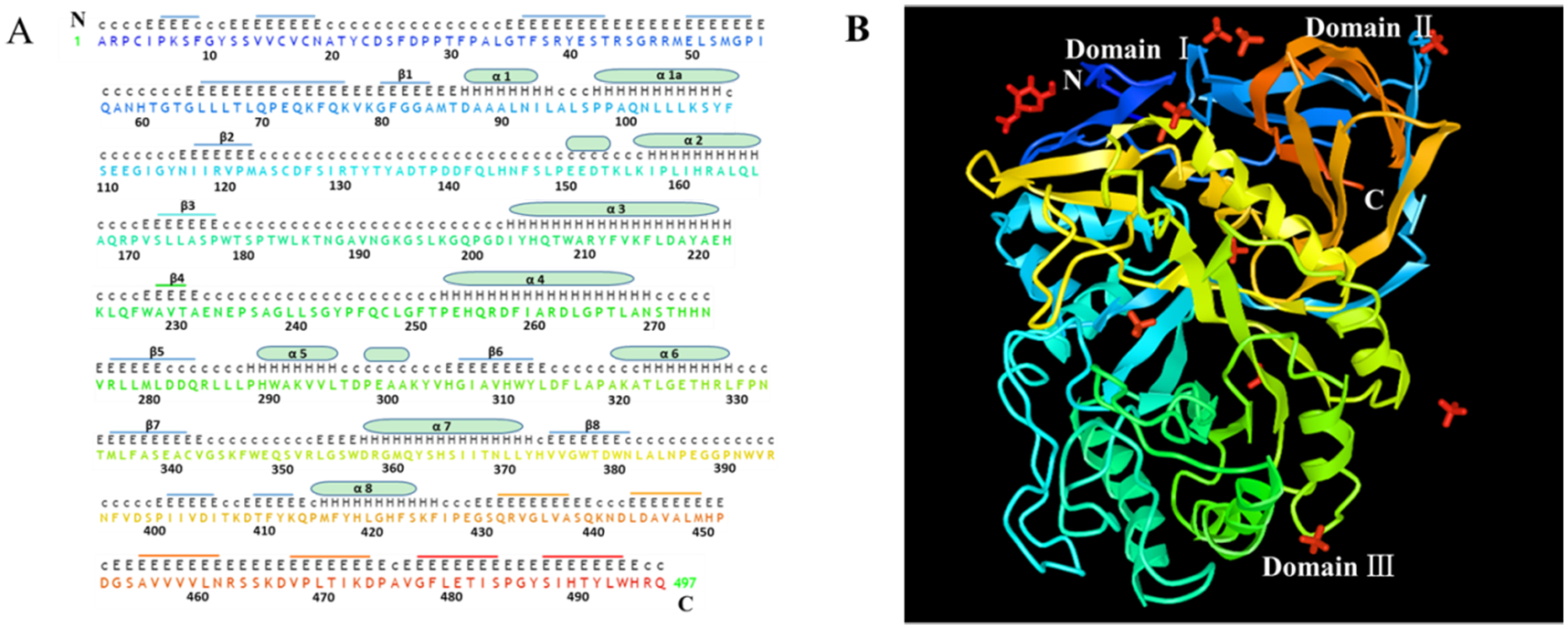
Fig. 1
Fig. 1. Sequence and structure of human acid-β-glucosidase.
A. The sequence of human acid-β-glucosidase has a total of 497 amino acid residues in which there are eight α helices displayed with cylinders and eight β-strands indicated by stubs. The sequences and stubs in discrepant colors are correspondently presented in X-ray structure in panel B. The upper upper-case letters are the nonstandard residues with coordinates and the upper lower-case letters are the nonstandard residues missing coordinates. The lower upper-case letters indicate the standard residues and the numbers are for amino acid sequence location. B. X-ray structure of α helices and β-strands of human acid-β-glucosidase (from NCBI structure database PDB ID 10GS viewed by iCn3D, https://www.ncbi.nlm.nih.gov/Structure/icn3d/full.html?showseq=1&mmdbid=23543&buidx=1). Acid-β-glucosidase has one N-acetyl-d-glucosamine (top left corner in red color), ten sulfate ions (four limbs in red color), and three domains: domain Ⅰ(aa1-aa29 and aa384–414), domain Ⅱ (an immunoglobulin-like domain consists of aa30-aa76 and aa429-aa497) and domain Ⅲ (a catalytic domain, which is a TIM barrel and contains aa77-aa383 and aa415-aa428).
Fig. 2
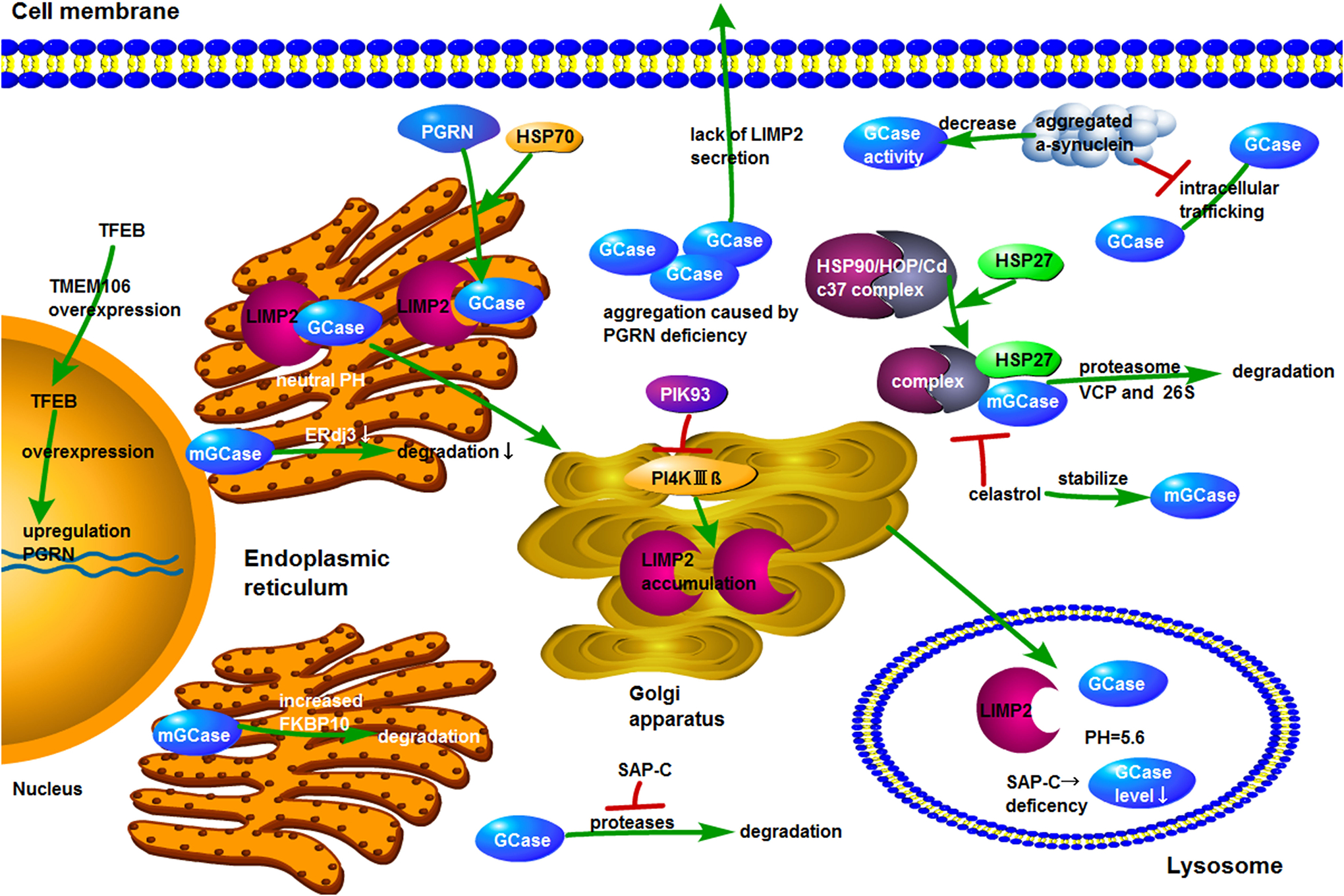
Fig. 2. Summary and illustration of the molecules known to be involved in the regulation of Gaucher Disease.
The overexpression of TMEM106 leads to the translocation of TFEB from cytoplasm to nucleus. GRN encoding PGRN is the target of TFEB and overexpression of TFEB results in upregulation of PGRN. GCase binds to LIMP2 at neutral pH in endoplasmic reticulum and then traffics to lysosome where GCase is separated from LIMP2 at acid condition. When LIMP2 is deficient, delivery of GCase to lysosome is reduced and GCase secretion is increased. Inhibition of PI4KIIIβ promotes LIMP-2 accumulation in Golgi. PGRN deficiency causes the aggregation of GCase in cytoplasm. HSP70 is recruited by PGRN to the GCase/LIMP2 complex. During degradation of mutant GCase, HSP90/HOP/Cdc37 chaperone complex first identifies the mutant GCase and then recruits HSP27, which leads to degradation of GCase mutants by VCP and 26S proteasome. Celastrol interferes with HSP90 chaperone function by hindering the assembly of chaperone complex required for proteasomal degradation of mutant GCase, thereby increasing the amount and catalytic activity of mutant GCase. The absence of SAP-C results in lower levels of GCase in acidic structures such as mature lysosomes, whereas application of SAP-C protects GCase from the degradation by proteases. A decrease in the concentration of ERdj3 reduces the rate of mutant GCase degradation. Elevated levels of FKBP10 promotes the degradation of mutant GCase. The aggregated α-synuclein reduces GCase activity and impedes the intracellular trafficking of GCase.

References

    1. Barkhuizen M, Anderson DG and Grobler AF, Advances in GBA-associated Parkinson’s disease--Pathology, presentation and therapies, Neurochem Int. 93 (2016) 6–25. - PubMed
    1. Beutler E, Gelbart T and Scott CR, Hematologically important mutations: Gaucher disease, Blood Cells Mol Dis. 35 (2005) 355–64. - PubMed
    1. Grabowski GA and Horowitz M, Gaucher’s disease: molecular, genetic and enzymological aspects, Baillieres Clin Haematol. 10 (1997) 635–56. - PubMed
    1. Koprivica V, Stone DL, Park JK, Callahan M, Frisch A, Cohen IJ, et al., Analysis and classification of 304 mutant alleles in patients with type 1 and type 3 Gaucher disease, Am J Hum Genet. 66 (2000) 1777–86. - PMC - PubMed
    1. Adar T, Ilan Y, Elstein D and Zimran A, Liver involvement in Gaucher disease - Review and clinical approach, Blood Cells Mol Dis. 68 (2018) 66–73. - PubMed

Publication types

Substances