


A rational-emotive stress management intervention for reducing job burnout and dysfunctional distress among special education teachers: An effect study
- PMID: 29703004
- PMCID: PMC5944538
- DOI: 10.1097/MD.0000000000010475
A rational-emotive stress management intervention for reducing job burnout and dysfunctional distress among special education teachers: An effect study
Erratum in
-
A rational-emotive stress management intervention for reducing job burnout and dysfunctional distress among special education teachers: An effect study: Erratum.Medicine (Baltimore). 2018 May;97(20):e10827. doi: 10.1097/MD.0000000000010827. Medicine (Baltimore). 2018. PMID: 29768388 Free PMC article. No abstract available.
Abstract
Background: Job-related burnout and distress are adverse stress responses which affect individuals in their occupational environment. This study aimed at investigating the effect of a rational-emotive stress management program on job burnout and dysfunctional distress among special education teachers in Nigeria.
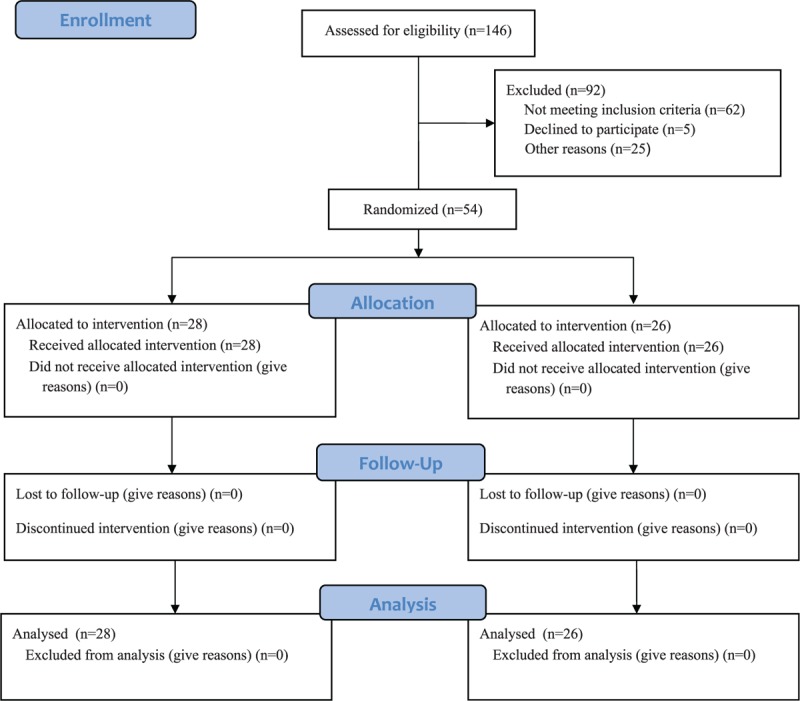
Methods: A pretest-posttest randomized control group design was used. The participants in the study were 54 special education teachers. Data were collected using self-report questionnaires. Participants were allocated to either the treatment group (n = 28 [59.1%]) or the waitlist control group (n = 26 [48.1%]), respectively. A rational-emotive stress management manual was used to deliver the intervention. We statistically analyzed the data collected at three-time points with repeated-measures analysis of variance.
Results: At baseline, the job-related burnout symptoms and distress scores of participants were high. However, an intention-to-treat analysis showed that the rational-emotive stress management intervention program was efficacious in reducing the levels of job-related burnout symptoms and dysfunctional distress among participants assigned to the treatment group, compared to a waitlisted group at post-treatment and follow-up meetings.
Conclusion: Our study demonstrates the effectiveness of a rational-emotive stress management intervention in reducing the level of job-related burnout and distress in a sample of special education teachers in Nigeria. Occupational health counsellors and other clinicians with sufficient knowledge of rational-emotive behavior therapy framework are urged to employ this approach in assisting other employees in managing job burnout symptoms, and distress.
Conflict of interest statement
Competing interest: The author (s) of this work have nothing to disclose.
The authors have no conflicts of interest to disclose.
Figures
References
-
- Jesse MT, Abouljoud MS, Hogan K, et al. Burnout in transplant nurses. Prog Transplant 2015;25:196–202. - PubMed
-
- Ogungbamila B. Occupational burnout among employees in some service occupations in Nigeria: are health workers different? Psychol Thought 2012;6:153–65.
-
- Nwikina L, Nwanekez A. Management of job-related teacher burnout in Nigerian schools. Academia Arena 2010;2:31–8.
-
- Olorunsola EO. An appraisal of burnout among the University Lecturers in Ekiti State, Nigeria. J Educ Develop Psychol 2013;3:133–7.
-
- Lee RT, Ashforth BE. A longitudinal study of burnout among supervisors and managers: comparisons between the Leiter and Maslach (1988) and Golembiewski et al. (1986) models. Organ Behav Hum Decis Process 1993;54:369–98.
Publication types
MeSH terms
LinkOut - more resources
Full Text Sources
Other Literature Sources
