


Extra-capsular growth of lymph node metastasis correlates with poor prognosis and high SOX9 expression in gastric cancer
- PMID: 29703178
- PMCID: PMC5924497
- DOI: 10.1186/s12885-018-4413-7
Extra-capsular growth of lymph node metastasis correlates with poor prognosis and high SOX9 expression in gastric cancer
Abstract
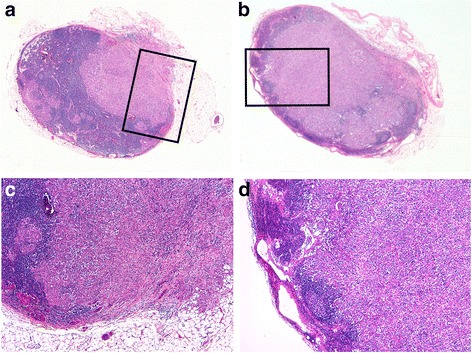
Background: Extra-capsular growth (ECG) describes the extension of neoplastic cells beyond the lymph node capsule. Aim of this study was to investigate the prognostic value of ECG and its association with a stem cell like phenotype indicated by expression of the transcription factor SOX9 in gastric cancer.
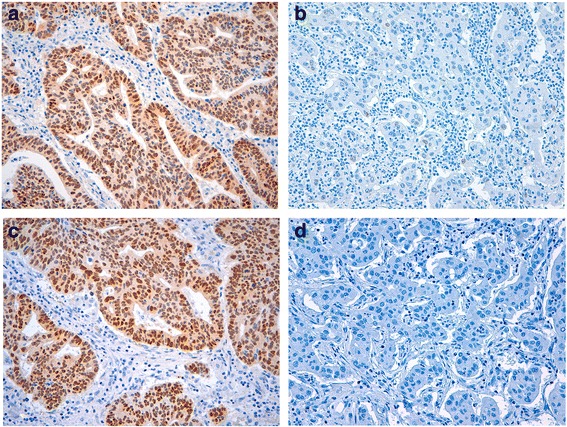
Methods: By histological evaluation, 199 patients with nodal positive gastric cancer or adeoncarcinoma of the esophageal-gastric junction (AEG) were divided into two groups according to the presence (ECG) or absence (ICG) of extracapsular growth in at least one nodal metastasis. Of these, 194 patients were stained for SOX9 and SOX2 using immunohistochemistry. Seventeen nodal negative patients (pT3/4, pN0, pM0) served as controls.
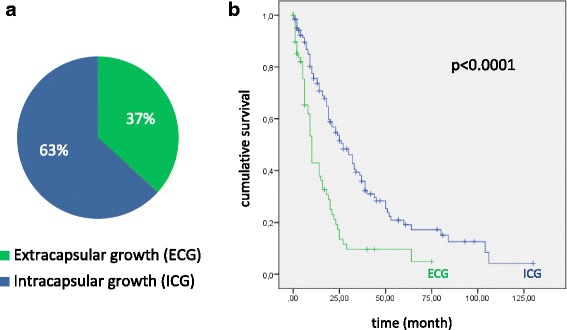
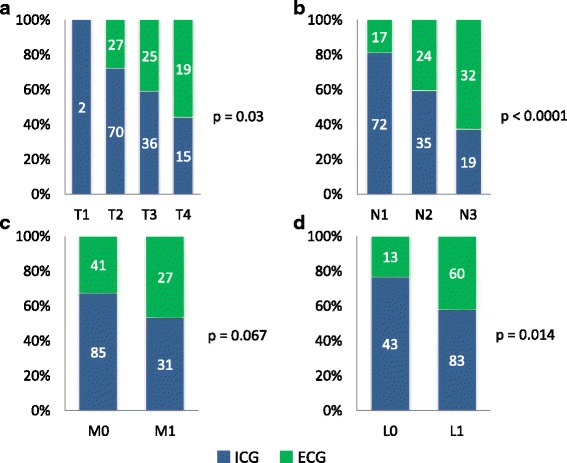
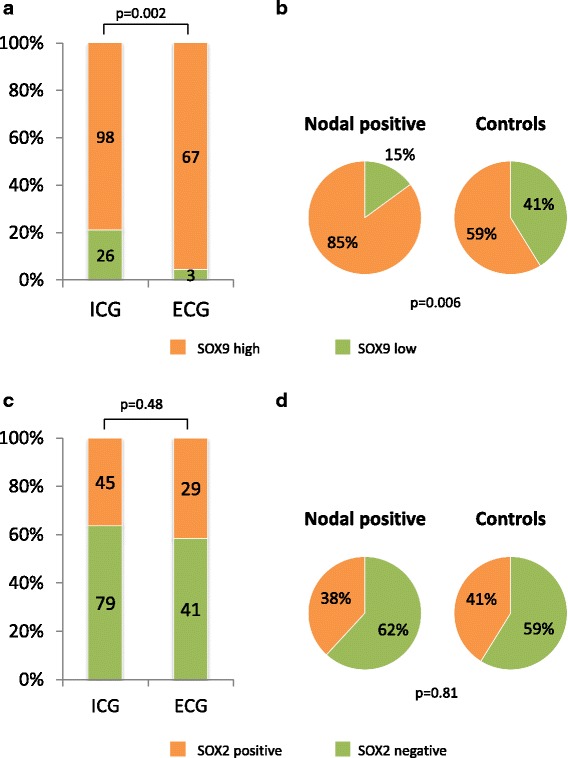
Results: Seventy-three patients (36.7%) showed ECG. ECG was associated with lower overall survival (p < 0.0001), advanced pT- (p = 0.03) and pN- category (p < 0.0001) and lymphovascular invasion (p = 0.014). In multivariate analysis, ECG was found to be an independent prognostic factor (HR = 2.1; 95% CI 1.7-3.4; p = 0.001). SOX9 expression correlated significantly with ECG (96% SOX9 high in ECG patients vs. 79% SOX9 high in patients with ICG; p = 0.002). Controls showed significantly reduced SOX9 expression compared to nodal positive carcinomas (59% vs. 85% high SOX9 expression; p = 0.006). No significant correlation of ECG and SOX2 (59% SOX2 negative in ECG patients vs. 64% in patients with ICG, p = 0.48) could be obtained.
Conclusions: Patients with ECG exhibit poorer prognosis and ECG was found to be an independent prognostic factor. Thus, ECG turns out to be a morphological biomarker for a more aggressive phenotype in gastric cancer. This is supported by the fact that ECG correlates with the expression of SOX9, which has been described in the context of pro-oncogenic properties of tumours. However, the fact that SOX2 failed to show significant results indicate that ECG is not associated with a distinct cancer stem cell phenotype in gastric cancer.
Keywords: ECG; Extranodal extension; Gastric cancer; Lymph node metastasis; Prognosis; SOX9.
Conflict of interest statement
Ethics approval and consent to participate
This study was carried out according to the recommendations of the ethics committee of the Medical Faculty of the Ludwig-Maximilians-University Munich, Germany. The current study has been performed in a retrospective manner in a cohort of patients diagnosed and treated according to national guidelines. In addition, the data sets as well as the specimens were irreversibly anonymized prior to inclusion in the study. Hence, under the circumstances aforementioned, neither a written consent nor a project specific approval by the ethic committee was necessary.
The study was performed according to the standards set in the declaration of Helsinki 1975. All researchers were blinded from patient data during experimental analysis.
Competing interests
J. Neumann is Associate Editor of BMC Cancer and thus member of the editorial board. All other authors have no potential competing interests and declare full transparency.
Publisher’s Note
Springer Nature remains neutral with regard to jurisdictional claims in published maps and institutional affiliations.
Figures

References
-
- Griebling TL, Ozkutlu D, See WA, Cohen MB. Prognostic implications of extracapsular extension of lymph node metastases in prostate cancer. Mod Pathol. 1997;10(8):804–809. - PubMed
MeSH terms
Substances
LinkOut - more resources
Full Text Sources
Other Literature Sources
Medical
Research Materials
