


The enigmatic seminal plasma: a proteomics insight from ejaculation to fertilization
- PMID: 29704899
- PMCID: PMC5923003
- DOI: 10.1186/s12958-018-0358-6
The enigmatic seminal plasma: a proteomics insight from ejaculation to fertilization
Abstract
Background: The 'omics' approach for a noninvasive diagnosis of male reproductive system disorders has gained momentum during the last decade, particularly from a screening and prognosis point of view. Due to the rapid development in assisted reproductive technologies (ART) over the years, the major focus of proteomic studies has been around the ejaculated spermatozoa. Although seminal plasma is not a requirement for ART, the question arose whether the role of seminal plasma is merely to transport spermatozoa.
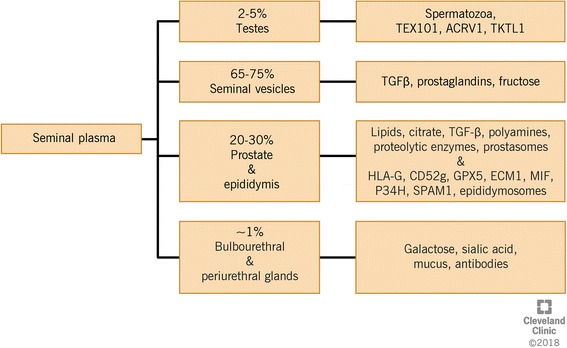
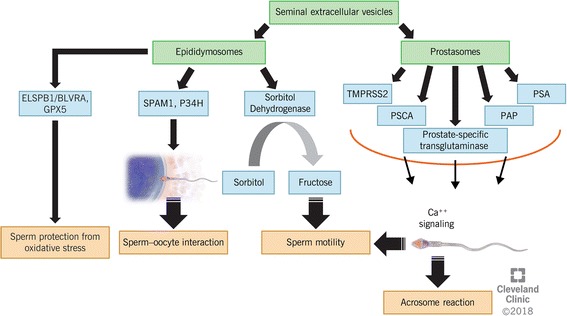
Main body: Seminal plasma (SP) contains a large diversity of proteins that are essential not only for sperm transport, but also for sperm protection and maturation. Most of the proteins bind to sperm surface through exosomes (epididymosomes and prostasomes), modulating sperm function, interaction with the female reproductive tract and finally fertilization. This review focuses on the state-of-art discoveries regarding SP proteome and its role in fertilization.
Conclusion: Tissue-specific proteins in the SP have emerged as fundamental contributors for protein biomarker discovery. This is important for a noninvasive diagnosis of male infertility and development of new therapeutic approaches. Moreover, ART success rates may be improved by taking into account the critical role of seminal proteome in fertilization.
Keywords: Assisted reproductive technologies; Cytokines; Epididymosomes; Exosomes; Female reproductive tract; Male infertility; Prostasomes; Proteomics; Seminal plasma.
Conflict of interest statement
Ethics approval and consent to participate
Not applicable.
Competing interests
The authors declare that they have no competing interests.
Publisher’s Note
Springer Nature remains neutral with regard to jurisdictional claims in published maps and institutional affiliations.
Figures
References
-
- Drake RR, White KY, Fuller TW, Igwe E, Clements MA, Nyalwidhe JO, Given RW, Lance RS, Semmes OJ. Clinical collection and protein properties of expressed prostatic secretions as a source for biomarkers of prostatic disease. J Proteome. 2009;72:907–917. doi: 10.1016/j.jprot.2009.01.007. - DOI - PMC - PubMed
Publication types
MeSH terms
Substances
Grants and funding
LinkOut - more resources
Full Text Sources
Other Literature Sources
