


Shared research priorities for pessary use in women with prolapse: results from a James Lind Alliance Priority Setting Partnership
- PMID: 29705767
- PMCID: PMC5931298
- DOI: 10.1136/bmjopen-2017-021276
Shared research priorities for pessary use in women with prolapse: results from a James Lind Alliance Priority Setting Partnership
Abstract
Objectives: To identify the shared priorities for future research of women affected by and clinicians involved with pessary use for the management of prolapse.
Design: A priority setting project using a consensus method.
Setting: A James Lind Alliance Pessary use for prolapse Priority Setting Partnership (JLA Pessary PSP) conducted from May 2016 to September 2017 in the UK.
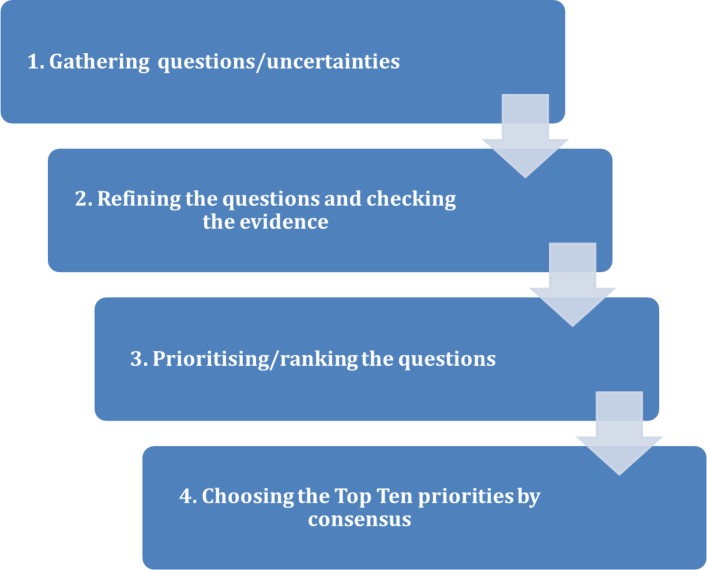
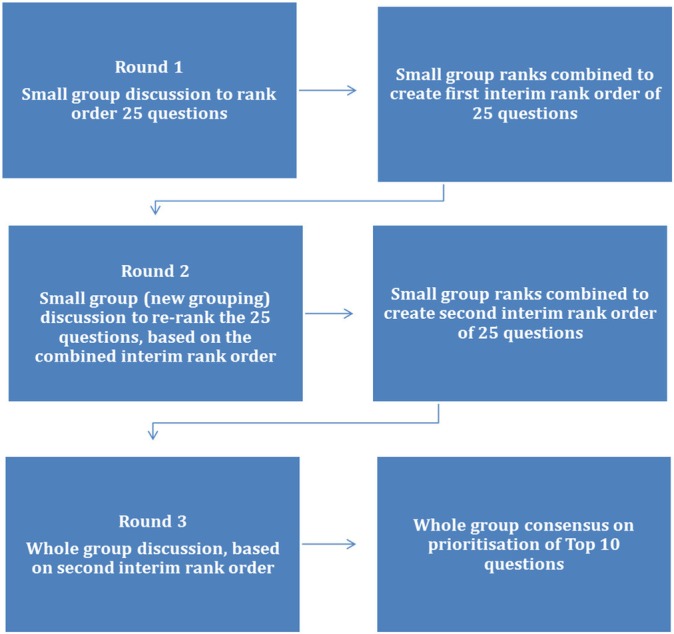
Participants: The PSP was run by a Steering Group of three women with experience of pessary use, three experienced clinicians involved with management of prolapse, two researchers with relevant experience, a JLA adviser and a PSP leader. Two surveys were conducted in 2016 and 2017. The first gathered questions about pessaries, and the second asked respondents to prioritise a list of questions. A final workshop was held on 8 September 2017 involving 10 women and 13 clinician representatives with prolapse and pessary experience.
Results: A top 10 list of priorities for future research in pessary use for prolapse was agreed by consensus.
Conclusions: Women with experience of pessary use and clinicians involved with prolapse management have worked together to determine shared priorities for future research. Aligning the top 10 results with existing research findings will highlight the gaps in current evidence and signpost future research to areas of priority. Effective dissemination of the results will enable research funding bodies to focus on gathering the evidence to answer the questions that matter most to those who will be affected.
Keywords: consensus; health priorities; pelvic organ prolapse; pessaries.
© Article author(s) (or their employer(s) unless otherwise stated in the text of the article) 2018. All rights reserved. No commercial use is permitted unless otherwise expressly granted.
Conflict of interest statement
Competing interests: None declared.
Figures
References
Publication types
MeSH terms
LinkOut - more resources
Full Text Sources
Other Literature Sources
Medical
Miscellaneous
