


COPD: time to improve its taxonomy?
- PMID: 29707563
- PMCID: PMC5912933
- DOI: 10.1183/23120541.00132-2017
COPD: time to improve its taxonomy?
Abstract
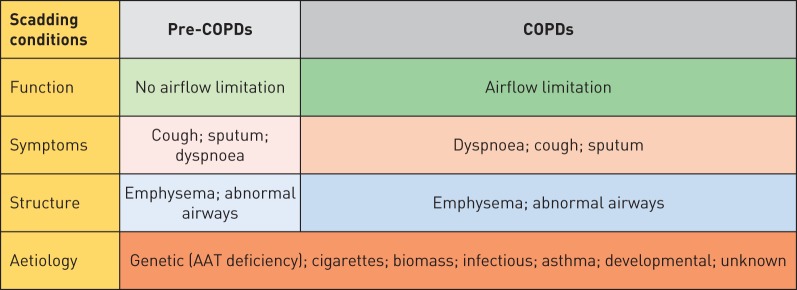
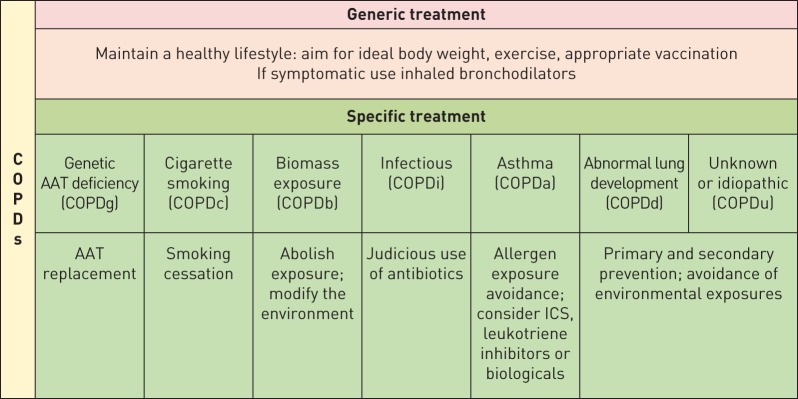
Due to well-conducted epidemiological studies and advances in genetics, molecular biology, translational research, the advent of computed tomography of the lungs and bioinformatics, the diagnosis of chronic obstructive pulmonary disease (COPD) as a single entity caused by susceptibility to cigarette smoke is no longer tenable. Furthermore, the once-accepted concept that COPD results from a rapid and progressive loss of lung function over time is not true for a sizeable proportion of adults with the disease. Now we know that some genetic predisposition and/or different environmental interactions (nutritional, infectious, pollution and immunological) may negatively modulate post-natal lung development and lead to poorly reversible airflow limitation later in life, consistent with COPD. We believe it is time to rethink the taxonomy of this disease based on the evidence at hand. To do so, we have followed the principles outlined in the 1980s by J.D. Scadding who proposed that diseases can be defined by four key characteristics: 1) clinical description (syndrome), 2) disorder of structure (morbid anatomy), 3) disorder of function (pathophysiology) and 4) causation (aetiology). Here, we propose a pragmatic approach to the taxonomy of COPD based on different processes that result in a similar syndromic presentation. It can accommodate changes over time, as the pathobiology that may lead to COPD expands. We hope that stakeholders in the field may find it useful to better define the patients now boxed into one single entity, so that specific studies can be designed and conducted for each type of COPDs.
Conflict of interest statement
Conflict of interest: Disclosures can be found alongside this article at openres.ersjournals.com. Both authors are members of the Board of Directors of the Global Initiative for Chronic Obstructive Lung Disease (GOLD), but the opinions and proposals presented in this manuscript are their own and not necessarily those of GOLD.
Figures
References
-
- Global Initiative for Chronic Obstructive Lung Disease Global Strategy for the Diagnosis, Management, and Prevention of Chronic Obstructive Pulmonary Disease. 2017. http://goldcopd.org/gold-2017-global-strategy-diagnosis-management-preve... Date last accessed: November 16, 2016.
-
- Agusti A, Bel E, Thomas M, et al. Treatable traits: toward precision medicine of airway diseases. Eur Respir J 2016; 47: 410–419. - PubMed
LinkOut - more resources
Full Text Sources
Other Literature Sources