Review
. 2018 May 9;118(9):4834-4885.
doi: 10.1021/acs.chemrev.7b00763. Epub 2018 Apr 30.

Tetramethylpiperidine N-Oxyl (TEMPO), Phthalimide N-Oxyl (PINO), and Related N-Oxyl Species: Electrochemical Properties and Their Use in Electrocatalytic Reactions

Affiliations
Review

Tetramethylpiperidine N-Oxyl (TEMPO), Phthalimide N-Oxyl (PINO), and Related N-Oxyl Species: Electrochemical Properties and Their Use in Electrocatalytic Reactions

Jordan E Nutting et al. Chem Rev. .

Abstract

N-Oxyl compounds represent a diverse group of reagents that find widespread use as catalysts for the selective oxidation of organic molecules in both laboratory and industrial applications. While turnover of N-oxyl catalysts in oxidation reactions may be accomplished with a variety of stoichiometric oxidants, N-oxyl reagents have also been extensively used as catalysts under electrochemical conditions in the absence of chemical oxidants. Several classes of N-oxyl compounds undergo facile redox reactions at electrode surfaces, enabling them to mediate a wide range of electrosynthetic reactions. Electrochemical studies also provide insights into the structural properties and mechanisms of chemical and electrochemical catalysis by N-oxyl compounds. This review provides a comprehensive survey of the electrochemical properties and electrocatalytic applications of aminoxyls, imidoxyls, and related reagents, of which the two prototypical and widely used examples are 2,2,6,6-tetramethylpiperidine N-oxyl (TEMPO) and phthalimide N-oxyl (PINO).


Conflict of interest statement

The authors declare no competing financial interest.

Figures
Scheme 1.
Scheme 1.
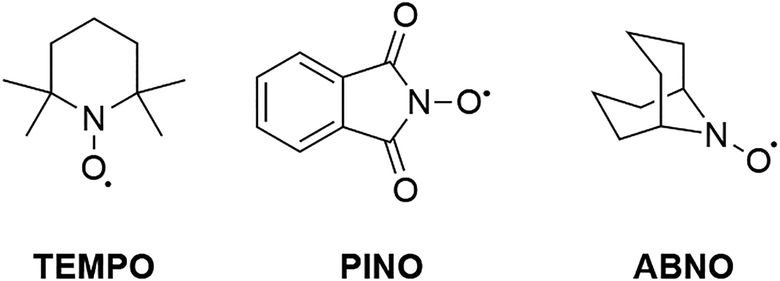
Structures of TEMPO, PINO, and ABNO.
Scheme 2.
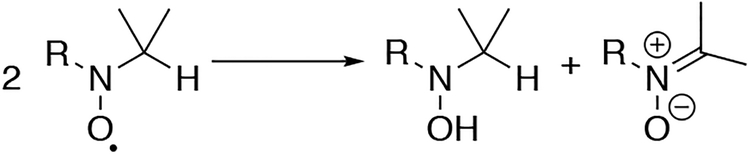
Scheme 2.
Disproportionation of aminoxyl radicals with α-protons.
Scheme 3.
Scheme 3.
Simplified redox chemistry of aminoxyl radicals.
Scheme 4.
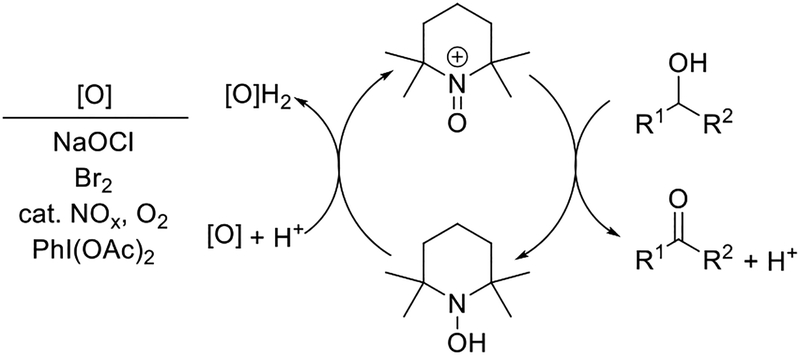
Scheme 4.
Alcohol oxidation methods employing aminoxyl (pre)catalysts.
Scheme 5.
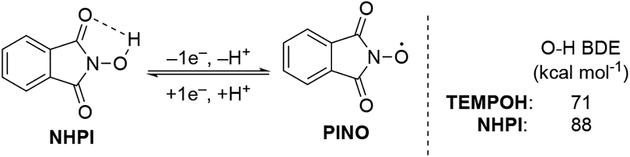
Scheme 5.
Redox reaction of N-hydroxyphthalimide (NHPI) and PINO and the O–H bond strengths of TEMPOH and NHPI.
Scheme 6.
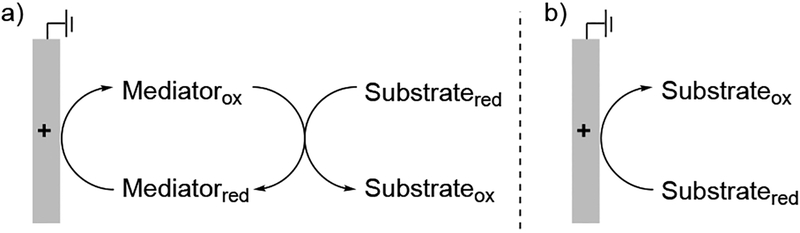
Scheme 6.
a) Mediated electrooxidation of organic substrates, and b) direct electrooxidation of an organic substrate at an anode surface.
Scheme 7.
Scheme 7.
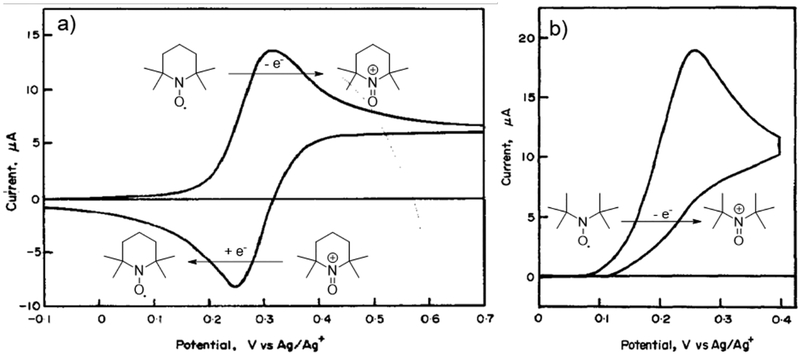
CV of (a) TEMPO and (b) DTBO. Analyses conducted with 5 mM aminoxyl radical in 0.5 M LiClO4 in acetonitrile (CH3CN) at a platinum electrode. Scan rate = 92 mV s−1. Aminoxyl redox reactions have been added for clarity. Adapted with permission from ref. . Copyright 1973 Elsevier.
Scheme 8.
Scheme 8.
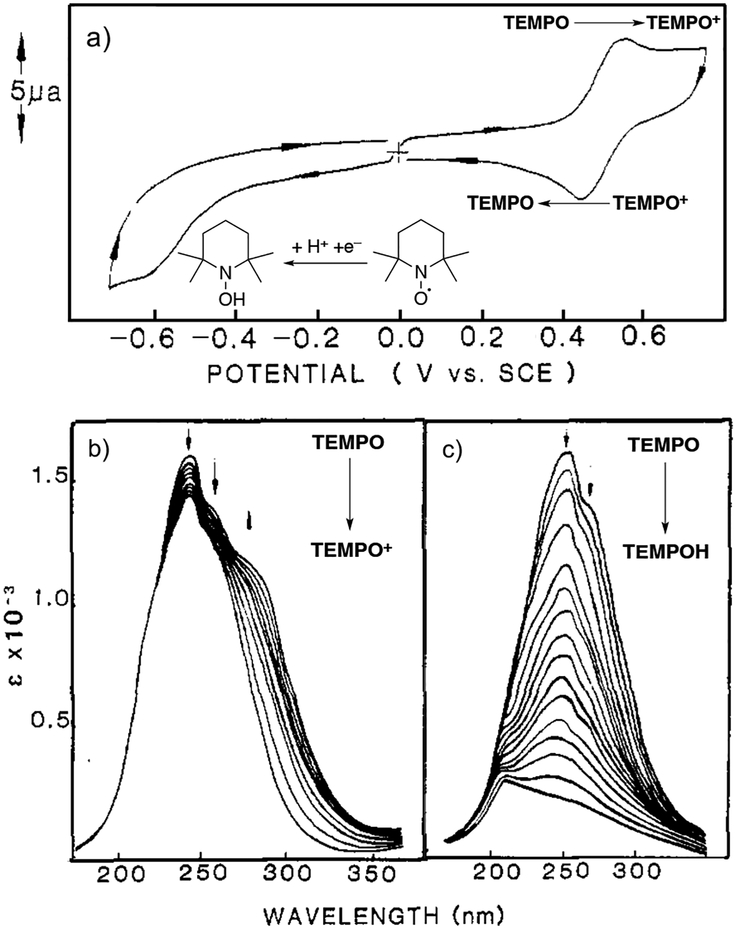
a) CV of TEMPO revealing the generation of TEMPOH and electronic absorption spectra of TEMPO recorded during (b) electrooxidation and (c) electroreduction. Potentials of +0.65 V and −0.80 V vs. SCE were applied for oxidation and reduction, respectively. Redox reactions have been added for clarity. Analyses conducted in an aqueous solution of NEt4ClO4 (0.08 M). Adapted with permission from ref. . Copyright 1988 American Chemical Society.
Scheme 9.
Scheme 9.
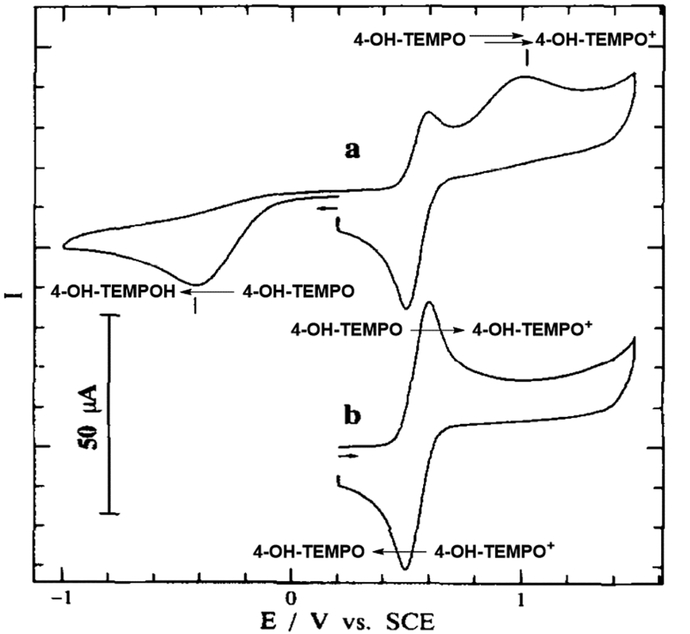
CVs of 4-OH-TEMPO (2.40 mM) with a (a) cathodic potential sweep prior to the anodic sweep, and (b) anodic sweep starting at 0.2 V. Redox reactions have been added for clarity. Analyses conducted in pH 4.3 Robinson buffer. Adapted with permission from ref. . Copyright 1995 Elsevier.
Scheme 10.
Scheme 10.
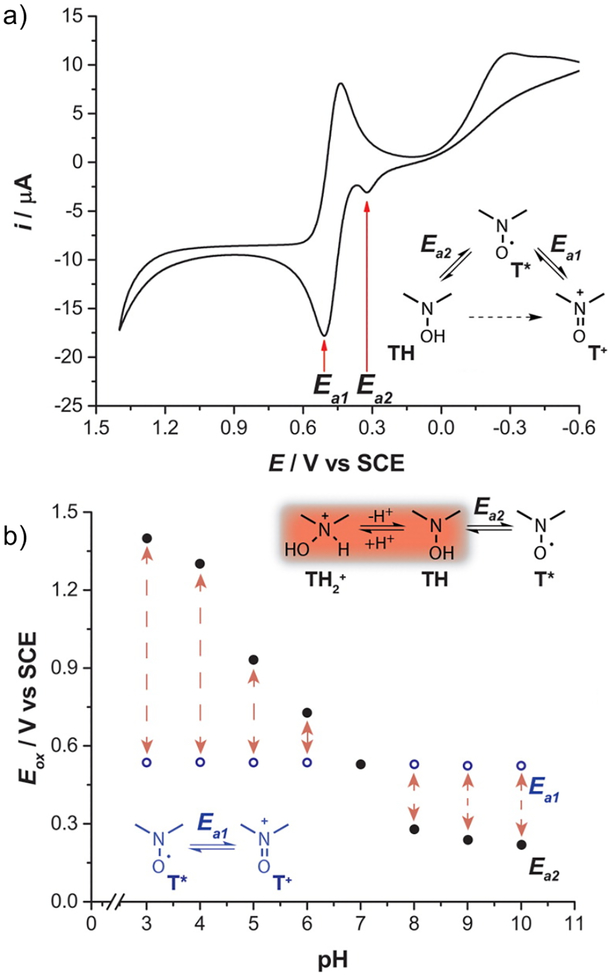
a) Representative CV of an aminoxyl radical highlighting the anodic peak potentials Ea1 and Ea2. b) Comparison of the oxidation potentials for the (○) TEMPO/TEMPO+ and (●) TEMPO/TEMPOH redox couples at varying pH. Reprinted with permission from ref. . Copyright 2015 American Chemical Society.
Scheme 11.
Scheme 11.
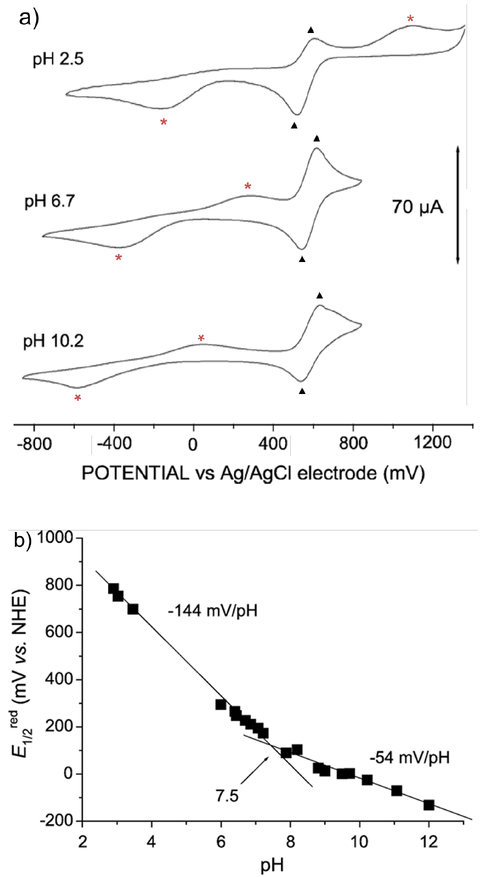
a) CVs of 4-OH-TEMPO (4.6 mM) in aqueous phosphate buffer. Labels for the (*) 4-OH-TEMPOH/4-OH-TEMPO and (▲) 4-OH-TEMPO/4-OH-TEMPO+ redox couples have been added for clarity. Scan rate = 100 mV s−1. b) Changing E1/2 as a function of pH for TEMPO (4.6 mM) in aqueous phosphate buffer. Adapted with permission from ref. . Copyright 2009 John Wiley & Sons, Ltd.
Scheme 12.
Scheme 12.
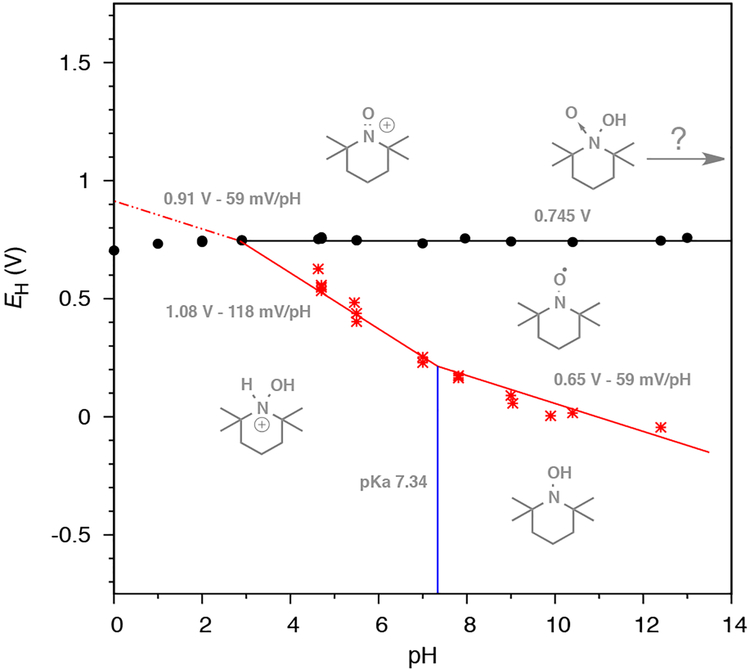
Pourbaix diagram of TEMPO under buffered aqueous solutions. The hydroxylammonium pKa values shown were determined by NMR. Line fits have been constrained to have slopes corresponding to 0, 1, or 2 H+/e, and to intersect at points. Black circles and lines correspond to oxoammonium reduction to the nitroxyl, red stars and solid lines correspond to aminoxyl reduction, and the dashed red line corresponds to the theoretical 2 e/2 H+ oxidation of hydroxylammonium to oxoammonium. EH denotes redox potential referenced to NHE. Reprinted with permission from ref. . Copyright 2018 American Chemical Society.
Scheme 13.
Scheme 13.
Disproportionation-comproportionation equilibrium of TEMPO and TEMPOH2+/TEMPO+ under acidic conditions.
Scheme 14.
Scheme 14.
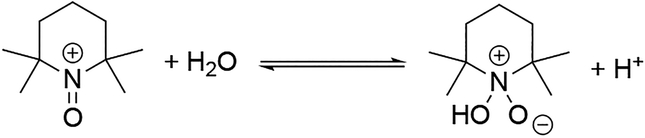
Adduct formation of TEMPO+ with hydroxide ion.
Scheme 15.
Scheme 15.
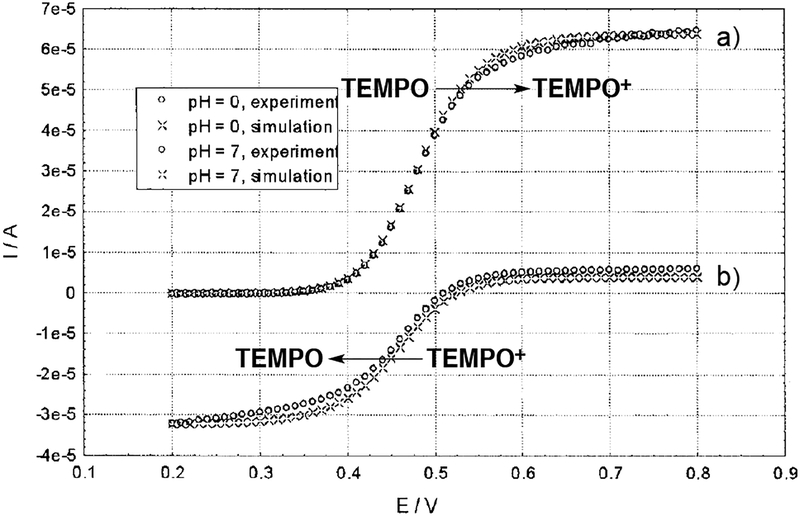
Digitally simulated and experimental steady-state voltammograms using RDE in aqueous solution under (a) neutral and (b) acidic conditions. Experimental data for 1 mM TEMPO in (a) 1 M NaClO4 (pH 7) and (b) 1 M HClO4 (pH 0). Redox reactions have been added for clarity. Adapted with permission from ref. . Copyright 2004 WILEY-VCH Verlag GmbH&Co. KGaA.
Scheme 16.
Scheme 16.
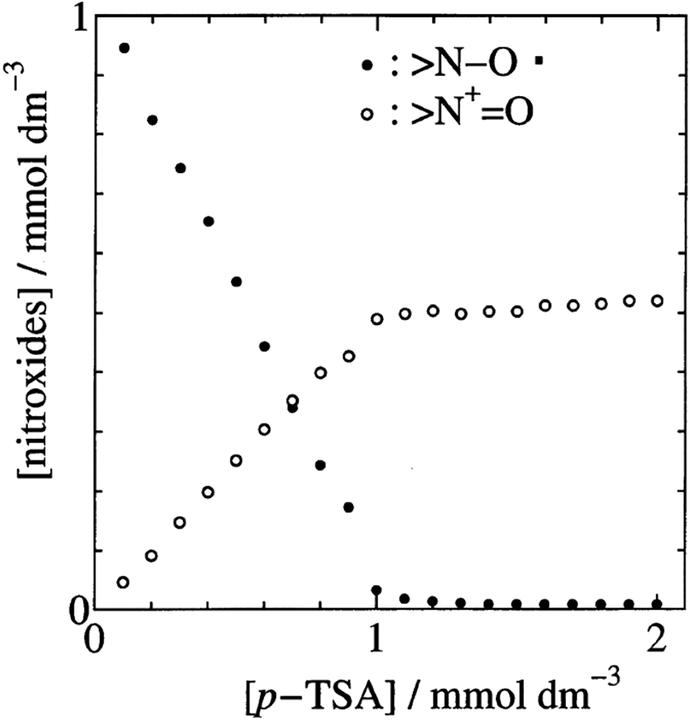
Concentration profile of (●) TEMPO and (○) TEMPO+ obtained from limiting currents as a function of the concentration of p-TSA in CH3CN containing 0.2 M NaClO4. Reprinted with permission from ref. . Copyright 2003 Elsevier.
Scheme 17.
Scheme 17.
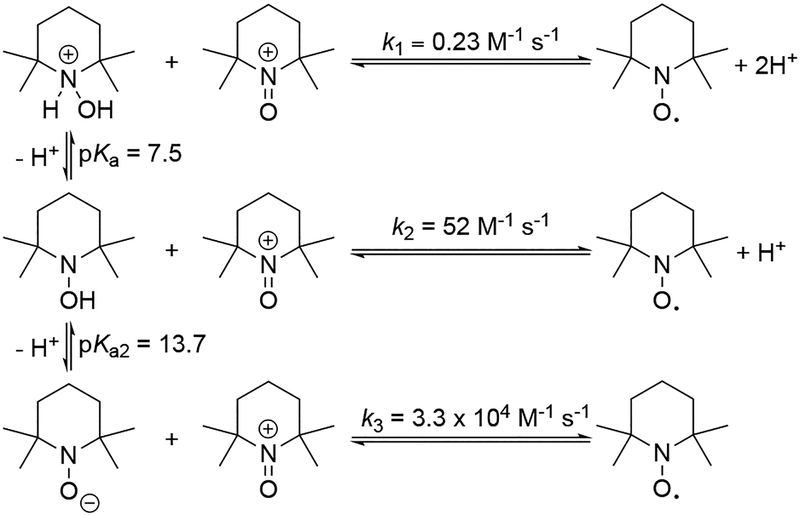
The acid-base equilibria of TEMPOH and the rate constants of the comproportionation reaction for the different forms of TEMPOH with TEMPO+.
Scheme 18.
Scheme 18.
Reversible CVs, at different scan rates, of the TEMPOH/TEMPO redox couple at the surface of a mercury drop electrode. Redox reactions have been added for clarity. Adapted with permission from ref. . Copyright 2002 Japan Society for Analytical Chemistry.
Scheme 19.
Scheme 19.
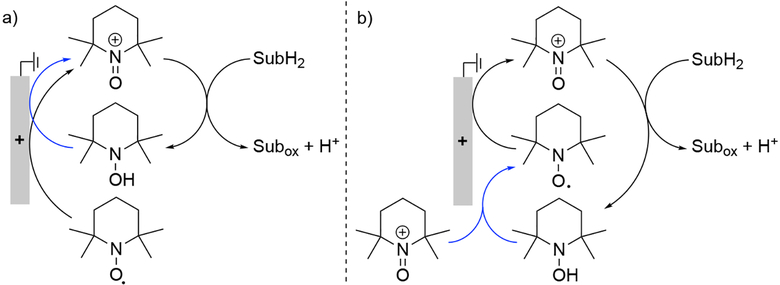
Possible mechanisms for regeneration of TEMPO+ in electrocatalytic reactions, a) direct electron transfer and b) comproportionation.
Scheme 20.
Scheme 20.
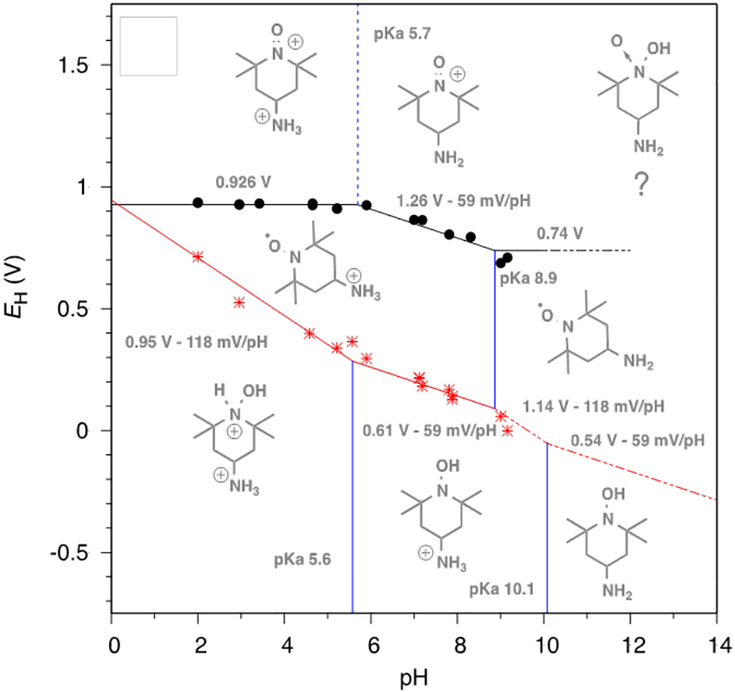
The Pourbaix diagram of 4-NH2-TEMPO under buffered aqueous conditions. Line fits have been constrained to have slopes corresponding to 0, 1, or 2 H+/e, and to intersect at points. Black circles and lines correspond to oxoammonium reduction, red stars and lines correspond to aminoxyl reduction. Dashed red lines are redox potentials inferred from spectroscopic pKa data. Blue solid lines correspond to pKa values measured by NMR, blue dashed line corresponds to pKa value inferred by voltammetric data. EH denotes redox potential referenced to NHE. Reprinted with permission from ref. . Copyright 2018 American Chemical Society.
Scheme 21.
Scheme 21.
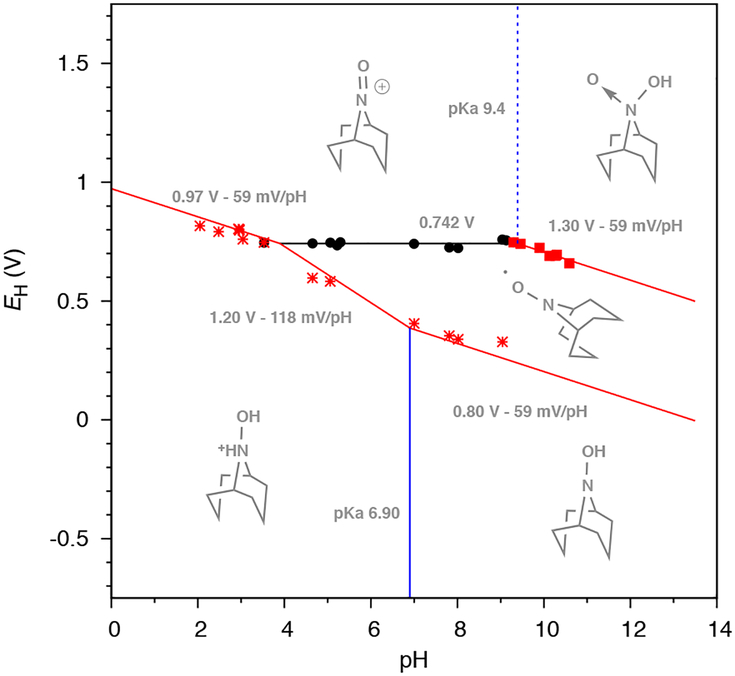
The Pourbaix diagram of ABNO under buffered aqueous conditions. Line fits have been constrained to have slopes corresponding to 0, 1, or 2 H+/e, and to intersect at points. Black circles and lines correspond to aminoxyl oxidation, red squares correspond to aminoxyl oxidation to hydroxylamine N-oxide, and red stars correspond to hydroxylamine or hydroxylammonium oxidation. Blue solid line corresponds to pKa measured by NMR, blue dashed line corresponds to pKa value inferred by voltammetric data. EH denotes redox potential referenced to NHE. Reprinted with permission from ref. . Copyright 2018 American Chemical Society.
Scheme 22.
Scheme 22.
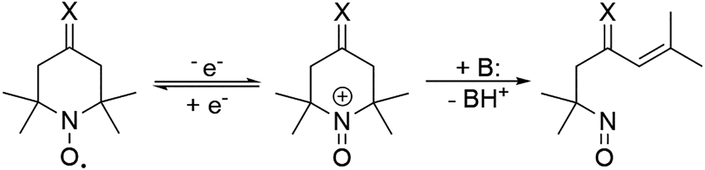
Suggested degradation pathway of electron-deficient oxoammonium ion under basic conditions.
Scheme 23.
Scheme 23.
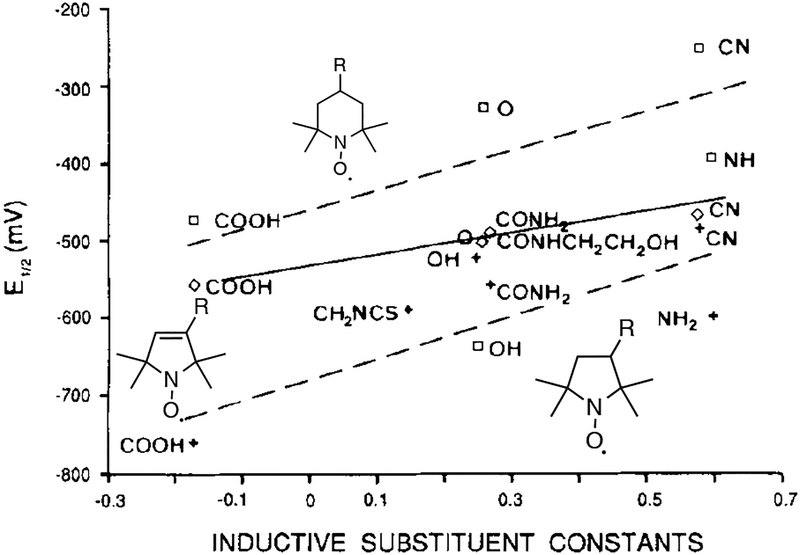
Correlation of inductive constants and half-wave potentials of different hydroxylamine/aminoxyl radicals couples for (☐) piperidine structures, (+) pyrrolidine structures, (◊) pyrroline structures. Analyses were conducted in pH 7.2–7.4 phosphate buffer at a Hg drop electrode. Adapted with permission from ref. . Copyright 1991 Elsevier.
Scheme 24.
Scheme 24.
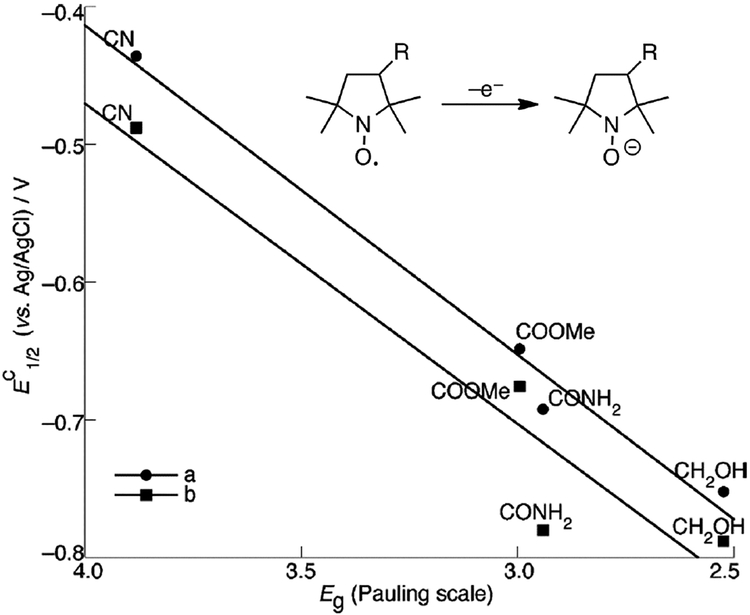
Correlation between the Pauling group electronegativity (Eg) of substituents vs. redox potentials (E1/2) for the five-membered ring hydroxylamine/aminoxyl radicals in (a) MeOH (0.1 M Bu4NClO4) and (b) phosphate buffer (0.1 M, pH 7.4). The general structure of the aminoxyl radicals and the corresponding electron transfer reaction have been added. Adapted with permission from ref. . Copyright 2007 Royal Society of Chemistry.
Scheme 25.
Scheme 25.
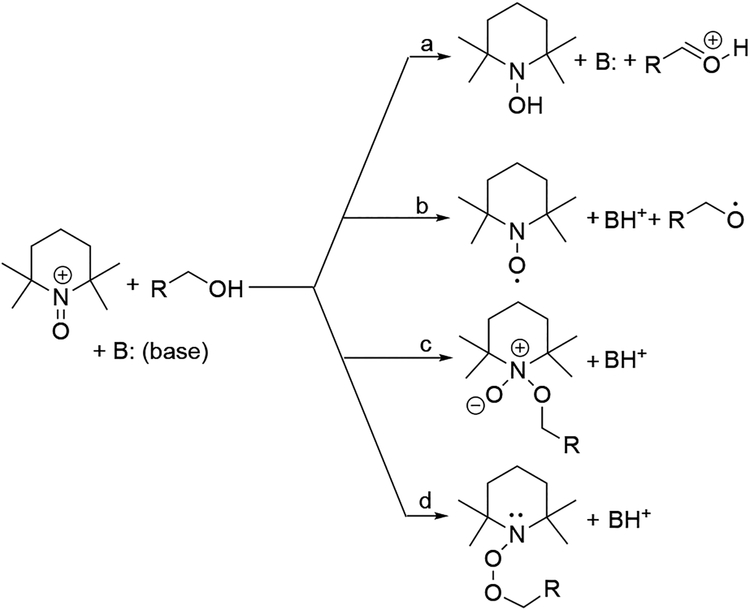
Proposed mechanistic paths for the TEMPO+-mediated oxidation of alcohols in the presence of base.
Scheme 26.
Scheme 26.
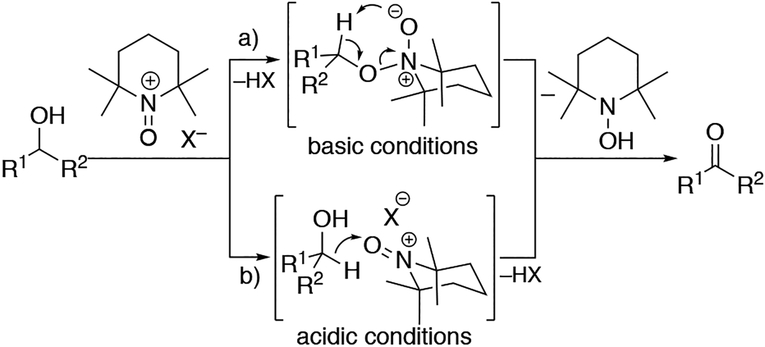
Rationale for the pH-dependent change in the mechanism and reaction selectivity in the reaction of TEMPO+ and alcohols under a) basic and b) acidic conditions.
Scheme 27.
Scheme 27.
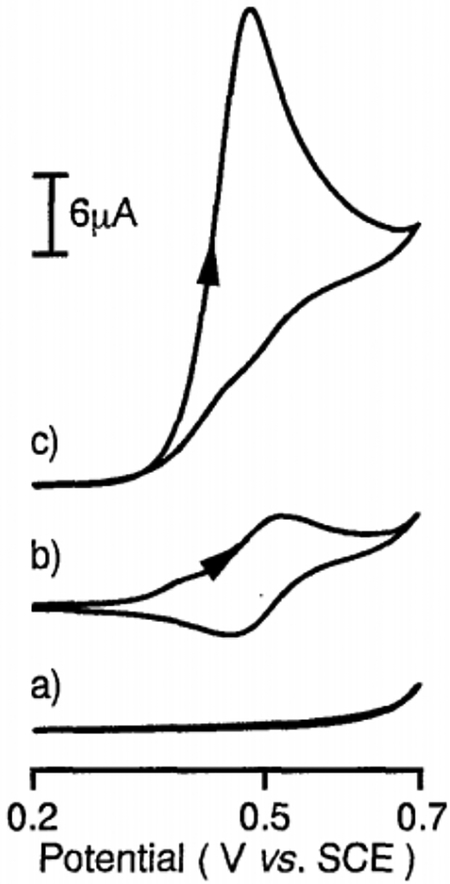
CVs of (a) blank electrolyte solution, (b) TEMPO, (c) TEMPO in the presence of 1-pentanol. Analyses conducted with 1 mM TEMPO, 1 mM 1-pentanol in aqueous solution of 150 mM NaOH at a glassy carbon electrode at 10 mV s−1. Adapted with permission from ref. . Copyright 1996 The Pharmaceutical Society of Japan.
Scheme 28.
Scheme 28.
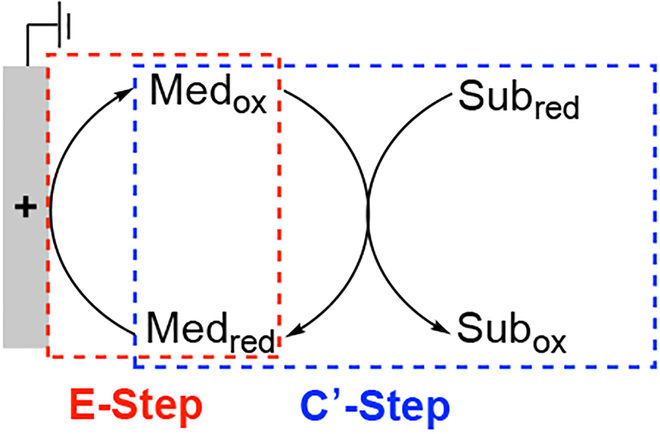
Generalized EC’ mechanism
Scheme 29.
Scheme 29.
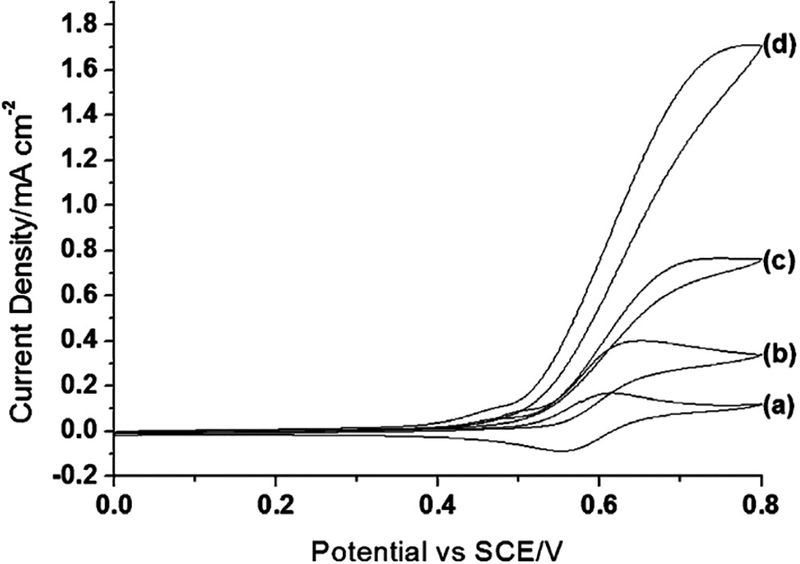
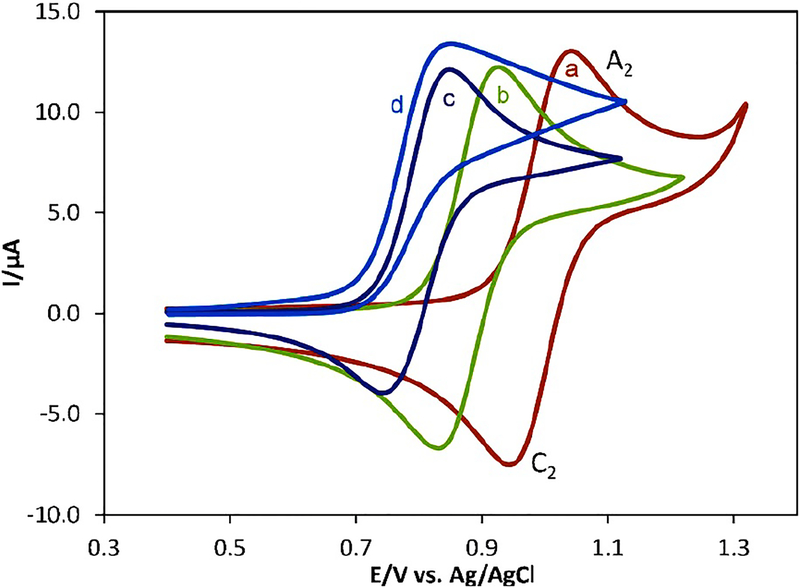
a) CV of 2 mM TEMPO at pH 9.3. CVs of 2 mM TEMPO in the presence of 16 mM benzyl alcohol at b) pH 9.3, c) pH 10.6, d) pH 11.5. Scan rate = 50 mV s−1. Adapted with permission from ref. . Copyright 2013 Elsevier.
Scheme 30.
Scheme 30.
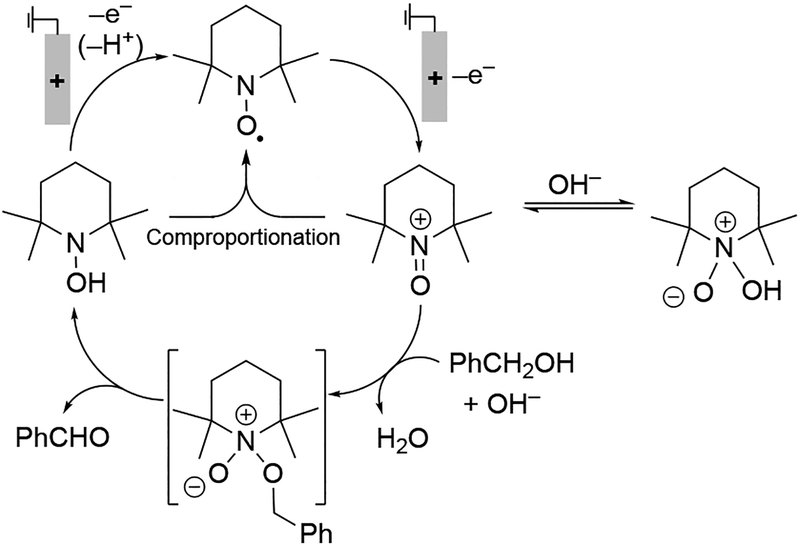
Mechanism of TEMPO catalyzed electrochemical oxidation of benzyl alcohol.
Scheme 31.
Scheme 31.
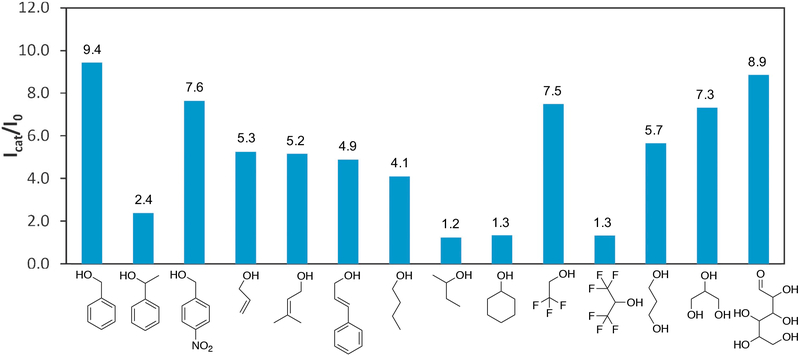
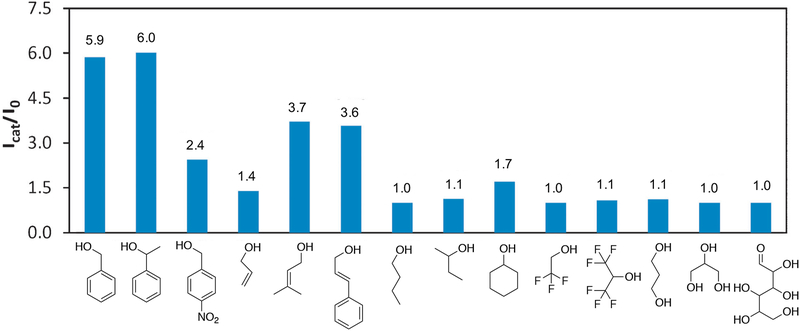
Ratio of the anodic-peak current of the TEMPO/TEMPO+ redox couple in the presence of alcohol substrates (icat) compared to the current in the absence of alcohols (io). Analyses conducted with 1 mM TEMPO, 10 mM alcohol in a pH 9.6 aqueous buffer solution at glassy carbon electrode. Reprinted with permission from ref. . Copyright 2014 John Wiley and Sons.
Scheme 32.
Scheme 32.
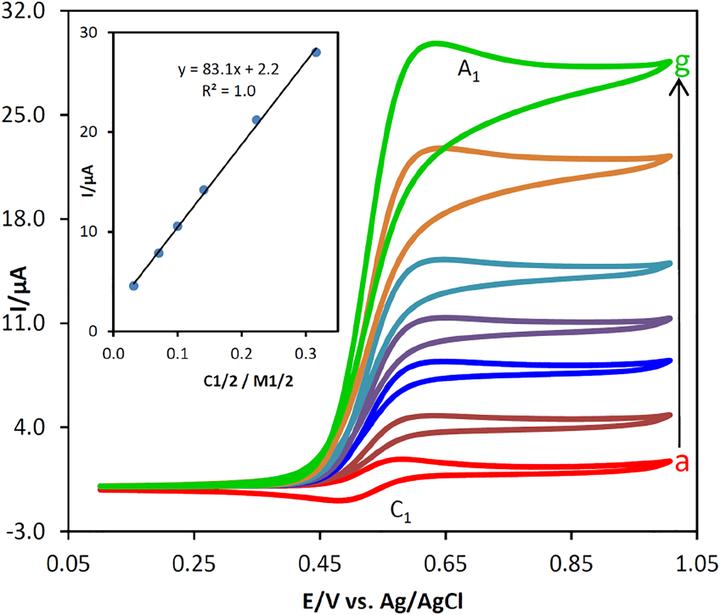
CVs of 1.0 mM TEMPO in the presence of various concentrations of benzyl alcohol at pH 9.6. The concentrations of benzyl alcohol are [increasing from (a) to (g)]: 0.0, 1.0, 5.0, 10.0, 20, 50.0 and 100 mM, and scan rate = 20 mV s−1. The inset shows the linear dependence of the anodic peak current on the square root of the alcohol concentration. Reprinted with permission from ref. . Copyright 2014 John Wiley and Sons.
Scheme 33.
Scheme 33.
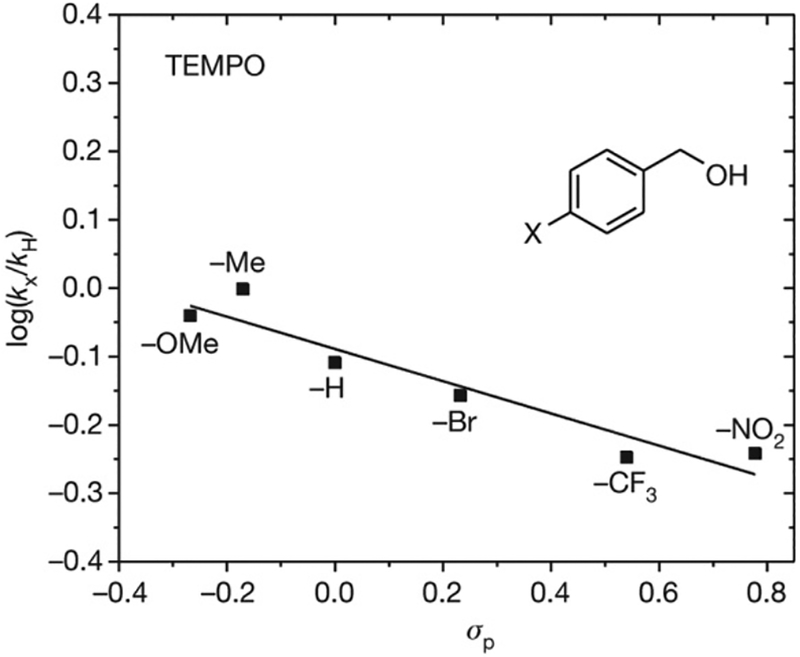
Electronic effects on the TEMPO-catalyzed electrochemical oxidation of benzyl alcohol derivatives. Analyses were conducted with 100 mM alcohol in 0.1 M Bu4NClO4 in CH3CN with 1 mM TEMPO and 450 mM N-methylimidazole. Reprinted with permission from ref. . Copyright 2016 Nature Publishing Group.
Scheme 34.
Scheme 34.
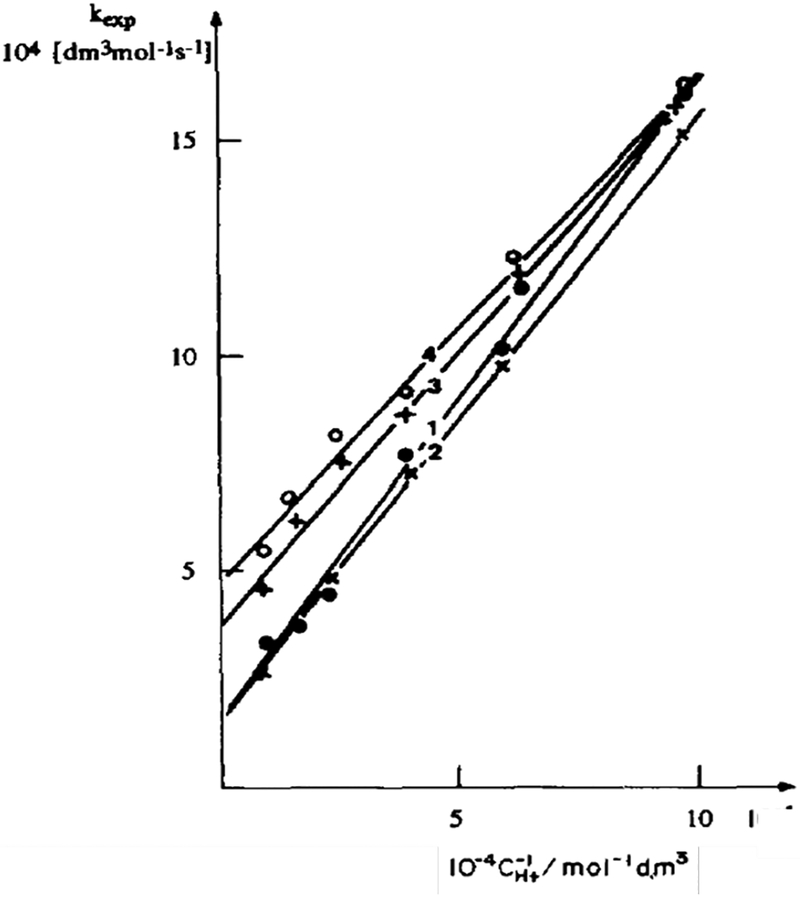
Rate constant of alcohol oxidation by 4-OH-TEMPO as a function of 1/[H+] for (●) propan-1-ol, (x) butan-1-ol, (+) propan-2-ol, and (○) butan-2-ol. Adapted with permission from ref. . Copyright 1995 Elsevier.
Scheme 35.
Scheme 35.
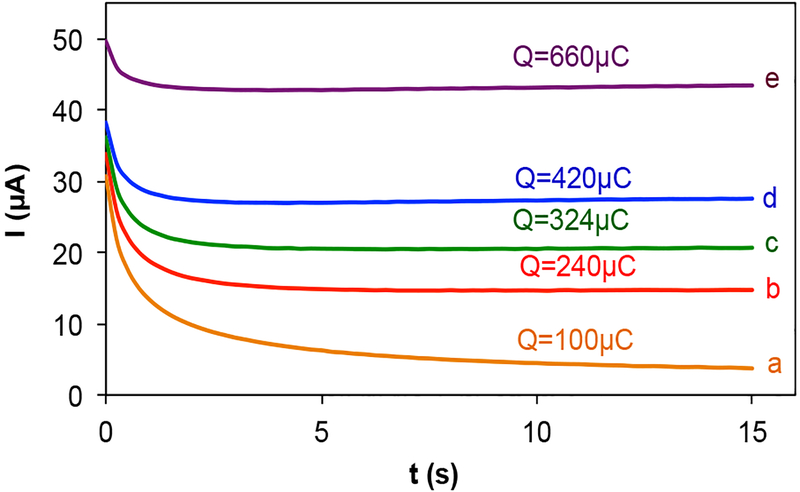
Chronoamperograms of ABNO (1 mM) in the (a) absence and presence of 1-butanol at (b) 5 mM, (c)10 mM, (d) 20 mM and (e) 50 mM concentrations in HCO3/CO32− electrolyte (pH 10), applied potential 0.7 V vs. Ag/AgCl. Reprinted with permission from ref. . Copyright 2015 American Chemical Society.
Scheme 36.
Scheme 36.
Linear-free-energy correlations for aminoxyl-catalyzed oxidation of 1-butanol with NaOCl as a chemical oxidant (blue triangles) and under electrochemical conditions (red squares). Reprinted with permission from ref. . Copyright 2015 American Chemical Society.
Scheme 37.
Scheme 37.
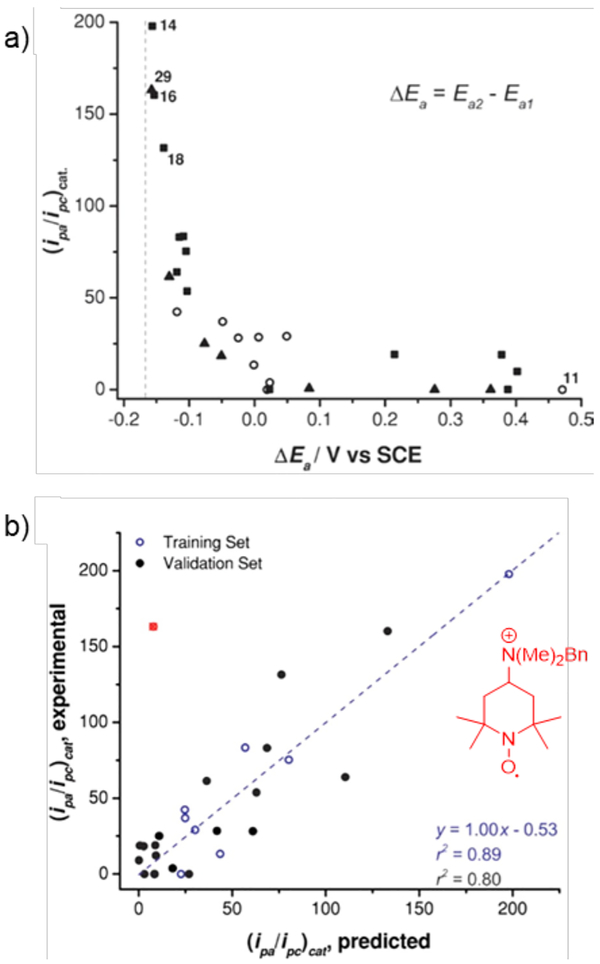
a) Plot demonstrating the asymptotic inverse relationship between ΔEa and (ipa/ipc)cat values for (○) 4-substituted and (▲) 4N-substituted TEMPO derivatives and (■) polycyclic species. b) Plot of the computationally predicted values of (ipa/ipc)cat versus the corresponding experimental values of the (○) training set, (●) the validation set, and (■) an outlier. Predicted values for (ipa/ipc)cat were determined from computed values of Ea1 and Ea2 performed using B3LYP/6–31+G(d,p) level of theory with a CPCM solvation model. All experimental values were measured at pH 7. Adapted with permission from ref. . Copyright 2015 American Chemical Society.
Scheme 38.
Scheme 38.
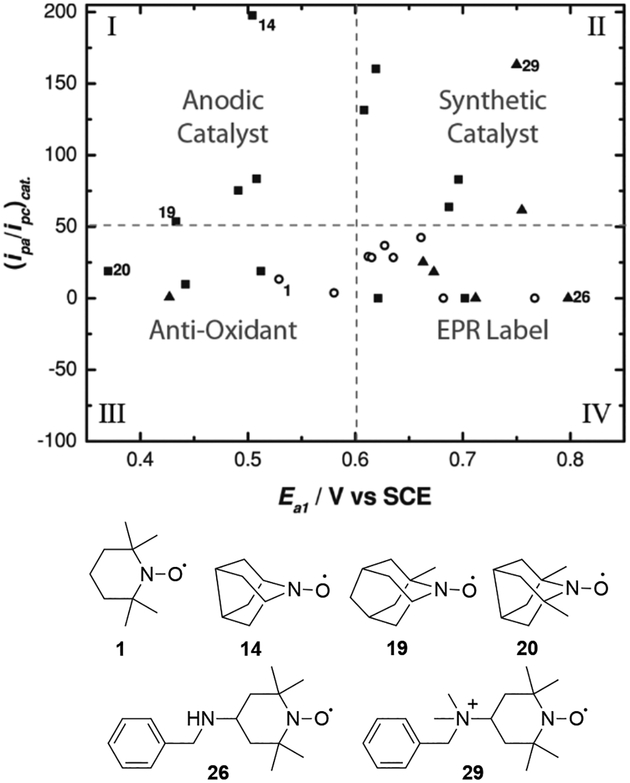
Plot of the aminoxyl/oxoammonium oxidation potential versus catalytic activity towards glycerol oxidation. (○) 4-Substituted TEMPO derivatives, (▲) 4N-substituted TEMPO derivatives, and (■) polycyclic species are represented by different shapes. Representative examples of the aminoxyl radicals in each quadrant are shown below. Adapted with permission from ref. . Copyright 2015 American Chemical Society.
Scheme 39.
Scheme 39.
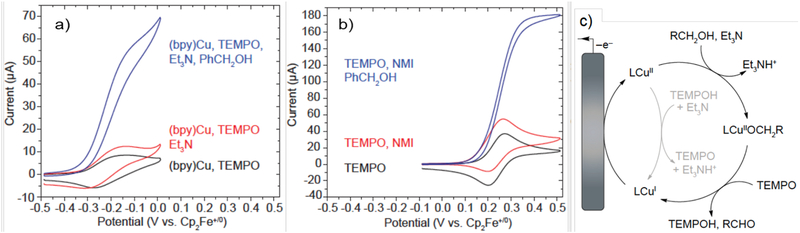
a) CVs of 100 mM benzyl alcohol in the presence of 5 mM TEMPO, 1 mM CuIOTf, 1 mM 2,2’-bipyridine (bpy), and 40 mM triethylamine (NEt3) and b) CVs of 100 mM benzyl alcohol in the presence of 1 mM TEMPO and 450 mM N-methyl imidazole. c) Proposed mechanism of cooperative alcohol electrooxidation. Reprinted with permission from ref. . Copyright 2016 Nature Publishing Group.
Scheme 40.
Scheme 40.
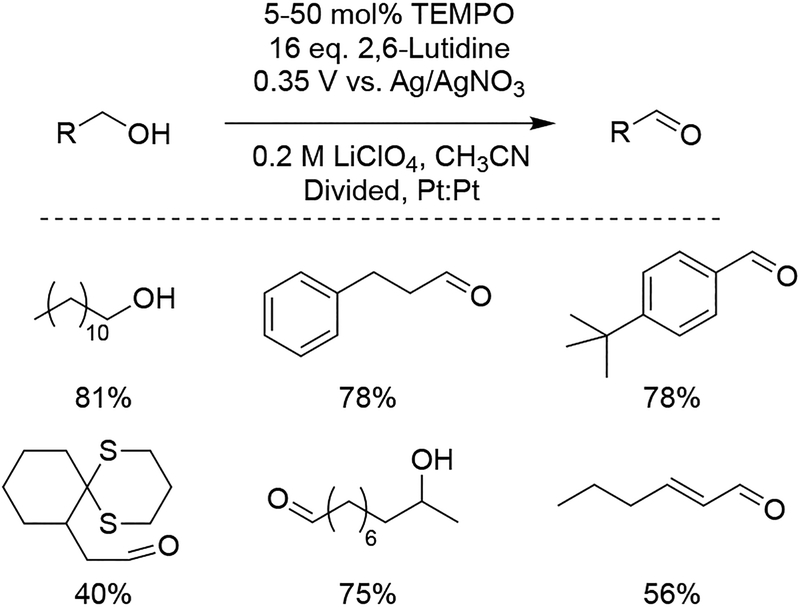
Electrochemical oxidation of aliphatic alcohols with catalytic amounts of TEMPO.
Scheme 41.
Scheme 41.
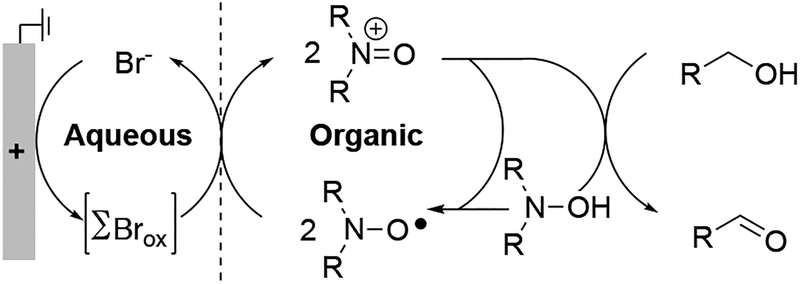
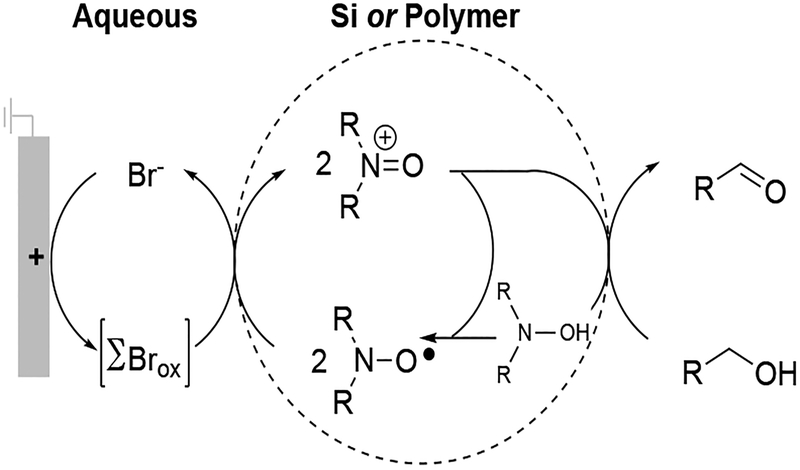
Bromide/aminoxyl double mediatory process for electrochemical alcohol oxidation where ΣBrox denotes possible bromide electrooxidation products.
Scheme 42.
Scheme 42.
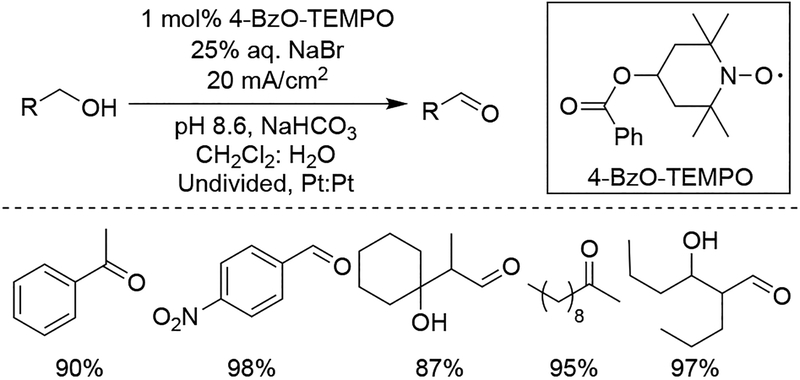
Double mediatory electrochemical oxidation of aliphatic alcohols.
Scheme 43.
Scheme 43.
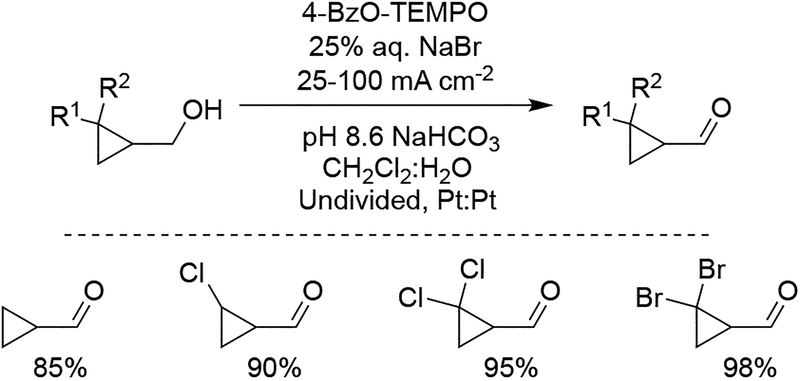
Electrochemical oxidation of cyclopropylcarbinols.
Scheme 44.
Scheme 44.
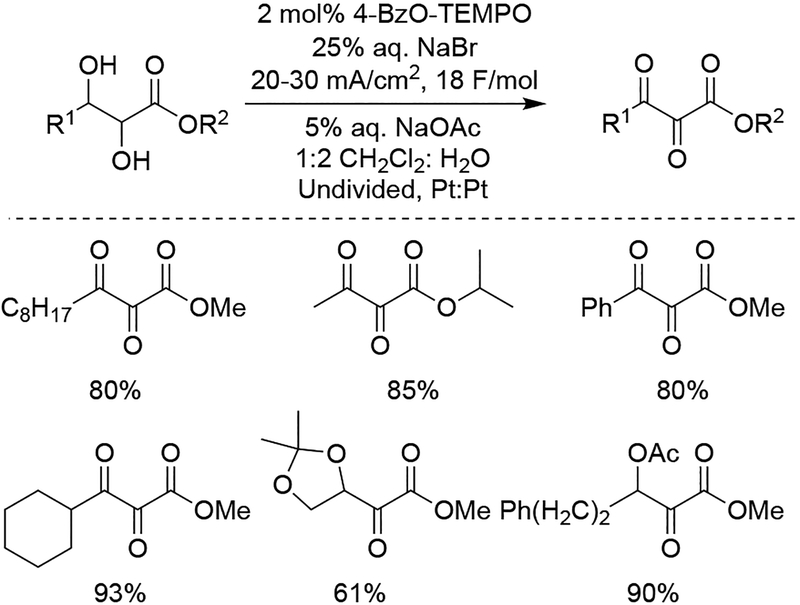
Double mediatory electrochemical oxidation of dihydroxyalkanoates.
Scheme 45.
Scheme 45.
Oxidation of 6β-methyl-3β,5α-dihydroxy-16α,17α-cyclohexanopregnan-20-one 4.
Scheme 46.
Scheme 46.
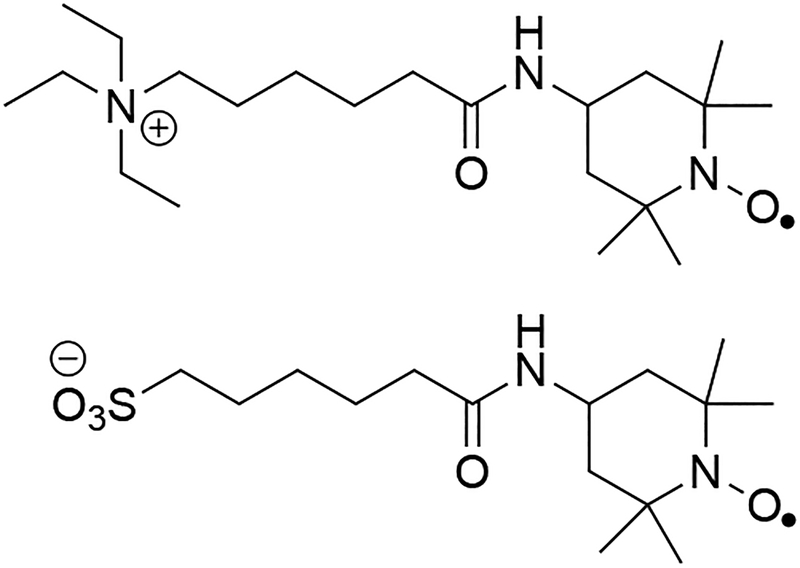
Cationic and anionic water-soluble TEMPO-derivatives employed by Tanaka.
Scheme 47.
Scheme 47.
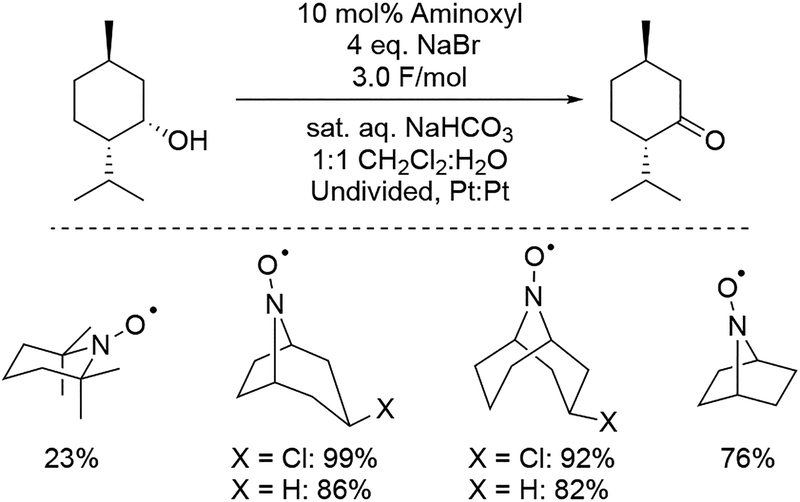
Electrooxidation of menthol catalyzed by aminoxyl radicals.
Scheme 48.
Scheme 48.
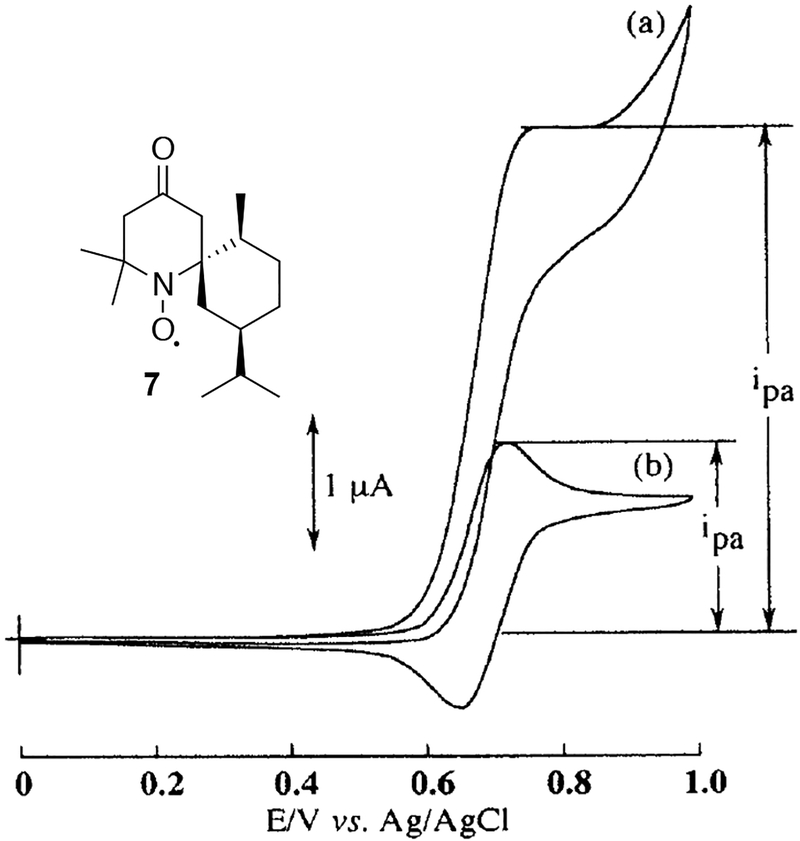
CVs of 7 in the presence of (a) (R)-1-phenylethanol and (b) (S)-1-phenylethanol. Adapted with permission from ref.. Copyright 1999 The Pharmaceutical Society of Japan.
Scheme 49.
Scheme 49.
Oxidative kinetic resolution of racemic sec-benzylic alcohols by 8.
Scheme 50.
Scheme 50.
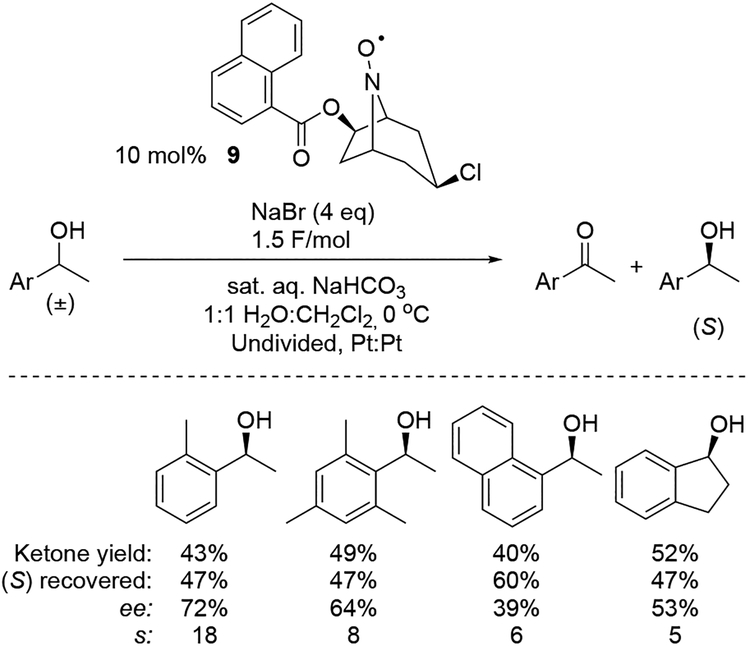
Oxidative kinetic resolution of racemic sec-benzylic alcohols by 9.
Scheme 51.
Scheme 51.
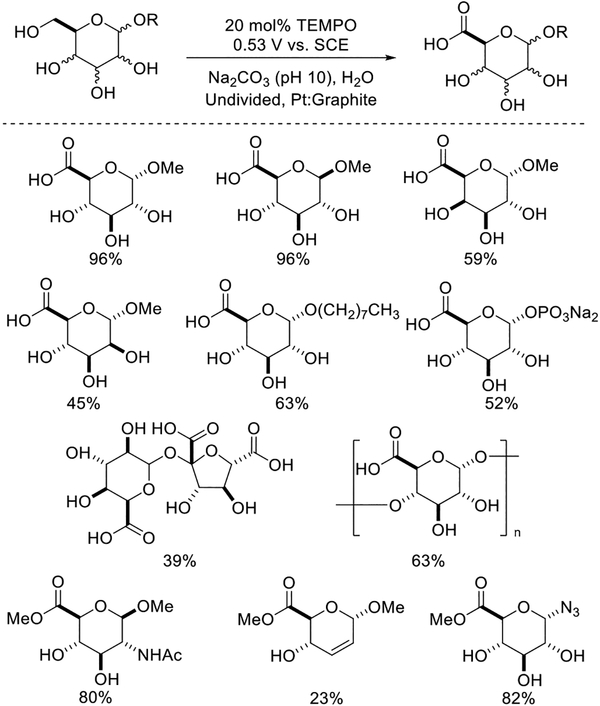
Selective oxidation of carbohydrates reported by Schäfer. Oxidation of glycosyl azides was performed in a divided cell.
Scheme 52.
Scheme 52.
Carboxylated cellulose
Scheme 53.
Scheme 53.
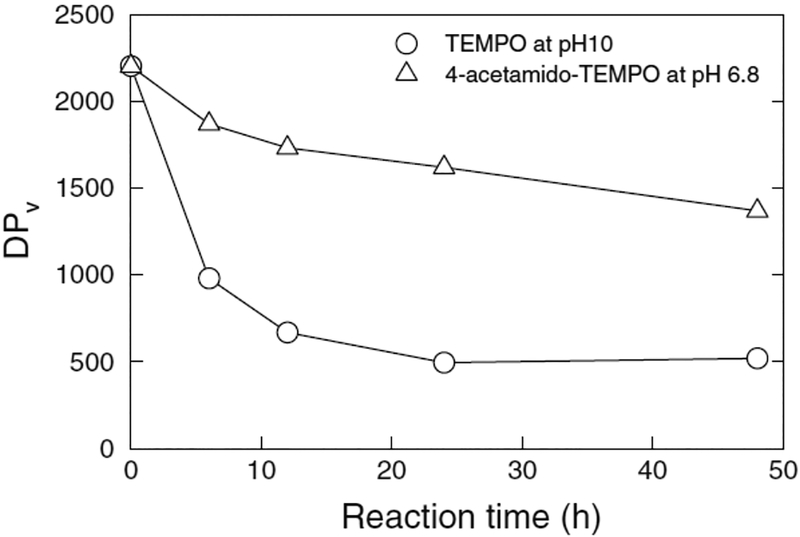
The viscosity average degrees of depolymerization (DPv) of softwood bleached kraft pulp native cellulose following aminoxyl-mediated electrooxidation at different pH. Reprinted with permission from ref. . Copyright 2010 Springer.
Scheme 54.
Scheme 54.
Oxidation of glycerol to 1,3-dihydroxyacetone (DHA).
Scheme 55.
Scheme 55.
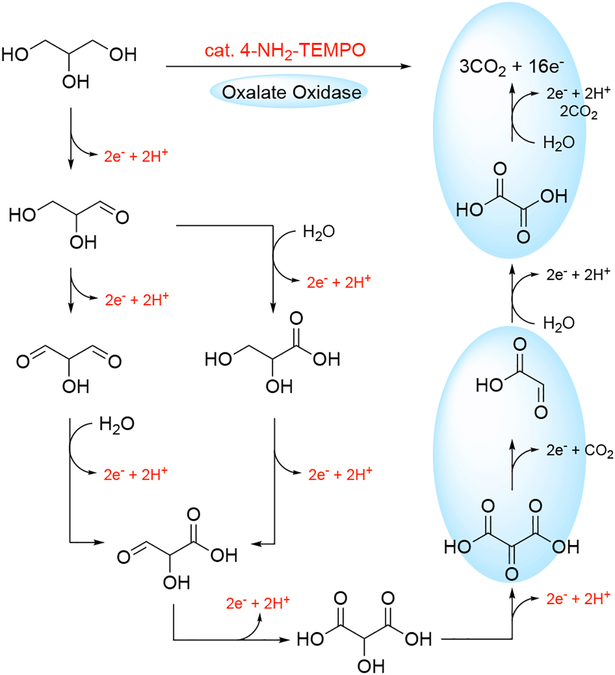
Proposed route for the complete oxidation of glycerol catalyzed by 4-NH2-TEMPO and oxalate oxidase. Enzyme-mediated steps are highlighted in blue ovals.
Scheme 56.
Scheme 56.
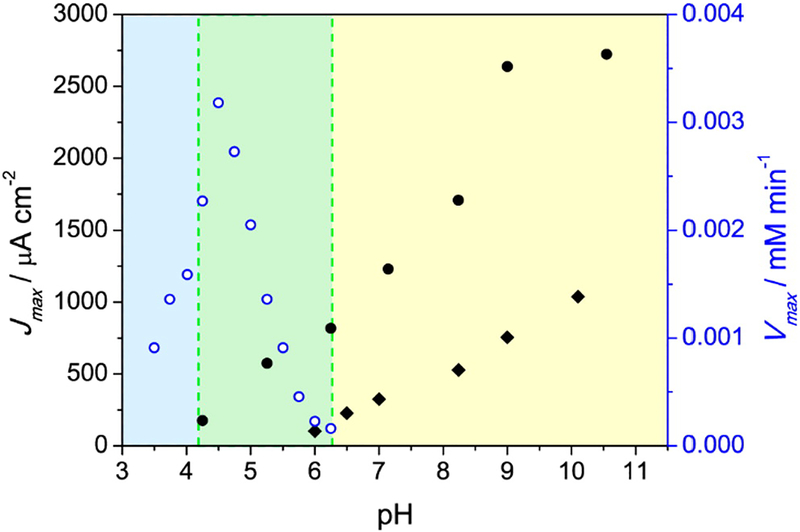
The pH profiles of (○) oxalate oxidase, (♦) TEMPO, and (●) 4-NH2-TEMPO for catalytic reactivity towards oxalic acid (for oxalate oxidase) and glycerol (for TEMPO and 4-NH2-TEMPO). Reprinted with permission from ref. . Copyright 2014 American Chemical Society.
Scheme 57.
Scheme 57.
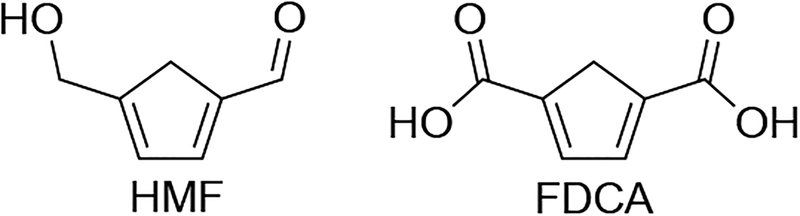
5-hydroxymethylfurfual (HMF) and its oxidation product, 2,5-furandicarboxylic acid (FDCA).
Scheme 58.
Scheme 58.
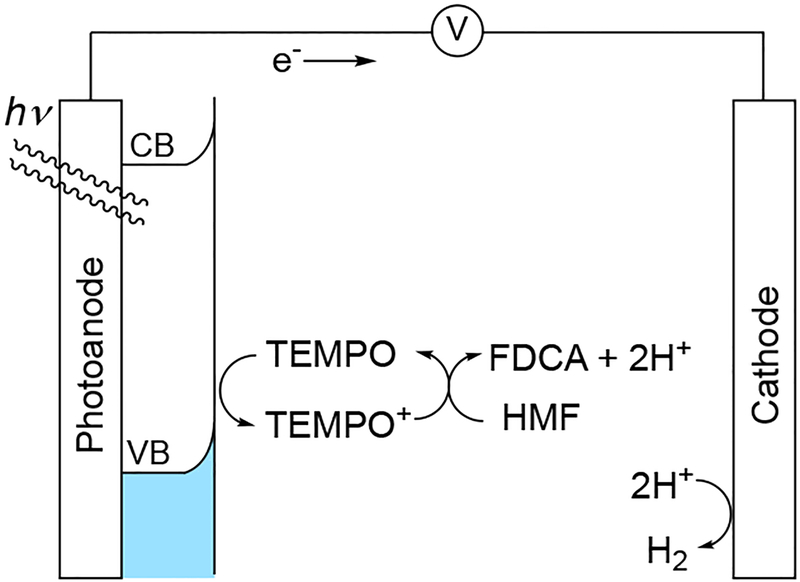
TEMPO-mediated oxidation of HMF and H2 generation in a photoelectrochemical cell.
Scheme 59.
Scheme 59.
Oxidation of HMF to DFF mediated by ACT/I under biphasic conditions.
Scheme 60.
Scheme 60.
Oxidation of betulin to betulin aldehyde.
Scheme 61.
Scheme 61.
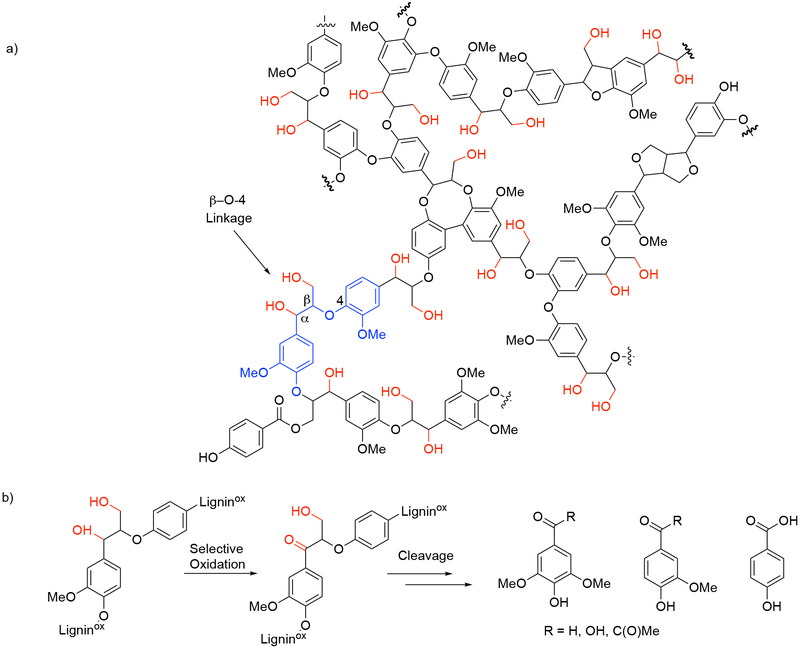
a) Representative structure of lignin highlighting hydroxyl groups (red) and the β-O-4 linkage (blue), and the b) oxidation/hydrolysis sequence that has been shown to afford high yields of low molecular weight aromatics from lignin.
Scheme 62.
Scheme 62.
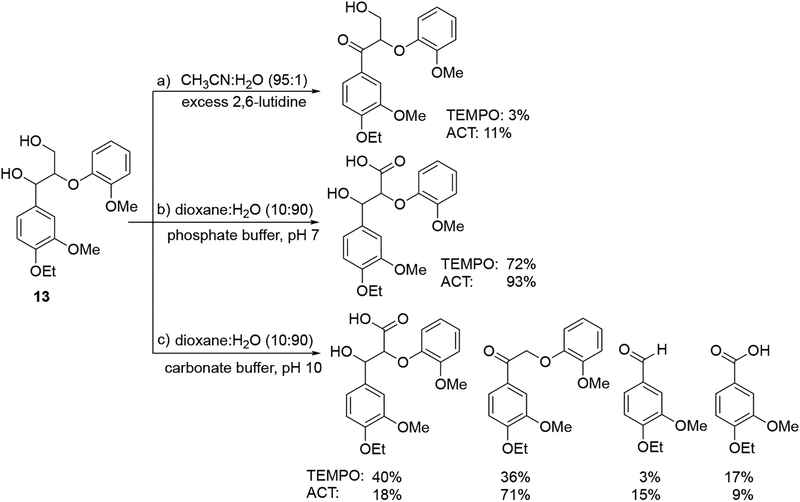
Aminoxyl-mediated electrooxidation of lignin β–O-4 model compound 13. Conditions (a): 0.1 M LiClO4 in 95% CH3CN/H2O, 5 equiv. of 2,6-lutidine; condition (b): 10% dioxane in pH 7 phosphate buffer; condition (c): 10% dioxane in pH 10 carbonate buffer. All electrolysis reactions were performed with 2.5 mM substrate and 0.5 mM aminoxyl in a divided cell with a carbon felt anode and platinum wire cathode. Electrolyses were conducted at constant potential.
Scheme 63.
Scheme 63.
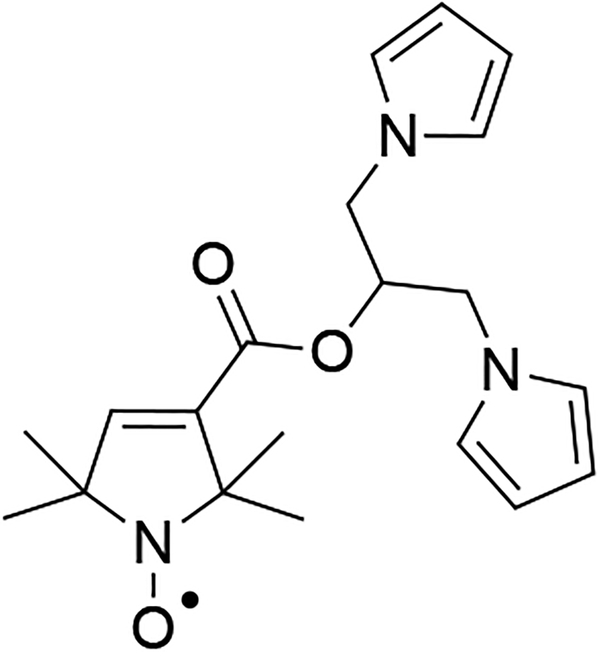
Pyrrole-tethered 2,2,5,5-tetramethyl-3-pyrolin-1-oxyl.
Scheme 64.
Scheme 64.
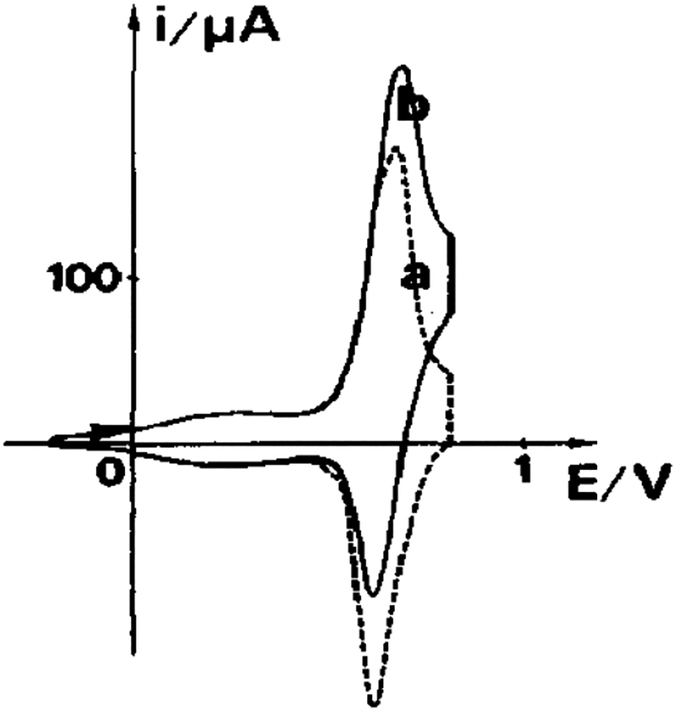
a) CV trace of the pyrrole-tethered 2,2,5,5-tetramethyl-3-pyrolin-1-oxyl film on a platinum electrode, (b) CV trace of the polypyrrole-aminoxyl film on a platinum electrode upon addition of 4-methoxybenzyl alcohol. CVs recorded in 0.1 M n-Bu4NClO4 and 0.01 M 2,4,6-collidine in CH3CN. Scan rate = 50 mV s−1. Potential referenced against Ag0/+. Adapted with permission from ref. . Copyright 1987 Elsevier.
Scheme 65.
Scheme 65.
TEMPO-PAA film after methylation of free acid residues.
Scheme 66.
Scheme 66.
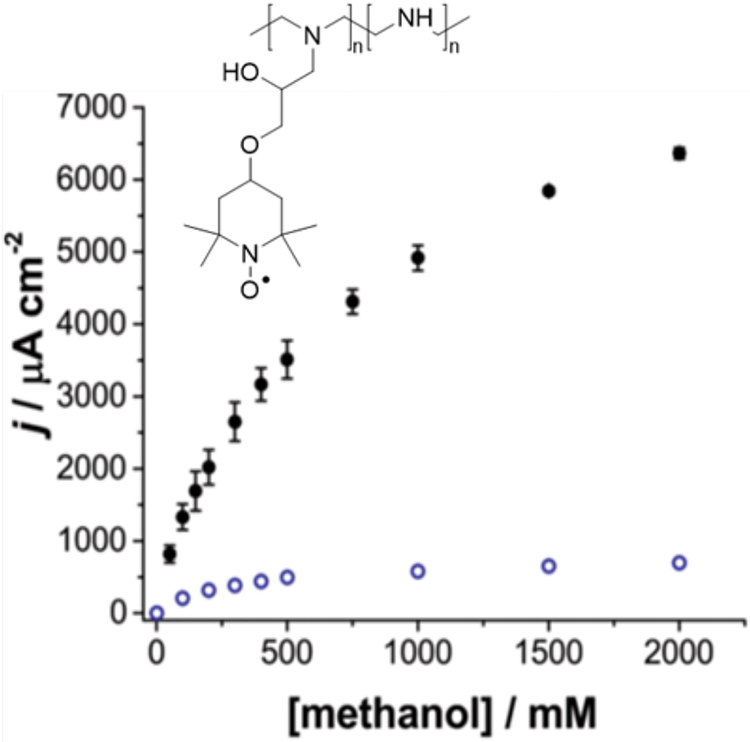
Catalytic activity for the electrooxidation of MeOH by (●) electrode-supported TEMPO-linked poly(ethylamine) and (○) 4-OMe-TEMPO. Inset: TEMPO-linked poly(ethylamine). Reprinted with permission from ref. . Copyright 2015 American Chemical Society.
Scheme 67.
Scheme 67.
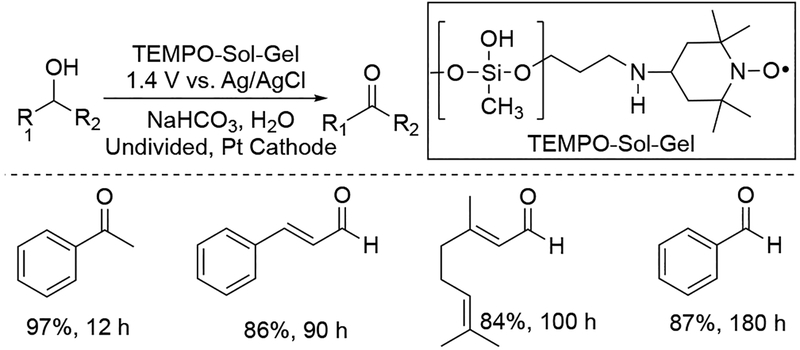
Electrooxidation of benzylic and allylic alcohols (0.5 mmol) by aminoxyl-doped solgel electrode.
Scheme 68.
Scheme 68.
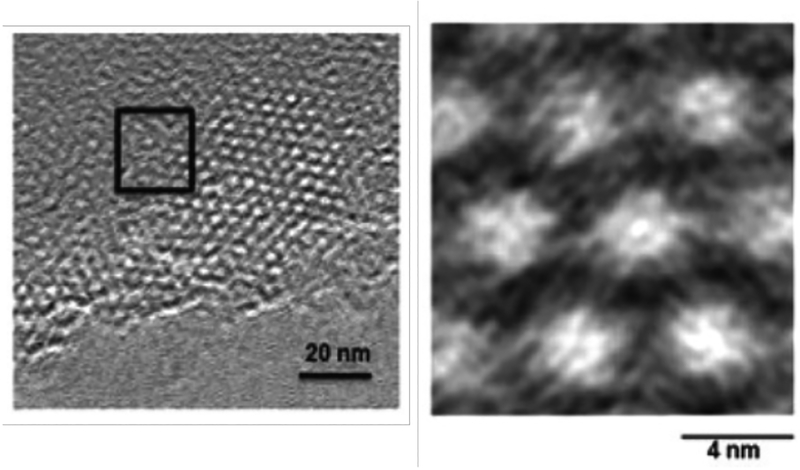
Transmission electron microscopy images of aminoxyl-linked mesoporous silica film. Reprinted with permission from ref. . Copyright 2014 Royal Society of Chemistry.
Scheme 69.
Scheme 69.
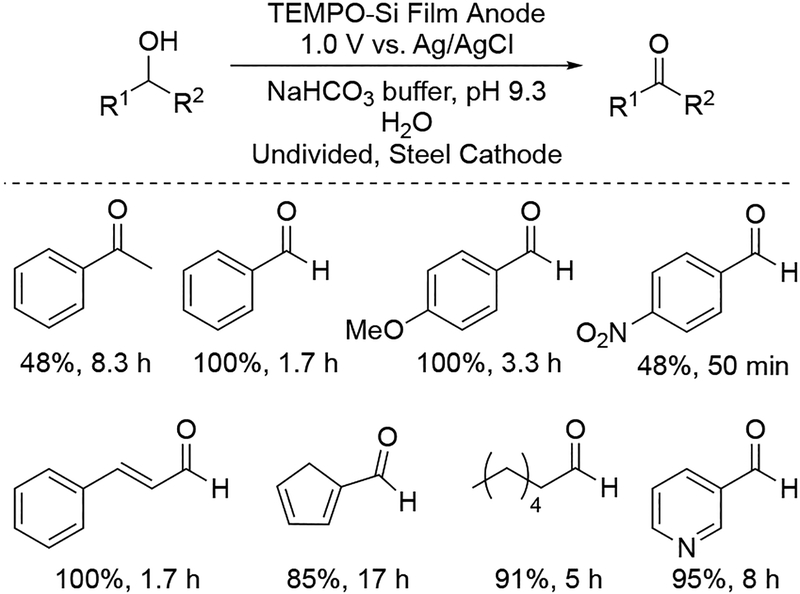
Electrooxidation of alcohols (1 mmol) mediated by aminoxyl-linked mesoporous silica film.
Scheme 70.
Scheme 70.
Electrooxidation of alcohols by aminoxyl radical species immobilized in solid particles.
Scheme 71.
Scheme 71.
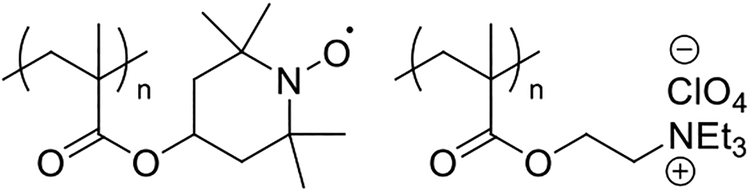
Poly(methacrylate)-TEMPO and polyelectrolyte.
Scheme 72.
Scheme 72.
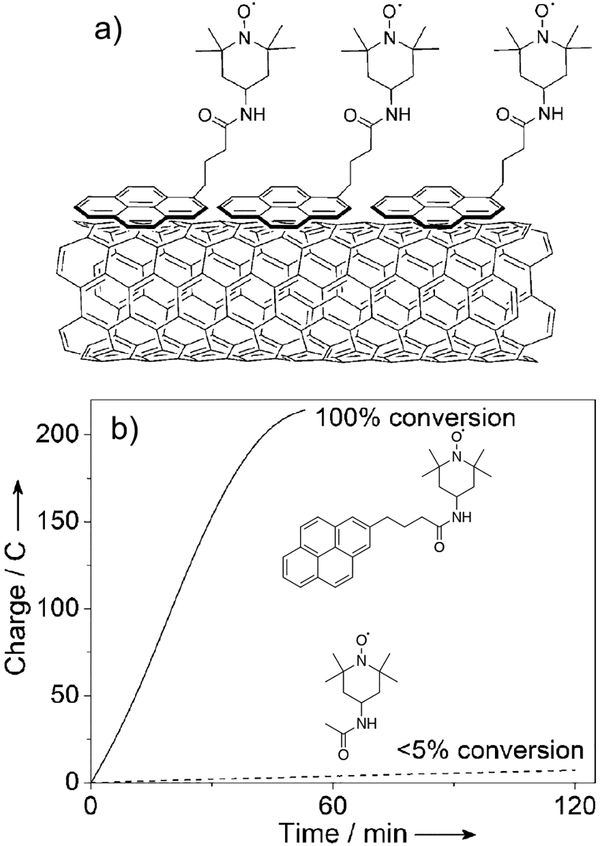
a) Schematic representation of pyrene-TEMPO immobilization via noncovalent interaction with a MWCNT. b) Comparison of bulk electrolysis of benzyl alcohol to benzaldehyde using dissolved (dashed line) and immobilized (solid line) aminoxyls. Reaction conditions: 10 mL carbonate buffer pH 10, 0.1 M benzyl alcohol, 5×10⁻⁵ M ACT or pyrene–TEMPO, bulk electrolysis at 0.7 V vs. Ag/AgCl. Reprinted with permission from ref. . Copyright 2017 John Wiley and Sons.
Scheme 73.
Scheme 73.
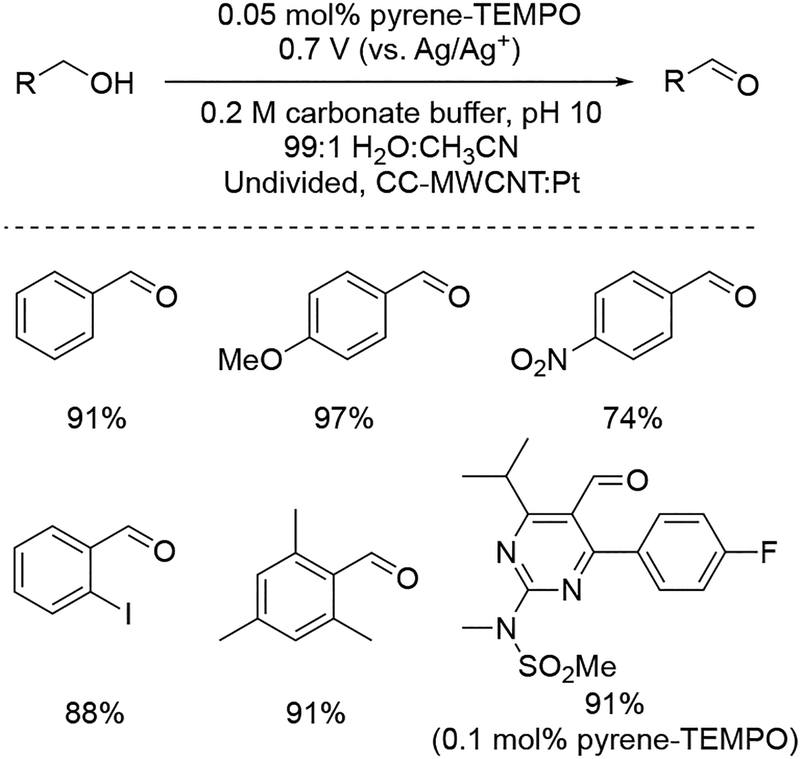
Pyrene-TEMPO mediated electrooxidation of alcohol substrates.
Scheme 74.
Scheme 74.
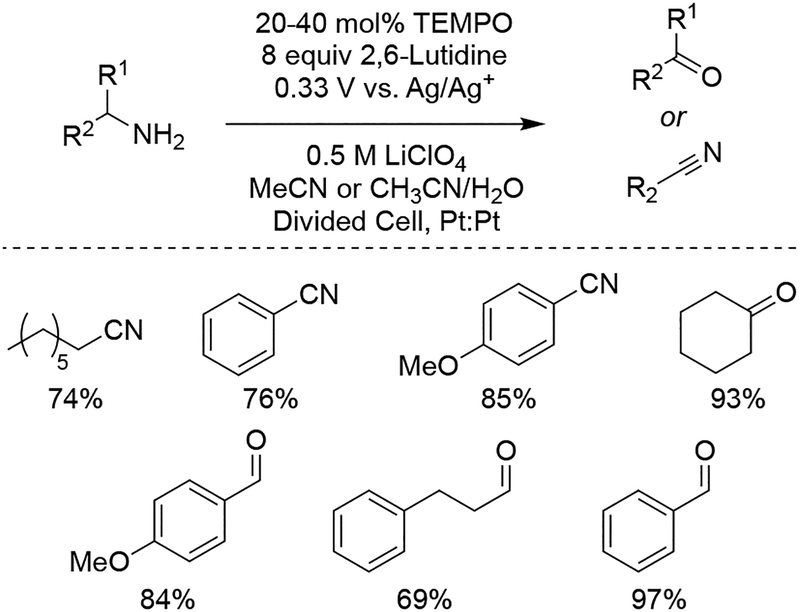
Oxidation of primary and secondary amines to give the corresponding nitrile or carbonyl.
Scheme 75.
Scheme 75.
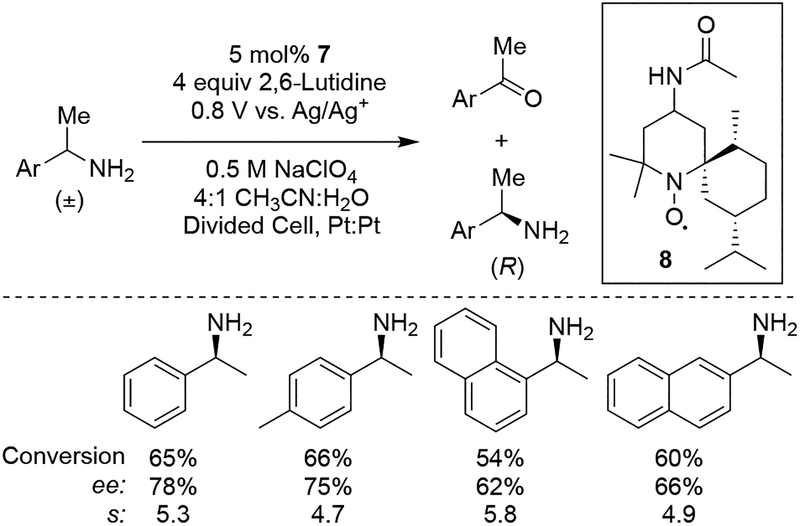
Kinetic resolution of benzylic primary amines catalyzed by chiral aminoxyl radical 8.
Scheme 76.
Scheme 76.
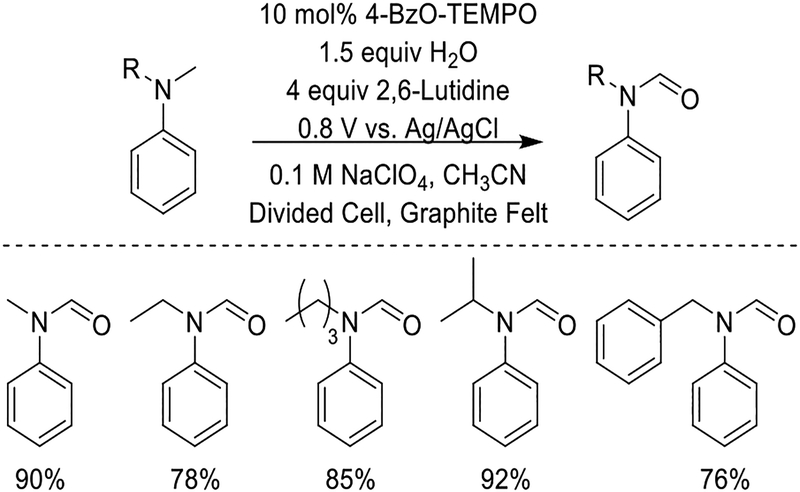
Oxidation of tertiary amines catalyzed by 4-BzO-TEMPO.
Scheme 77.
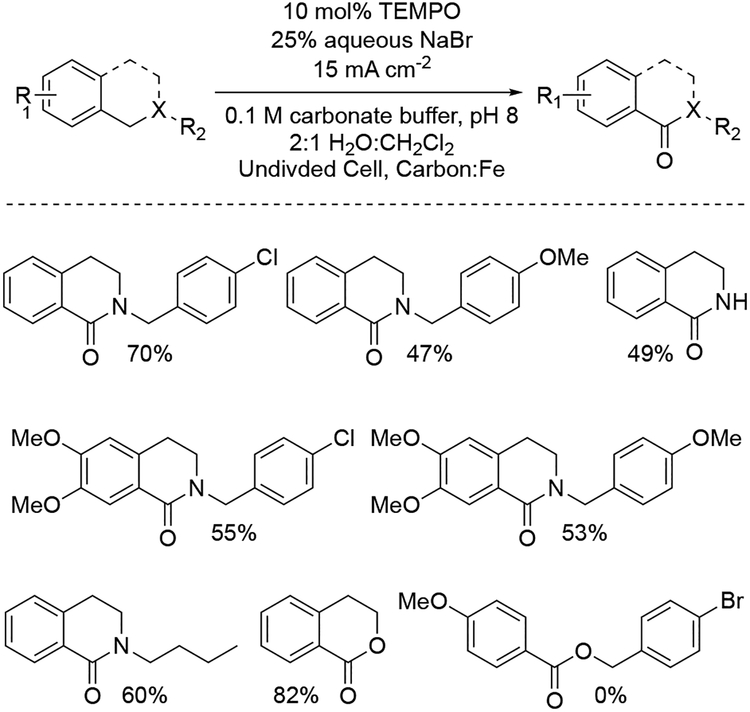
Scheme 77.
Oxidation of tetrahydroisoquinolines and related compounds.
Scheme 78.
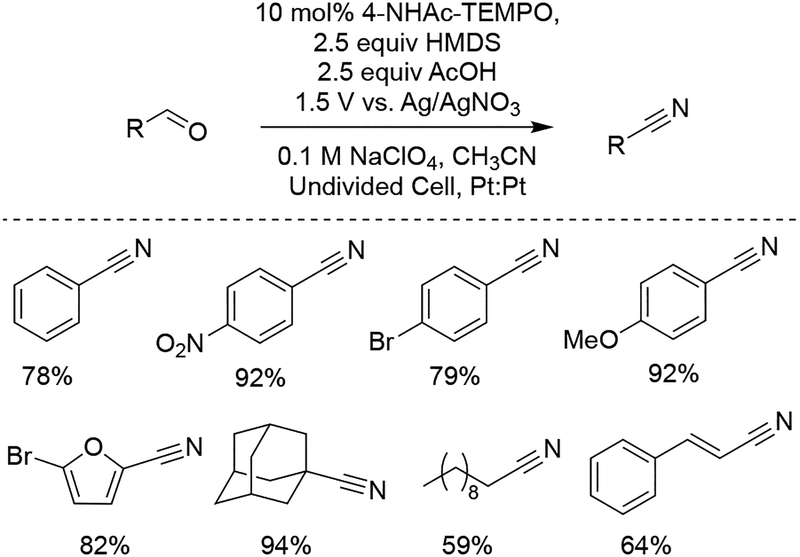
Scheme 78.
Aminoxyl-catalyzed electrooxidation of aldehydes to nitriles with HMDS as the nitrogen source.
Scheme 79.
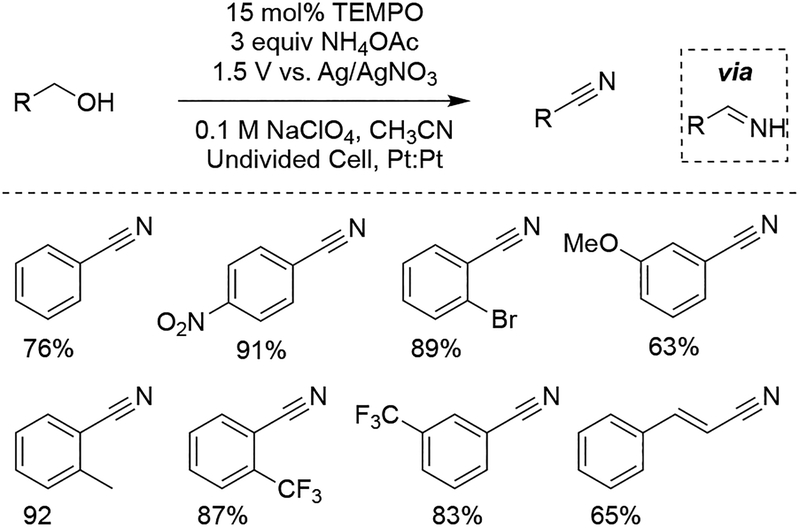
Scheme 79.
Aminoxyl-catalyzed oxidation of alcohols to nitriles with NH4OAc.
Scheme 80.
Scheme 80.
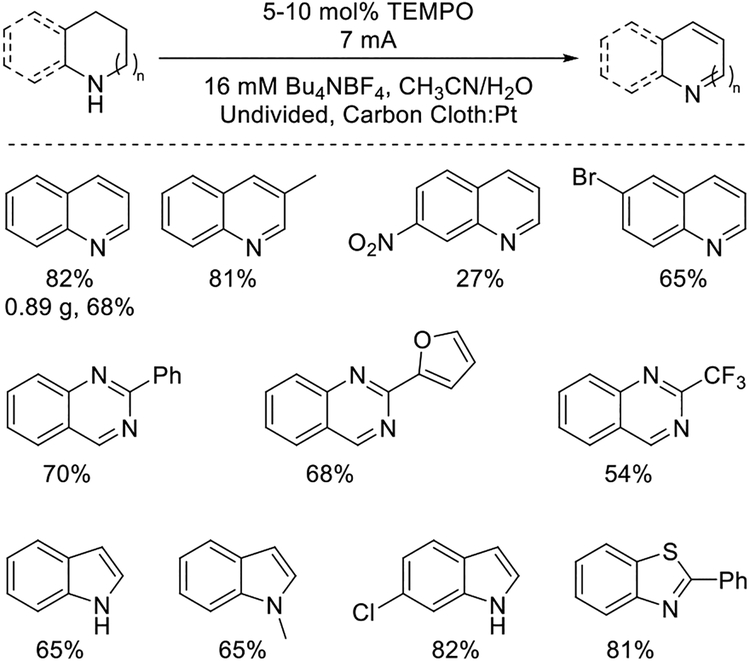
Acceptorless dehydrogenation of saturated N-heterocycles.
Scheme 81.
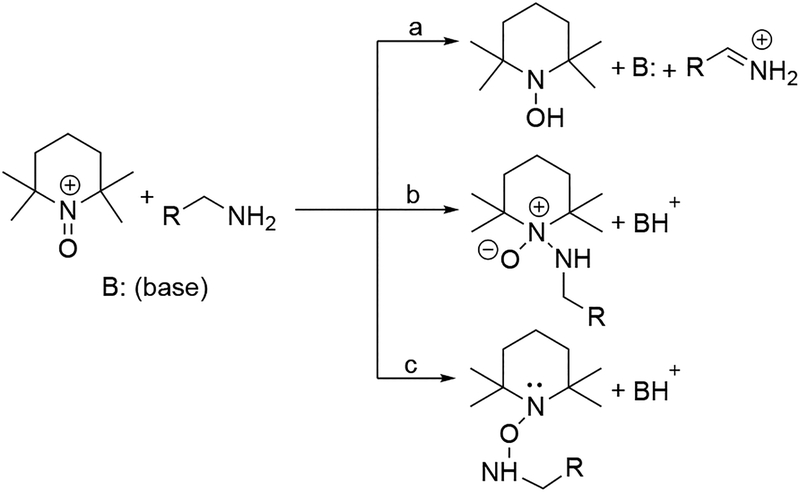
Scheme 81.
Proposed rate-limiting steps of amine oxidation by oxoammonium.
Scheme 82.
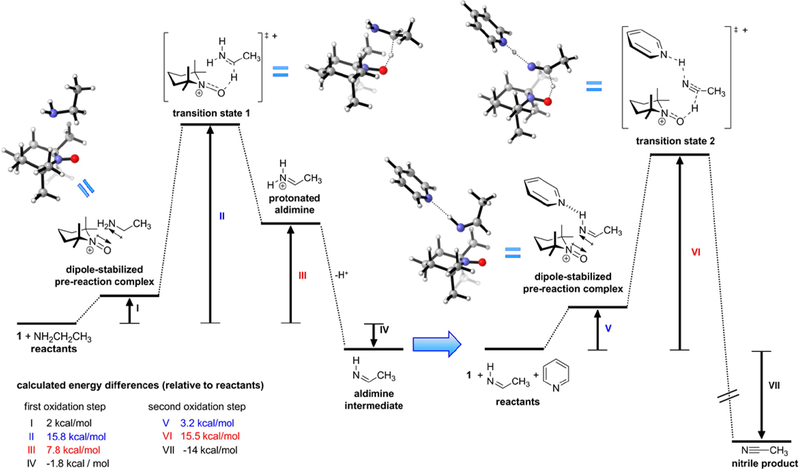
Scheme 82.
Calculated reaction profile for the oxidation of primary amines to nitriles by oxoammonium (B3LYP/6–311+G*). Reprinted with permission from ref. . Copyright 2014 American Chemical Society.
Scheme 83.
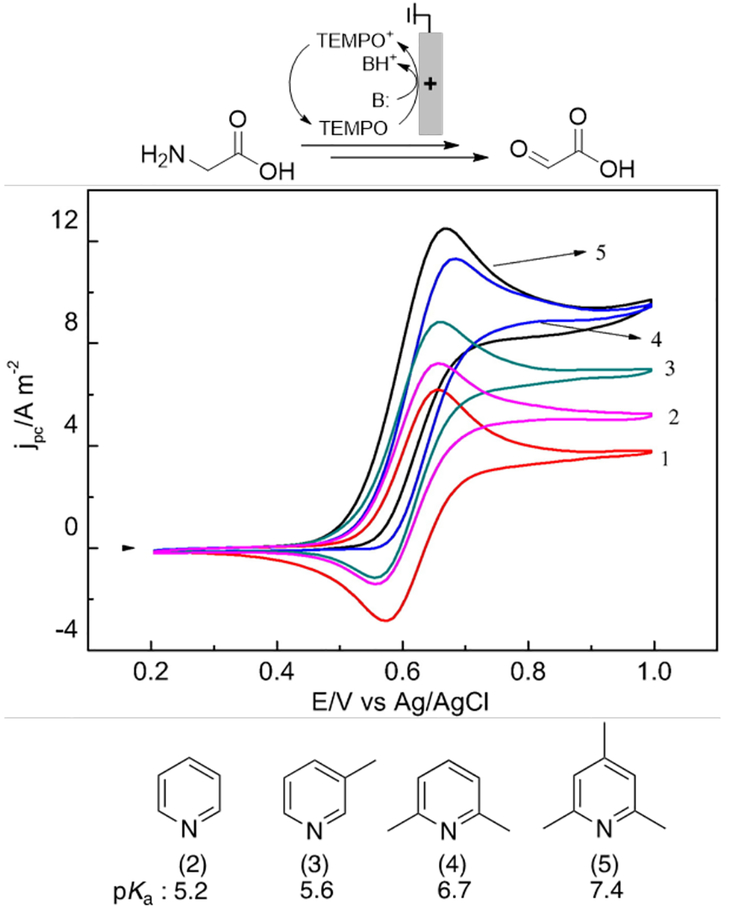
Scheme 83.
Electrooxidation of glycine by TEMPO in (1) absence of base and presence of 100 mM (2) pyridine, (3) 3-picoline, (4) 2,6-lutidine, and (5) 2,4,6-collidine. CV conditions: 5 mM glycine, 5 mM TEMPO in 0.1 M NaClO4 in 3:1 CH3CN:H2O at platinum electrode. pKa values are reported for the corresponding pyridinium-type species in water. Reprinted with permission from ref. . Copyright 2017 Elsevier.
Scheme 84.
Scheme 84.
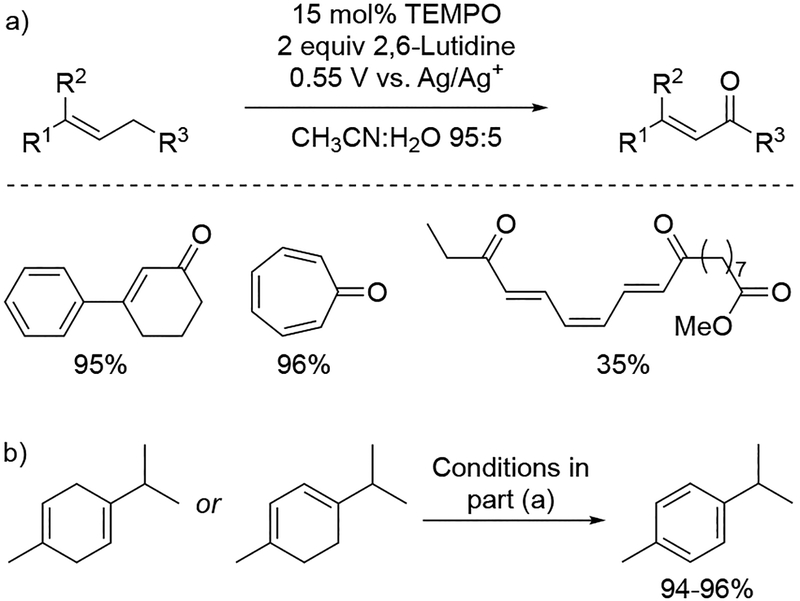
a) Allylic oxidation of activated alkenes, and b) unexpected aromatization of α-terpinene and γ-terpinene to cymene. The electrolyte, electrode materials, and cell design are not addressed in the reference.
Scheme 85.
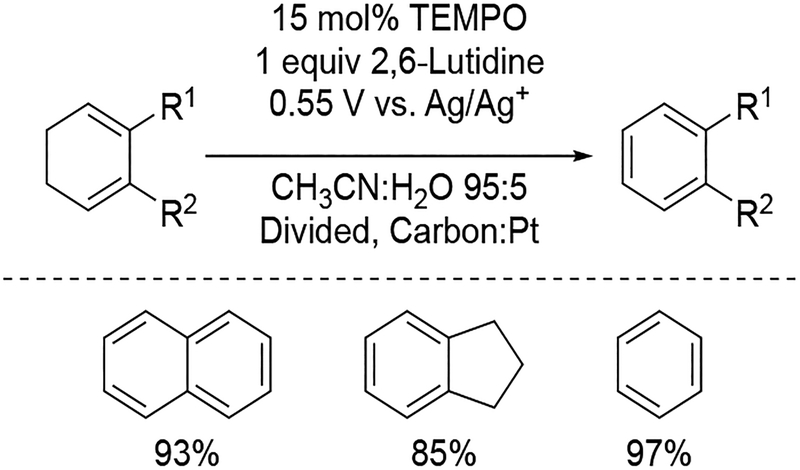
Scheme 85.
Aromatization of cyclohexadienes.
Scheme 86.
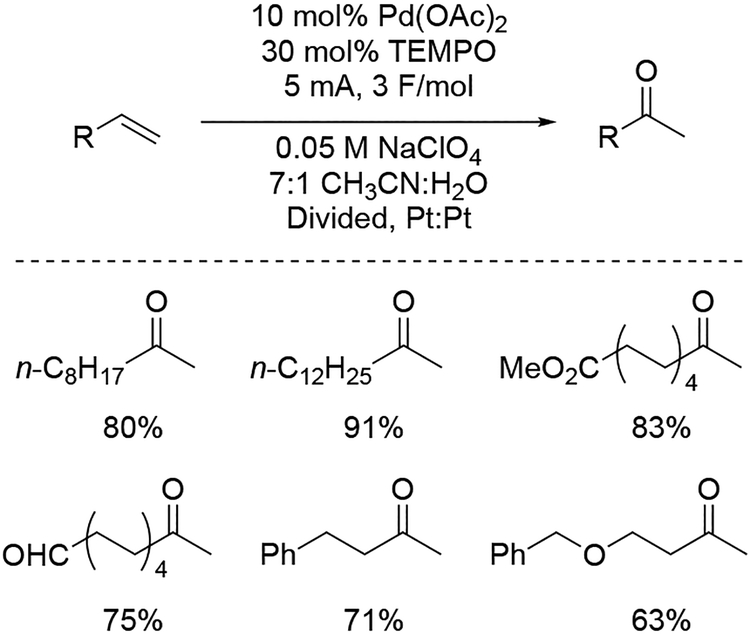
Scheme 86.
Wacker-type electrooxidation of terminal alkenes by Pd(OAc)2 catalysis with co-catalytic TEMPO.
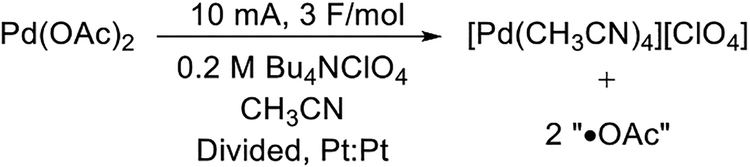
Scheme 87.
Scheme 87.
Electrochemical generation of cationic Pd2+ species.
Scheme 88.
Scheme 88.
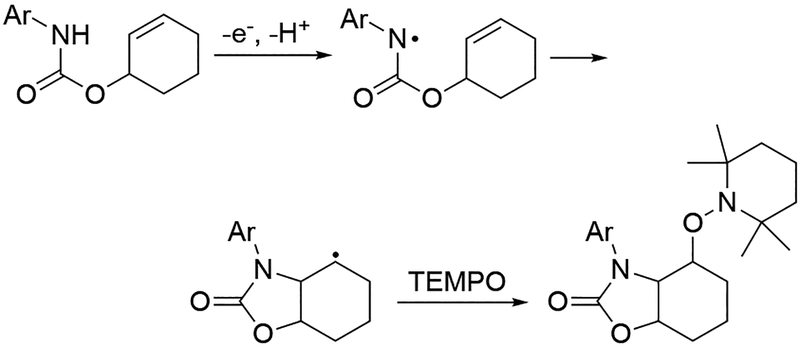
Proposed route for aminooxygenation of unactivated alkenes.
Scheme 89.
Scheme 89.
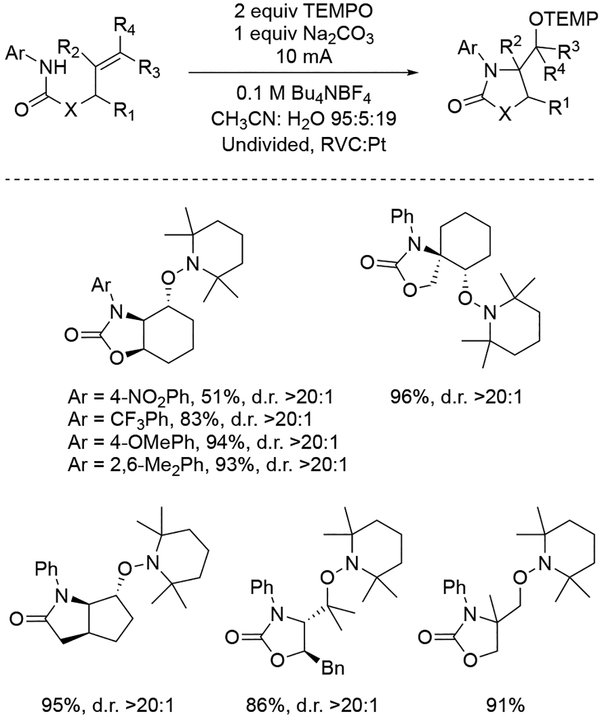
Intramolecular aminooxygenation of unactivated alkenes mediated by TEMPO.
Scheme 90.
Scheme 90.
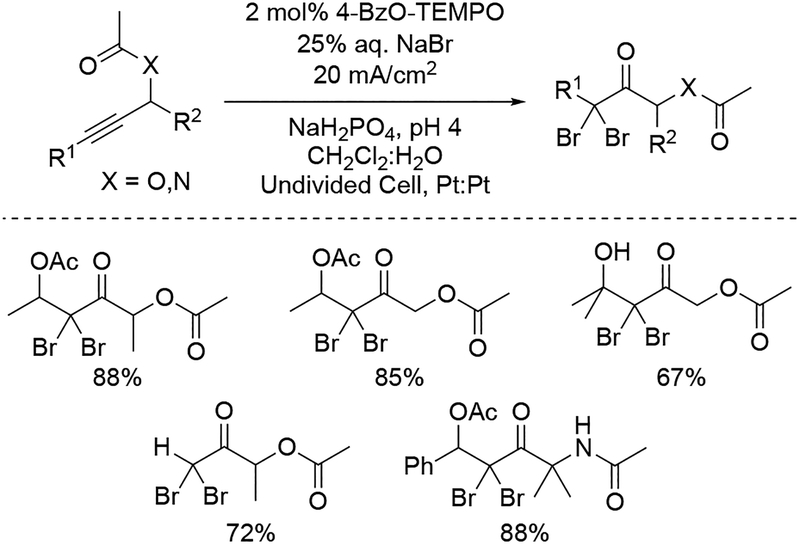
Mediated electrooxidation of propargyl acetates to provide α,α-dihaloketone products products.
Scheme 91.
Scheme 91.
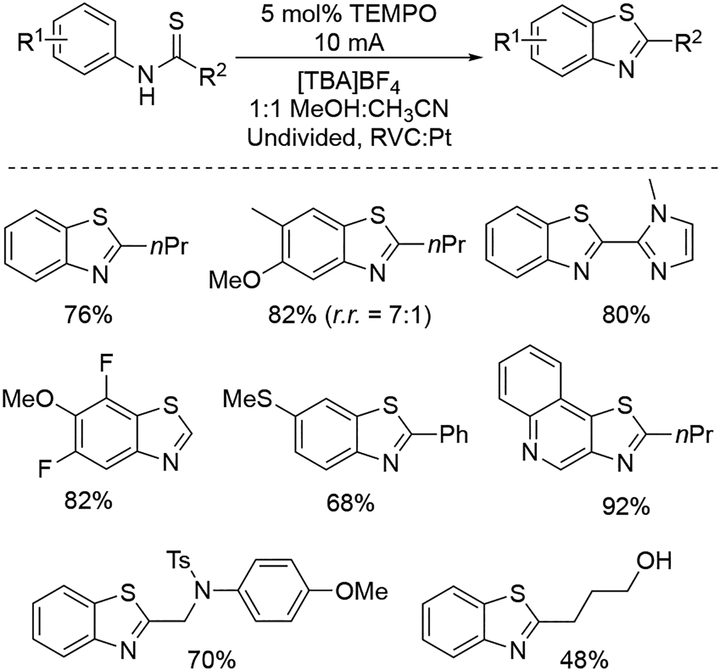
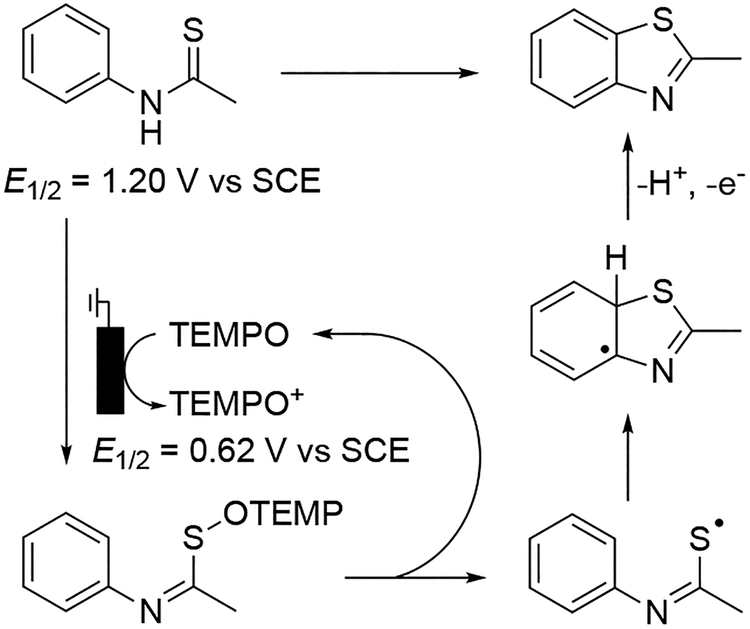
Electrooxidation of thioamides by TEMPO.
Scheme 92.
Scheme 92.
Proposed mechanism of TEMPO-mediated oxidation of thioamides. The E1/2 of TEMPO under these conditions was measured to be 0.62 V vs. SCE.
Scheme 93.
Scheme 93.
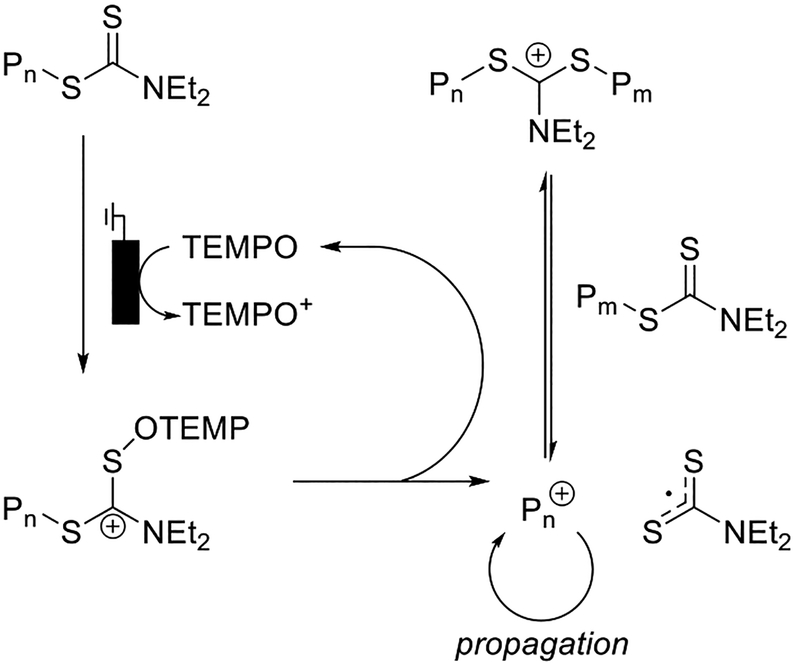
Proposed pathway for TEMPO-mediated electrochemical cationic polymerization.
Scheme 94.
Scheme 94.
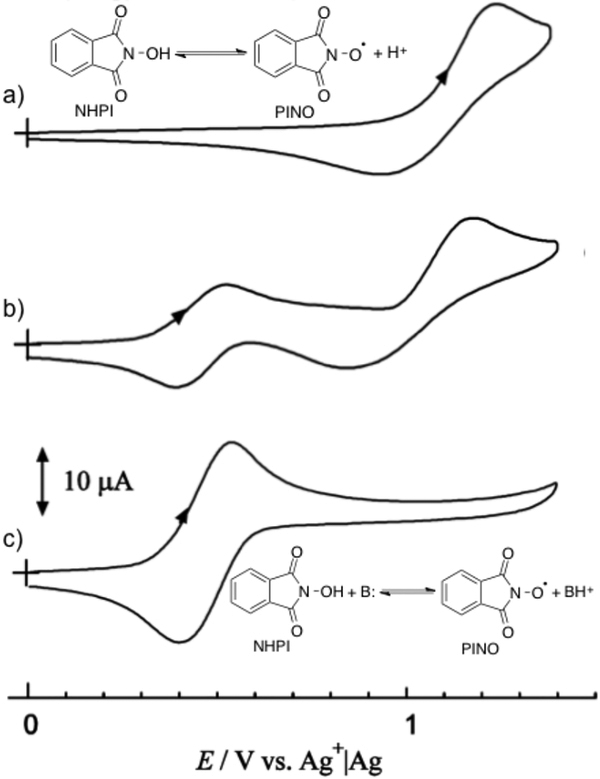
CVs for 5 mM NHPI in 0.1 M Et4NClO4 in CH3CN at a glassy carbon electrode in the (a) absence and (b) presence of 1 mM and (c) 5 mM 2,6-lutidine. Scan rate = 200 mV s−1. Redox reactions added for clarity. Adapted with permission from ref. . Copyright 2005 Elsevier.
Scheme 95.
Scheme 95.
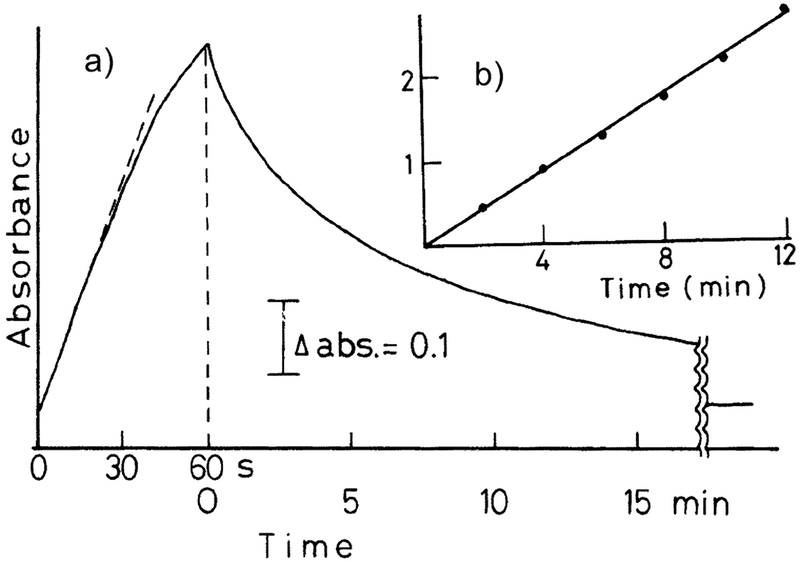
a) Absorption-time curve for the generation and decay of PINO and (b) the second-order plot for the decomposition of PINO; the ordinate for the inset plot corresponds to (A0-A)/A0A, where A0 and A are the absorbance at t=0 and t, respectively. Reprinted with permission from ref. . Copyright 1987 The Pharmaceutical Society of Japan.
Scheme 96.
Scheme 96.
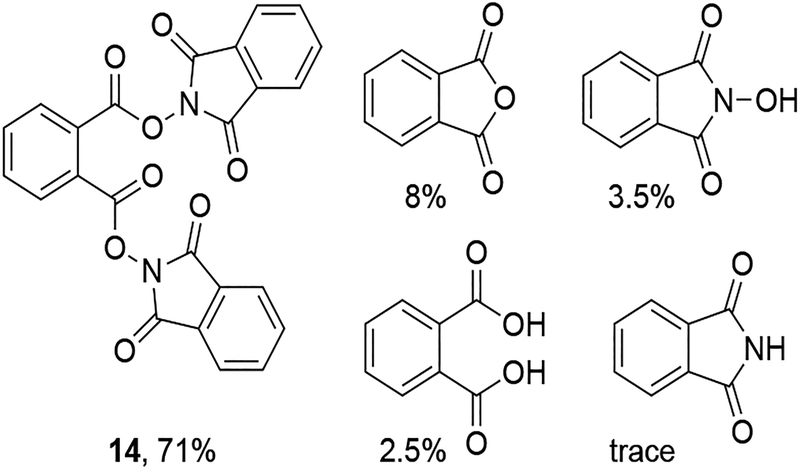
Decomposition products of PINO observed following bulk electrolysis of NHPI in CH3CN.
Scheme 97.
Scheme 97.
CVs of 1.0 mM NHPI in buffered solutions at various pH values and the same ionic strength. The solution pHs [from (a) to (d)] are: 2.5, 4.7, 7.2 and 8.3. Scan rate = 100 mV s−1. Reprinted with permission from ref. . Copyright 2014 John Wiley and Sons.
Scheme 98.
Scheme 98.
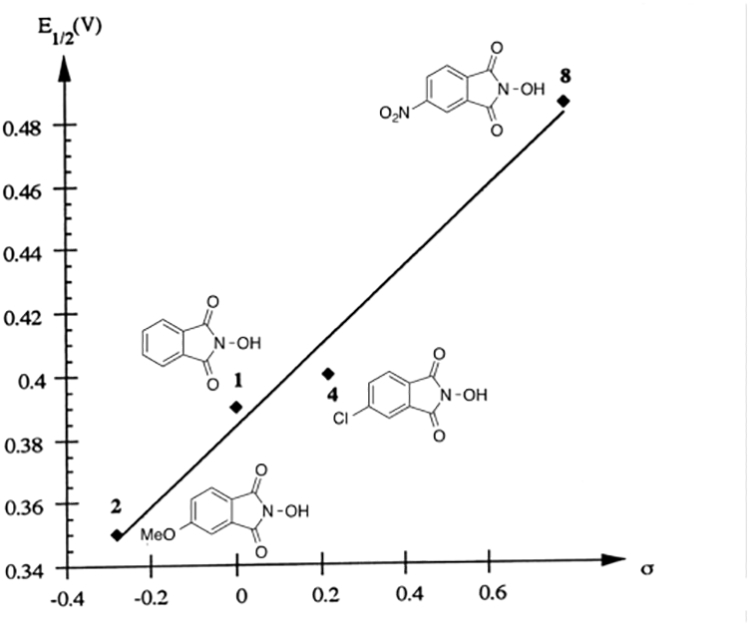
The reported E1/2 (vs. Ag/Ag+) for NHPI derivatives in the presence of collidine versus the σ Hammett parameters for the substituent on 4-position of the NHPI benzene ring. Adapted with permission from ref. . Copyright 1998 Elsevier.
Scheme 99.
Scheme 99.
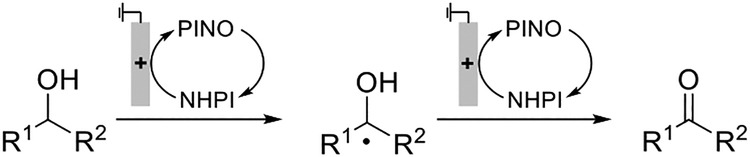
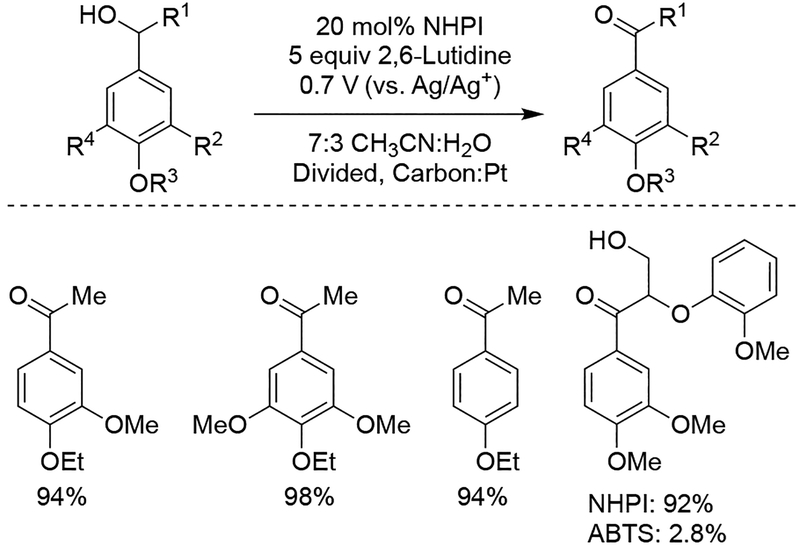
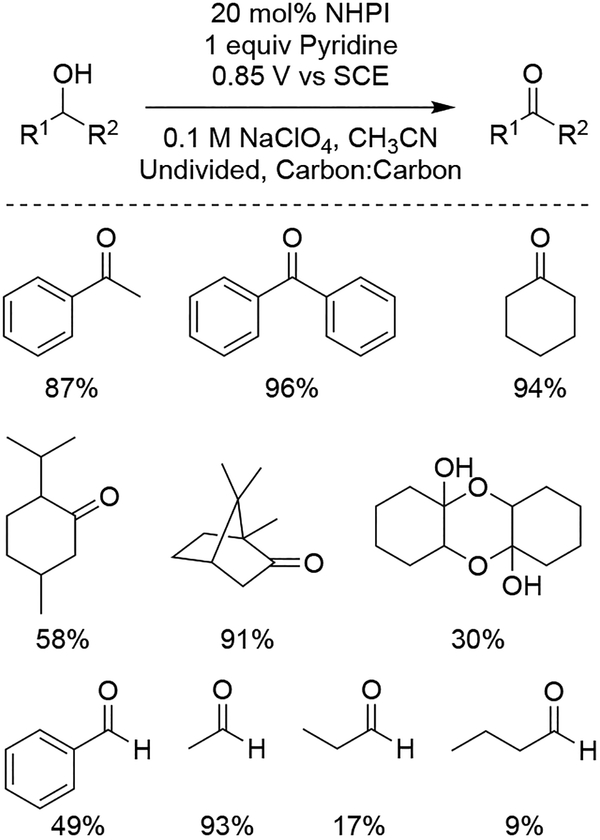
NHPI-mediated electrochemical oxidation of alcohol substrates.
Scheme 100.
Scheme 100.
Suggested mechanism of NHPI-mediated electrooxidation of alcohols.
Scheme 101.
Scheme 101.
Ratio of the anodic-peak current (icat) of NHPI in the presence of alcohols compared to the anodic peak current (i0) in the absence of alcohols. Reprinted with permission from ref. . Copyright 2014 John Wiley and Sons.
Scheme 102.
Scheme 102.
NHPI-mediated electrooxidation of lignin models.
Scheme 103.
Scheme 103.
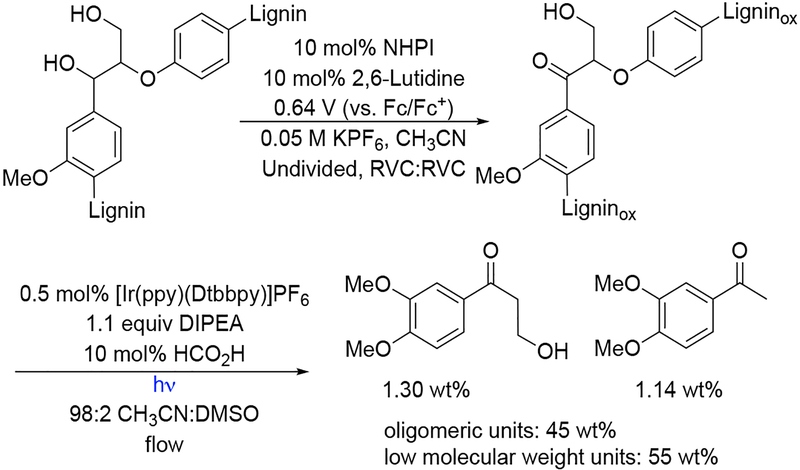
Electrooxidation and photochemical cleavage of native lignin.
Scheme 104.
Scheme 104.
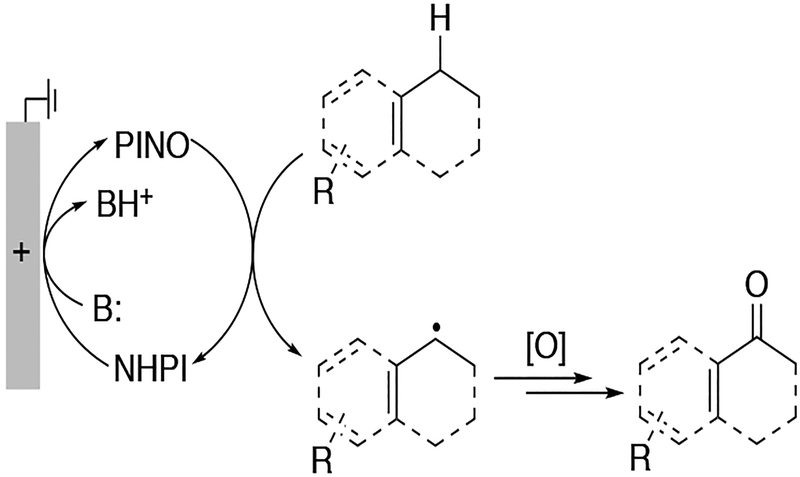
Benzylic and allylic oxygenation mediated by NHPI.
Scheme 105.
Scheme 105.
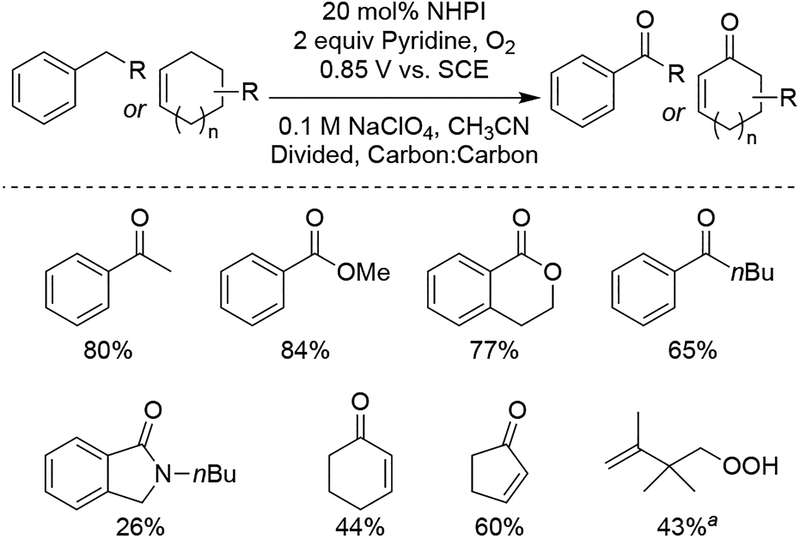
Electrochemical NHPI/PINO mediated oxygenation of benzylic and allylic bonds.
Scheme 106.
Scheme 106.
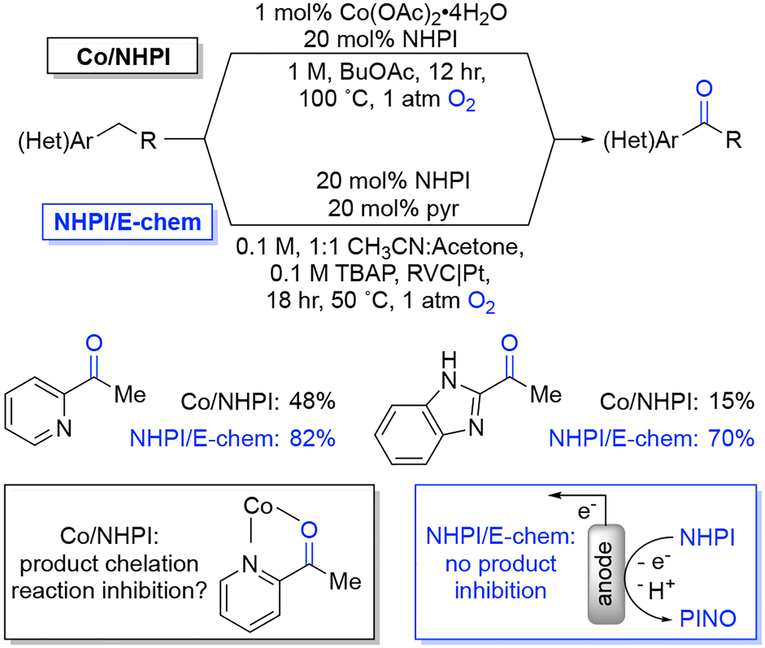
Comparison of the benzylic oxygenation of heteroaromatic species by NHPI-mediated aerobic and electrochemical methods. Adapted from Ref. with permission from the Royal Society of Chemistry.
Scheme 107.
Scheme 107.
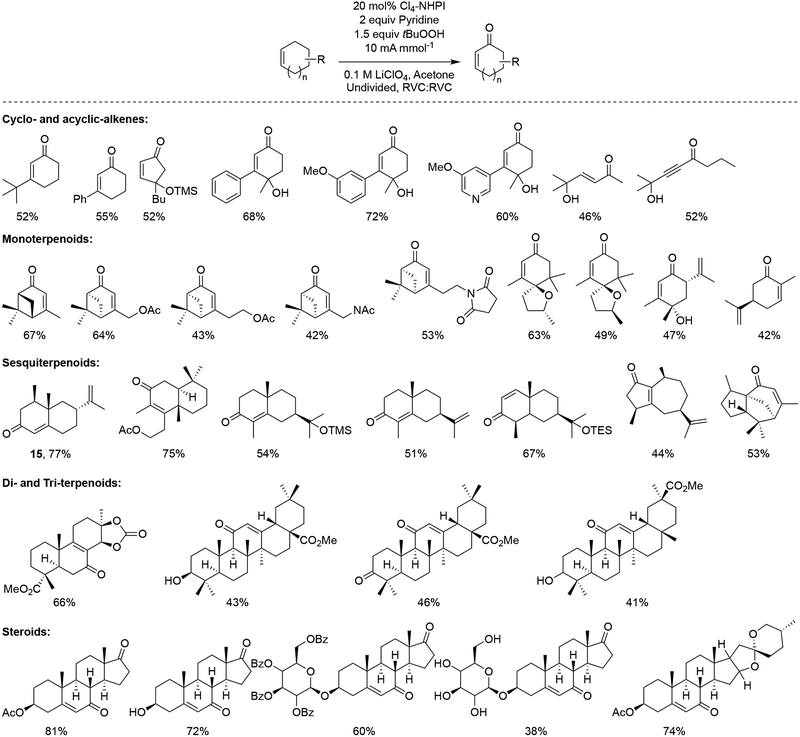
Scope of the oxygenation of allylic C–H bonds mediated by Cl4-NHPI.
Scheme 108.
Scheme 108.
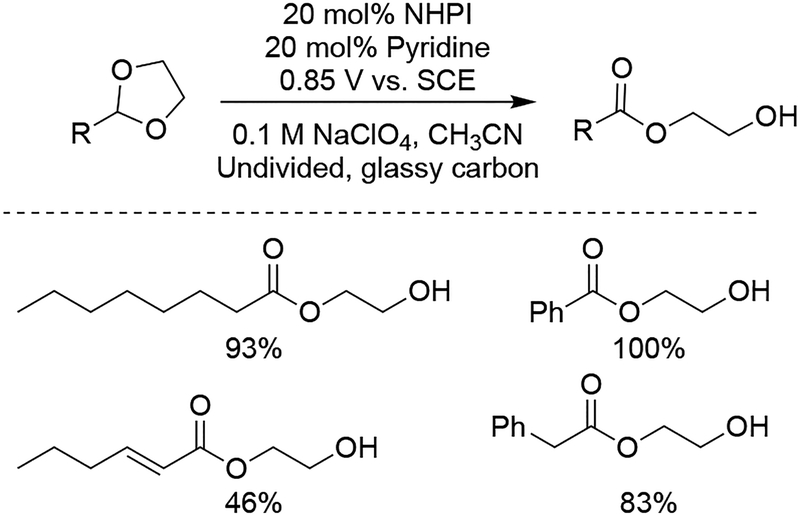
NHPI-mediated oxidation of aldehyde acetals.
Scheme 109.
Scheme 109.
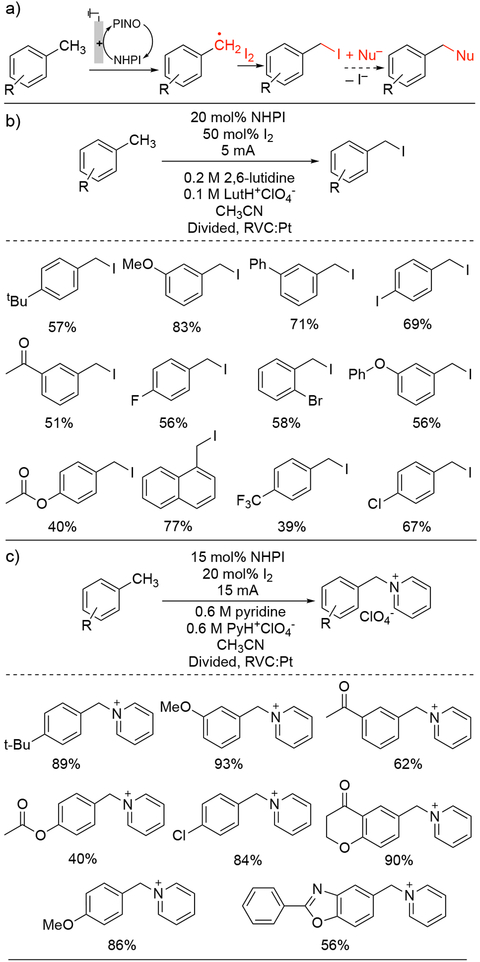
a) Electrochemical NHPI/PINO-mediated iodination/functionalization of methyl arenes b) iodination and c) in situ methylarene iodination/alkylation of pyridine. LutH+ = 2,6-lutidinium, PyrH+ = pyridinium.
Scheme 110.
Scheme 110.
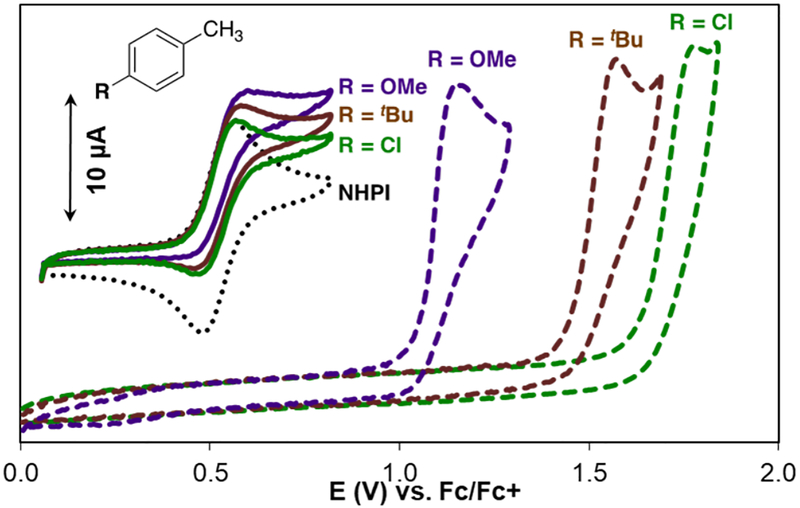
Comparison of the required potential for NHPI mediated HAT (solid lines), and direct ET (dashed lines) for oxidation of (green) p-chlorotoluene, (brown) p-t-butyltoluene, and (blue) p-methoxytoluene. Dotted line shows the CV of NHPI in the absence of substrates. Current units from the original report have been corrected.
Scheme 111.
Scheme 111.
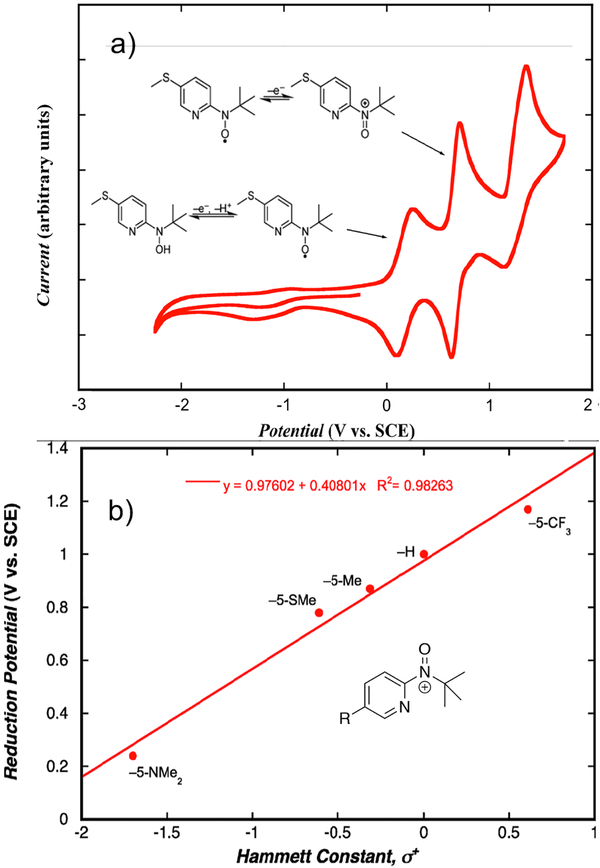
a) CV of acyclic aminoxyl radical derivative. Redox reactions added for clarity. b) Correlation between the reduction potential of acyclic oxoammonium derivatives and substituent Hammett σ* constants. Adapted with permission from ref. . Copyright 2013 American Chemical Society.
Scheme 112.
Scheme 112.
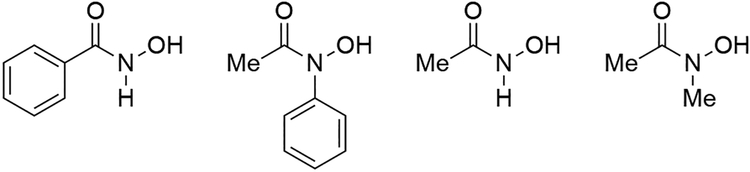
Hydroxamic acids examined by Masui and co-workers.
Scheme 113.
Scheme 113.
Laccase mediated aerobic oxidation

References

    1. Keana JFW Newer Aspects of the Synthesis and Chemistry of Nitroxide Spin Labels. Chem. Rev, 1978, 78, 37–64.
    1. Mitchell JB; Samuni A; Krishna MC; DeGraff WG; Ahn MS; Samuni U; Russo A Biologically Active Metal-Independent Superoxide Dimutase Mimics. Biochemistry 1990, 29, 2802–2807. - PubMed
    1. Nilsson UA; Olsson L-I; Carlin G; Bylund-Fellenius A-C Inhibition of Lipid Peroxidation by Spin Labels. J. Biol. Chem 1989, 264, 11131–11135. - PubMed
    1. Lafon-Cazal M; Pietri S; Culcasi M; Bockaert J NMDA-Dependent Superoxide Production and Neurotoxicity. Nature 1993, 364, 535–537. - PubMed
    1. Kato F; Kikuchi A; Okuyama T; Oyaizu K; Nishide H Nitroxide Radicals as Highly Reactive Redox Mediators in Dye-Sensitized Solar Cells. Angew. Chem., Int. Ed 2012, 51, 10177–10180. - PubMed

Publication types