


Optimizing the impact of low-efficacy influenza vaccines
- PMID: 29712866
- PMCID: PMC5960327
- DOI: 10.1073/pnas.1802479115
Optimizing the impact of low-efficacy influenza vaccines
Abstract
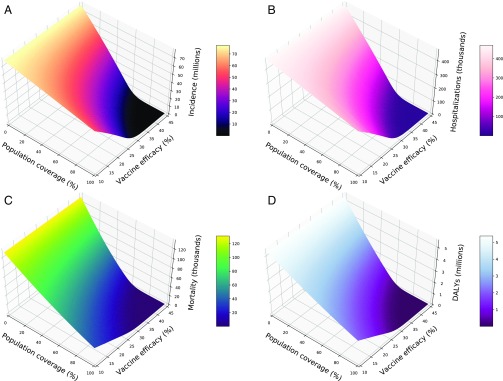
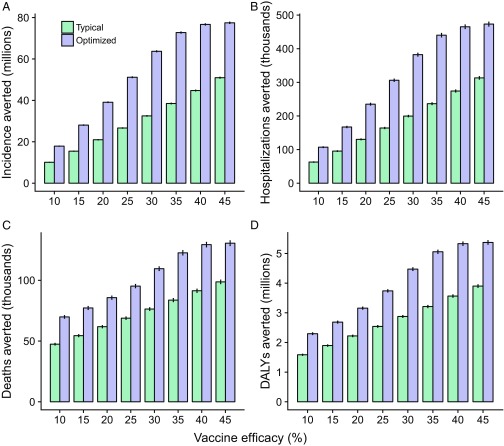
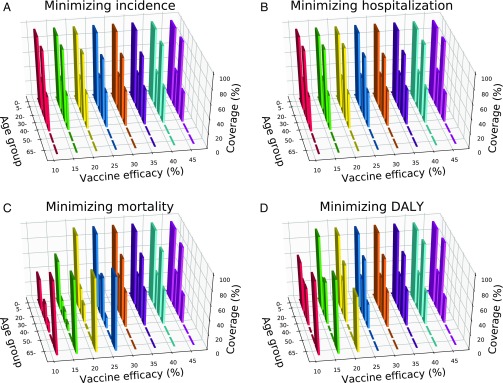
The efficacy of influenza vaccines varies from one year to the next, with efficacy during the 2017-2018 season anticipated to be lower than usual. However, the impact of low-efficacy vaccines at the population level and their optimal age-specific distribution have yet to be ascertained. Applying an optimization algorithm to a mathematical model of influenza transmission and vaccination in the United States, we determined the optimal age-specific uptake of low-efficacy vaccine that would minimize incidence, hospitalization, mortality, and disability-adjusted life-years (DALYs), respectively. We found that even relatively low-efficacy influenza vaccines can be highly impactful, particularly when vaccine uptake is optimally distributed across age groups. As vaccine efficacy declines, the optimal distribution of vaccine uptake shifts toward the elderly to minimize mortality and DALYs. Health practitioner encouragement and concerted recruitment efforts are required to achieve optimal coverage among target age groups, thereby minimizing influenza morbidity and mortality for the population overall.
Keywords: DALY; age structured; hospitalization; mathematical model; vaccination.
Conflict of interest statement
The authors declare no conflict of interest.
Figures
References
-
- Centers for Disease Control and Prevention 2017 Disease burden of influenza. Available at https://www.cdc.gov/flu/about/disease/burden.htm. Accessed December 7, 2017.
-
- Centers for Disease Control and Prevention 2017 2017-2018 influenza season week 49 ending December 9, 2017. FluView: A Weekly Influenza Surveillance Report Prepared by the Influenza Division. Available at https://www.cdc.gov/flu/weekly/weeklyarchives2017-2018/Week49.htm. Accessed December 27, 2017.
-
- Paules CI, Sullivan SG, Subbarao K, Fauci AS. Chasing seasonal influenza. The need for a universal influenza vaccine. N Engl J Med. 2017;378:7–9. - PubMed
Publication types
MeSH terms
Substances
Grants and funding
LinkOut - more resources
Full Text Sources
Other Literature Sources
Medical
