


The association of diet, gut microbiota and colorectal cancer: what we eat may imply what we get
- PMID: 29713943
- PMCID: PMC5960467
- DOI: 10.1007/s13238-018-0543-6
The association of diet, gut microbiota and colorectal cancer: what we eat may imply what we get
Abstract
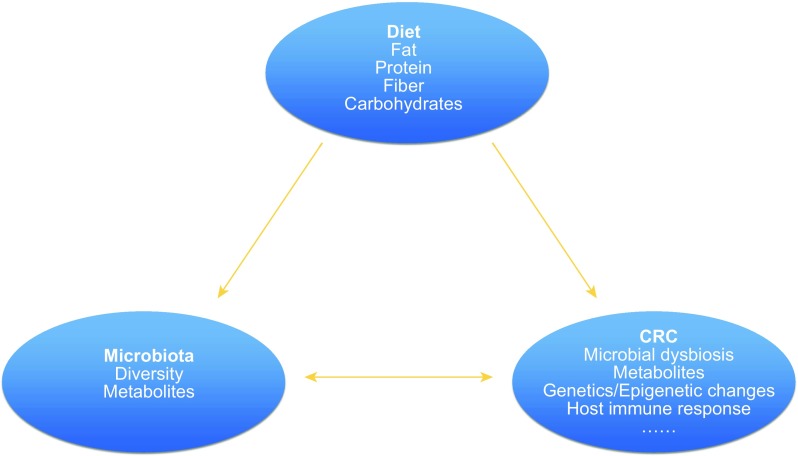
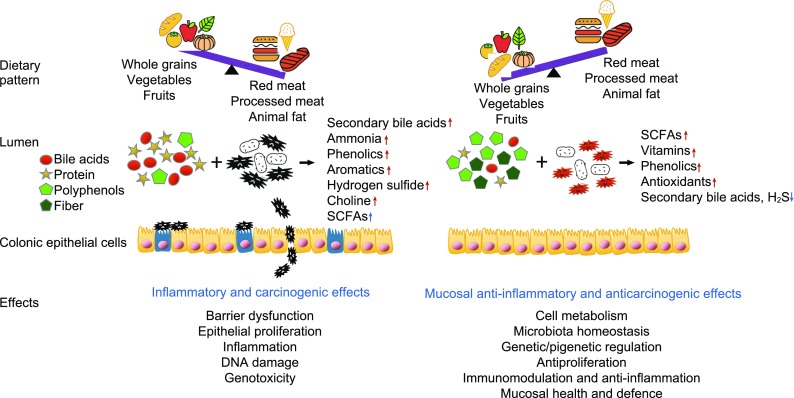
Despite the success of colonoscopy screening and recent advances in cancer treatment, colorectal cancer (CRC) still remains one of the most commonly diagnosed and deadly cancers, with a significantly increased incidence in developing countries where people are adapting to Western lifestyle. Diet has an important impact on risk of CRC. Multiple epidemiological studies have suggested that excessive animal protein and fat intake, especially red meat and processed meat, could increase the risk of developing CRC while fiber could protect against colorectal tumorigenesis. Mechanisms have been investigated by animal studies. Diet could re-shape the community structure of gut microbiota and influence its function by modulating the production of metabolites. Butyrate, one of the short-chain fatty acids (SCFAs), which act as a favorable source for colonocytes, could protect colonic epithelial cells from tumorigenesis via anti-inflammatory and antineoplastic properties through cell metabolism, microbiota homeostasis, antiproliferative, immunomodulatory and genetic/epigenetic regulation ways. In contrast, protein fermentation and bile acid deconjugation, which cause damage to colonic cells through proinflammatory and proneoplastic ways, lead to increased risk of developing CRC. In conclusion, a balanced diet with an increased abundance of fiber should be adopted to reduce the risk and prevent CRC.
Keywords: colorectal cancer; fat; fiber; gut microbiota; metabolites; protein.
Figures
References
-
- Alberts DS, Ritenbaugh C, Story JA, Aickin M, Rees-McGee S, Buller MK, Atwood J, Phelps J, Ramanujam PS, Bellapravalu S, et al. Randomized, double-blinded, placebo-controlled study of effect of wheat bran fiber and calcium on fecal bile acids in patients with resected adenomatous colon polyps. J Natl Cancer Inst. 1996;88:81–92. - PubMed
-
- Alexander DD, Weed DL, Cushing CA, Lowe KA. Meta-analysis of prospective studies of red meat consumption and colorectal cancer. Eur J Cancer Prev. 2011;20:293–307. - PubMed
-
- Bardou M, Barkun AN, Martel M. Obesity and colorectal cancer. Gut. 2013;62:933–947. - PubMed
-
- Beaumont M, Portune KJ, Steuer N, Lan A, Cerrudo V, Audebert M, Dumont F, Mancano G, Khodorova N, Andriamihaja M, et al. Quantity and source of dietary protein influence metabolite production by gut microbiota and rectal mucosa gene expression: a randomized, parallel, double-blind trial in overweight humans. Am J Clin Nutr. 2017;106:1005–1019. - PubMed
Publication types
MeSH terms
LinkOut - more resources
Full Text Sources
Other Literature Sources
Medical
