. 2018 Oct;19(10):1147-1156.
doi: 10.1016/j.jpain.2018.04.006. Epub 2018 Apr 30.

Oxidative Stress Contributes to Fracture/Cast-Induced Inflammation and Pain in a Rat Model of Complex Regional Pain Syndrome

Affiliations

Oxidative Stress Contributes to Fracture/Cast-Induced Inflammation and Pain in a Rat Model of Complex Regional Pain Syndrome

Tian-Zhi Guo et al. J Pain. 2018 Oct.

Abstract

Clinical evidence suggests that vitamin C (Vit C) may protect against the development of complex regional pain syndrome (CRPS) after fracture or surgery. Tibia fracture followed by 4 weeks of cast immobilization (fracture/cast) in rats results in nociceptive, vascular, and bone changes resembling clinical CRPS. In this study, fracture/cast rats were treated with the oxidative stress inhibitors Vit C, N-acetyl cysteine, or 4-hydroxy-2,2,6,6-tetramethylpiperidin-1-oxyl to examine their effects on CRPS-related nociceptive and vascular changes. Administration of these agents significantly reduced fracture/cast-induced cutaneous allodynia by 64 to 78%, muscle hyperalgesia by 34 to 40%, and hind limb unweighting by 48 to 89%. Treatments with Vit C and N-acetyl cysteine reduced the oxidative stress markers malondialdehyde in the skin, muscle, and sciatic nerve, and lactate in the gastrocnemius muscle of the fracture/cast limb. Furthermore, Vit C treatment inhibited the post-fracture upregulation of substance P and calcitonin gene-related peptide in the sciatic nerve and the increased expression of the pain-related inflammatory mediators, including interleukin (IL)-6, and nerve growth factor in the skin and IL-1β, and IL-6 in the muscle of the post-fracture/cast limb. These data suggest that oxidative stress may contribute to the nociceptive features of the rat CRPS model.

Perspective: Vit C reduced the CRPS-like signs, oxidative stress, and the upregulation of neuropeptide production and inflammatory mediators observed after tibia fracture and casting in rats. Limiting oxidative stress by use of Vit C or alternative strategies could reduce the risk of developing CRPS after surgery or other forms of trauma.

Keywords: Fracture; complex regional pain syndrome; cytokines; immobilization.; oxidative stress; vitamin C.


Conflict of interest statement

Competing Interests: The authors declare that they have no competing interests.

Figures

Figure 1.
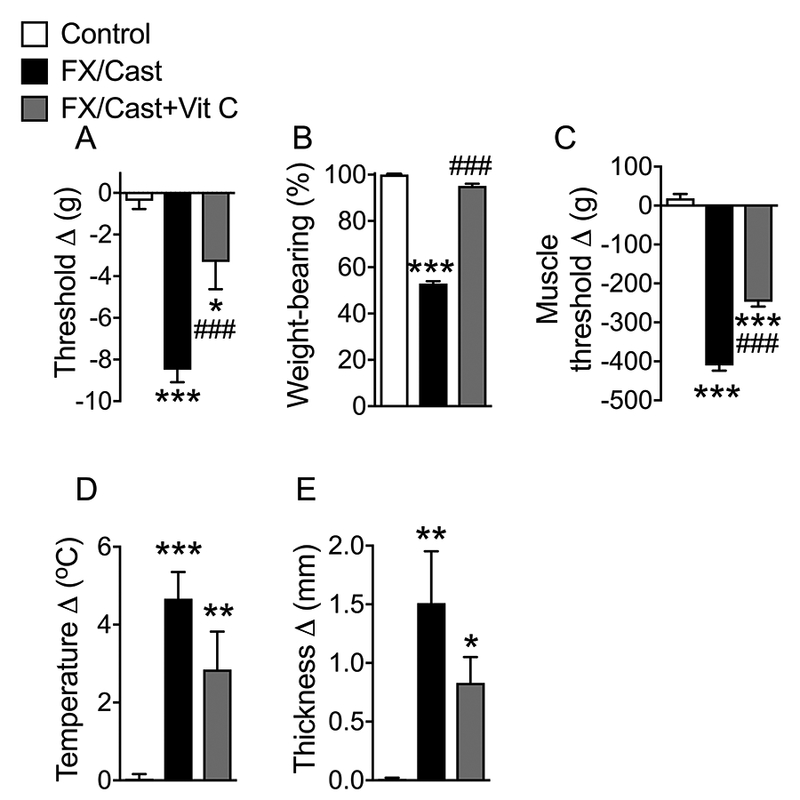
Figure 1.. Systemic vitamin C treatment prevented development of nociceptive sensitization after tibia fracture and casting.
Rats underwent distal tibia fracture with 4 weeks cast immobilization and were treated with either daily saline gavage for 4 weeks (FX/Cast) or Vit C (200 mg/kg daily gavage) for 4 weeks (FX/Cast+Vit C). Additional nonfracture rats were used as Controls. On the day after cast removal behavioral testing was performed. FX/Cast rats developed hindlimb (A) von Frey allodynia, (B) unweighting, (C) gastrocnemius mechanical hyperalgesia, (D) warmth, and (E) edema, and Vit C treatment inhibited the development of the post fracture/cast nociceptive changes, but not warmth and edema. Measurements for (A), (C), (D), and (E) represent the difference between the fracture/cast ipsilateral side (R) and the contralateral paw (L). Thus, negative values (R-L) in graphs (A) and (C) indicate allodynia and hyperalgesia, respectively, whereas positive values (R-L) in Panels (D) and (E) indicate warmth and edema, respectively. The values displayed in panel (B) represent weight-bearing on the fracture/cast hindlimb as a percentage of half of the total bilateral hindlimb weight-bearing, thus any percentage less than 100% represented fracture hindlimb unweighting. Data are expressed as mean values ± SEM and were analyzed by one way ANOVA and post-hoc Newman-Keuls multiple comparison testing (n=10 per cohort). *P < 0.05, **P < 0.01 and ***P < 0.001 vs. nonfracture Controls treated with vehicle; ###P <0.001 vs. FX/Cast treated with vehicle.
Figure 2.
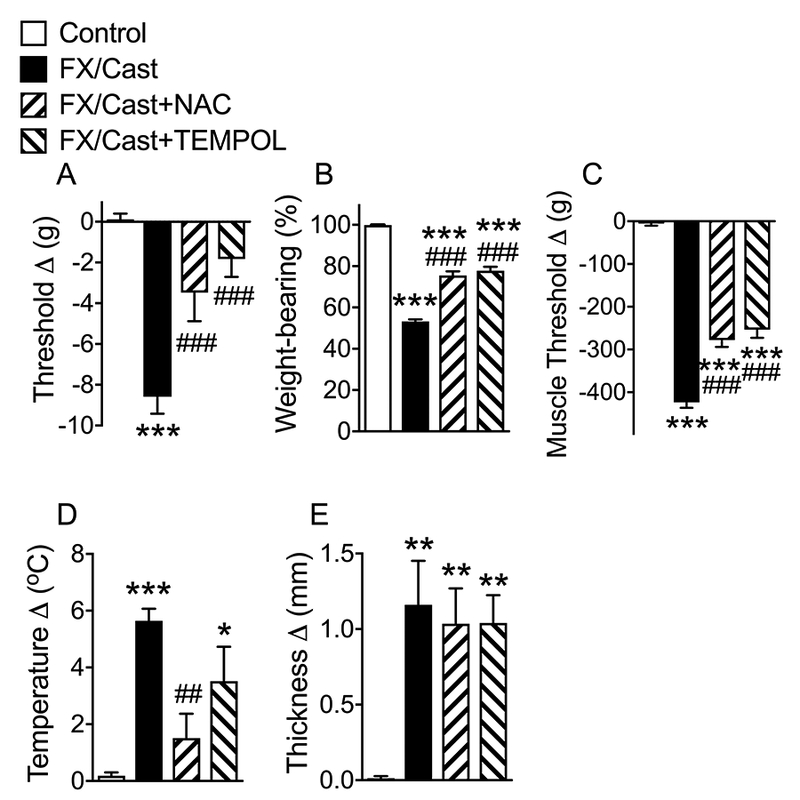
Figure 2.. Systemic NAC or TEMPOL treatment reduced nociceptive sensitization after tibia fracture and casting.
Rats underwent distal tibia fracture with 4 weeks cast immobilization, then the cast was removed and the next day the rats were injected with vehicle or drug and behavioral testing was performed 1 hour later. There were 4 treatment groups; 1) Control (nonfracture), 2) fracture/cast (FX/Cast) rats treated with i.p. saline vehicle, and fracture/cast rats treated with the antioxidants 3) NAC (200 mg/kg, i.p., FX/Cast+NAC), or 4) TEMPOL (100 mg/kg, i.p., FX/Cast+TEMPOL). Intraperitoneal injection of NAC or TEMPOL partially reversed hindpaw (A) von Frey allodynia, (B) unweighting, (C) gastrocnemius mechanical hyperalgesia, and (D) warmth (NAC but not TEMPOL), but had no effect on hindpaw (E) edema. Data are expressed as mean values ± SEM and were analyzed by one way ANOVA and post-hoc Newman-Keuls multiple comparison testing (n=10 per cohort). *P < 0.05, **P < 0.01 and ***P < 0.001 vs nonfracture Controls treated with vehicle; #P < 0.05 and ###P <0.001 vs. FX/Cast treated with vehicle
Figure 3.
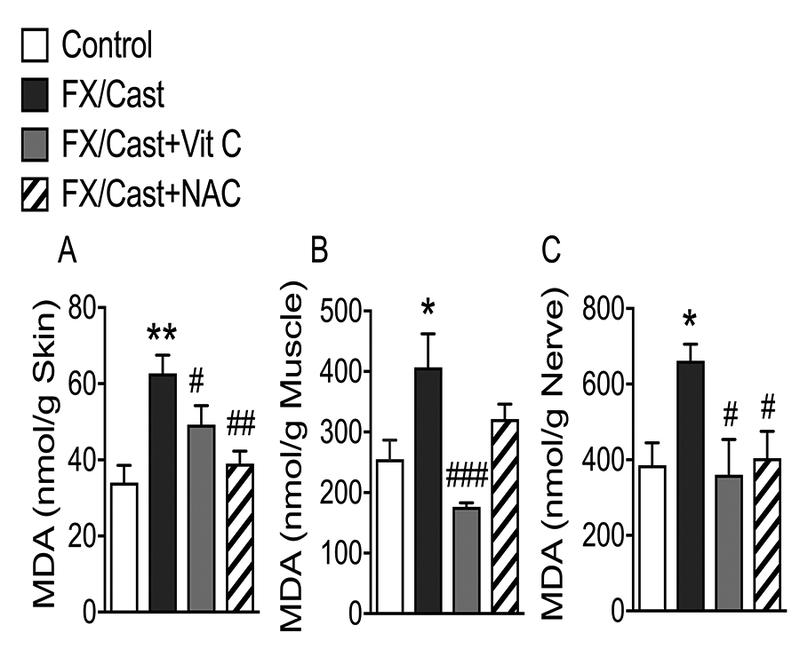
Figure 3.. Lipid peroxidation levels increased in skin, muscle and sciatic nerve after fracture/cast and Vit C or NAC treatment reversed this up regulation.
Elevated concentrations of the lipid peroxidation product malondialdehyde (MDA) were detected in the ipsilateral (A) hindpaw skin, (B) gastrocnemius muscle, and (C) sciatic nerve at 4 weeks after tibia fracture/cast. Four weeks treatment with Vit C inhibited the post-fracture/cast increase in MDA levels in skin, muscle and sciatic nerve. Intraperitoneal injection of the antioxidant NAC at 4 weeks post fracture also inhibited the increase in MDA in skin and sciatic nerve. Data are expressed as mean values ± SEM and analyzed using one-way ANOVA followed by post hoc Newman-Keuls multiple comparison testing (n=7 per cohort). *P < 0.05, **P < 0.01 and ***P < 0.001 vs. nonfracture Controls treated with vehicle; #P < 0.05, ##P < 0.01 and ###P < 0.001 vs. FX/Cast treated with vehicle.
Figure 4.
Figure 4.. Muscle lactate levels increased after fracture/cast and Vit C or NAC treatment inhibited this increase.
Muscle lactate levels were increased 100% in the ipsilateral gastrocnemius at 4 weeks after fracture/cast. Both Vit C and NAC treatments reduced the fracture/cast-induced muscle lactate increases by 82 and 73%, respectively. Data are expressed as mean values ± SEM and analyzed using one-way ANOVA followed by post hoc Newman-Keuls multiple comparison testing (n=6 per cohort). ***P < 0.001 vs. nonfracture Controls treated with vehicle; #P < 0.05 and ###P < 0.001 vs. FX/Cast treated with vehicle.
Figure 5.
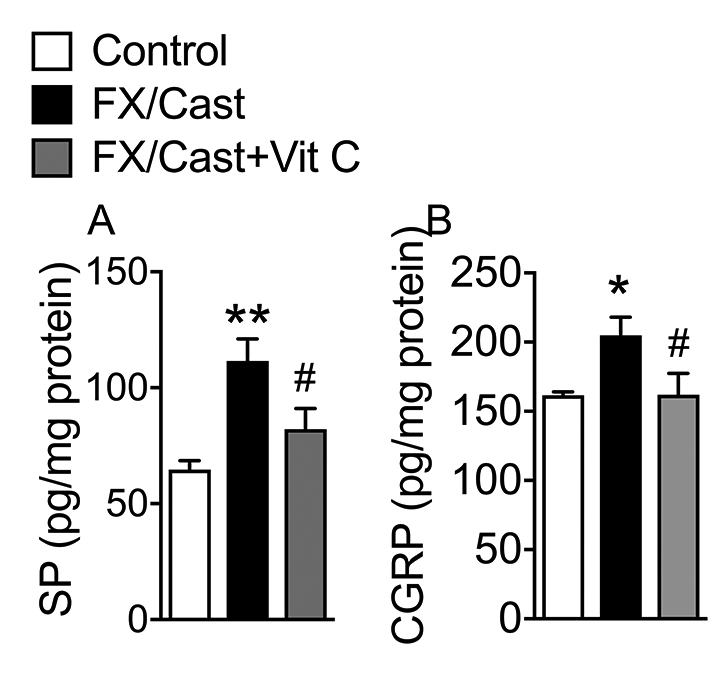
Figure 5.. Sciatic nerve SP and CGRP levels increased after fracture/cast and Vit C treatment inhibited this increase.
At 4 weeks after fracture/cast both SP (A) as well as CGRP (B) protein levels were increased in the ipsilateral sciatic nerve and a 4 week course of Vit C treatment (200 mg/kg/day p.o.) inhibited this increase. Data are expressed as mean values ± SEM and analyzed using one-way ANOVA followed by post hoc Newman-Keuls multiple comparison testing (n=7 per cohort). *P<0.05 and **P < 0.01 vs. nonfracture Controls treated with vehicle; #P < 0.05 vs. FX/Cast treated with vehicle.
Figure 6.
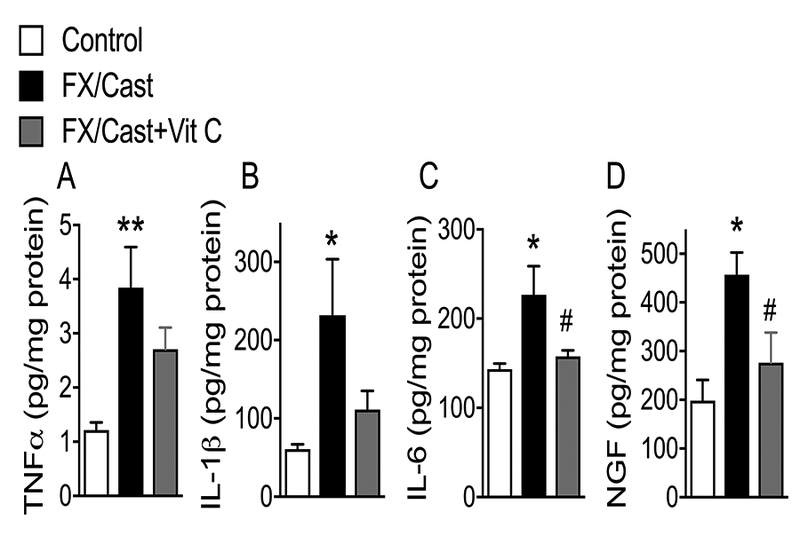
Figure 6.. Hindpaw skin inflammatory mediator levels increased after fracture/cast and Vit C treatment reversed the increases in IL-6 and NGF.
(A) TNFα, (B) IL-1β, (C) IL-6, and (D) nerve growth factor (NGF) levels in hindpaw skin were increased at 4 weeks post fracture/cast and a 4 week course of Vit C treatment (200 mg/kg/day p.o.) inhibited the increases in IL-6 and NGF. Data are expressed as mean values ± SEM and analyzed using one-way ANOVA followed by post hoc Newman-Keuls multiple comparison testing (n=6 per cohort). *P<0.05 and **P < 0.01 vs. nonfracture Controls treated with vehicle; #P < 0.05 vs. FX/Cast treated with vehicle.
Figure 7.
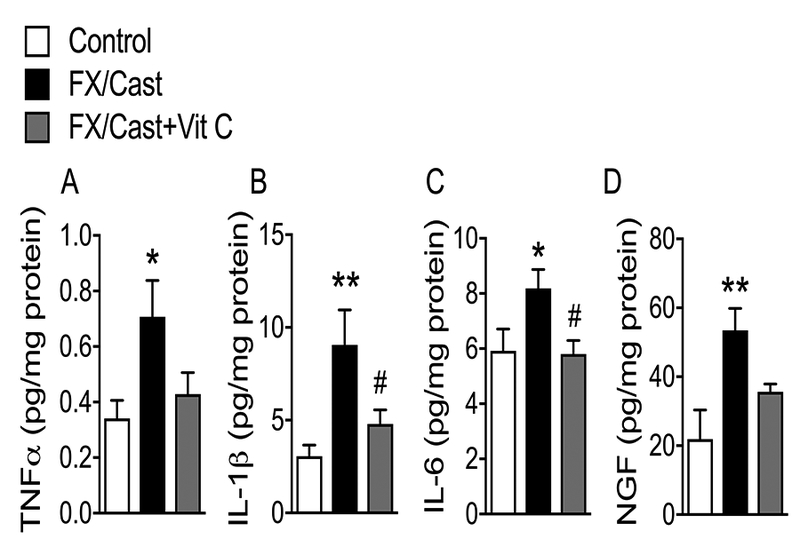
Figure 7.. Muscle inflammatory mediator levels increased after fracture/cast and Vit C treatment reversed the increases in IL-1β and IL-6.
(A) TNFα, (B) IL-1β, (C) IL-6, and (D) nerve growth factor (NGF) levels in the ipsilateral gastrocnemius muscle were increased at 4 weeks post fracture/cast and a 4 week course of Vit C treatment (200 mg/kg/day, p.o.) inhibited this increase. Data are expressed as mean values ± SEM and analyzed using one-way ANOVA followed by post hoc Newman-Keuls multiple comparison testing (n=7 per cohort). *P<0.05 and **P < 0.01 vs. nonfracture Controls treated with vehicle; #P < 0.05 vs. FX/Cast treated with vehicle.

References

    1. Balazs L, Leon M. Evidence of an oxidative challenge in the Alzheimer’s brain. Neurochemical research. 19:1131–1137, 1994 - PubMed
    1. Baykal T, Seferoglu B, Karsan O, Kiziltunc A, Senel K. Antioxidant profile in patients with complex regional pain syndrome type I. International journal of rheumatic diseases. 17:156–158, 2014 - PubMed
    1. Besse JL, Gadeyne S, Galand-Desme S, Lerat JL, Moyen B. Effect of vitamin C on prevention of complex regional pain syndrome type I in foot and ankle surgery. Foot and ankle surgery : official journal of the European Society of Foot and Ankle Surgeons. 15:179–182, 2009 - PubMed
    1. Birklein F, Ibrahim A, Schlereth T, Kingery WS. The rodent tibia fracture model: a critical review and comparison with the complex regional pain syndrome literature. J Pain. In Press, 2018 - PMC - PubMed
    1. Birklein F, Weber M, Neundorfer B. Increased skin lactate in complex regional pain syndrome: evidence for tissue hypoxia? Neurology. 55:1213–1215, 2000 - PubMed

Publication types

MeSH terms