


Long working hours and sickness absence-a fixed effects design
- PMID: 29720132
- PMCID: PMC5930848
- DOI: 10.1186/s12889-018-5473-y
Long working hours and sickness absence-a fixed effects design
Abstract
Background: While long working hours seem to lead to impaired health, several studies have also shown that long working hours are related to lower levels of sickness absence. Previous studies on the relationship between long working hours and sickness absence have compared those who work long hours to those who do not, looking only at between-individual correlations. Those results might therefore reflect relatively stable differences between employees who typically work long hours and employees who typically do not. The aim of the present study is to examine within-individual correlations between long working hours and sickness absence.
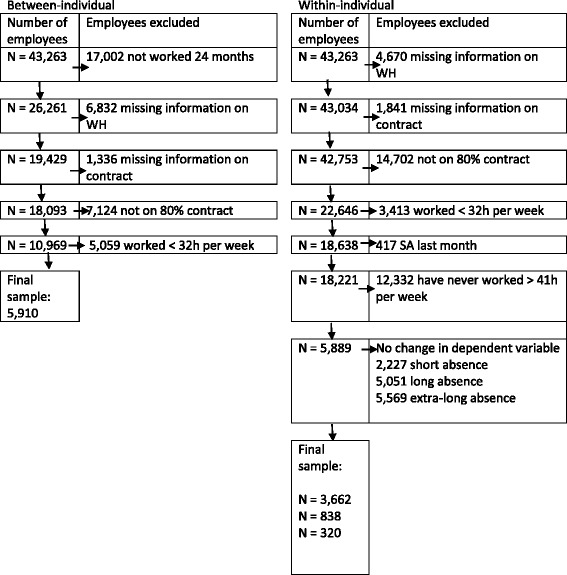
Methods: Records from the Human Resources department in a large Norwegian hospital from 2012 to 2015 provided objective data on both working hours and sickness absence. Two analyses were performed: a prospective cohort analysis to replicate the results from previous between-individual analyses and a second analysis of within-individual correlations using a fixed effect design.
Results: In line with existing research, both between-individual and within-individual analyses showed a negative relationship between long working hours (> 48 h/week) and short-term sickness absence (1-8 days) and no significant difference in incidence of long-term sickness absence (> 8 days).
Conclusions: The results indicate that the negative relationship between long working hours and sickness absence is not due only to relatively stable individual differences between those who typically work long hours and those who do not. The results from both analyses therefore still contrast with previous research showing a negative relationship between long working hours and other health indicators.
Keywords: Fixed effects; Long working hours; Sickness absence; Work hours.
Conflict of interest statement
Ethics approval and consent to participate
The study conformed to the principles embodied in the Declaration of Helsinki.
Permission to access the data was sought from the participating hospital, which was also responsible for anonymizing the data before being passed on to the project group.
The project was reported to the Norwegian Social Science Data Service (NSD), ensuring compliance with all ethical requirements for data collection, data storage, and data handling (ref: 40900 / 3 / LT). NSD is the Data Protection Official for Research for all Norwegian universities and university colleges, as well as for several hospitals and research institutes. According to national regulations, most research must only be submitted to NSD, which also evaluates the need for further ethical approval by the Data Inspectorate (
Competing interests
The author declares that they have no competing interests.
Publisher’s Note
Springer Nature remains neutral with regard to jurisdictional claims in published maps and institutional affiliations.
References
MeSH terms
Grants and funding
LinkOut - more resources
Full Text Sources
Other Literature Sources
