Adolescent clinical populations and associations between trauma and behavioral and emotional problems
- PMID: 29723033
- PMCID: PMC6215522
- DOI: 10.1037/tra0000371
Adolescent clinical populations and associations between trauma and behavioral and emotional problems
Abstract
Objective: Trauma exposure is common during childhood and adolescence and is associated with youth emotional and behavioral problems. The present study adds to the current literature on trauma exposure among adolescent clinical populations by examining the association between trauma exposure and adolescent self-report of emotional and behavioral problems broadly, including internalizing and externalizing symptoms, in addition to the trauma-specific symptoms of posttraumatic stress disorder (PTSD).
Method: This study included 94 female (64%) and male (36%) adolescents, ages 13-19, representing 4 clinical populations: those seeking inpatient psychiatry, outpatient psychiatry, residential substance abuse, and outpatient medical services. Adolescents self-reported trauma history and internalizing, externalizing, and PTSD symptoms.
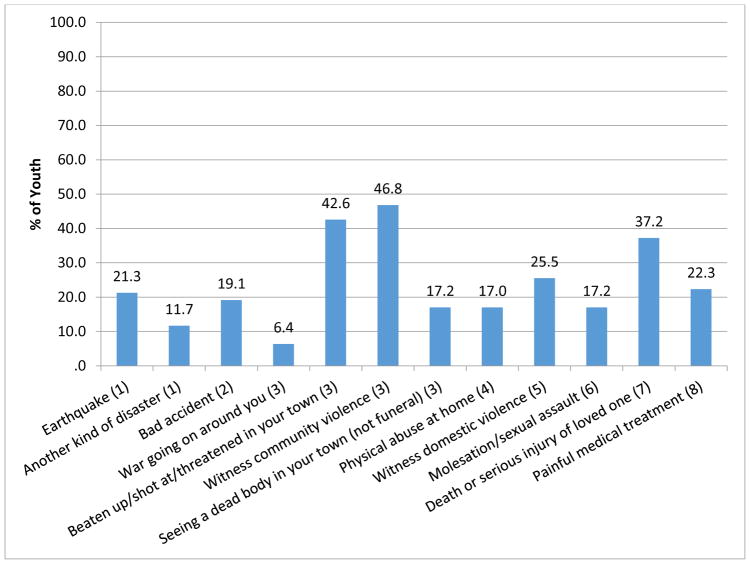
Results: Most adolescents reported experiencing at least 1 traumatic event (83%; M = 2.28, SD = 1.83). Multiple regression analyses controlling for age, race/ethnicity, gender, and treatment setting indicated a greater number of types of trauma are associated with externalizing symptoms (β = .31, p < .01) and PTSD symptoms (β = .35, p < .01).
Conclusion: Trauma is a common experience among adolescents, particularly those presenting for behavioral health services, making trauma-informed care essential in these service delivery settings. Treatment that addresses adolescent risk behaviors and prevents recurrent trauma may be particularly important given the negative impact of multiple traumatic events on developing adolescents. (PsycINFO Database Record (c) 2019 APA, all rights reserved).
Figures
References
-
- Achenbach TM. Manual for the Youth Self-Report and 1991 Profile. Burlington, VT: University of Vermont Department of Psychiatry; 1991.
-
- Achenbach TM, Rescorla LA. Manual for the ASEBA School-Age Forms & Profiles. Burlington, VT: University of Vermont, Research Center for Children, Youth, & Families; 2001.
-
- American Psychiatric Association. Diagnostic and Statistical Manual of Mental Disorders (4th Edition, Text Revision) Washington, DC: American Psychiatric Association; 2000.
-
- American Psychiatric Association. Diagnostic and Statistical Manual of Mental Disorders. 5. American Psychiatric Association; 2013.
-
- Begle AM, Hanson RF, Danielson CK, McCart MR, Ruggiero KJ, Amstadter AB, … Kilpatrick DG. Longitudinal pathways of victimization, substance use, and delinquency: Findings from the National Survey of Adolescents. Addictive Behaviors. 2011;36(7):682–689. doi: 10.1016/j.addbeh.2010.12.026. - DOI - PMC - PubMed
MeSH terms
Grants and funding
LinkOut - more resources
Full Text Sources
Other Literature Sources
Medical