


Increased Ca++ uptake by erythrocytes infected with malaria parasites: Evidence for exported proteins and novel inhibitors
- PMID: 29726084
- PMCID: PMC6113089
- DOI: 10.1111/cmi.12853
Increased Ca++ uptake by erythrocytes infected with malaria parasites: Evidence for exported proteins and novel inhibitors
Abstract
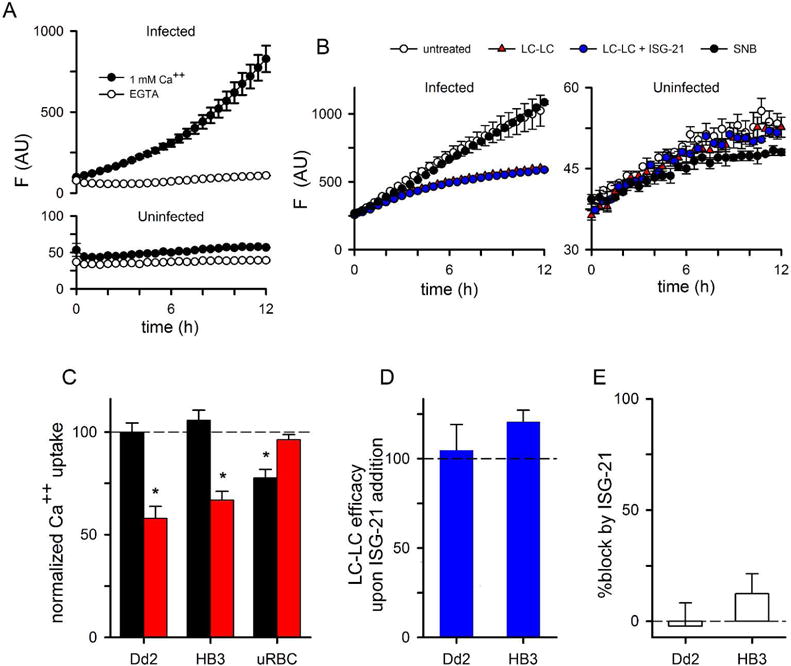
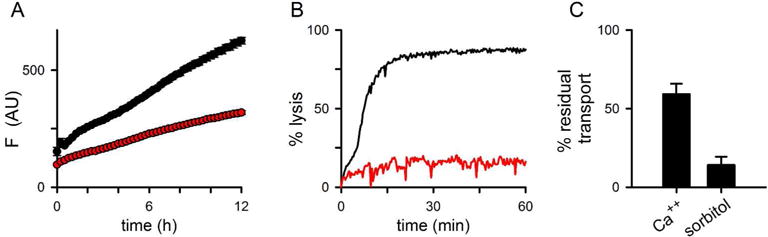
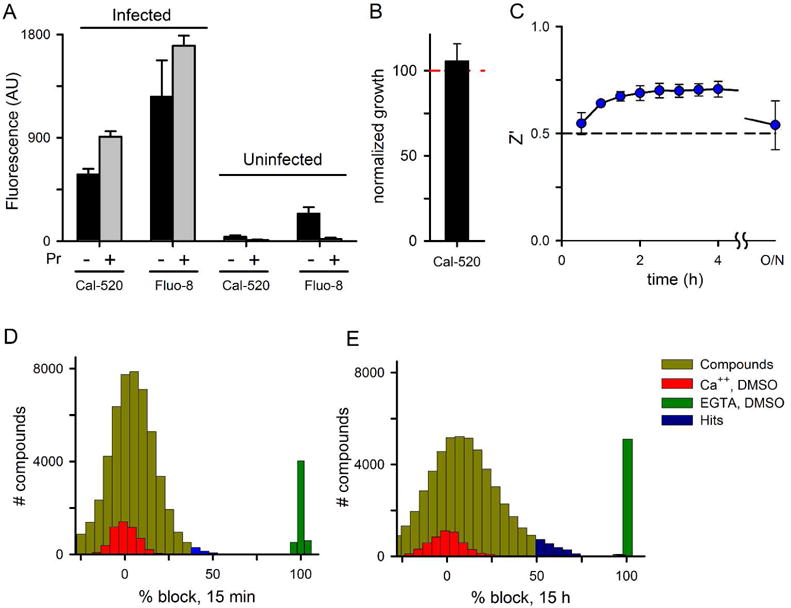
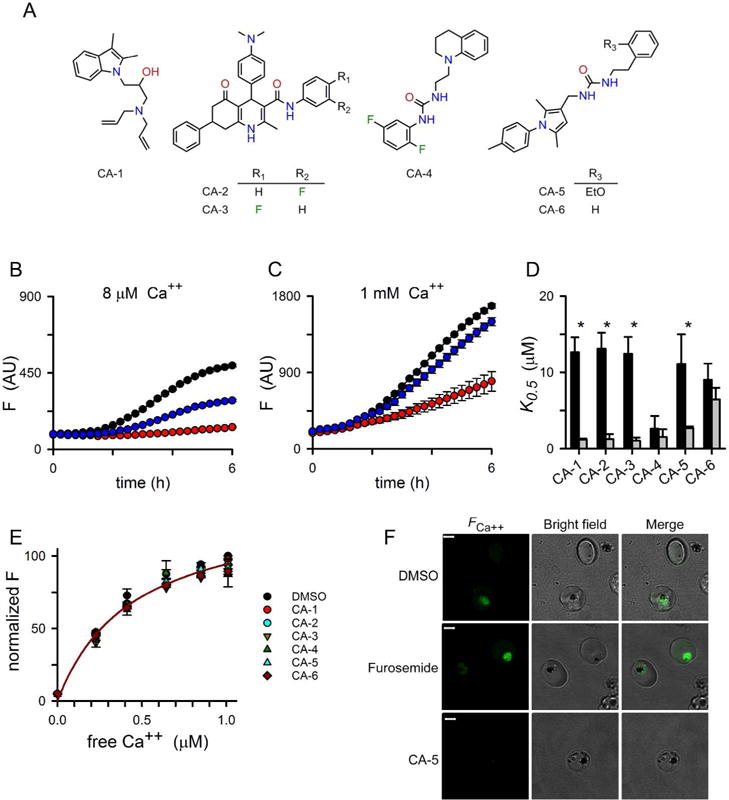
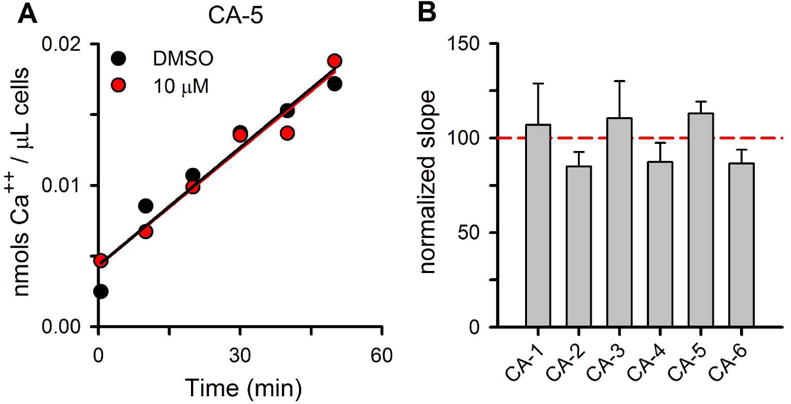
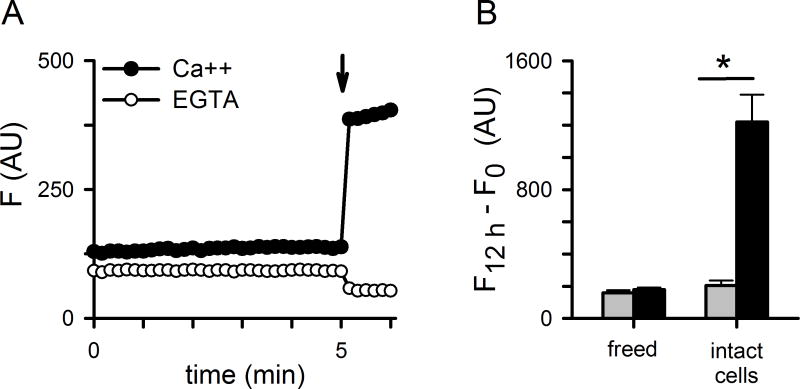
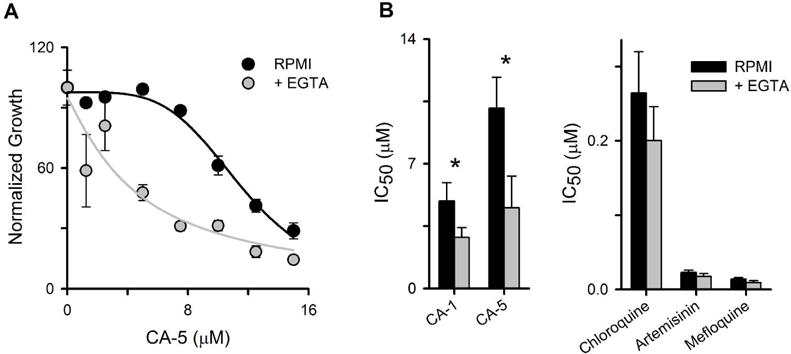
Malaria parasites export many proteins into their host erythrocytes and increase membrane permeability to diverse solutes. Although most solutes use a broad-selectivity channel known as the plasmodial surface anion channel, increased Ca++ uptake is mediated by a distinct, poorly characterised mechanism that appears to be essential for the intracellular parasite. Here, we examined infected cell Ca++ uptake with a kinetic fluorescence assay and the virulent human pathogen, Plasmodium falciparum. Cell surface labelling with N-hydroxysulfosuccinimide esters revealed differing effects on transport into infected and uninfected cells, indicating that Ca++ uptake at the infected cell surface is mediated by new or altered proteins at the host membrane. Conditional knockdown of PTEX, a translocon for export of parasite proteins into the host cell, significantly reduced infected cell Ca++ permeability, suggesting involvement of parasite-encoded proteins trafficked to the host membrane. A high-throughput chemical screen identified the first Ca++ transport inhibitors active against Plasmodium-infected cells. These novel chemical scaffolds inhibit both uptake and parasite growth; improved in vitro potency at reduced free [Ca++ ] is consistent with parasite killing specifically via action on one or more Ca++ transporters. These inhibitors should provide mechanistic insights into malaria parasite Ca++ transport and may be starting points for new antimalarial drugs.
Keywords: Plasmodium falciparum; calcium transport; high-throughput screen; inhibitors; malaria.
Published 2018. This article is a U.S. Government work and is in the public domain in the USA.
Figures
References
-
- Alkhalil A, Cohn JV, Wagner MA, Cabrera JS, Rajapandi T, Desai SA. Plasmodium falciparum likely encodes the principal anion channel on infected human erythrocytes. Blood. 2004;104:4279–4286. - PubMed
-
- Anjaneyulu PS, Staros JV. Reactions of N-hydroxysulfosuccinimide active esters. Int J Pept Protein Res. 1987;30:117–124. - PubMed
-
- Benjamini Y, Krieger AM, Yekutieli D. Adaptive linear step-up procedures that control the false discovery rate. Biometrika. 2006;93:491–507.
Publication types
MeSH terms
Substances
Grants and funding
LinkOut - more resources
Full Text Sources
Other Literature Sources
