


What can we learn from problem-based learning tutors at a graduate entry medical school? A mixed method approach
- PMID: 29728090
- PMCID: PMC5935969
- DOI: 10.1186/s12909-018-1214-2
What can we learn from problem-based learning tutors at a graduate entry medical school? A mixed method approach
Abstract
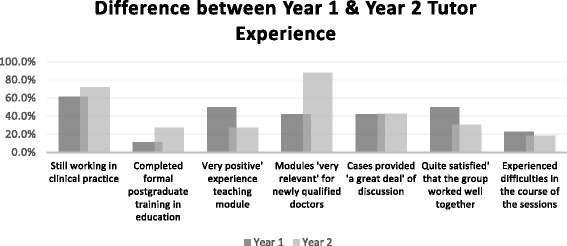
Problem-based learning (PBL) has been adopted by many medical schools as an innovative method to deliver an integrated medical curriculum since its inception at McMaster University (Dornan et al., Med Educ 39(2):163-170, 2005; Finucane et al., Med Educ 35(1):56-61, 2001; Barrows, Tutorials in problem-based learning: A new direction in teaching the health professions, 1984). The student experience in PBL has been explored in detail (Merriam, New Directions for Adult and Continuing Education 89: 3-13, 2001; Azer, Kaohsiung J Med Sci 25(5): 240-249, 2009; Boelens et al., BMC Med Ed 15(1): 84, 2015; Dolmans et al., Med Teach 24(2):173-180, 2002; Lee et al., Med Teach 35(2): e935-e942, 2013) but the tutors who facilitate PBL have valuable insight into how PBL functions and this aspect has not been extensively researched. The integrated curriculum for years 1 and 2 at the Graduate Entry Medical School at the University of Limerick is delivered though problem-based learning (PBL). This programme requires collaborative teamwork between students and the tutors who facilitate small-group tutorial sessions. All PBL tutors at GEMS are medically qualified, with the majority (68%) currently working in clinical practice.
Methods: A mixed-methods approach was adopted, utilising two surveys and follow-up focus groups to fully understand the tutor experience. Thirty-three tutors took part in two online surveys with a response rate of 89%. Thirteen tutors participated in two focus groups. Descriptive analysis was completed on survey data and thematic analysis on focus group discussions which highlighted five main themes.
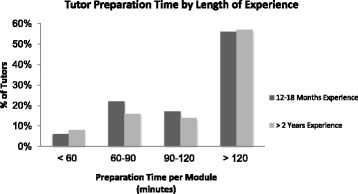
Results: Tutors reported challenges with managing group dynamics, development of confidence in tutoring with experience and a willingness to learn from peers to improve practice. Findings are in keeping with previously published work. Results also identified several less commonly discussed issues impacting student engagement in PBL including the use of mobile device technology, unauthorised access to learning objectives and PBL cases, and the importance and need for professional development amongst tutors, including the impact of tutoring on clinical practice. This study revealed that experienced tutors spend considerable time preparing for PBL tutorials in the basic sciences and that this input is rewarded by the benefits it brings to their clinical practice.
Conclusions: Understanding PBL from the tutor's perspective reveals valuable insights which can inform ongoing tutor development and support. Limited research exists in the area of PBL tutor's experiences which may be of interest to medical educators, clinicians and the wider medical community. Findings highlight the value of shared tutor experiences as a resource that can be capitalised on to benefit both novice and experienced tutors.
Keywords: Graduate entry medicine; Problem-based learning; Small group learning; Tutor experience.
Conflict of interest statement
Authors’ information
Diane O Doherty is a research assistant at the Graduate Entry Medical School at the University of Limerick.
Dr. Helena Mc Keague is a Senior Lecturer in Medical Education and PBL Co-ordinator at the Graduate Entry Medical School at the University of Limerick.
Dr. Sarah Harney is a Lecturer in Medical Education at the Graduate Entry Medical School at the University of Limerick.
Dr. Gerard Browne is Academic Lead Clinical Skills and Admissions at the School of Medicine at the University of Central Lancashire.
Professor Deirdre Mc Grath is Director of Education at the Graduate Entry Medical School at the University of Limerick.
Ethics approval and consent to participate
Ethical approval was sought and approved from the University of Limerick’s Faculty of Education and Health Science ethics committee (2016_06_23_EHS). Written consent was given by all participants.
Competing interests
The authors declare that they have no competing interests.
Publisher’s Note
Springer Nature remains neutral with regard to jurisdictional claims in published maps and institutional affiliations.
Figures
References
-
- Barrows H. A specific problem-based. Self-directed learning method designed to teach medical problem-solving skills, and enhance knowledge retention and recall. In: Schmidt HG, Devolder ML, ed. by. Tutorials in problem-based learning: a new direction in teaching the health professions. 1st. Assen/Maastricht: Van Gorcum; 1984 p. 16–32.
-
- Merriam SB. Andragogy and self-directed learning: pillars of adult learning theory. New Directions for Adult and Continuing Education. 2001;89:3–13. doi: 10.1002/ace.3. - DOI
MeSH terms
LinkOut - more resources
Full Text Sources
Other Literature Sources
