


Cardiovascular risk factors in adolescents with prediabetes
- PMID: 29729052
- PMCID: PMC6218322
- DOI: 10.1111/dme.13661
Cardiovascular risk factors in adolescents with prediabetes
Abstract
Aims: Adolescents with Type 2 diabetes are more likely to have cardiovascular disease (CVD) risk factors but there are few data available among adolescents with prediabetes. We characterized CVD risk factors among adolescents with prediabetes in the USA and compared levels of those risk factors with adolescents with normal glucose.
Methods: The 2005-2014 National Health and Nutrition Examination Survey, a nationally representative cross-sectional survey, included 2843 adolescents aged 12-19 years after excluding those with diabetes. Prediabetes was based on an HbA1c , a fasting plasma glucose or a 2-h plasma glucose. We determined cardiometabolic risk factors in adolescents using age-appropriate cut-off points. We calculated odds ratios (OR) and 95% confidence intervals (CI) of these outcomes associated with having prediabetes compared with normal glucose levels.
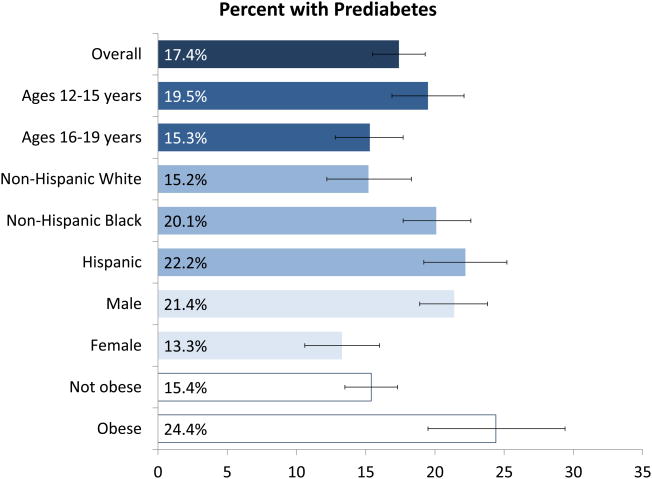
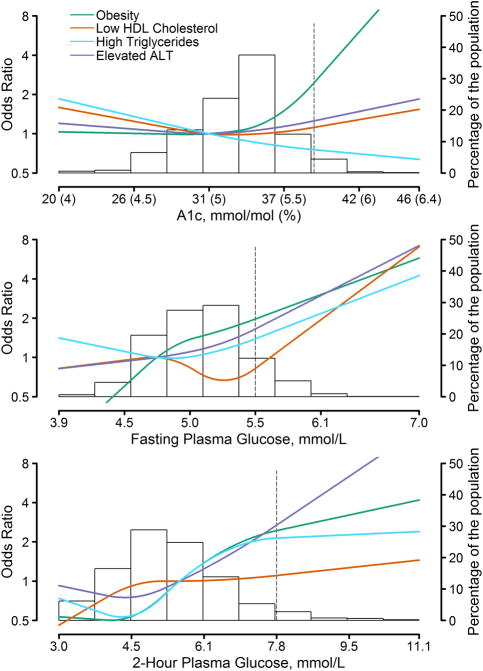
Results: The weighted prevalence of prediabetes was 17.4%. After adjustment, prediabetes (vs. normal glucose) was associated with obesity (OR 1.86, 95% CI 1.35-2.55), low HDL-cholesterol (OR 1.62, 95% CI 1.08-2.44), high triglycerides (OR 1.61, 95% CI 1.12-2.30) and elevated liver transaminase (OR 2.09, 95% CI 1.19-3.67), but not with hypertension (OR 1.77, 95% CI 0.88-3.54), elevated total cholesterol (OR 1.30, 95% CI 0.82-2.06), elevated LDL-cholesterol (OR 1.59, 95% CI 0.88-2.88) or albuminuria (OR 1.24, 95% CI 0.76-2.02).
Conclusions: US adolescents with prediabetes are more likely to have obesity, low HDL-cholesterol, high triglycerides and elevated liver transaminase than adolescents with normal glucose. Addressing prediabetes in youth is important for the prevention of Type 2 diabetes and long-term comorbidity.
Published 2018. This article has been contributed to by US Government employees and their work is in the public domain in the USA.
Figures
References
-
- Liu J, Joshi D, Sempos CT. Non-high-density-lipoprotein cholesterol and cardiovascular risk factors among adolescents with and without impaired fasting glucose. Appl Physiol Nutr Metab. 2009;34:136–142. - PubMed
Grants and funding
LinkOut - more resources
Full Text Sources
Other Literature Sources
Miscellaneous
