


Delirium as a predictor of mortality in US Medicare beneficiaries discharged from the emergency department: a national claims-level analysis up to 12 months
- PMID: 29730630
- PMCID: PMC5942463
- DOI: 10.1136/bmjopen-2017-021258
Delirium as a predictor of mortality in US Medicare beneficiaries discharged from the emergency department: a national claims-level analysis up to 12 months
Abstract
Background: Delirium is common among seniors discharged from the emergency department (ED) and associated with increased risk of mortality. Prior research has addressed mortality associated with seniors discharged from the ED with delirium, however has generally relied on data from one or a small number of institutions and at single time points.
Objectives: Analyse mortality rates among seniors discharged from the ED with delirium up to 12 months at the national level.
Design: Retrospective cohort study.
Setting: Analysed data from the Centers for Medicare & Medicaid Services limited data sets for 2012-2013.
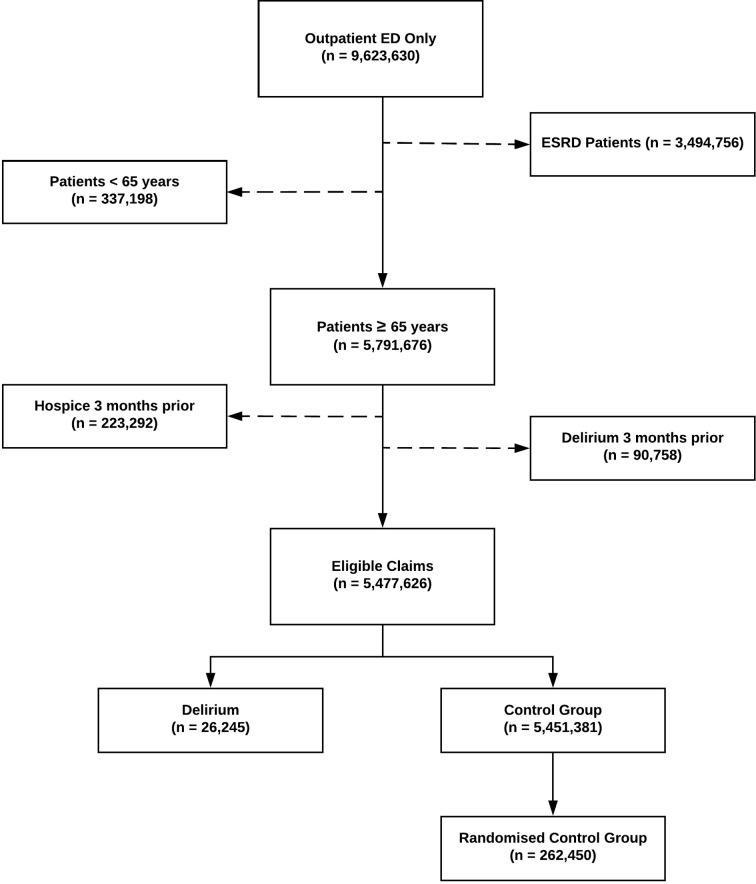
Participants: Medicare fee-for-service beneficiaries aged 65 years or older discharged from the ED. We focused on new incident cases of delirium, patients with any prior claims for delirium, hospice claims or end-stage renal disease were excluded. Sample size included 26 245 delirium claims, and a randomly selected sample of 262 450 controls.
Outcome measures: Mortality within 12 months after discharge from the ED, excluding patients transferred or admitted as inpatients.
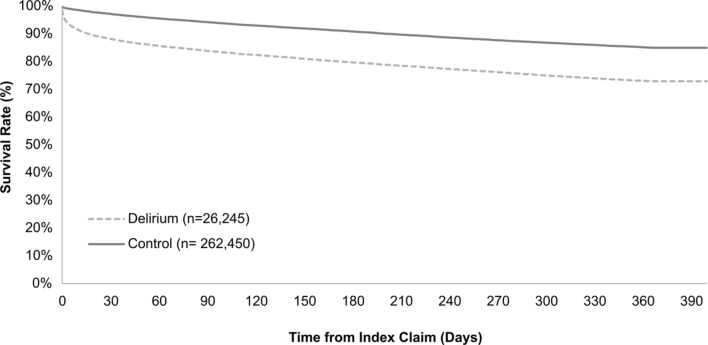
Results: Among all beneficiaries, 46 508 (16.1%) died within 12 months, of which 39 404 (15.0%) were in the non-delirium (ie, control group) and 7104 (27.1%) were in the delirium cohort, respectively. Mortality was strongest at 30 days with an adjusted HR of 4.82 (95% CI 4.60 to 5.04). Over time, delirium was consistently associated with increased mortality risk compared with controls up to 12 months (HR 2.07; 95% CI 2.01 to 2.13). Covariates that affected mortality included older age, comorbidity and presence of dementia.
Conclusions: Our results demonstrate delirium is a significant marker of mortality among seniors in the ED, and mortality risk is most salient in the first 3 months following an ED visit. Given the significant clinical and financial implications, there is a need to increase delirium screening and management within the ED to help identify and treat this potentially fatal condition.
Keywords: claims data; delirium; geriatrics; mortality.
© Article author(s) (or their employer(s) unless otherwise stated in the text of the article) 2018. All rights reserved. No commercial use is permitted unless otherwise expressly granted.
Conflict of interest statement
Competing interests: None declared.
Figures
References
-
- Albert M, McCaig L, Ashman J. Emergency department visits by persons aged 65 and over. United States: NCHS Data Brief, 2013:130. - PubMed
MeSH terms
LinkOut - more resources
Full Text Sources
Other Literature Sources
Medical
