


Dopamine Modulates Option Generation for Behavior
- PMID: 29731299
- PMCID: PMC5981001
- DOI: 10.1016/j.cub.2018.03.069
Dopamine Modulates Option Generation for Behavior
Abstract
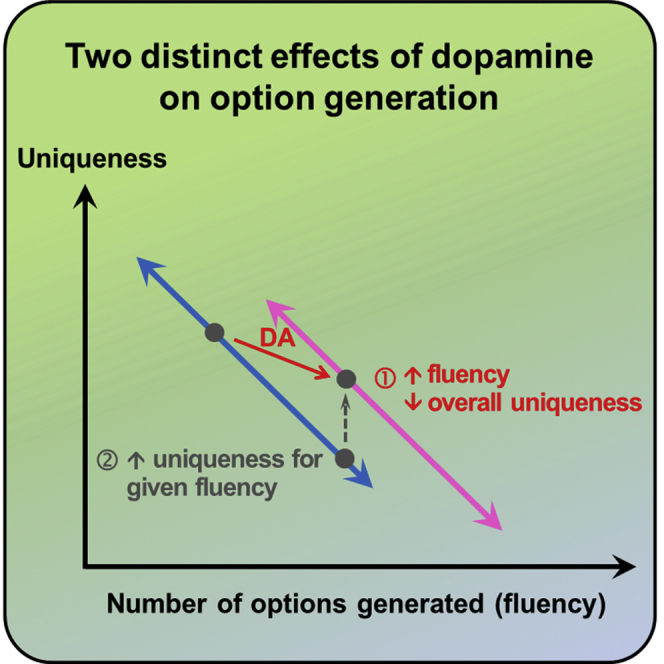
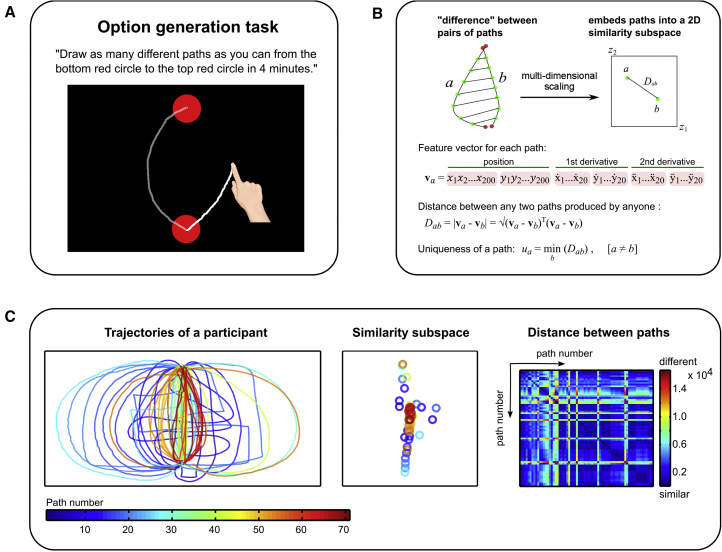
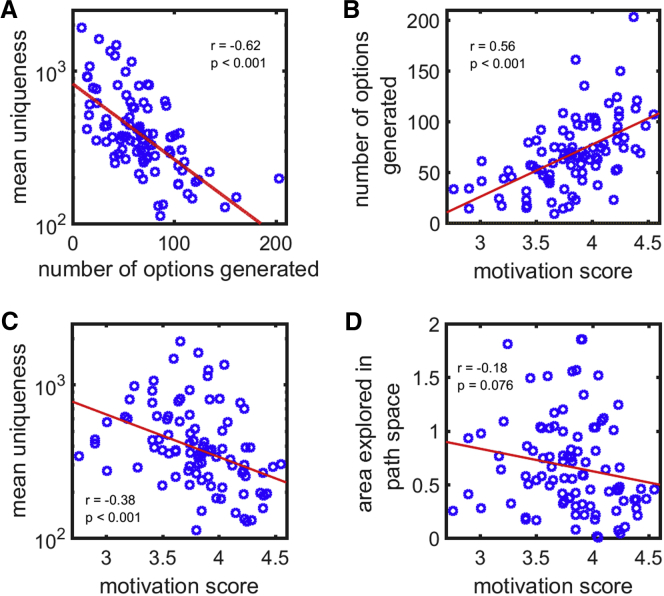
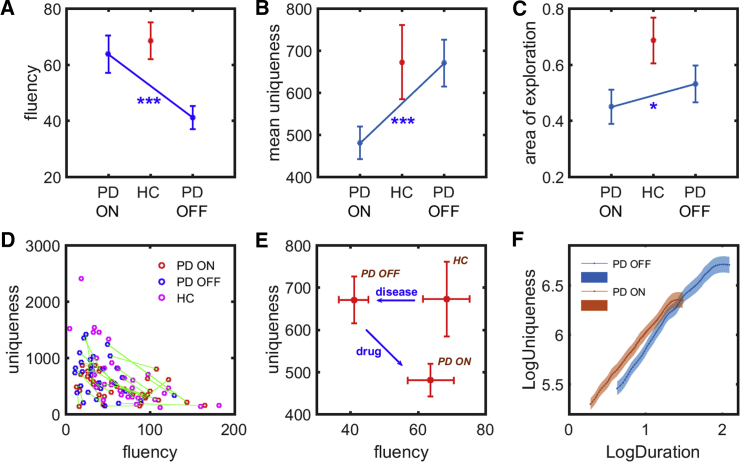
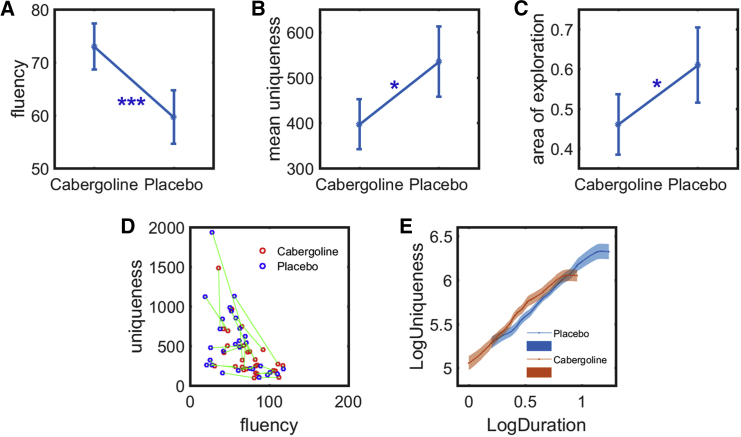
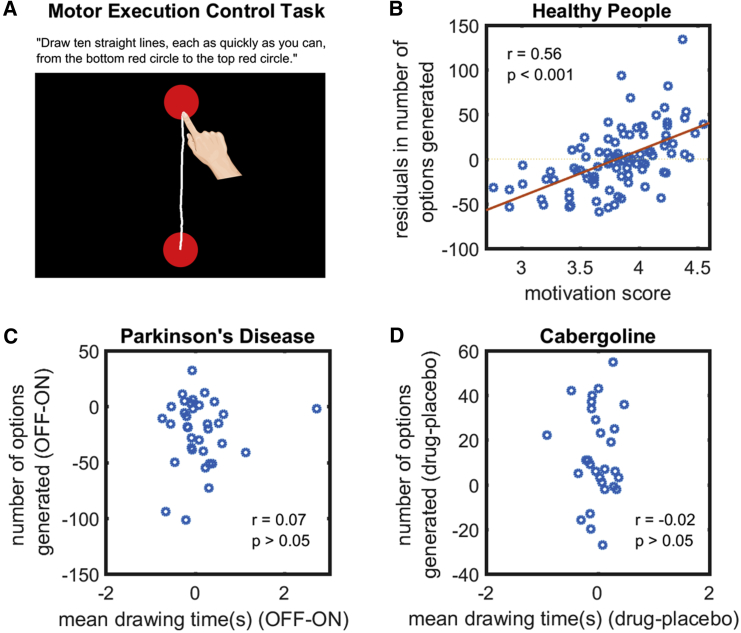
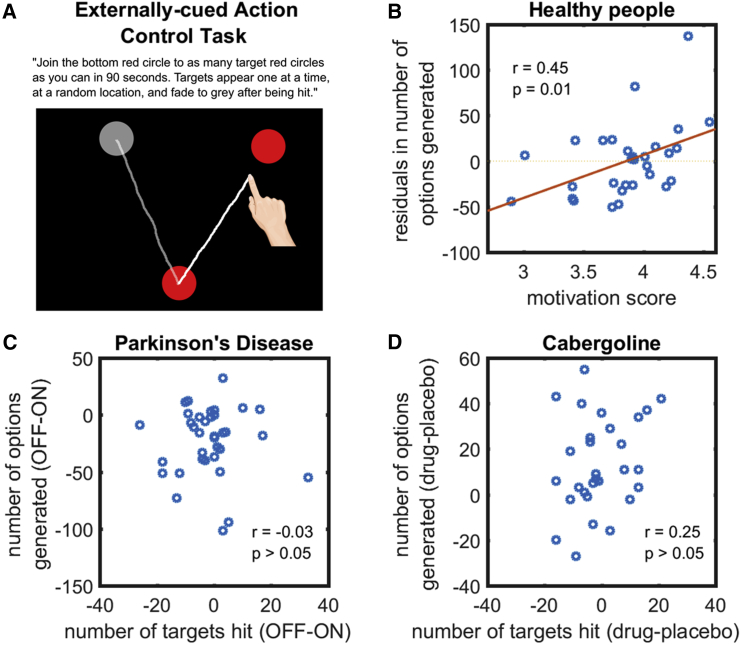
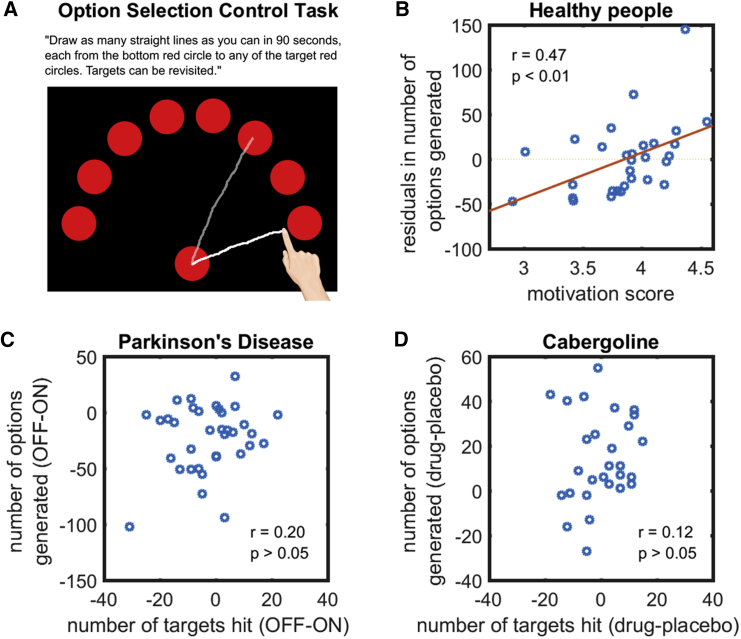
Animals make innumerable decisions every day, each of which involves evaluating potential options for action. But how are options generated? Although much is now known about decision making when a fixed set of potential options is provided, surprisingly little progress has been made on self-generated options. Some researchers have proposed that such abilities might be modulated by dopamine. Here, we used a new measure of option generation that is quantitative, objective, and culture fair to investigate how humans generate different behavioral options. Participants were asked to draw as many different paths (options) as they could between two points within a fixed time. Healthy individuals (n = 96) exhibited a trade-off between uniqueness (how individually different their options were) and fluency (number of options), generating either many similar or few unique options. To assess influence of dopamine, we first examined patients with Parkinson's disease (n = 35) ON and OFF their dopaminergic medication and compared them to elderly healthy controls (n = 34). Then we conducted a double-blind, placebo-controlled crossover study of the D2 agonist cabergoline in healthy older people (n = 29). Across both studies, dopamine increased fluency but diminished overall uniqueness of options generated, due to the effect of fluency trading off with uniqueness. Crucially, however, when this trade-off was corrected for, dopamine was found to increase uniqueness for any given fluency. Three carefully designed control studies showed that performance on our option-generation task was not related to executing movements, planning actions, or selecting between generated options. These findings show that dopamine plays an important role in modulating option generation.
Keywords: Parkinson’s disease; apathy; cabergoline; creativity; decision making; dopamine; option generation.
Copyright © 2018 The Author(s). Published by Elsevier Ltd.. All rights reserved.
Figures
References
-
- Glimcher P.W., Rustichini A. Neuroeconomics: the consilience of brain and decision. Science. 2004;306:447–452. - PubMed
-
- Kalis A., Mojzisch A., Schweizer T.S., Kaiser S. Weakness of will, akrasia, and the neuropsychiatry of decision making: an interdisciplinary perspective. Cogn. Affect. Behav. Neurosci. 2008;8:402–417. - PubMed
-
- Kaiser S., Simon J.J., Kalis A., Schweizer S., Tobler P.N., Mojzisch A. The cognitive and neural basis of option generation and subsequent choice. Cogn. Affect. Behav. Neurosci. 2013;13:814–829. - PubMed
Publication types
MeSH terms
Substances
Grants and funding
LinkOut - more resources
Full Text Sources
Other Literature Sources
Medical
Miscellaneous
