


Evidence of Serial Processing in Visual Word Recognition
- PMID: 29733752
- PMCID: PMC6050133
- DOI: 10.1177/0956797617751898
Evidence of Serial Processing in Visual Word Recognition
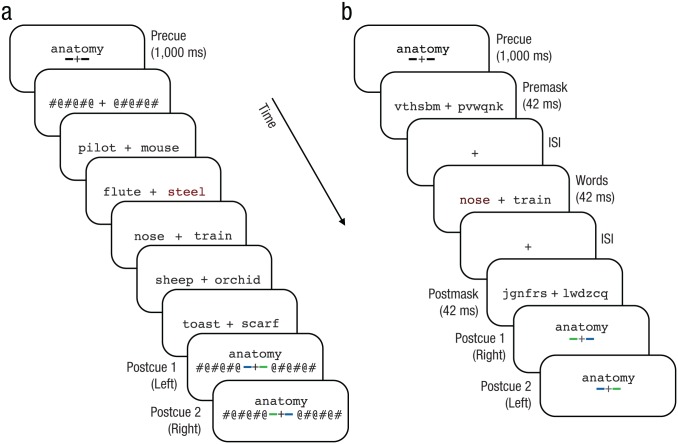
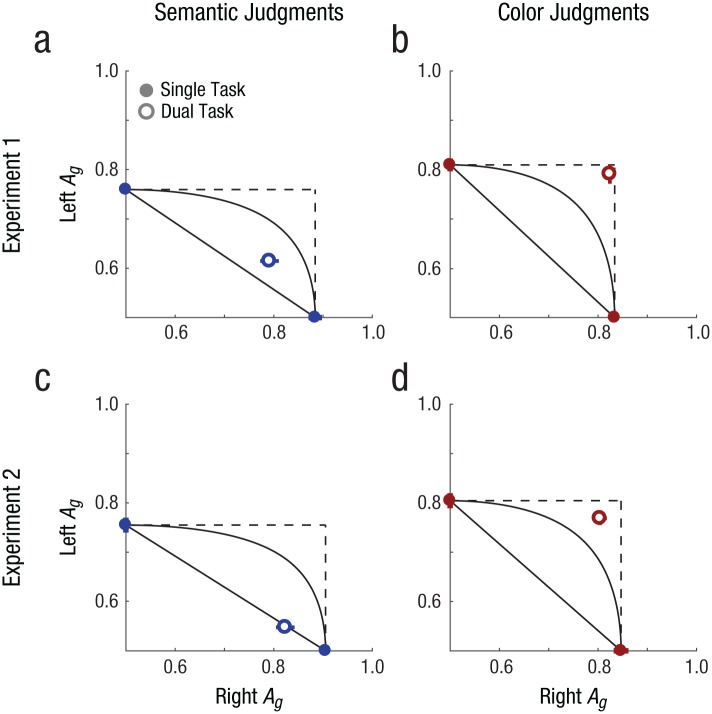
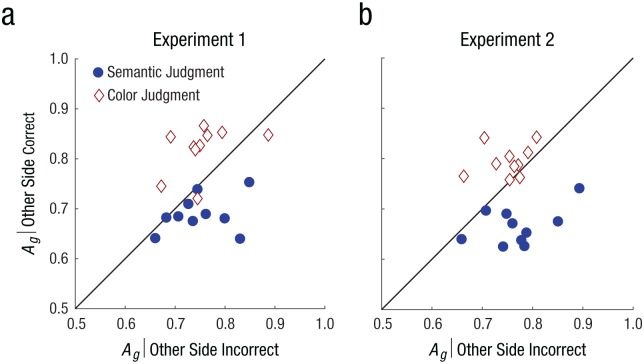
Abstract
To test the limits of parallel processing in vision, we investigated whether people can recognize two words at once. Participants viewed brief, masked pairs of words and were instructed in advance to judge both of the words (dual-task condition) or just one of the words (single-task condition). For judgments of semantic category, the dual-task deficit was so large that it supported all-or-none serial processing: Participants could recognize only one word and had to guess about the other. Moreover, participants were more likely to be correct about one word if they were incorrect about the other, which also supports a serial-processing model. In contrast, judgments of text color with identical stimuli were consistent with unlimited-capacity parallel processing. Thus, under these conditions, serial processing is necessary to judge the meaning of words but not their physical features. Understanding the implications of this result for natural reading will require further investigation.
Keywords: divided attention; language; open data; visual attention; visual perception; word recognition.
Conflict of interest statement
Figures
References
-
- Augustinova M., Ferrand L. (2014). Automaticity of word reading: Evidence from the semantic Stroop paradigm. Current Directions in Psychological Science, 23, 343–348.
-
- Boles D. B. (1983). Hemispheric interaction in visual field asymmetry. Cortex, 19, 99–113. - PubMed
-
- Bonnel A.-M., Prinzmetal W. (1998). Dividing attention between the color and the shape of objects. Perception & Psychophysics, 60, 113–124. - PubMed
-
- Bonnel A.-M., Stein J. F., Bertucci P. (1992). Does attention modulate the perception of luminance changes? The Quarterly Journal of Experimental Psychology, 44A, 601–626. - PubMed
-
- Braun J. (1998). Divided attention: Narrowing the gap between brain and behavior. In Parasuraman R. (Ed.), The attentive brain (pp. 327–351). Cambridge, MA: MIT Press.
Publication types
MeSH terms
Grants and funding
LinkOut - more resources
Full Text Sources
Other Literature Sources
