Acute and Persistent Hepatitis E Virus Genotype 3 and 4 Infection: Clinical Features, Pathogenesis, and Treatment
- PMID: 29735575
- PMCID: PMC6601456
- DOI: 10.1101/cshperspect.a031872
Acute and Persistent Hepatitis E Virus Genotype 3 and 4 Infection: Clinical Features, Pathogenesis, and Treatment
Abstract
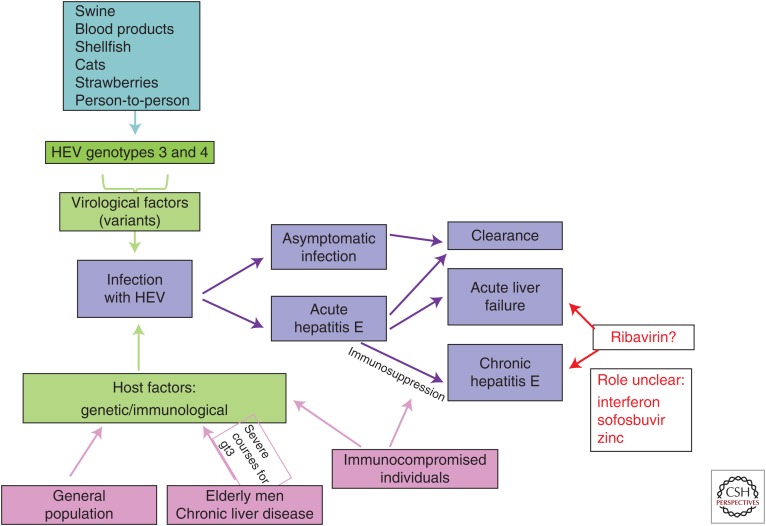
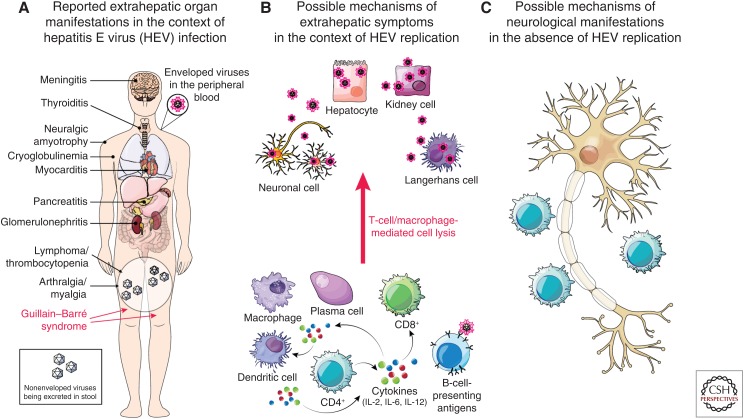
Hepatitis E virus (HEV) genotype (gt)3 and 4 infections are prevalent in industrialized and high-income countries. Although most HEV gt3 and gt4 infections are clinically silent, acute infection may be symptomatic in some patients. In persons with underlying liver disease and in elderly men, HEV infections may present as acute or acute-on-chronic liver failure. Chronic hepatitis may develop in immunosuppressed individuals, including transplant recipients, human immunodeficiency virus (HIV)-infected patients, and persons with hematologic malignancy undergoing chemotherapy, and may progress to life-threatening liver cirrhosis. Extrahepatic manifestations of infection may include neurological and renal disease. Although there is no approved specific therapy for the treatment of acute or chronic HEV gt3 or gt4 infection, off-label use of ribavirin appears to be capable of eliminating chronic HEV infection, and may reduce disease severity in patients suffering from acute liver failure.
Copyright © 2019 Cold Spring Harbor Laboratory Press; all rights reserved.
Figures
References
-
- Abravanel F, Lhomme S, Rostaing L, Kamar N, Izopet J. 2015. Protracted fecal shedding of HEV during ribavirin therapy predicts treatment relapse. Clin Infect Dis 60: 96–99. - PubMed
-
- Abravanel F, Barrague H, Dorr G, Saune K, Peron JM, Alric L, Kamar N, Izopet J, Champagne E. 2016. Conventional and innate lymphocytes response at the acute phase of HEV infection in transplanted patients. J Infect 72: 723–730. - PubMed
-
- Acharya SK, Dasarathy S, Kumer TL, Sushma S, Prasanna KS, Tandon A, Sreenivas V, Nijhawan S, Panda SK, Nanda SK, et al. 1996. Fulminant hepatitis in a tropical population: Clinical course, cause, and early predictors of outcome. Hepatology 23: 1448–1455. - PubMed
-
- Aggarwal R, Jameel S. 2011. Hepatitis E. Hepatology 54: 2218–2226. - PubMed
-
- Aggarwal R, Kini D, Sofat S, Naik SR, Krawczynski K. 2000. Duration of viraemia and faecal viral excretion in acute hepatitis E. Lancet 356: 1081–1082. - PubMed
Publication types
MeSH terms
Substances
LinkOut - more resources
Full Text Sources
Other Literature Sources
Miscellaneous