


Effects of high-intensity interval training on fatigue and quality of life in testicular cancer survivors
- PMID: 29736007
- PMCID: PMC5959855
- DOI: 10.1038/s41416-018-0044-7
Effects of high-intensity interval training on fatigue and quality of life in testicular cancer survivors
Abstract
Background: Testicular cancer survivors (TCS) are at increased risk of cancer-related fatigue (CRF), psychosocial impairment, and poor mental health-related quality of life (HRQoL). Here, we examine the effects of high-intensity interval training (HIIT) on patient-reported outcomes (PROs) in TCS. Secondarily, we explore cardiorespiratory fitness as a mediator of intervention effects and select baseline characteristics as moderators of intervention effects.
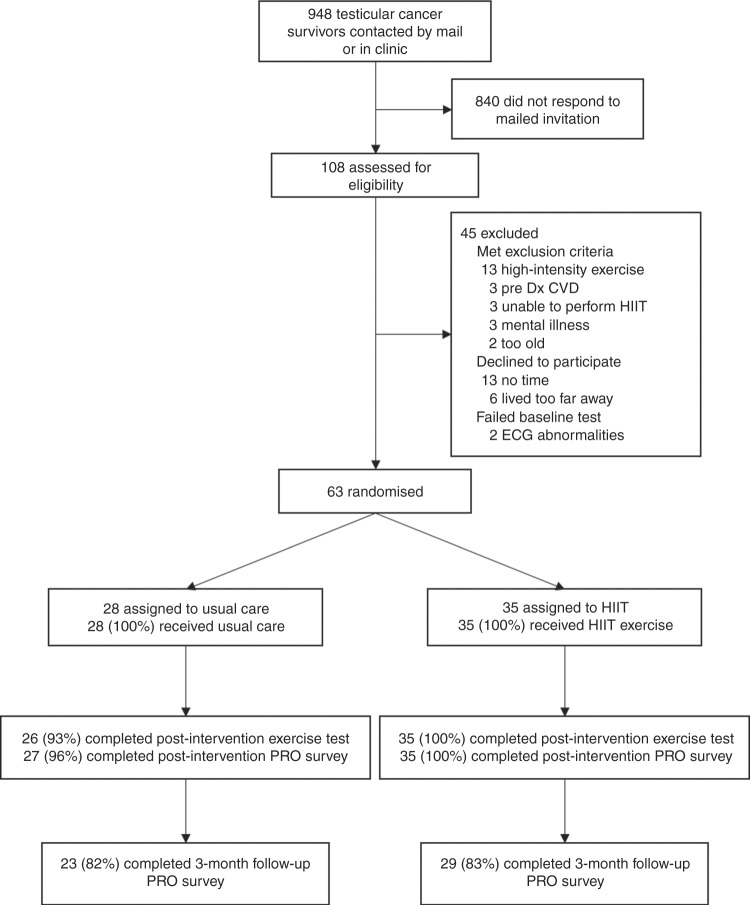
Methods: TCS (n = 63) were randomly assigned to 12 weeks of supervised HIIT or usual care (UC). PROs included CRF, depression, anxiety, stress, self-esteem, sleep quality, and HRQoL assessed at baseline, post-intervention, and 3-month follow-up.
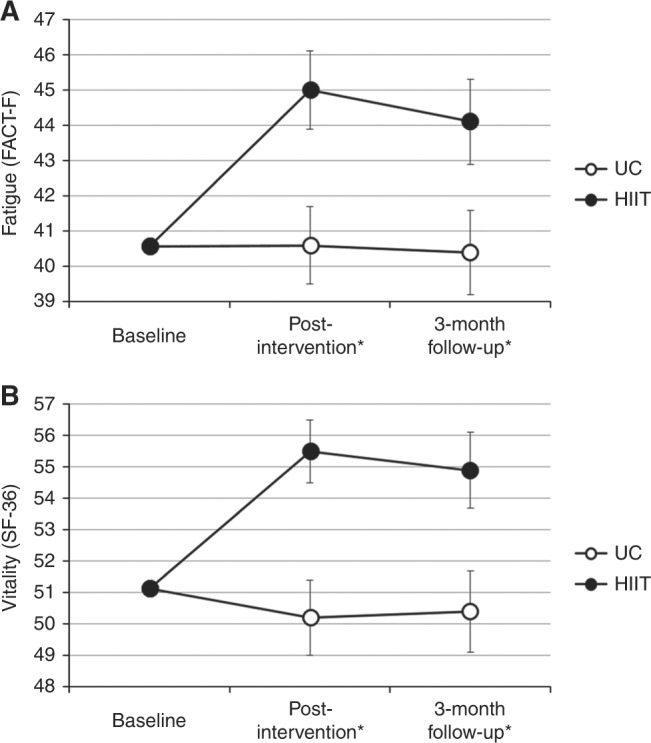
Results: TCS (median 7 years postdiagnosis) completed 99% of training sessions and achieved 98% of target training intensity. ANCOVA revealed that, compared to UC, HIIT significantly improved post-intervention CRF (p = 0.003), self-esteem (p = 0.029), and multiple HRQoL domains (ps ≤ 0.05). Effects on CRF (p = 0.031) and vitality (p = 0.015) persisted at 3-month follow-up. Cardiorespiratory fitness changes mediated CRF and HRQoL improvements. CRF effects were larger for TCS with an inactive lifestyle, lower fitness, higher testosterone, and clinical fatigue at baseline.
Conclusions: HIIT significantly improves CRF and HRQoL in TCS. Mediation by cardiorespiratory fitness and moderation by clinical characteristics suggests opportunities for targeted exercise interventions to optimise PROs in TCS.
Conflict of interest statement
The authors declare no competing interests.
Figures

References
-
- Curado, M et al. Cancer Incidence In Five Continents. (IARC Press, Lyon, 2007). .
Publication types
MeSH terms
LinkOut - more resources
Full Text Sources
Other Literature Sources
Medical
Miscellaneous
