


Expressed information needs of patients with osteoporosis and/or fragility fractures: a systematic review
- PMID: 29736627
- PMCID: PMC5938310
- DOI: 10.1007/s11657-018-0470-4
Expressed information needs of patients with osteoporosis and/or fragility fractures: a systematic review
Abstract
This systematic review identified patients have unmet information needs about the nature of osteoporosis, medication, self-management and follow-up. Clinician knowledge and attitudes appear to be of key importance in determining whether these needs are met. Unmet information needs appear to have psychosocial consequences and result in poor treatment adherence.
Purpose: Patient education is an integral component of the management of osteoporosis, yet patients are dissatisfied with the information they receive and see this as an area of research priority. This study aimed to describe and summarise the specific expressed information needs of patients in previously published qualitative research.
Methods: Using terms relating to osteoporosis, fragility fracture and information needs, seven databases were searched. Articles were screened using predefined inclusion and exclusion criteria. Full-text articles selected for inclusion underwent data extraction and quality appraisal. Findings were drawn together using narrative synthesis.
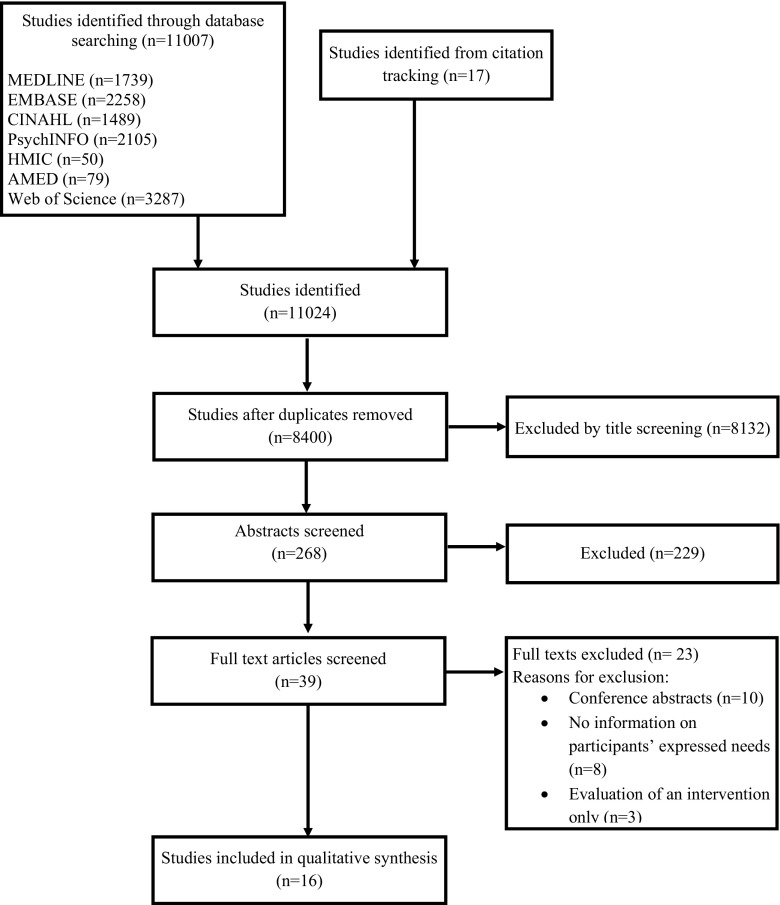
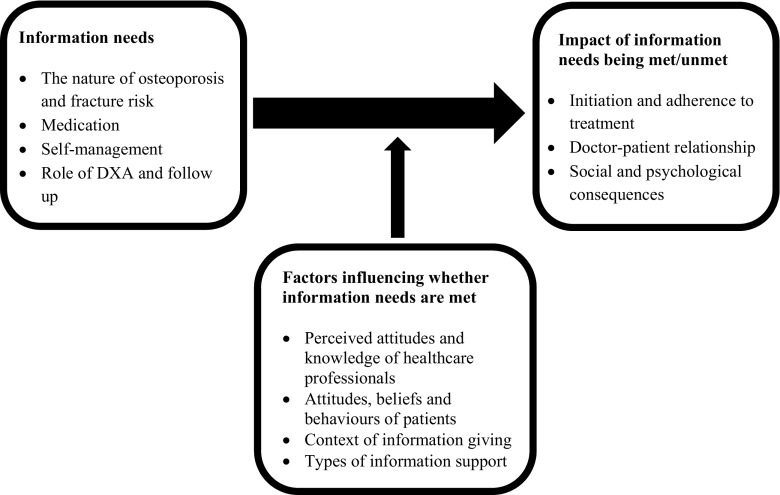
Results: The search identified 11,024 articles. Sixteen empirical studies were included in the review. Thematic analysis revealed three overarching themes relating to specific information needs, factors influencing whether information needs are met and the impact of unmet information needs. Specific information needs identified included the following: the nature of osteoporosis/fracture risk; medication; self-management and understanding the role of dual energy x-ray absorptiometry and follow-up. Perceived physician knowledge and attitudes, and the attitudes, beliefs and behaviours of patients were important factors in influencing whether information needs were met, in addition to contextual factors and the format of educational resources. Failure to elicit and address information needs appears to be associated with poor treatment adherence, deterioration of the doctor-patient relationship and important psychosocial consequences.
Conclusion: This is the first study to describe the information needs of patients with osteoporosis and fracture, the impact of this information gap and possible solutions. Further research is needed to co-design and evaluate educational interventions with patients.
Keywords: Communication; Education; Information needs; Osteoporosis.
Conflict of interest statement
None.
Figures
References
-
- Department of Health. (2012) The power of information: putting all of us in control of the health and care information we need. https://www.gov.uk/government/uploads/system/uploads/attachment_data/fil... Accessed 02 Jan 2018
-
- de Iongh A, Fagan P, Fenner J, Kidd L. (2015) A practical guide to self-management support: key components for successful implementation. London: The Health Foundation
-
- Kinghan D, Carson P, Flanagan A, Megaw M. (2017) Patient education / self management programmes for people with long term conditions (2016/17). https://www.health-ni.gov.uk/sites/default/files/publications/health/pes.... Accessed 02 Jan 2018
-
- Superio-Cabuslay E, Ward MM, Lorig KR. Patient education interventions in osteoarthritis and rheumatoid arthritis: a meta-analytic comparison with nonsteroidal antiinflammatory drug treatment. Arthritis Care Res. 1996;9(4):292–301. doi: 10.1002/1529-0131(199608)9:4<292::AID-ANR1790090414>3.0.CO;2-4. - DOI - PubMed
Publication types
MeSH terms
Grants and funding
LinkOut - more resources
Full Text Sources
Other Literature Sources
Medical
Miscellaneous
