Review
. 2018 May 7:e1705328.
doi: 10.1002/adma.201705328. Online ahead of print.

Advances in Biomaterials for Drug Delivery

Affiliations
Review

Advances in Biomaterials for Drug Delivery

Owen S Fenton et al. Adv Mater. .

Abstract

Advances in biomaterials for drug delivery are enabling significant progress in biology and medicine. Multidisciplinary collaborations between physical scientists, engineers, biologists, and clinicians generate innovative strategies and materials to treat a range of diseases. Specifically, recent advances include major breakthroughs in materials for cancer immunotherapy, autoimmune diseases, and genome editing. Here, strategies for the design and implementation of biomaterials for drug delivery are reviewed. A brief history of the biomaterials field is first established, and then commentary on RNA delivery, responsive materials development, and immunomodulation are provided. Current challenges associated with these areas as well as opportunities to address long-standing problems in biology and medicine are discussed throughout.

Keywords: biomaterials; drug delivery; immune therapy; nanomedicine; polymers.


Conflict of interest statement

Conflict of Interest

The authors declare no conflict of interest.

Figures
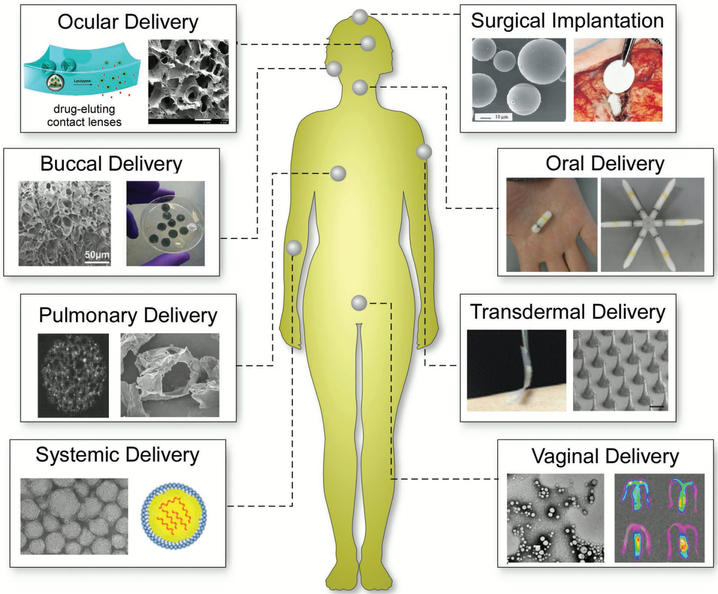
Figure 1.
Figure 1.
Examples of biomaterials and their routes of administration for in vivo use. In addition to pills and injections, biomaterials have been developed to successfully administer drugs in a variety of other ways. Images for ocular delivery: left: Reproduced with permission.[150b] Copyright 2014, American Chemical Society; right: reproduced with permission.[237a] Copyright 2014, Elsevier. Images for buccal delivery: reproduced with permission.[237e] Copyright 2015, Elsevier. Images for pulmonary delivery: left: reproduced with permission.[12e] Copyright 1997, American Association for the Advancement of Science; right: reproduced with permission.[237f] Copyright 2009, Springer Science. Images for systemic delivery: reproduced with permission.[237d] Copyright 2016, National Academy of Sciences, USA. Images for surgical implantation: left: reproduced with permission.[237b] copyright 2002, Adis International; right: reproduced with permission.[237c] Copyright 1998, Elsevier. Images for oral delivery: reproduced with permission.[237g] Copyright 2016, American Association for the Advancement of Science. Images for transdermal delivery: reproduced with permission.[170j] Copyright 2015, National Academy of Sciences, USA. Images for vaginal delivery: reproduced with permission.[237h] Copyright 2017, Elsevier.
Figure 2.
Figure 2.
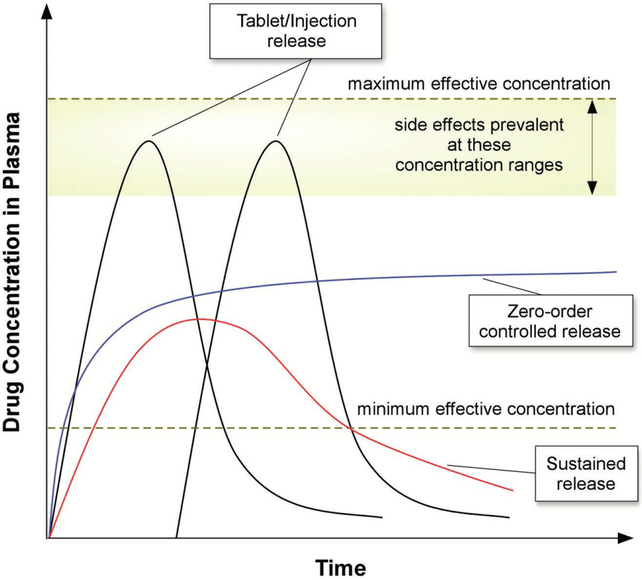
Schematic representation of drug plasma levels after various dosing regimens.
Figure 3.
Figure 3.
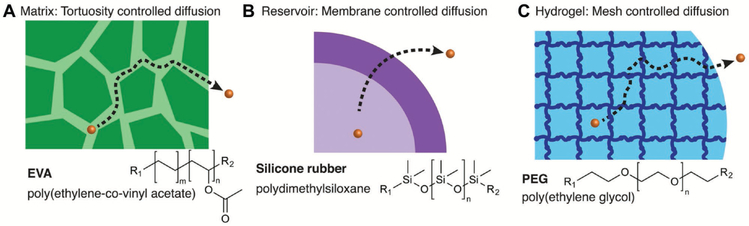
Examples of controlled release platforms. A) The controlled release of macromolecules can be controlled via matrix tortuosity-controlled diffusion. B) Membrane controlled diffusion can be used to control the release of small molecules from materials including silicone rubbers. C) Hydro-gels can also be used for the controlled release of drugs via mesh size and network swelling. Adapted with permission.[3] Copyright 2016, American Chemical Society
Figure 4.
Figure 4.
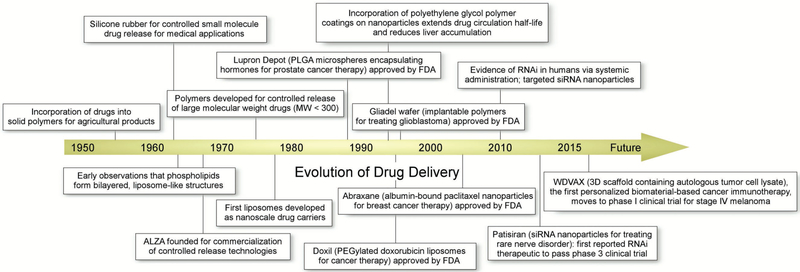
Timeline representing key moments in the history of biomaterials research.
Figure 5.
Figure 5.
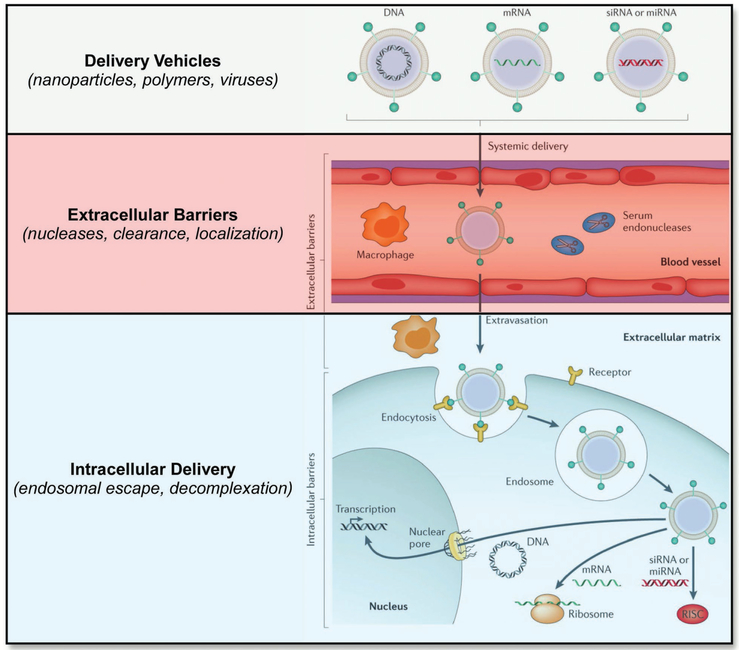
Delivery barriers to RNA delivery. Adapted with permission.[62] Copyright 2014, Macmillan Publishers Limited, part of Springer Nature.
Figure 6.
Figure 6.
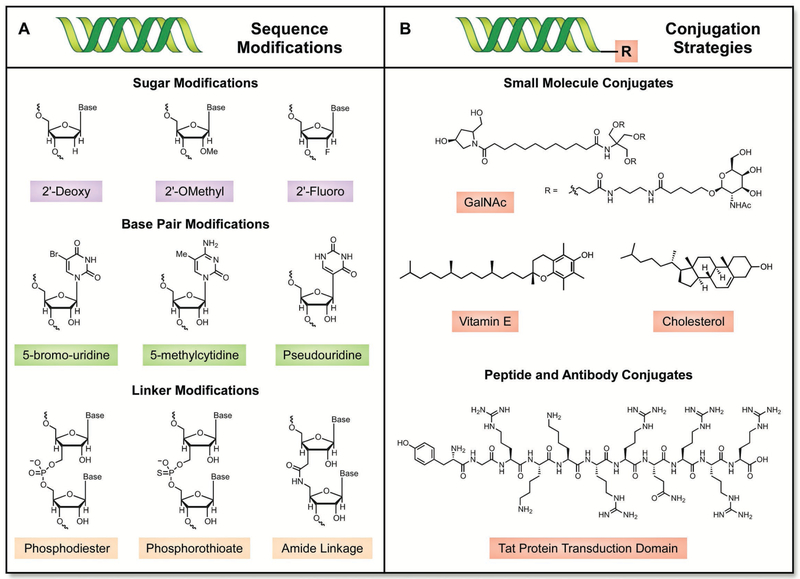
A) Common sugar, base pair, and linker modifications used in RNA delivery. B) Representative chemical ligands used for direct conjugation strategies to RNAs.
Figure 7.
Figure 7.
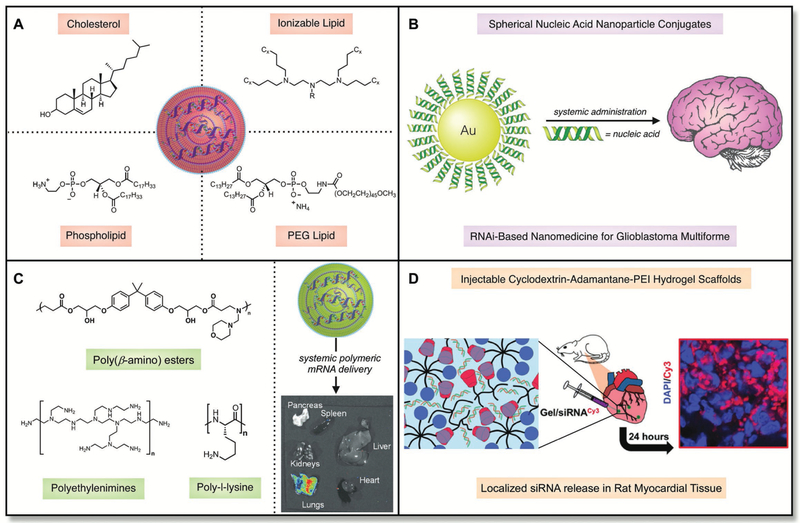
A) In addition to RNA, lipid nanoparticles consist of four primary components—cholesterol, a phospholipid, a lipid anchored poly(ethylene glycol) derivatie, and an ionizable lipid. B) Spherical nucleic acids have been developed that can deliver RNA therapeutically to the brain following systemic administration. C) Polymer nanoparticles have been developed that can deliver RNAs to the lungs. Adapted with permission.[108b] Copyright 2016, WILEY-VCH. D) Injectable hydrogels have been used to localize siRNAs to the myocardium in mice. Adapted with permission.[109] Copyright 2017, American Chemical Society.
Figure 8.
Figure 8.
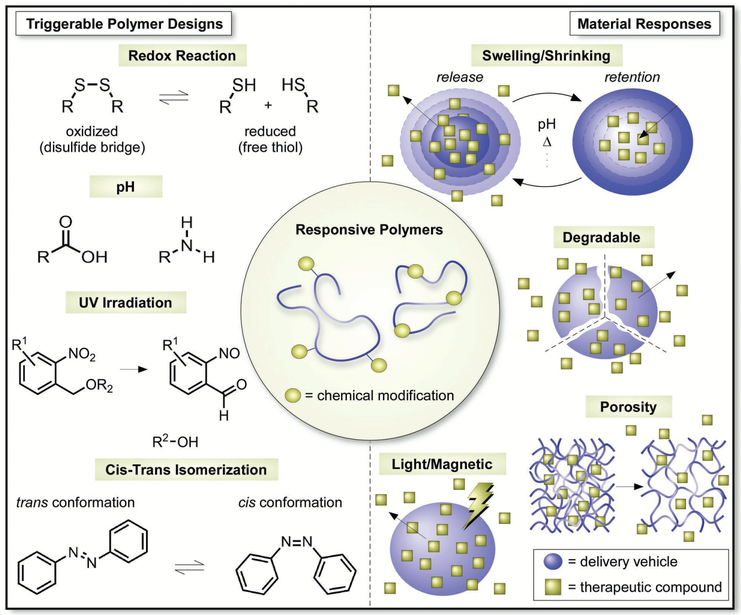
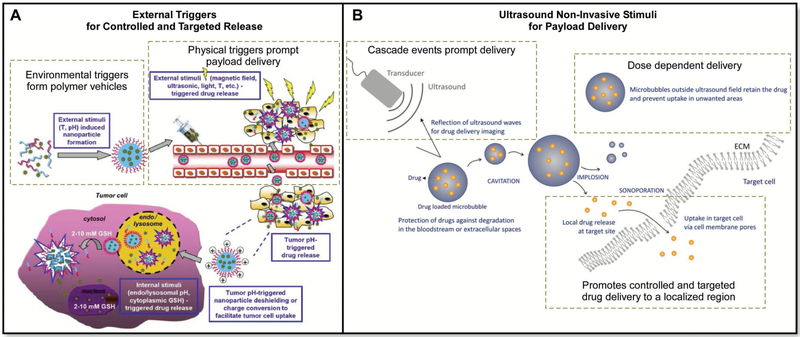
The design of “triggerable” materials that respond to environmental stimuli for the temporally and spatially controlled delivery of therapeutics.
Figure 9.
Figure 9.
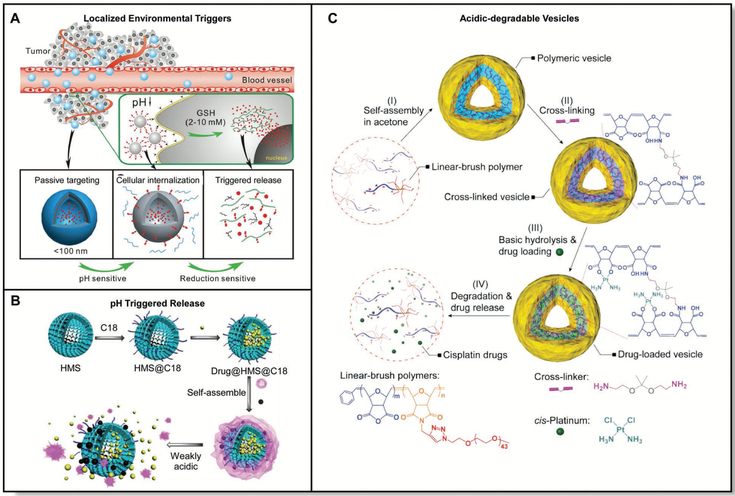
A) Localized regions throughout diseased tissue can be exploited for selective uptake of polymer vesicles and triggers for drug delivery. Adapted with permission.[148] Copyright 2014, Royal Society of Chemistry. B) Controlled release of anticancer therapeutics from nanoparticles due to localized weakly acidic pH conditions. Adapted with permission.[146] Copyright 2012, Royal Society of Chemistry. C) Acid-degradable polymers for the release of anticancer drugs. Adapted with permission.[147] Copyright 2015, Royal Society of Chemistry.
Figure 10.
Figure 10.
A) Targeting tumor cells with pH responsive materials. Adapted with permission.[148] Copyright 2014, Royal Society of Chemistry. B) Delivering a payload to a localized area of the body using noninvasive ultrasound to trigger release from microbubbles or nanoparticles. Adapted with permission.[160a] Copyright 2012, Elsevier.
Figure 11.
Figure 11.
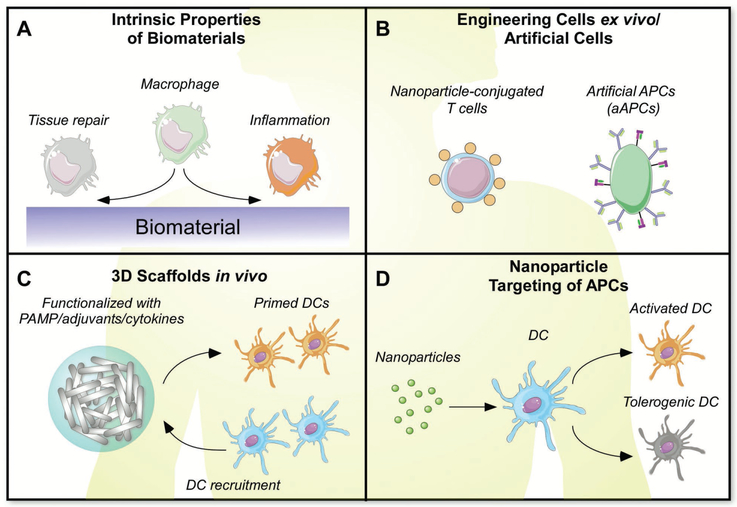
A) Intrinsic properties of biomaterials can influence cellular response. B) Cellular engineering for therapeutic applications. C) 3D scaffolds can alter cell activation. D) Nanoparticles can be targeted to specific cell populations.
Figure 12.
Figure 12.
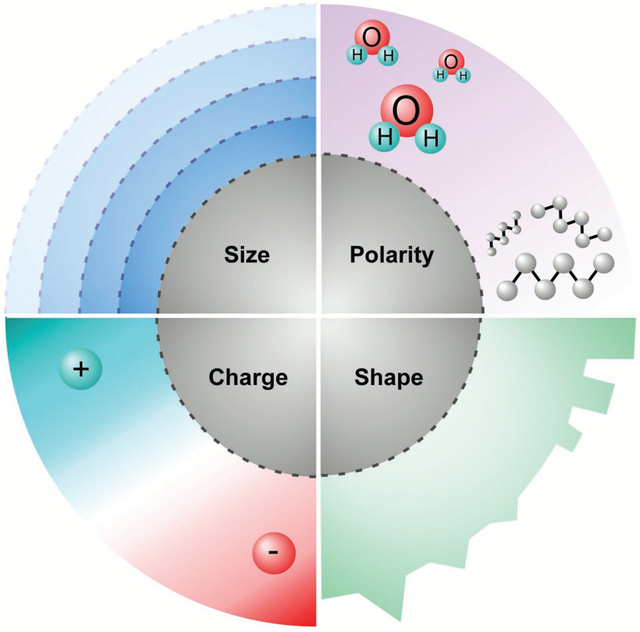
Size, shape, charge, and polarity may play a role in the immune response to biomaterials.
Figure 13.
Figure 13.
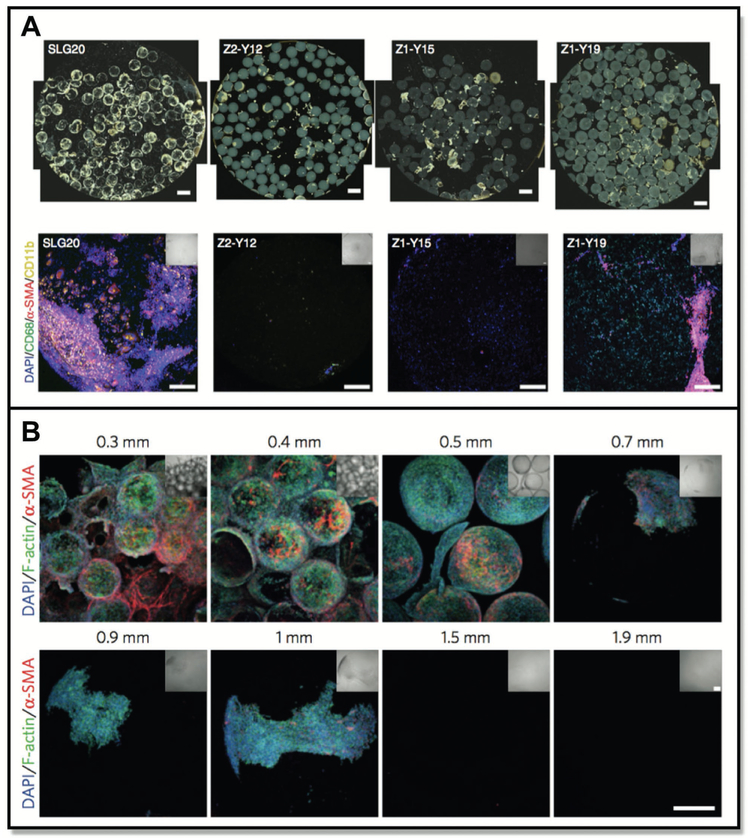
A) Modified alginate hydrogels implanted in cynomolgus macaques mitigate the foreign body response. Adapted with permission.[201a] Copyright 2016, Nature Publishing Group. B) Increasing alginate sphere size results in reduced cellular deposition and firbrosis. Adapted with permission.[118] Copyright 2015, Nature Publishing Group.
Figure 14.
Figure 14.
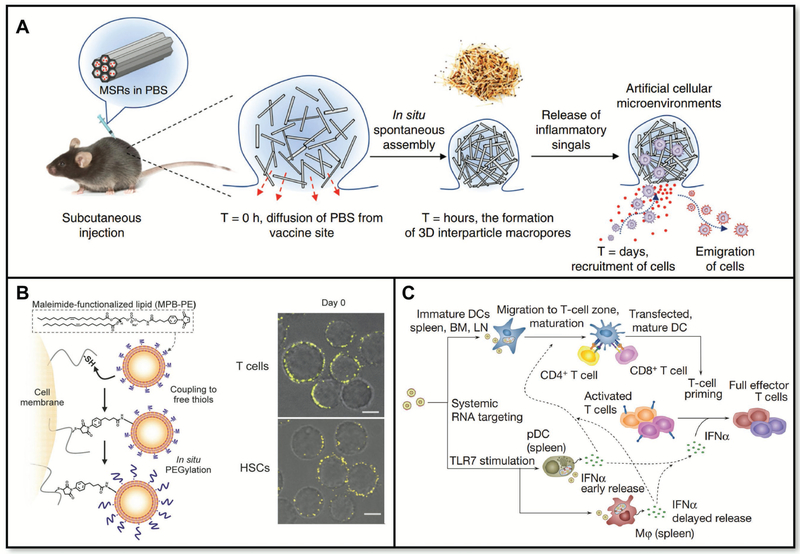
A) Spontaneous assembly of mesoporous silica rods recruits host cells for maturation in vivo. Adapted with permission.[223] Copyright 2015, Nature Publishing Group. B) Stable conjugation of nanoparticles to the surfaces of T cells and hematopoietic stem cells via cell surface thiols. Adapted with permission.[234a] Copyright 2010, Nature Publishing Group. C) RNA-lipoplexes trigger interferon alpha release, maturation of antigen-presenting cells and effector T-cell differentiation. Adapted with permission.[232] Copyright 2016, Nature Publishing Group.

References

    1. Drews J, Science 2000, 287, 1960. - PubMed
    1. Aitken M, Kleinrock M, Lyle J, Nass D, Caskey L, 2014 Medicines Use and Spending Shifts: A Review of the Use of Medicines in the U.S. in 2014, IMS Health Inc; 2015, available from: https://www.redaccionmedica.com/contenido/images/IIHI_Use_of_Medicines_R... (accessed: April 2018).
    1. Tibbitt MW, Dahlman JE, Langer R, J. Am. Chem. Soc 2016, 138, 704. - PubMed
    1. Mitragotri S, Burke PA, Langer R, Nat. Rev. Drug Discovery 2014, 13, 655. - PMC - PubMed
    1. Yun YH, Lee BK, Park K, J. Controlled Release 2015, 219, 2. - PMC - PubMed