


Interventions for improving adherence to iron chelation therapy in people with sickle cell disease or thalassaemia
- PMID: 29737522
- PMCID: PMC5985157
- DOI: 10.1002/14651858.CD012349.pub2
Interventions for improving adherence to iron chelation therapy in people with sickle cell disease or thalassaemia
Update in
-
Interventions for improving adherence to iron chelation therapy in people with sickle cell disease or thalassaemia.Cochrane Database Syst Rev. 2023 Mar 6;3(3):CD012349. doi: 10.1002/14651858.CD012349.pub3. Cochrane Database Syst Rev. 2023. PMID: 36877640 Free PMC article. Review.
Abstract
Background: Regularly transfused people with sickle cell disease (SCD) and people with thalassaemia (who are transfusion-dependent or non-transfusion-dependent) are at risk of iron overload. Iron overload can lead to iron toxicity in vulnerable organs such as the heart, liver and endocrine glands; which can be prevented and treated with iron chelating agents. The intensive demands and uncomfortable side effects of therapy can have a negative impact on daily activities and well-being, which may affect adherence.
Objectives: To identify and assess the effectiveness of interventions (psychological and psychosocial, educational, medication interventions, or multi-component interventions) to improve adherence to iron chelation therapy in people with SCD or thalassaemia.
Search methods: We searched CENTRAL (the Cochrane Library), MEDLINE, Embase, CINAHL, PsycINFO, Psychology and Behavioral Sciences Collection, Web of Science Science & Social Sciences Conference Proceedings Indexes and ongoing trial databases (01 February 2017). We searched the Cochrane Cystic Fibrosis and Genetic Disorders Group's Haemoglobinopathies Trials Register (12 December 2017).
Selection criteria: For trials comparing medications or medication changes, only randomised controlled trials (RCTs) were eligible for inclusion.For studies including psychological and psychosocial interventions, educational Interventions, or multi-component interventions, non-RCTs, controlled before-after studies, and interrupted time series studies with adherence as a primary outcome were also eligible for inclusion.
Data collection and analysis: Three authors independently assessed trial eligibility, risk of bias and extracted data. The quality of the evidence was assessed using GRADE.
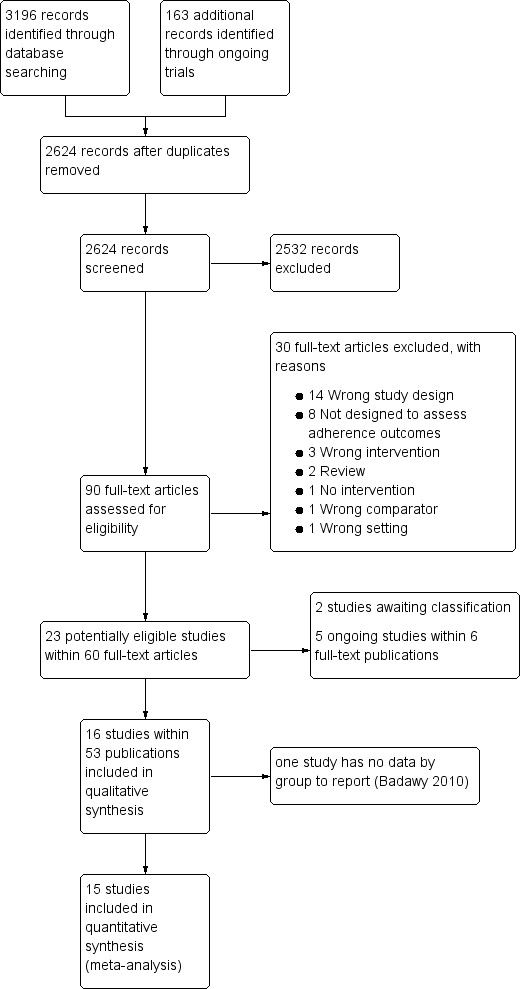
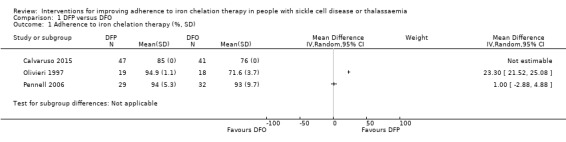
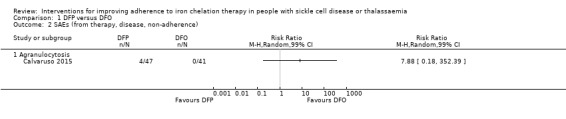
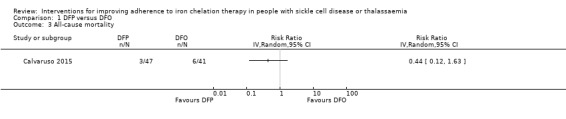
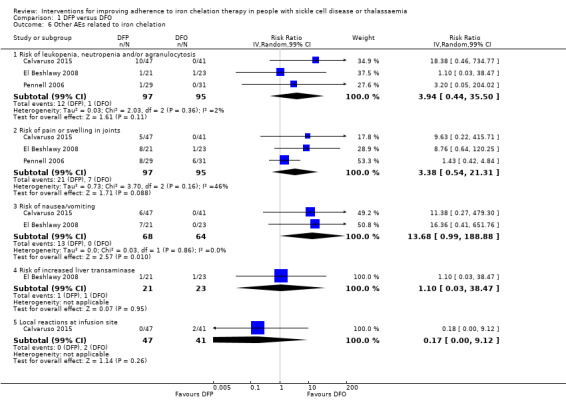
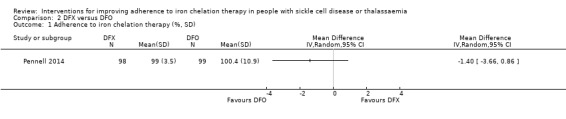
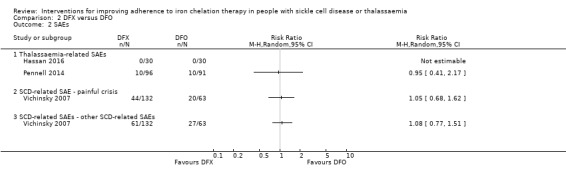
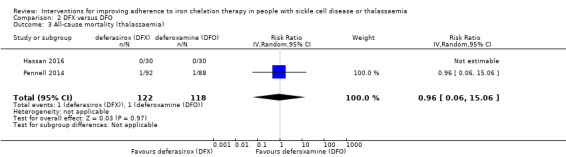
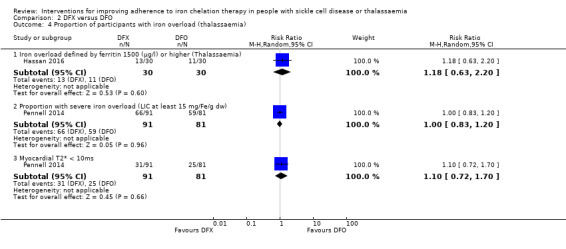
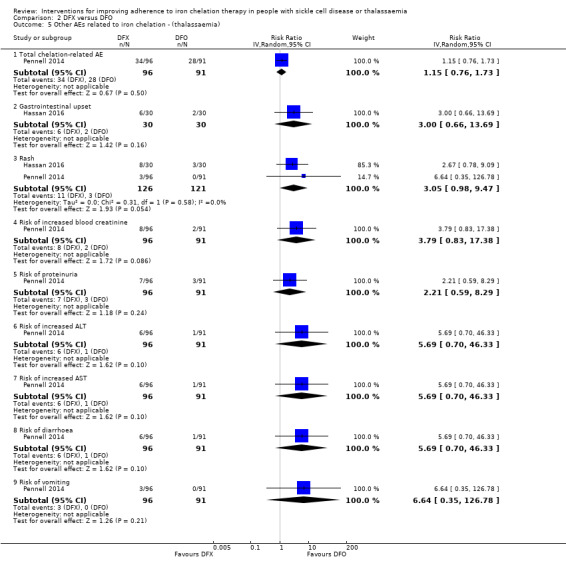
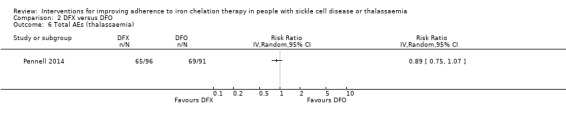
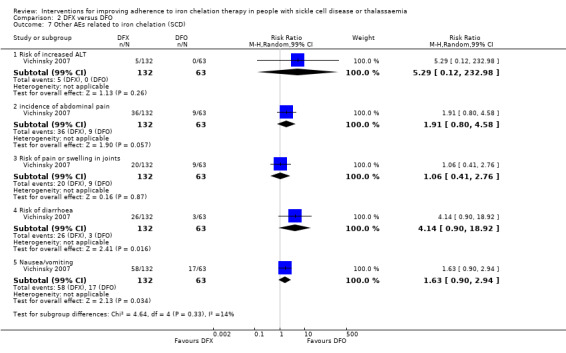
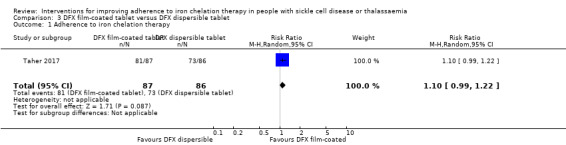
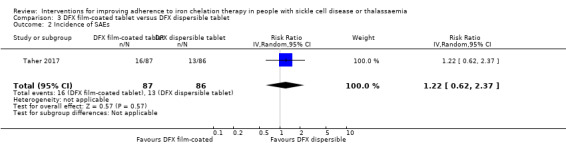
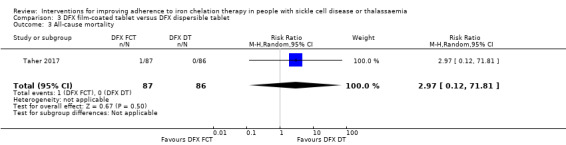
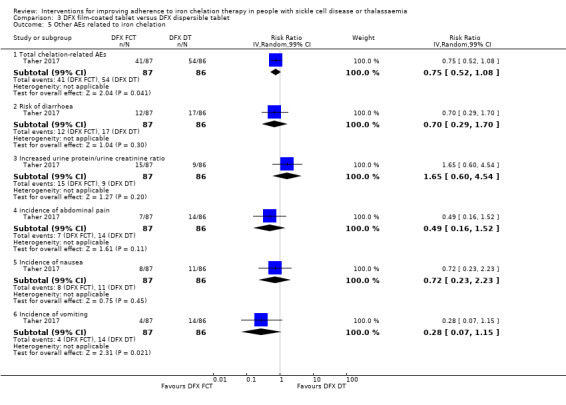
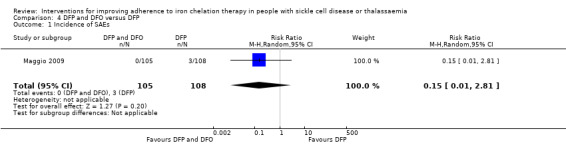
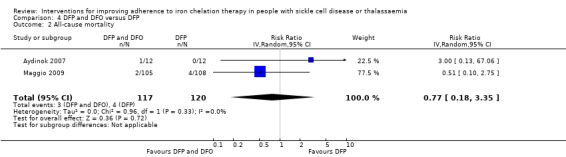
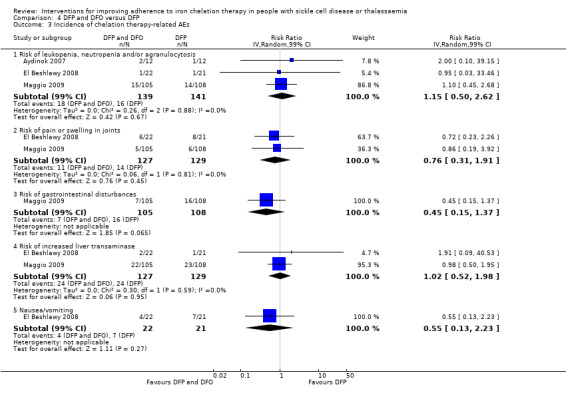
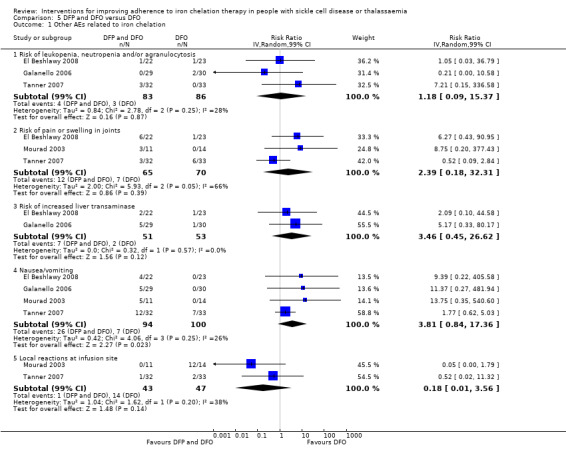
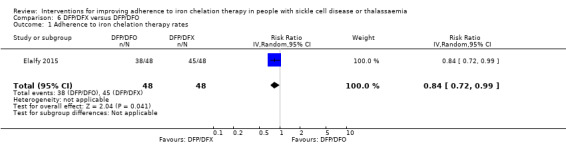
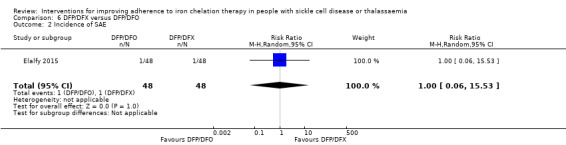
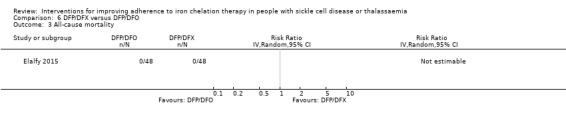
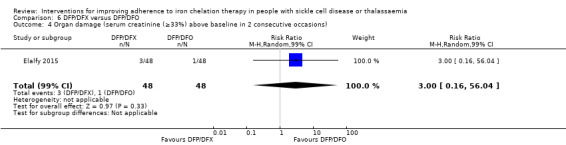
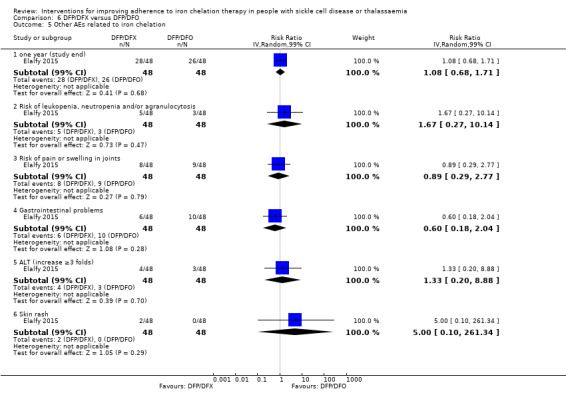
Main results: We included 16 RCTs (1525 participants) published between 1997 and 2017. Most participants had β-thalassaemia major; 195 had SCD and 88 had β-thalassaemia intermedia. Mean age ranged from 11 to 41 years. One trial was of medication management and 15 RCTs were of medication interventions. Medications assessed were subcutaneous deferoxamine, and two oral-chelating agents, deferiprone and deferasirox.We rated the quality of evidence as low to very low across all outcomes identified in this review.Three trials measured quality of life (QoL) with validated instruments, but provided no analysable data and reported no difference in QoL.Deferiprone versus deferoxamineWe are uncertain whether deferiprone increases adherence to iron chelation therapy (four trials, very low-quality evidence). Results could not be combined due to considerable heterogeneity (participants' age and different medication regimens). Medication adherence was high (deferiprone (85% to 94.9%); deferoxamine (71.6% to 93%)).We are uncertain whether deferiprone increases the risk of agranulocytosis, risk ratio (RR) 7.88 (99% confidence interval (CI) 0.18 to 352.39); or has any effect on all-cause mortality, RR 0.44 (95% CI 0.12 to 1.63) (one trial; 88 participants; very low-quality evidence).Deferasirox versus deferoxamineWe are uncertain whether deferasirox increases adherence to iron chelation therapy, mean difference (MD) -1.40 (95% CI -3.66 to 0.86) (one trial; 197 participants; very-low quality evidence). Medication adherence was high (deferasirox (99%); deferoxamine (100%)). We are uncertain whether deferasirox decreases the risk of thalassaemia-related serious adverse events (SAEs), RR 0.95 (95% CI 0.41 to 2.17); or all-cause mortality, RR 0.96 (95% CI 0.06 to 15.06) (two trials; 240 participants; very low-quality evidence).We are uncertain whether deferasirox decreases the risk of SCD-related pain crises, RR 1.05 (95% CI 0.68 to 1.62); or other SCD-related SAEs, RR 1.08 (95% CI 0.77 to 1.51) (one trial; 195 participants; very low-quality evidence).Deferasirox film-coated tablet (FCT) versus deferasirox dispersible tablet (DT)Deferasirox FCT may make little or no difference to adherence, RR 1.10 (95% CI 0.99 to 1.22) (one trial; 173 participants; low-quality evidence). Medication adherence was high (FCT (92.9%); DT (85.3%)).We are uncertain if deferasirox FCT increases the incidence of SAEs, RR 1.22 (95% CI 0.62 to 2.37); or all-cause mortality, RR 2.97 (95% CI 0.12 to 71.81) (one trial; 173 participants; very low-quality evidence).Deferiprone and deferoxamine combined versus deferiprone alone We are uncertain if deferiprone and deferoxamine combined increases adherence to iron chelation therapy (very low-quality evidence). Medication adherence was high (deferiprone 92.7% (range 37% to 100%) to 93.6% (range 56% to 100%); deferoxamine 70.6% (range 25% to 100%).Combination therapy may make little or no difference to the risk of SAEs, RR 0.15 (95% CI 0.01 to 2.81) (one trial; 213 participants; low-quality evidence).We are uncertain if combination therapy decreases all-cause mortality, RR 0.77 (95% CI 0.18 to 3.35) (two trials; 237 participants; very low-quality evidence).Deferiprone and deferoxamine combined versus deferoxamine aloneDeferiprone and deferoxamine combined may have little or no effect on adherence to iron chelation therapy (four trials; 216 participants; low-quality evidence). Medication adherence was high (deferoxamine 91.4% to 96.1%; deferiprone: 82.4%)Deferiprone and deferoxamine combined, may have little or no difference in SAEs or mortality (low-quality evidence). No SAEs occurred in three trials and were not reported in one trial. No deaths occurred in two trials and were not reported in two trials.Deferiprone and deferoxamine combined versus deferiprone and deferasirox combinedDeferiprone and deferasirox combined may improve adherence to iron chelation therapy, RR 0.84 (95% CI 0.72 to 0.99) (one trial; 96 participants; low-quality evidence). Medication adherence was high (deferiprone and deferoxamine: 80%; deferiprone and deferasirox: 95%).We are uncertain if deferiprone and deferasirox decreases the incidence of SAEs, RR 1.00 (95% CI 0.06 to 15.53) (one trial; 96 participants; very low-quality evidence).There were no deaths in the trial (low-quality evidence).Medication management versus standard careWe are uncertain if medication management improves health-related QoL (one trial; 48 participants; very low-quality evidence). Adherence was only measured in one arm of the trial.
Authors' conclusions: The medication comparisons included in this review had higher than average adherence rates not accounted for by differences in medication administration or side effects.Participants may have been selected based on higher adherence to trial medications at baseline. Also, within the clinical trial context, there is increased attention and involvement of clinicians, thus high adherence rates may be an artefact of trial participation.Real-world, pragmatic trials in community and clinic settings are needed that examine both confirmed or unconfirmed adherence strategies that may increase adherence to iron chelation therapy.Due to lack of evidence this review cannot comment on intervention strategies for different age groups.
Conflict of interest statement
Lise Estcourt: partly funded by the NIHR Cochrane Programme Grant ‐ Safe and Appropriate Use of Blood Components.
Patricia Fortin: funded by the NIHR Cochrane Programme Grant ‐ Safe and Appropriate Use of Blood Components.
Karen Madgwick: none to declare.
Sally Hopewell: partly funded by the NIHR Cochrane Programme Grant ‐ Safe and Appropriate Use of Blood Components.
Marialena Trivella: partly funded by the NIHR Cochrane Programme Grant ‐ Safe and Appropriate Use of Blood Components.
Sheila Fisher: partly funded by the NIHR Cochrane Programme Grant ‐ Safe and Appropriate Use of Blood Components.
Figures
Update of
-
Interventions for improving adherence to iron chelation therapy in people with sickle cell disease or thalassaemia.Cochrane Database Syst Rev. 2016 Sep;2016(9):CD012349. doi: 10.1002/14651858.CD012349. Cochrane Database Syst Rev. 2016. Update in: Cochrane Database Syst Rev. 2018 May 08;5:CD012349. doi: 10.1002/14651858.CD012349.pub2. PMID: 27713668 Free PMC article. Updated.
References
References to studies included in this review
Aydinok 2007 {published data only}
-
- Aydinok Y, El‐Beshlawy A, Orelli‐Leber C, Czarnecki‐Tarabishi C, Manz C Y. A randomized controlled trial comparing the combination therapy of deferiprone (DFP) and desferrioxamine (DFO) versus DFP or DFO monotherapy in patients with thalassemia major. Blood 2006;108(11). [Abstract no.: 557]
-
- Aydinok Y, Ulger Z, Nart D, Terzi A, Cetiner N, Ellis G, et al. A randomized controlled 1‐year study of daily deferiprone plus twice weekly desferrioxamine compared with daily deferiprone monotherapy in patients with thalassemia major. Haematologica 2007;92(12):1599‐606. - PubMed
-
- Manz CH, El‐Beshlawy A, Aydinok Y, Leber C, Czarnecki‐Tarabishi C. A randomized controlled prospective clinical study comparing the combination therapy of deferiprone (L1) and desferrioxamine with L1 and DFO monotherapy in patients with thalassemia major. Haematologica 2006;91(S1):190. [Abstract no.: 0515]
Badawy 2010 {published data only}
-
- Badawy S, Hassan TH, Hesham MA, Badr MA. Evaluation of iron chelation therapy in B‐thalassemic patients in Zagazig University Hospital. ASPHO abstracts (The American Society of Pediatric Hematology/Oncology) 2010; Vol. 54, issue 6:799‐800.
Bahnasawy 2017 {published data only}
-
- Bahnasawy SM, Wakeel LM, Beblawy N, El‐Hamamsy M. Clinical pharmacist‐provided services in iron overloaded Beta‐thalassemia major children; A new insight to patient care. Basic & Clinical Pharmacology & Toxicology 2017;120(4):354‐9. - PubMed
Calvaruso 2015 {published data only}
-
- Calvaruso G, Vitrano A, Maggio R, Ballas S, Steinberg MH, Rigano P, et al. Deferiprone versus deferoxamine in thalassemia intermedia: results from a 5‐year long‐term Italian multicenter randomized clinical trial. American Journal of Hematology 2015;90(7):634‐8. - PubMed
-
- Vitrano A, Calvaruso G, Maggio G, Romeo MA, Cianciulli P, Lai ME, et al. Deferiprone versus deferoxamine in thalassemia intermedia: results from 5‐year long‐term Italian multi‐center randomized clinical trial. 56th ASH Annual Meeting and Exposition; 2014 Dec 6‐9; San Francisco, California 2014.
Elalfy 2015 {published data only}
-
- Elalfy M, Walli Y, Adly A, Henawy Y. 18 months data of a randomized controlled trial of combined deferiprone (DFP) and deferasirox (DFX) versus combined deferiprone and deferoxamine (DFO), in young B‐thalassemia major. Haematologica 2014;99(S1):443‐4.
-
- Elalfy MS, Adly AM, Wali Y, Tony S, Samir A, Elhenawy YI. Efficacy and safety of a novel combination of two oral chelators deferasirox/deferiprone over deferoxamine/deferiprone in severely iron overloaded young beta thalassemia major patients. European Journal of Haematology 2015;95(5):411‐20. - PubMed
-
- Elalfy MS, Wali Y, Tony S, Samir, Adly A. Comparison of two combination iron chelation regimens, deferiprone and deferasirox versus deferiprone and deferoxamine, in pediatric patients with beta‐thalassemia major. Blood 2013;122(21). [Abstract no.: 559]
El Beshlawy 2008 {published data only}
-
- Study With Deferiprone and/or Desferrioxamine in Iron Overloaded Patients. ClinicalTrials.gov 2006; Vol. NCT00350662.
-
- El‐Beshlawy A, Manz C, Naja M, Eltagui M, Tarabishi C, Youssry I, et al. Iron chelation in thalassemia: combined or monotherapy? The Egyptian experience. Annals of Hematology 2008;87(7):545‐50. - PubMed
Galanello 2006 {published data only}
-
- Galanello R, Kattamis A, Piga A, Tricta F. Safety and efficacy of alternate desferrioxamine and deferiprone compared to desferrioxamine alone in the treatment of iron overload in transfusion‐dependent thalassemia patients. Blood 2004;104(11 Pt 1). [Abstract no.: 3611]
-
- Galanello R, Piga A, Forni G L, Bertrand Y, Foschini M L, Bordone E, et al. Phase II clinical evaluation of deferasirox, a once‐daily oral chelating agent, in pediatric patients with beta‐thalassemia major. Haematologica 2006;91(10):1343‐51. - PubMed
Hassan 2016 {published data only}
Maggio 2009 {published data only}
-
- Maggio A, Capra M, Cuccia L, Gagliardotto F, Magnano C, Caruso V, et al. Deferiprone versus sequential deferiprone‐deferoxamine treatment in thalassemia major: a five years multicenter randomized clinical trial under the auspices of the society for the study of thalassemia and hemogobinopathies (SoST). Blood 2007;110(11). [Abstract no.: 575]
-
- Maggio A, Vitrano A, Capra M, Cuccia L, Gagliardotto F, Filosa A, et al. Decrease of mortality during deferiprone treatments: results from a large randomised cohort of thalassemia major patients under the auspices of the Italian society for thalassemia and hemogobinopathies. Blood 2008;112 Suppl:Abstract no: 3885.
-
- Maggio A, Vitrano A, Capra M, Cuccia L, Gagliardotto F, Filosa A, et al. Long‐term sequential deferiprone‐deferoxamine versus deferiprone alone for thalassaemia major patients: A randomized clinical trial. British Journal of Haematology 2009;145(2):245‐54. - PubMed
-
- NCT00733811. Efficacy Study of the Use of Sequential DFP‐DFO Versus DFP. https://clinicaltrials.gov/ct2/show/NCT00733811 (accessed 11 April 2018).
-
- Pantalone GR, Maggio A, Vitrano A, Capra M, Cuccia L, Gagliardotto F, et al. Sequential alternating deferiprone and deferoxamine treatment compared to deferiprone monotherapy: Main findings and clinical follow‐up of a large multicenter randomized clinical trial in ‐thalassemia major patients. Hemoglobin 2011;35(3):206‐16. - PubMed
Mourad 2003 {published data only}
-
- Mourad FH, Hoffbrand AV, Sheikh‐Taha M, Koussa S, Khoriaty AI, Taher A. Comparison between desferrioxamine and combined therapy with desferrioxamine and deferiprone in iron overloaded thalassaemia patients. British Journal of Haematology 2003;121(1):187‐9. - PubMed
Olivieri 1997 {published data only}
-
- Olivieri N, the Iron Chelation Research Group. Randomized trial of deferiprone (LI) and deferoxamine (DFO) in thalassemia major. Blood 1996; Vol. 88, issue 10 Suppl 1:651a.
-
- Olivieri NF, Brittenham GM. Evidence of progression of myocardial iron loading as determined by magnetic resonance imaging (MRI) in thalassemia patients during treatment with deferiprone (L1) and deferoxamine (DFO). Blood 1999; Vol. 94, issue 10 Suppl 1:35b.
-
- Olivieri NF, Brittenham GM. Final results of the randomized trial of deferiprone (L1) and deferoxamine (DFO). Blood 1997; Vol. 90, issue 10 Suppl 1:264a.
-
- Olivieri NF, Brittenham GM, Armstrong SAM, Basran RK, Daneman R, Daneman N, et al. First prospective randomized trial of the iron chelators deferiprone (L1) and deferoxamine. Blood 1995; Vol. 86, issue 10 Suppl 1:249a.
-
- Pope, Elena. Critical review of standard and new methods of assessing compliance with chelation therapy in thalassemic patients. Proquest Dissertations Publishing 1995.
Pennell 2006 {published data only}
-
- Pennell D J, Berdoukas V, Karagiorga M, Ladis V, Piga A, Aessopos A, et al. Randomized controlled trial of deferiprone or deferoxamine in beta‐thalassemia major patients with asymptomatic myocardial siderosis. Blood 2006;107(9):3738‐44. - PubMed
Pennell 2014 {published data only}
-
- Aydinok Y, Porter JB, Piga A, Elalfy M, El‐Beshlawy A, Kilinc Y, et al. Prevalence and distribution of iron overload in patients with transfusion‐dependent anemias differs across geographic regions: results from the CORDELIA study. European Journal of Haematology 2015;95(3):244‐53. - PubMed
-
- Pennell D, Porter J, Piga A, El‐Alfy M, El‐Beshlawy A, Kilinc Y, et al. Prevalence of cardiac iron overload in patients with transfusion‐dependent anemias: data from the randomized, active‐controlled deferasirox CORDELIA trial. Haematologica 2012;97 Suppl 1:384. [Abstract no.: 0928]
-
- Pennell D, Porter JB, Piga A, Lai Y, El‐Beshlawy A, Beloul K, et al. A multicenter, randomized, open‐label trial evaluating deferasirox compared with deferoxamine for the removal of cardiac iron in patients with beta‐thalassemia major and iron overload (CORDELIA). Blood 2012;120(21). [Abstract no.: 2124]
Taher 2017 {published data only}
-
- A randomized, open‐label, multicenter, two arm, phase II study to investigate the benefits of an improved deferasirox formulation (Film‐coated Tablet). ClinicalTrials.go 2014; Vol. NCT02125877.
-
- A randomized, open‐label, multicenter, two arm, phase II study to investigate the benefits of an improved deferasirox formulation (film‐coated tablet). EU Clinical Trials Register issue https://www.clinicaltrialsregister.eu/ctr‐search/trial/2013‐004167‐32/AT.
-
- Huang VW, Banderas B, Sen R. Psychometric evaluation of clinical outcomes assessments in a phase II trial. Value in Health 2016; Vol. 19, issue 7:A746.
-
- Taher AT, Origa R, Perrotta S, Kourakli A, Ruffo GB, Kattamis A, et al. New film‐coated tablet formulaion of deferasirox is well tolerated in patients with thalassemia or lower‐risk MDS: Results of the randomized, Phase II ECLIPSE study. American Journal of Hematology 2017;92(5):420‐8. - PMC - PubMed
Tanner 2007 {published data only}
-
- Tanner MA, Galanello R, Dessi C, Agus A, Smith GC, Westwood MA, et al. Improved endothelial function combined chelation therapy in thalassaemia major. Blood 2006;108(11). [Abstract no.: 1770]
-
- Tanner MA, Galanello R, Dessi C, Smith GC, Westwood MA, Agus A, et al. A randomized, placebo‐controlled, double‐blind trial of the effect of combined therapy with deferoxamine and deferiprone on myocardial iron in thalassemia major using cardiovascular magnetic resonance. Circulation 2007;115(14):1876‐84. - PubMed
-
- Tanner MA, Galanello R, Dessi C, Smith GC, Westwood MA, Agus A, et al. The effect of combined therapy with deferoxamine and deferiprone on myocardial iron and endothelial function in thalassaemia major: a randomized controlled trials using cardiovascular magnetic resonance. Haematologica 2006; Vol. 91, issue Suppl 1:191.
-
- Tanner MA, Galanello R, Dessi C, Westwood MA, Smith GC, Khan M, et al. A randomized, placebo controlled, double blind trial of the effect of combined therapy with deferoxamine and deferiprone on myocardial iron in thalassaemia major using cardiovascular magnetic resonance. Blood 2005;106(11 Pt 1). [Abstract no.: 3655] - PubMed
Vichinsky 2007 {published data only}
-
- Vichinsky E. Patient reported outcomes with chelation therapy in patients with sickle cell disease (SCD) on either deferasirox (Exjade®, ICL670) or deferoxamine (DFO). 29th annual meeting of the National Sickle Cell Disease Program; April 8‐12; Memphis, USA 2006. [Abstract no.: 174]
-
- Vichinsky E. Results of a randomized, controlled phase two trials of deferasirox (Exjade®, ICL670) in sickle cell disease patients with chronic overload. 29th Annual Meeting of the National Sickle Cell Disease Program; April 8‐12; Memphis, USA 2006. [Abstract no.: 175]
-
- Vichinsky E, Coates T, Thompson A, Bernaudin F, Lagrone D, Dong V, et al. Safety and efficacy of iron chelation therapy with deferasirox in patients with sickle cell disease (SCD): 3.5‐year follow‐up. 14th Congress of the European Haematology Association; Jun 4‐7; Berlin, Germany 2009.
References to studies excluded from this review
Abu 2015 {published data only}
-
- Abu SO, Auda W, Kamhawy H, Al‐Tonbary Y. Impact of educational programme regarding chelation therapy on the quality of life for B‐thalassemia major children. Hematology 2015;20(5):297‐303. - PubMed
Al Kloub 2014 {published data only}
-
- Al‐Kloub MI, A Bed MA, Al Khawaldeh OA, Al Tawarah YM, Froelicher ES. Predictors of non‐adherence to follow‐up visits and deferasirox chelation therapy among Jordanian adolescents with Thalassemia major. Pediatric Hematology and Oncology 2014;31(7):624‐37. - PubMed
Al Kloub 2014a {published data only}
-
- Al‐Kloub, MI, TN, Salameh, ES, Froelicher. Impact of psychosocial status and disease knowledge on deferoxamine adherence among thalassaemia major adolescents. International Journal of Nursing Practice 2014;20(3):265‐74. - PubMed
Al Refaie 1995 {published data only}
-
- Al‐Refaie FN, Hershko C, Hoffbrand AV, Kosaryan M, Olivier NF, Tondury P, et al. Results of long‐term deferiprone (L1) therapy: a report by the International Study Group on Oral Iron Chelators. British Journal of Haematology 1995;91(1):224‐9. - PubMed
Alvarez 2009 {published data only}
-
- Alvarez O, Rodriguez‐Cortes H, Robinson N, Lewis N, Pow Sang CD, Lopez‐Mitnik G, et al. Adherence to deferasirox in children and adolescents with sickle cell disease during 1‐year of therapy. Journal of Pediatric Hematology/Oncology 2009;31(10):739‐44. - PubMed
Armstrong 2011 {published data only}
-
- Armstrong EP, Skrepnek GH, Ballas SK, Kwok P, Snodgrass S, Sasane M. Costs, persistence, and hospitalizations associated with the use of iron‐chelating therapies in sickle cell disease in medicaid patients. Blood 2011; Vol. 118, issue 21.
Bala 2014 {published data only}
-
- Bala J, Sarin J. Treatment adherence and quality of life of thalassemic children. International Journal of Nursing Education 2014;6(2):151‐2.
Belgrave 1989 {published data only}
-
- Belgrave FZ, Gilbert SK. Health care adherence of persons with sickle cell disease. The role of social support. Annals of the New York Academy of Sciences 1989;565:369‐70.
Berkovitch 1995 {published data only}
-
- Berkovitch M, Davis S, Matsui D, DonskyJ, Koren G, Olivieri NF. Use of a eutectic mixture of local anesthetics for prolonged subcutaneous drug administration. Journal of Clinical Pharmacology 1995;35(3):295‐7. - PubMed
Chakrabarti 2013 {published data only}
-
- Chakrabarti P, Bohara V, Ray S, Sankar Ray S, Kumar, NU, Chaudhuri U. Can the availability of unrestricted financial support improve the quality of care of thalassemics in a center with limited resources? A single center study from India. Thalassemia Reports 2013;3(1):6‐10.
Daar 2010 {published data only}
-
- Daar S, Al, Salmi F, Ableen V, Jacob W, Jabeen Z, Pathare A. T2*MRI ‐ An effective tool to increase chelation compliance in thalassemia major. Haematologica 2010, issue 95:698.
Gomber 2004 {published data only}
-
- Gomber S, Saxena R, Madan N. Comparative efficacy of desferrioxamine, deferiprone and in combination on iron chelation in thalassemic children. Indian Pediatrics 2004;41(1):21‐7. - PubMed
Kidson Gerber 2008 {published data only}
-
- Kidson‐Gerber G, Lindeman R. Adherence to desferrioxamine and deferiprone and the impact of deferiprone co‐prescription in thalassaemia major patients. Does the addition of deferiprone improve adherence?. British Journal of Haematology 2008;142(4):679‐80. - PubMed
Kolnagou 2008 {published data only}
-
- Kolnagou A, Economides C, Eracleous E, Kontoghiorghes GJ. Long term comparative studies in thalassemia patients treated with deferoxamine or a deferoxamine/deferiprone combination. Identification of effective chelation therapy protocols. Hemoglobin 2008;32(1‐2):41‐7. - PubMed
Leonard 2014 {published data only}
-
- Leonard S, Jonassaint J, Anderson L, Shah N. The use of mobile technology for intensive training in medication management in the pediatric population. Blood 2014; Vol. 124, issue 21.
Loiselle 2016 {published data only}
Mazzone 2009 {published data only}
NCT01709032 {published data only}
-
- NCT01709032. Combination deferasirox and deferiprone for severe iron overload in thalassemia. https://clinicaltrials.gov/ct2/show/NCT01709032 (accessed 11 April 2018).
NCT01825512 {published data only}
-
- NCT01825512. Multicentre, randomised, open label, non‐inferiority active‐controlled trial to evaluate the efficacy and safety of deferiprone compared to deferasirox in paediatric patients aged from 1 month to less than 18 years of age affected by transfusion‐dependent haemoglobinopathies. https://clinicaltrials.gov/ct2/show/NCT01825512 (accessed 11 April 2018).
NCT02133560 {published data only}
-
- NCT02133560. Use of mobile technology for intensive training in medication management. https://clinicaltrials.gov/ct2/show/NCT02133560 (accessed 14 April 2018).
NCT02466555 {published data only}
-
- NCT02466555. Music Therapy in Sickle Cell Transition Study. https://clinicaltrials.gov/ct2/show/NCT02466555 (accessed 14 April 2018). [Sponsors: University Hospital Case Medical Center|Kulas FoundationOther IDs: 03‐15‐30]
Pakbaz 2004 {published data only}
-
- Pakbaz Z, Fischer R, Gamino R, Quirolo K, Yamashita R, Treadwell M, et al. Assessing compliance to iron chelation therapy in patients with thalassemia. Blood 2004; Vol. 104, issue 11:33B.
Pakbaz 2005 {published data only}
-
- Pakbaz ZR, Fischer M, Treadwell R, Yamashita EB, Fung L, Calvell K, et al. A simple model to assess and improve adherence to iron chelation therapy with deferoxamine in patients with thalassemia. Annals of the New York Academy of Sciences 2005;1054:486‐91. - PubMed
Porter 2009 {published data only}
-
- Porter JB, Athanasiou‐Metaxa M, Bowden DK, Troncy, J, Habr D, Domokos G, et al. Improved patient satisfaction, adherence and health‐related quality of life with deferasirox (Exjade) in beta‐thalassemia patients previously receiving other iron chelation therapies. Blood 2009; Vol. 114, issue 22.
Porter 2012 {published data only}
-
- Porter J, Bowden DK, Economou M, Troncy J, Ganser A, Habr D, et al. Health‐ related quality of life, treatment satisfaction, adherence and persistence in beta‐thalassemia and myelodysplastic syndrome patients with iron overload receiving deferasirox: results from the epic clinical trial. Anemia 2012;297:641. - PMC - PubMed
Vichinsky 2005 {published data only}
-
- Vichinsky E, Fischer R, Pakbaz Z, Onyekwere O, Porte, J, Swerdlow P, et al. Satisfaction and convenience of chelation therapy in patients with sickle cell disease (SCD): Comparison between deferasirox (Exjade®, ICL670) and deferoxamine (DFO). Blood 2005;106(11 Pt 1). [Abstract no.: 2334]
Vichinsky 2008 {published data only}
-
- Vichinsky E, Pakbaz Z, Onyekwere O, Porter J, Swerdlow P, Coates T, et al. Patient‐reported outcomes of deferasirox (Exjade, ICL670) versus deferoxamine in sickle cell disease patients with transfusional hemosiderosis. Substudy of a randomized open‐label phase II trial. Acta Haematologica 2008;119(3):133‐41. - PubMed
Waheed 2014 {published data only}
-
- Waheed N, Ali S, Butt MA. Comparison of deferiprone and deferrioxamine for the treatment of transfusional iron overload in children with beta thalassemia major. Journal of Ayub Medical College, Abbottabad: JAMC 2014;26(3):297‐300. - PubMed
Walsh 2014 {published data only}
Yarali 2006 {published data only}
-
- Yarali N, Fisgin T, Duru F, Kara A, Ecin N, Fitoz S, Erden I. Subcutaneous bolus injection of deferoxamine is an alternative method to subcutaneous continuous infusion. Journal of Pediatric Hematology/Oncology 2006;28(1):11‐6. - PubMed
References to studies awaiting assessment
Antmen 2013 {published data only}
-
- Antmen B, Organ K, Sasmaz I, Berktas M, Kilinc Y. A cohort study to assess the contribution of patient compliance program on persistence to deferasirox in patients with chronic iron overload in turkey (ex‐pat program). Haematologica/the Hematology Journal 2013; Vol. 98:713‐4.
NCT00004982 {published data only}
-
- NCT00004982. Combination iron chelation therapy. https://clinicaltrials.gov/ct2/show/NCT00004982 (accessed 18 April 2018).
References to ongoing studies
EudraCT 2012‐000353‐31 {published data only}
-
- Consorzio per le Valutazioni Biologiche e Farmacologiche. Multicentre, randomised, open label, non‐inferiority active‐controlled trial to evaluate the efficacy and safety of deferiprone compared to deferasirox in paediatric patients aged from 1 month to less than 18 years of age affected by transfusion‐dependent haemoglobinopathies. https://www.clinicaltrialsregister.eu/ctr‐search/trial/2012‐000353‐31/IT (EU Clinical Trials Register) (accessed 18 April 2018).
IRCT2015101218603N2 {published data only}
-
- Amirmoezi F. To assess compliance, efficacy and satisfaction with two different formulation of deferasirox in patients with transfusion‐dependent beta‐thalassemia. http://en.irct.ir/trial/16826 (Iranian Registry of Clinical Trails) (accessed 18 April 2018).
Madderom 2016 {published data only}
-
- Cnossen MH. A randomized trial evaluaTing the Effects of group medical AppointMents on self‐efficacy and adherence in Sickle Cell Disease (TEAM study). ‐ TEAM study [Effecten van GroepsconsulTen op zElfmAnageMent en therapietrouw in sikkelcelziekte (TEAM studie)]. http://www.trialregister.nl/trialreg/admin/rctview.asp?TC=4750 (Erasmus Medical Center, Sophia Children's Hospital) (accessed 18 April 2018), issue NTR4750.
NCT02173951 {published data only}
-
- NCT02173951. An algorithm to start iron chelation in minimally transfused young beta‐thalassemia major patients. https://clinicaltrials.gov/ct2/show/NCT02173951 (accessed 18 April 2018):ClinicalTrials.gov.
NCT02435212 {published data only}
-
- NCT02435212. Study to evaluate treatment compliance, efficacy and safety of an improved deferasirox formulation (granules) in pediatric patients (2‐<18 years old) with iron overload. https://clinicaltrials.gov/ct2/show/NCT02435212 (accessed 18 April 2018). [Sponsors: Novartis Pharmaceuticals|NovartisOther IDs: CICL670F2202|2013‐004739‐55]
Additional references
Abetz 2006
American Pharmacists Association 2008
-
- American Pharmacists Association, National Association of Chain Drug Stores Foundation. Medication therapy management in community pharmacy practice: core elements of an MTM service (version 2.0). American Pharmacists Association 2008:24. - PubMed
APPG 2009
-
- All‐Party Parliamentary Group on Sickle Cell and Thalassaemia (APPG). Sickle cell disease and thalassaemia: A health check. http://ukts.org/pdfs/awareness/appg.pdf (accessed 20 June 2016).
Aydinok 2014
-
- Aydinok Y, Kattamis A, Viprakasit V. Current approach to iron chelation in children. British Journal of Haematology 2014;165(6):745‐55. - PubMed
Costello 2004
-
- Costello I, Wong ICK, Nunn AJ. A literature review to identify interventions to improve the use of medicines in children. Child: Care, Health and Development 2004;30(6):647‐65. - PubMed
Covidence [Computer program]
-
- Veritas Health Innovation. Covidence systematic review software. Melbourne, Australia: Veritas Health Innovation, 2017.
Deeks 2011
-
- Deeks JJ, Higgins JPT, Altman DG on behalf of the Cochrane Statistical Methods Group, editor(s). Chapter 9: Analysing data and undertaking meta‐analysis. In: Higgins JPT, Green S editor(s). Cochrane Handbook for Systematic Reviews of Interventions Version 5.1.0 (updated March 2011). The Cochrane Collaboration, 2011. Available from www.cochrane‐handbook.org.
EPOC 2015
-
- Effective Practice, Organisation of Care (EPOC). EPOC Resources for review authors. http://epoc.cochrane.org/epoc‐specific‐resources‐review‐authors (accessed 21 September 2017).
Fisher 2013
-
- Fisher SA, Brunskill SD, Doree C, Gooding S, Chowdbury O, Roberts DJ. Desferrioxamine mesylate for managing transfusional iron overload in people with transfusion‐dependent thalassaemia. Cochrane Database of Systematic Reviews 2013, Issue 8. [DOI: 10.1002/14651858.CD004450.pub3] - DOI - PMC - PubMed
Gravitz 2014
-
- Gravitz L, Pincock S. Sickle‐cell disease. Nature 2014;515:S1. - PubMed
Grosse 2011
Haywood 2009
-
- Haywood, C, Beach M, Lanzkron S, Strouse, J, Wilson, R, Park, H, et al. A systematic review of barriers and interventions to improve appropriate use of therapies for sickle cell disease. Journal of the National Medical Association 2009;10(10):1022‐33. - PubMed
Higgins 2011a
-
- Higgins JPT, Green S, editor(s). Cochrane Handbook for Systematic Reviews of Interventions Version 5.1.0 [updated March 2011]. The Cochrane Collaboration 2011. Available from www.cochrane‐handbook.org.
Higgins 2011b
-
- Higgins JPT, Deeks JJ, editor(s). Chapter 7: Selecting studies and collecting data. In: Higgins JPT, Green S, editor(s). Cochrane Handbook for Systematic Reviews of Interventions Version 5.1.0 [updated March 2011]. The Cochrane Collaboration, 2011. Available from www.cochrane‐handbook.org.
Higgins 2011c
-
- Higgins JPT, Altman DG, Sterne JAC on behalf of the Cochrane Statistical Methods Group and the Cochrane Bias Methods Group, editor(s). Chapter 8: Assessing risk of bias in included studies. In: Higgins JPT, Green S, editor(s). Cochrane Handbook for Systematic Reviews of Interventions. Version 5.1.0 [updated March 2011]. The Cochrane Collaboration, 2011. Available from www.cochrane‐handbook.org.
Higgins 2011d
-
- Higgins JPT, Deeks JJ, Altman DG on behalf of the Cochrane Statistical Methods Group, editor (s). Chapter 16: Special topics in statistics. In: Higgins JPT, Green S, editor(s). Cochrane Handbook of Systematic Reviews of Interventions. Version 5.1.0 [updated March 2011]. The Cochrane Collaboration, 2011. Available from www.cochrane‐handbook.org.
Modell 2008
NCCMH 2010
-
- National Collaborating Centre for Mental Health. Depression in adults with a chronic physical health problem: treatment and management. Clinical guideline [CG91]. www.nice.org.uk/guidance/cg91 (accessed 16 April 2018). [ISBN:: 13: 978‐1‐904671‐86‐2]
NCCPC 2009
-
- The National Collaborating Centre for Primary Care. Medicines adherence: involving patients in decisions about prescribed medicines and supporting adherence. NICE Guideline CG76. https://www.nice.org.uk/guidance/cg76 (accessed 20 June 2016).
NICE 2009
-
- National Institute for Health and Care Excellence. Depression in adults with chronic physical health problem: recognition and management. NICE guideline CG91. www.nice.org.uk/guidance/cg91 (accessed 20 June 2016).
NICE 2010
-
- NICE National Institute for health and Care Excellence. Sickle cell disease. http://cks.nice.org.uk/sickle‐celldisease#!backgroundsub:3 (accessed 20 June 2016).
Payne 2008
-
- Payne KA, Rofail D, Baladi JF, Viala M, Abetz L, Desrosiers MP, et al. Iron chelation therapy: clinical effectiveness, economic burden and quality of life in patients with iron overload. Advances in Therapy 2008;25(8):725‐42. - PubMed
Piel 2012
Piel 2014
-
- Piel, FB, Weatherall DJ. The α‐thalassemias. New England Journal of Medicine 2014;371(20):1908‐16. - PubMed
Pleasants 2014
-
- Pleasants S. Epidemiology: a moving target. Nature 2014;515:S2‐3. - PubMed
Rees 2010
-
- Rees DC, Williams TN, Gladwin MT. Sickle‐cell disease. Lancet 2010;376(9757):2018‐31. - PubMed
Reeves 2011
-
- Reeves BC, Deeks JJ, Higgins JPT, Wells GA on behalf of the Cochrane Non‐Randomised Studies Methods Group. Chapter 13: Including non‐randomized studies. In: Higgins JPT, Green S, editor(s). Cochrane Handbook for Systematic Reviews of Interventions Version 5.1.0 [updated March 2011]. The Cochrane Collaboration, 2011. Available from www.cochrane‐handbook.org.
RevMan 2014 [Computer program]
-
- The Nordic Cochrane Centre, The Cochrane Collaboration. Review Manager (RevMan). Version 5.3. Copenhagen: The Nordic Cochrane Centre, The Cochrane Collaboration, 2014.
Rofail 2010
-
- Rofail D, Viala M, Gater A, Abetz‐Webb L, Baladi JF, Cappellini MD. An instrument assessing satisfaction with iron chelation therapy: Psychometric testing from an open‐label clinical trial. Advances in Therapy 2010;27(8):533‐46. - PubMed
Rund 2005
-
- Rund D, Rachmilewitz E. β‐Thalassemia. New England Journal of Medicine 2005;353(11):1135‐46. - PubMed
Ryan 2014
-
- Ryan R, Santesso N, Lowe D, Hill S, Grimshaw J, Prictor M, Kaufman C, Cowie G, Taylor M. Interventions to improve safe and effective medicines use by consumers: an overview of systematic reviews. Cochrane Database of Systematic Reviews 2014, Issue 4. [DOI: 10.1002/14651858.CD007768.pub3] - DOI - PMC - PubMed
Schünemann 2011a
-
- Schünemann HJ, Oxman AD, Higgins JPT, Vist GE, Glasziou P, Guyatt GH on behalf of the Cochrane Applicability and Recommendations Methods Group and the Cochrane Statistical Methods Group. Chapter 11: Presenting results and ‘Summary of findings’ tables. In: Higgins JPT, Green S, editor(s). Cochrane Handbook for Systematic Reviews of Interventions Version 5.1.0 [updated March 2011]. The Cochrane Collaboration, 2011. Available from www.cochrane‐handbook.org.
Sterne 2011
-
- Sterne JAC, Egger M, Moher D on behalf of the Cochrane Bias Methods Group, editor(s). Chapter 10: Addressing reporting biases. In: Higgins JPT, Green S, editor(s). Cochrane Handbook for Systematic Reviews of Interventions Version 5.1.0 [updated March 2011]. The Cochrane Collaboration, 2011. Available from www.cochrane‐handbook.org.
Sterne 2016
-
- Sterne JAC, Higgins JPT, Reeves BC on behalf of the development group for ROBINS‐I. ROBINS‐I: a tool for assessing Risk Of Bias In Non‐randomized Studies of Interventions, Version 7 March 2016. www.riskofbias.info (accessed 19 April 2016).
Telfer 2006
-
- Telfer P, Coen PG, Christou S, Hadjigavriel M, Kolnakou A, Pangalou E, et al. Survival of medically treated thalassemia patients in Cyprus. Trends and risk factors over the period 1980‐2004. Haematologica 2006;91(9):1187‐92. - PubMed
Thomas 2013
-
- Thomas, V, Rawle, H, Abedian, M, Ferguson, A. Implementing the NICE clinical guideline 91 ('Depression in adults with a chronic physical health problem') in a haematology department. Clinical Psychology Forum 2013;246:41‐45.
Trachtenberg 2012
Trachtenberg 2014
UK Thalassaemia Society 2008
-
- United Kingdom Thalassaemia Society. Standards for the clinical care of children and adults with thalassaemia in the UK. UK Thalassaemia Society 2008; Vol. 2nd edition:120.
Vekeman 2016
-
- Vekeman F, Sasane M, Cheng WY, Ramanakumar AV, Fortier J, Qiu Y, et al. Adherence to iron chelation therapy and associated healthcare resource utilization and costs in Medicaid patients with sickle cell disease and thalassemia. Journal of Medical Economics 2016;19(3):292‐303. - PubMed
Wertheimer 2003
-
- Wertheimer A, Santella T. Medication compliance research. Journal of Applied Research in Clinical and Experimental Therapeutics 2003;3(3):254‐61.
WHO 2003
-
- World Health Organization. Adherence to long‐term therapies: Evidence for action. WHO 2003:194.
Yawn 2014
-
- Yawn BP, Buchanan GR, Afenyi‐Annan AN, Ballas SK, Hassell KL, James AH, et al. Management of sickle cell disease:summary of the 2014 evidence‐based report by expert panel members. JAMA 2014;312(10):1033‐48. - PubMed
References to other published versions of this review
Fortin 2016
Publication types
MeSH terms
Substances
Grants and funding
LinkOut - more resources
Full Text Sources
Other Literature Sources
Medical
