


Astrocytes, an active player in Aicardi-Goutières syndrome
- PMID: 29740948
- PMCID: PMC8028286
- DOI: 10.1111/bpa.12600
Astrocytes, an active player in Aicardi-Goutières syndrome
Abstract
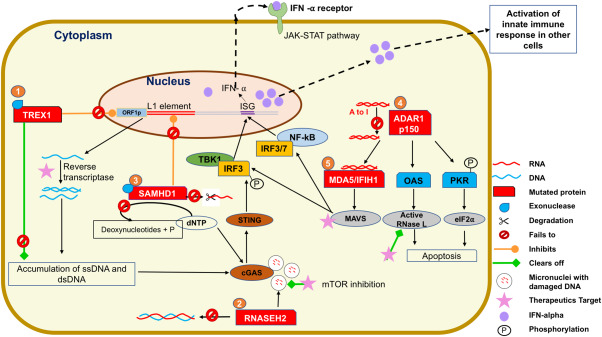
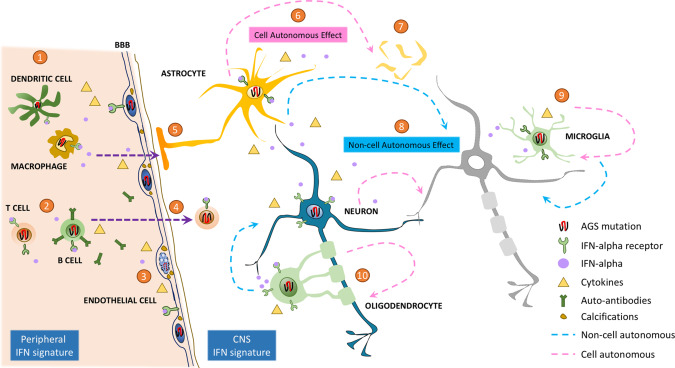
Aicardi-Goutières syndrome (AGS) is an early-onset, autoimmune and genetically heterogeneous disorder with severe neurologic injury. Molecular studies have established that autosomal recessive mutations in one of the following genes are causative: TREX1, RNASEH2A, RNASEH2B, RNASEH2C, SAMHD1, ADAR1 and IFIH1/MDA5. The phenotypic presentation and pathophysiology of AGS is associated with over-production of the cytokine Interferon-alpha (IFN-α) and its downstream signaling, characterized as type I interferonopathy. Astrocytes are one of the major source of IFN in the central nervous system (CNS) and it is proposed that they could be key players in AGS pathology. Astrocytes are the most ubiquitous glial cell in the CNS and perform a number of crucial and complex functions ranging from formation of blood-brain barrier, maintaining ionic homeostasis, metabolic support to synapse formation and elimination in healthy CNS. Involvement of astrocytic dysfunction in neurological diseases-Alexander's disease, Epilepsy, Alzheimer's and amyotrophic lateral sclerosis (ALS)-has been well-established. It is now known that compromised astrocytic function can contribute to CNS abnormalities and severe neurodegeneration, nevertheless, its contribution in AGS is unclear. The current review discusses known molecular and cellular pathways for AGS mutations and how it stimulates IFN-α signaling. We shed light on how astrocytes might be key players in the phenotypic presentations of AGS and emphasize the cell-autonomous and non-cell-autonomous role of astrocytes. Understanding the contribution of astrocytes will help reveal mechanisms underlying interferonopathy and develop targeted astrocyte specific therapeutic treatments in AGS.
Keywords: Aicardi-Goutières syndrome; astrocytes; interferon; type I interferonopathy.
© 2018 International Society of Neuropathology.
Figures
References
-
- Aicardi J, Goutieres F (1984) A progressive familial encephalopathy in infancy with calcifications of the basal ganglia and chronic cerebrospinal fluid lymphocytosis. Ann Neurol 15:49–54. - PubMed
-
- Akwa Y, Hassett DE, Eloranta ML, Sandberg K, Masliah E, Powell H et al (1998) Transgenic expression of IFN‐alpha in the central nervous system of mice protects against lethal neurotropic viral infection but induces inflammation and neurodegeneration. J Immunol 161:5016–5026. - PubMed
-
- Bartsch K, Knittler K, Borowski C, Rudnik S, Damme M, Aden K et al (2017) Absence of RNase H2 triggers generation of immunogenic micronuclei removed by autophagy. Hum Mol Genet 26:3960–3972. - PubMed
Publication types
MeSH terms
Substances
Supplementary concepts
Grants and funding
LinkOut - more resources
Full Text Sources
Other Literature Sources
Medical
Miscellaneous
