


Persistent effects of obesity: a neuroplasticity hypothesis
- PMID: 29741270
- PMCID: PMC6158064
- DOI: 10.1111/nyas.13665
Persistent effects of obesity: a neuroplasticity hypothesis
Abstract
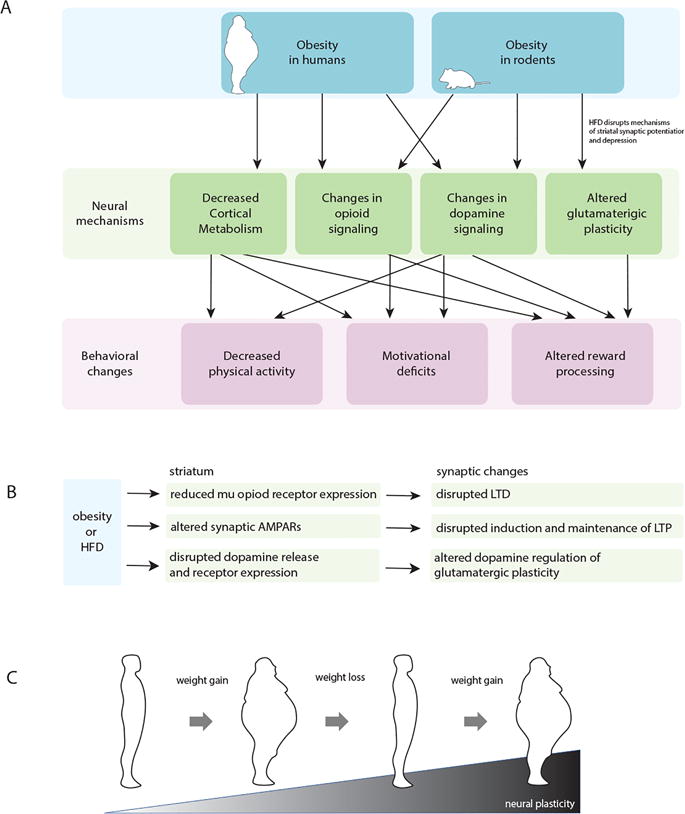
The obesity epidemic is a leading cause of health problems in the United States, increasing the risk of cardiovascular, endocrine, and psychiatric diseases. Although many people lose weight through changes in diet and lifestyle, keeping the weight off remains a challenge. Here, we discuss a hypothesis that seeks to explain why obesity is so persistent. There is a great degree of overlap in the circuits implicated in substance use disorder and obesity, and neural plasticity of these circuits in response to drugs of abuse is well documented. We hypothesize that obesity is also associated with neural plasticity in these circuits, and this may underlie persistent changes in behavior, energy balance, and body weight. Here, we discuss how obesity-associated reductions in motivation and physical activity may be rooted in neurophysiological alterations in these circuits. Such plasticity may alter how humans and animals use, expend, and store energy, even after weight loss.
Keywords: glutamate; high-fat diet; obesity; plasticity; synaptic.
Published 2018 This article is a U.S. Government work and is in the public domain in the USA.
Conflict of interest statement
The authors declare no competing interests.
Figures
References
-
- Mokdad AH, et al. The spread of the obesity epidemic in the United States, 1991–1998. Jama. 1999;282:1519–1522. - PubMed
-
- National Center for Health, S. Health, United States, 2015: With Special Feature on Racial and Ethnic Health Disparities. National Center for Health Statistics (US); 2016. - PubMed
-
- McGinnis JM, Foege WH. Actual causes of death in the United States. Jama. 1993;270:2207–2212. - PubMed
Publication types
MeSH terms
Substances
Grants and funding
LinkOut - more resources
Full Text Sources
Other Literature Sources
Medical
