


Cluster-Randomized Test-Negative Design Trials: A Novel and Efficient Method to Assess the Efficacy of Community-Level Dengue Interventions
- PMID: 29741576
- PMCID: PMC6118074
- DOI: 10.1093/aje/kwy099
Cluster-Randomized Test-Negative Design Trials: A Novel and Efficient Method to Assess the Efficacy of Community-Level Dengue Interventions
Abstract
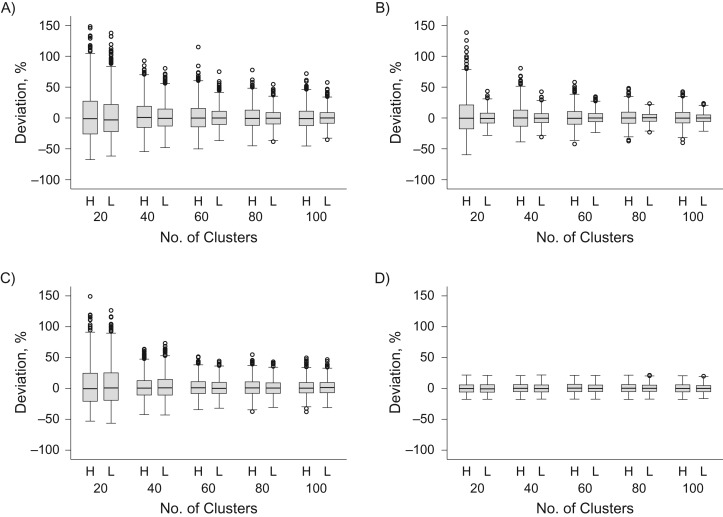
Cluster-randomized controlled trials are the gold standard for assessing efficacy of community-level interventions, such as vector-control strategies against dengue. We describe a novel cluster-randomized trial methodology with a test-negative design (CR-TND), which offers advantages over traditional approaches. This method uses outcome-based sampling of patients presenting with a syndrome consistent with the disease of interest, who are subsequently classified as test-positive cases or test-negative controls on the basis of diagnostic testing. We used simulations of a cluster trial to demonstrate validity of efficacy estimates under the test-negative approach. We demonstrated that, provided study arms are balanced for both test-negative and test-positive illness at baseline and that other test-negative design assumptions are met, the efficacy estimates closely match true efficacy. Analytical considerations for an odds ratio-based effect estimate arising from clustered data and potential approaches to analysis are also discussed briefly. We concluded that application of the test-negative design to certain cluster-randomized trials could increase their efficiency and ease of implementation.
Figures
References
-
- Wilson AL, Boelaert M, Kleinschmidt I, et al. Evidence-based vector control? Improving the quality of vector control trials. Trends Parasitol. 2015;31(8):380–390. - PubMed
-
- Hayes RJ, Moulton LH. Cluster Randomised Trials. London, UK: Chapman & Hall/CRC Press; 2009.
-
- Cornfield J. Randomization by group: a formal analysis. Am J Epidemiol. 1978;108(2):100–102. - PubMed
-
- Hayes RJ, Bennett S. Simple sample size calculation for cluster-randomized trials. Int J Epidemiol. 1999;28(2):319–326. - PubMed
Publication types
MeSH terms
Grants and funding
LinkOut - more resources
Full Text Sources
Other Literature Sources
Medical
Miscellaneous
