


Spontaneous acalculous gallbladder perforation in a man secondary to chemotherapy and radiation: A rare case report
- PMID: 29742709
- PMCID: PMC5959403
- DOI: 10.1097/MD.0000000000010674
Spontaneous acalculous gallbladder perforation in a man secondary to chemotherapy and radiation: A rare case report
Abstract
Rationale: Gallbladder perforation is a serious clinical condition and associated with high morbidity and mortality. A definitive diagnosis is contentious before surgery.
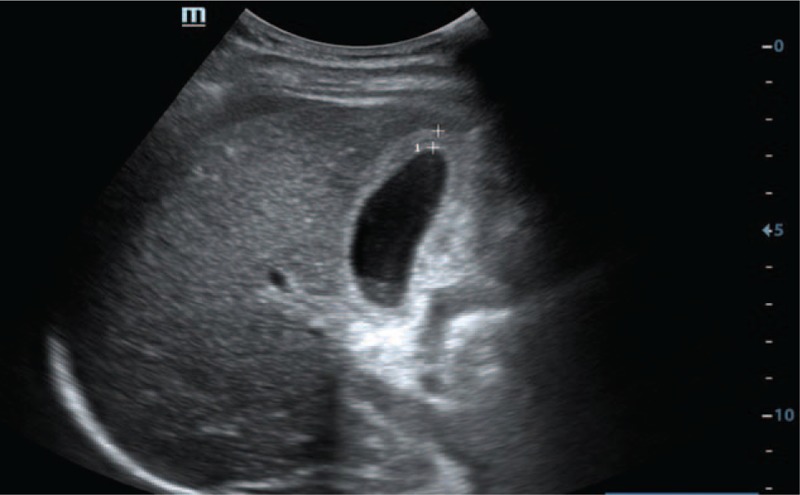
Patient concerns: We herein report a case of perforation of the gallbladder neck secondary to chemotherapy and radiation for nasopharyngeal carcinoma patient.
Diagnoses: Gallbladder perforation secondary to chemotherapy and radiation.
Interventions: To decrease the mortality associated with gallbladder perforation, Laparoscopic cholecystectomy and peritoneal lavage were performed followed for gallbladder perforation patient because of chemotherapy and radiation.
Outcomes: The patient recovered fully without serious complication and discharged on the 10th postoperative day. A pathological examination of the resected gallbladder revealed cholecystitis in the thinning of the neck.
Lessons: Early diagnosis and surgical intervention of gallbladder perforation in relation to asopharyngeal carcinoma chemotherapy and radiation are of prime importance. The laparoscopic procedure is safe and feasible in the selected patients.
Conflict of interest statement
The authors have no conflicts of interest to disclose.
Figures


References
-
- Menakuru SR, Kaman L, Behera A, et al. Current management of gall bladder perforations. ANZ J Surg 2004;74:843–6. - PubMed
-
- Roslyn J, Busuttil RW. Perforation of the gallbladder: a frequently mismanaged condition. Am J Surg 1979;137:307–12. - PubMed
-
- Kalliafas S, Ziegler DW, Flancbaum L, et al. Acute acalculous cholecystitis: incidence, risk factors, diagnosis, and outcome. Am Surg 1998;64:471–5. - PubMed
-
- Estevao-Costa J, Soares-Oliveira M, Lopes JM, et al. Idiopathic perforation of the gallbladder: a novel differential diagnosis of acute abdomen. J Pediatr Gastroenterol Nutr 2002;35:88–9. - PubMed
Publication types
MeSH terms
Substances
LinkOut - more resources
Full Text Sources
Other Literature Sources
Medical
