


Unearthing how, why, for whom and under what health system conditions the antiretroviral treatment adherence club intervention in South Africa works: A realist theory refining approach
- PMID: 29743067
- PMCID: PMC5944119
- DOI: 10.1186/s12913-018-3150-6
Unearthing how, why, for whom and under what health system conditions the antiretroviral treatment adherence club intervention in South Africa works: A realist theory refining approach
Abstract
Background: Poor retention in care and suboptimal adherence to antiretroviral treatment (ART) undermine its successful rollout in South Africa. The adherence club intervention was designed as an adherence-enhancing intervention to enhance the retention in care of patients on ART and their adherence to medication. Although empirical evidence suggests the effective superiority of the adherence club intervention to standard clinic ART care schemes, it is poorly understood exactly how and why it works, and under what health system contexts. To this end, we aimed to develop a refined programme theory explicating how, why, for whom and under what health system contexts the adherence club intervention works (or not).
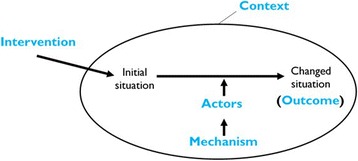
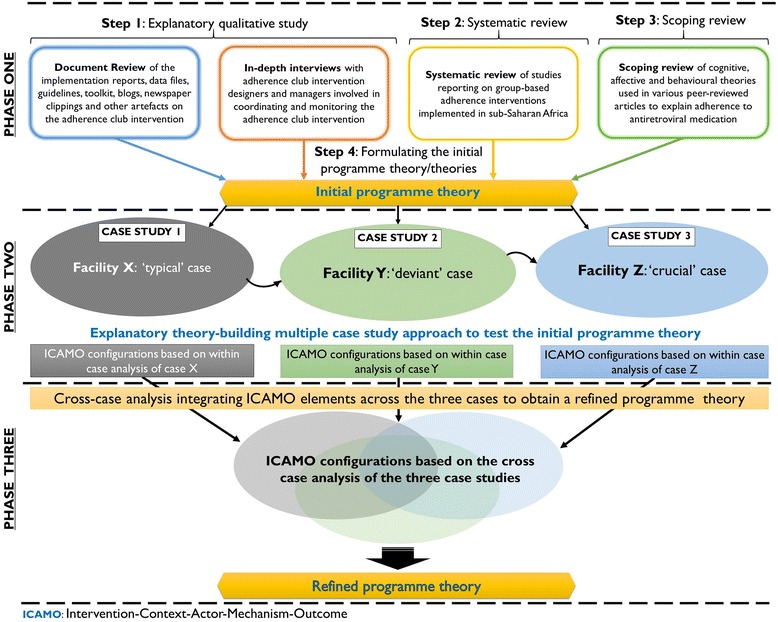
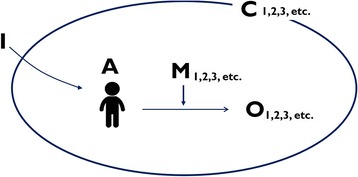
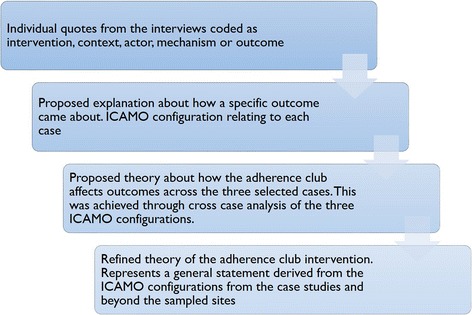
Methods: We undertook a realist evaluation study to uncover the programme theory of the adherence club intervention. We elicited an initial programme theory of the adherence club intervention and tested the initial programme theory in three contrastive sites. Using a cross-case analysis approach, we delineated the conceptualisation of the intervention, context, actor and mechanism components of the three contrastive cases to explain the outcomes of the adherence club intervention, guided by retroductive inferencing.
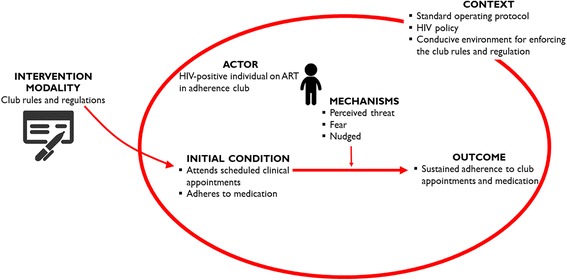
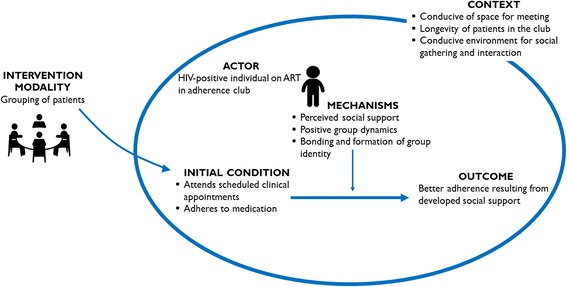
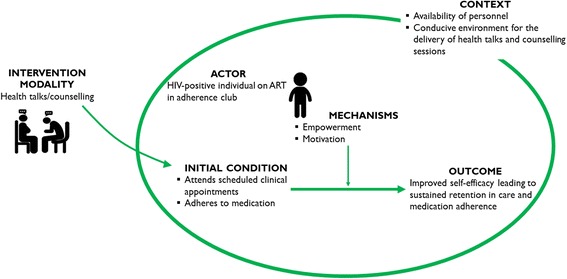
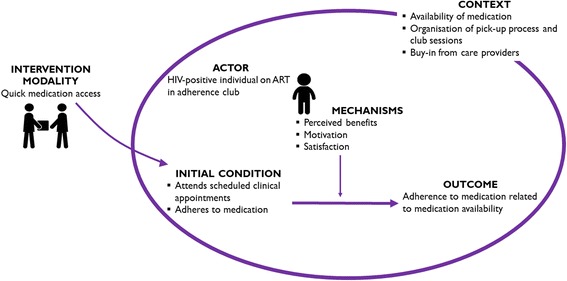
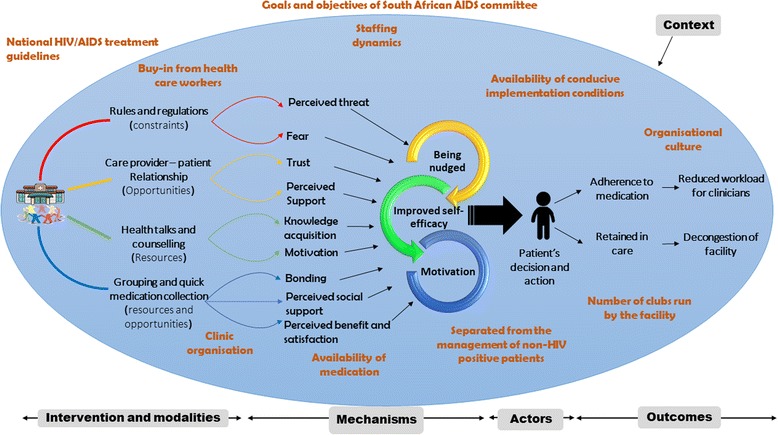
Results: We found that an intervention that groups clinically stable patients on ART in a convenient space to receive a quick and uninterrupted supply of medication, health talks, counselling, and immediate access to a clinician when required works because patients' self-efficacy improves and they become motivated and nudged to remain in care and adhere to medication. The successful implementation and rollout of the adherence club intervention are contingent on the separation of the adherence club programme from other patients who are HIV-negative. In addition, there should be available convenient space for the adherence club meetings, continuous support of the adherence club facilitators by clinicians and buy-in from the health workers at the health-care facility and the community.
Conclusion: Understanding what aspects of antiretroviral club intervention works, for what sections of the patient population, and under which community and health systems contexts, could inform guidelines for effective implementation in different contexts and scaling up of the intervention to improve population-level ART adherence.
Keywords: Adherence; Adherence club; Antiretroviral therapy; Configurational mapping. Intervention-context-Actor-mechanism-outcome configuration; Generative mechanisms; Programme theory; Realist evaluation; Retention in care; Retroduction.
Conflict of interest statement
Ethics approval and consent to participate
This study is part of a larger project “A realist evaluation of the antiretroviral treatment adherence club programme in selected primary health care facilities in the metropolitan area of Western Cape Province, South Africa” which has received ethics clearance from the University of the Western Cape Research Ethics Committee (UWC REC) (Registration No: 15/6/28). The University’s research ethics committees are registered with the National Health Research Ethics Committee in South Africa.
Competing interests
The authors declare that they have no competing interests.
Publisher’s Note
Springer Nature remains neutral with regard to jurisdictional claims in published maps and institutional affiliations.
Figures
References
-
- UNAIDS. HIV stats: South Africa. 2017. Available from: http://www.unaids.org/en/regionscountries/countries/southafrica, [Cited 2017 Oct 20].
-
- Stats SA. Mid-year population estimates 2017. 2017.
Publication types
MeSH terms
Substances
LinkOut - more resources
Full Text Sources
Other Literature Sources
Medical
