


High-frequency oscillatory ventilation guided by transpulmonary pressure in acute respiratory syndrome: an experimental study in pigs
- PMID: 29743121
- PMCID: PMC5943989
- DOI: 10.1186/s13054-018-2028-7
High-frequency oscillatory ventilation guided by transpulmonary pressure in acute respiratory syndrome: an experimental study in pigs
Abstract
Background: Recent clinical studies have not shown an overall benefit of high-frequency oscillatory ventilation (HFOV), possibly due to injurious or non-individualized HFOV settings. We compared conventional HFOV (HFOVcon) settings with HFOV settings based on mean transpulmonary pressures (PLmean) in an animal model of experimental acute respiratory distress syndrome (ARDS).
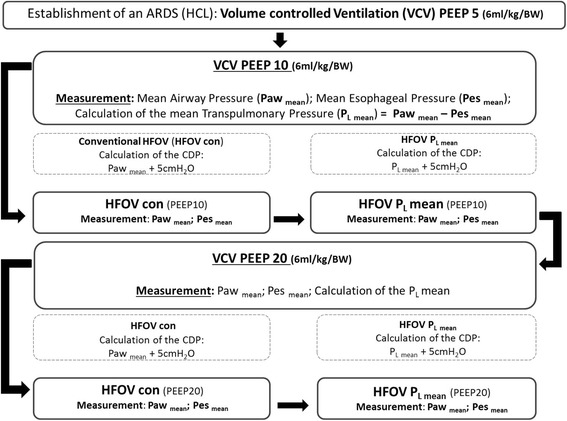
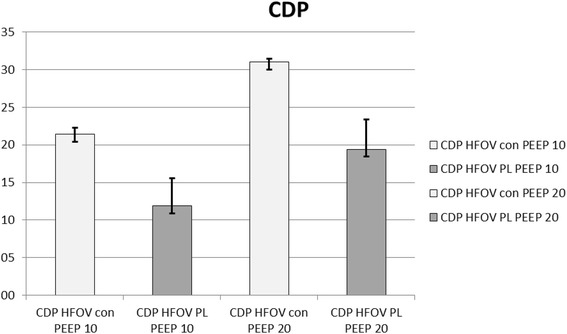
Methods: ARDS was induced in eight pigs by intrabronchial installation of hydrochloric acid (0.1 N, pH 1.1; 2.5 ml/kg body weight). The animals were initially ventilated in volume-controlled mode with low tidal volumes (6 ml kg- 1) at three positive end-expiratory pressure (PEEP) levels (5, 10, 20 cmH2O) followed by HFOVcon and then HFOV PLmean each at PEEP 10 and 20. The continuous distending pressure (CDP) during HFOVcon was set at mean airway pressure plus 5 cmH2O. For HFOV PLmean it was set at mean PL plus 5 cmH2O. Baseline measurements were obtained before and after induction of ARDS under volume controlled ventilation with PEEP 5. The same measurements and computer tomography of the thorax were then performed under all ventilatory regimens at PEEP 10 and 20.
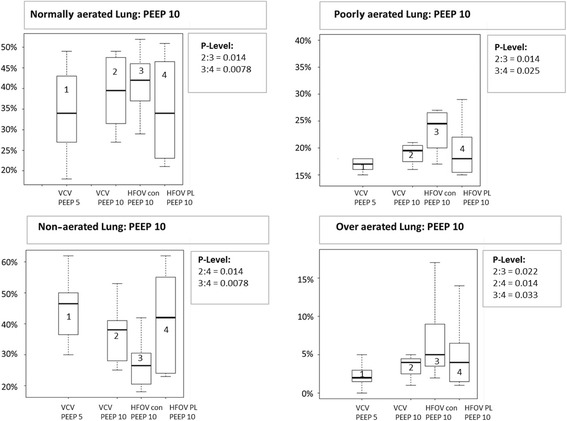
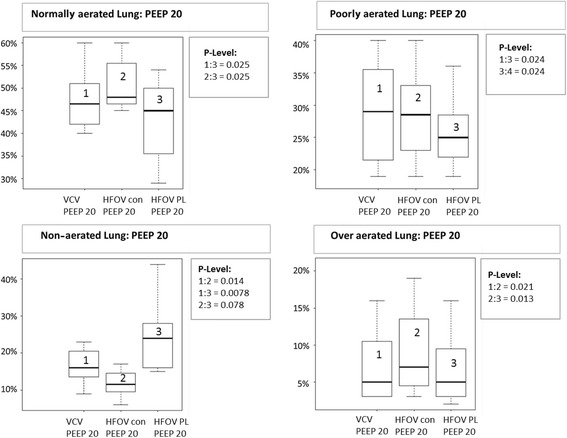
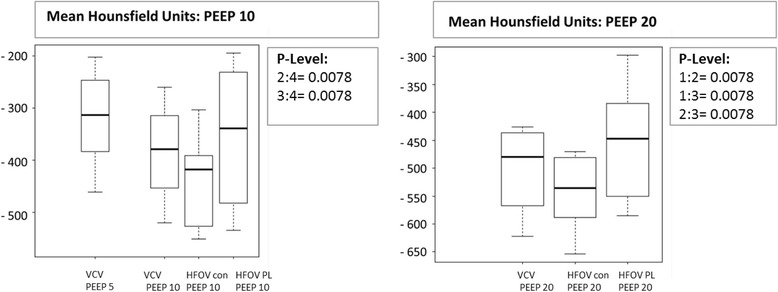
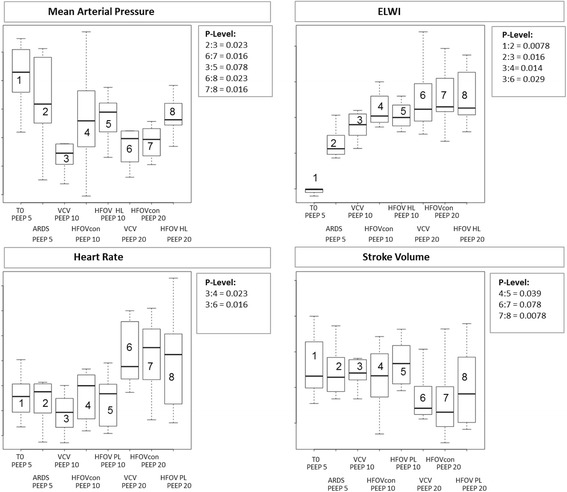
Results: Cardiac output, stroke volume, mean arterial pressure and intrathoracic blood volume index were significantly higher during HFOV PLmean than during HFOVcon at PEEP 20. Lung density, total lung volume, and normally and poorly aerated lung areas were significantly greater during HFOVcon, while there was less over-aerated lung tissue in HFOV PLmean. The groups did not differ in oxygenation or extravascular lung water index.
Conclusion: HFOV PLmean is associated with less hemodynamic compromise and less pulmonary overdistension than HFOVcon. Despite the increase in non-ventilated lung areas, oxygenation improved with both regimens. An individualized approach with HFOV settings based on transpulmonary pressure could be a useful ventilatory strategy in patients with ARDS. Providing alveolar stabilization with HFOV while avoiding harmful distending pressures and pulmonary overdistension might be a key in the context of ventilator-induced lung injury.
Keywords: Aerated lung tissue; HFOV; Hemodynamics; Oxygenation; Transpulmonary pressure; Volume controlled ventilation.
Conflict of interest statement
Ethics approval
The study had the approval of our institution’s animal study review board. The animals were handled according to the Helsinki convention for the use and care of animals.
Competing interests
The authors declare that they have no competing interests.
Publisher’s Note
Springer Nature remains neutral with regard to jurisdictional claims in published maps and institutional affiliations.
Figures
References
-
- Amato MB, Barbas CS, Medeiros DM, Magaldi RB, Schettino GP, Lorenzi-Filho G, Kairalla RA, Deheinzelin D, Munoz C, Oliveira R, et al. Effect of a protective-ventilation strategy on mortality in the acute respiratory distress syndrome. N Engl J Med. 1998;338(6):347–354. doi: 10.1056/NEJM199802053380602. - DOI - PubMed
-
- Derdak S, Mehta S, Stewart TE, Smith T, Rogers M, Buchman TG, Carlin B, Lowson S, Granton J. High-frequency oscillatory ventilation for acute respiratory distress syndrome in adults: a randomized, controlled trial. Am J Respir Crit Care Med. 2002;166(6):801–808. doi: 10.1164/rccm.2108052. - DOI - PubMed
MeSH terms
LinkOut - more resources
Full Text Sources
Other Literature Sources
