Microbiome and Cardiovascular Disease in CKD
- PMID: 29743160
- PMCID: PMC6218820
- DOI: 10.2215/CJN.12691117
Microbiome and Cardiovascular Disease in CKD
Abstract
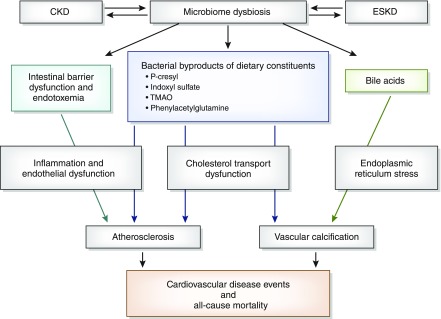
Patients with CKD exhibit a disproportionate burden of cardiovascular mortality, which likely stems from the presence of unique, nontraditional risk factors that accompany deteriorating kidney function. Mounting evidence suggests that alterations to the intestinal microbiome in CKD may serve as one such risk factor. The human intestinal tract is home to >100 trillion micro-organisms made up of a collection of commensal, symbiotic, and pathogenic species. These species along with their local environment constitute the intestinal microbiome. Patients with CKD show intestinal dysbiosis, an alteration of the gut micro-organism composition and function. Recent evidence links byproducts of intestinal dysbiosis to vascular calcification, atherosclerosis formation, and adverse cardiovascular outcomes in CKD. CKD-associated intestinal dysbiosis may also be accompanied by defects in intestinal barrier function, which could further enhance the negative effects of pathogenic intestinal bacteria in the human host. Thus, intestinal dysbiosis, defective intestinal barrier function, and a reduced capacity for clearance by the kidney of absorbed bacterial byproducts may all potentiate the development of cardiovascular disease in CKD. This narrative review focuses on microbiome-mediated mechanisms associated with CKD that may promote atherosclerosis formation and cardiovascular disease. It includes (1) new data supporting the hypothesis that intestinal barrier dysfunction leads to bacterial translocation and endotoxemia that potentiate systemic inflammation, (2) information on the accumulation of dietary-derived bacterial byproducts that stimulate pathways promoting atheromatous changes in arteries and cardiovascular disease, and (3) potential interventions. Despite great scientific interest in and a rapidly growing body of literature on the relationship between the microbiome and cardiovascular disease in CKD, many important questions remain unanswered.
Keywords: Atherosclerosis; Bacteria; Bacterial Translocation; Cardiovascular Diseases; Chronic; Dysbiosis; Endotoxemia; Gastrointestinal Microbiome; Humans; Intestines; Microbiota; Renal Insufficiency; arteries; risk factors; vascular calcification.
Copyright © 2018 by the American Society of Nephrology.
Figures
References
-
- United States Renal Data System: United States Renal Data System Annual Data Report 2015. CKD in the General Population. Available at: https://www.usrds.org/2015/view/v1_01.aspx. Accessed September 25, 2017
Publication types
MeSH terms
Grants and funding
LinkOut - more resources
Full Text Sources
Other Literature Sources
Medical