Review
. 2018 Mar 18:2018:1941285.
doi: 10.1155/2018/1941285. eCollection 2018.

The Good, the Bad, and the Ugly of ROS: New Insights on Aging and Aging-Related Diseases from Eukaryotic and Prokaryotic Model Organisms

Affiliations
Review

The Good, the Bad, and the Ugly of ROS: New Insights on Aging and Aging-Related Diseases from Eukaryotic and Prokaryotic Model Organisms

Ana L Santos et al. Oxid Med Cell Longev. .

Abstract

Aging is associated with the accumulation of cellular damage over the course of a lifetime. This process is promoted in large part by reactive oxygen species (ROS) generated via cellular metabolic and respiratory pathways. Pharmacological, nonpharmacological, and genetic interventions have been used to target cellular and mitochondrial networks in an effort to decipher aging and age-related disorders. While ROS historically have been viewed as a detrimental byproduct of normal metabolism and associated with several pathologies, recent research has revealed a more complex and beneficial role of ROS in regulating metabolism, development, and lifespan. In this review, we summarize the recent advances in ROS research, focusing on both the beneficial and harmful roles of ROS, many of which are conserved across species from bacteria to humans, in various aspects of cellular physiology. These studies provide a new context for our understanding of the parts ROS play in health and disease. Moreover, we highlight the utility of bacterial models to elucidate the molecular pathways by which ROS mediate aging and aging-related diseases.


Figures
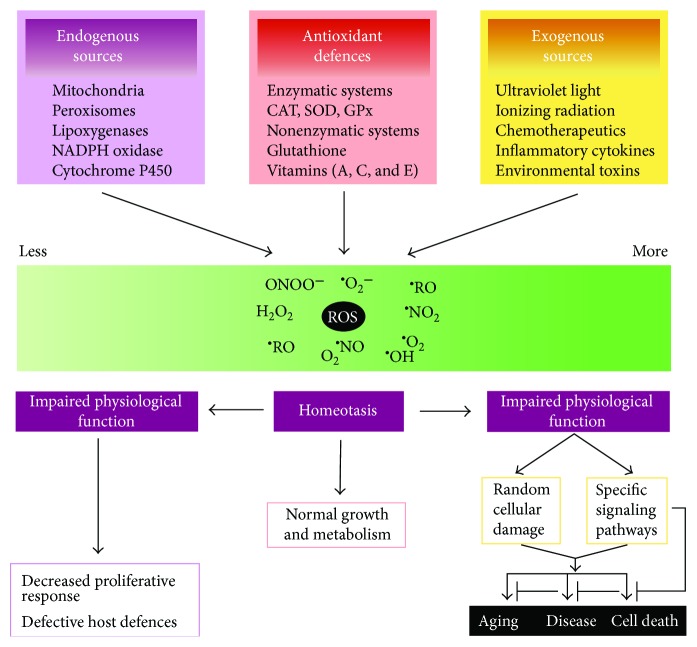
Figure 1
Figure 1
The sources and cellular responses to reactive oxygen species (ROS). Oxidants are generated as a result of normal intracellular metabolism in mitochondria and peroxisomes, as well as from a variety of cytosolic enzyme systems. In addition, a number of external agents can trigger ROS production. A sophisticated enzymatic and nonenzymatic antioxidant defense system including catalase (CAT), superoxide dismutase (SOD), and glutathione peroxidase (GPx) counteracts and regulates overall ROS levels to maintain physiological homeostasis. Lowering ROS levels below the homeostatic set point may interrupt the physiological role of oxidants in cellular proliferation and host defense. Similarly, increased ROS may also be detrimental and lead to cell death or to an acceleration in aging and age-related diseases. Traditionally, the impairment caused by increased ROS is thought to result from random damage to proteins, lipids, and DNA. In addition to these effects, a rise in ROS levels may also constitute a stress signal that activates specific redox-sensitive signaling pathways. Once activated, these diverse signaling pathways may have either damaging or potentially protective functions. Reproduced with permission from T. Finkel and N.J. Holbrook: Oxidants, oxidative stress and the biology of aging. Nature, vol. 408, no. 6809, pp.239-247, 2000.
Figure 2
Figure 2
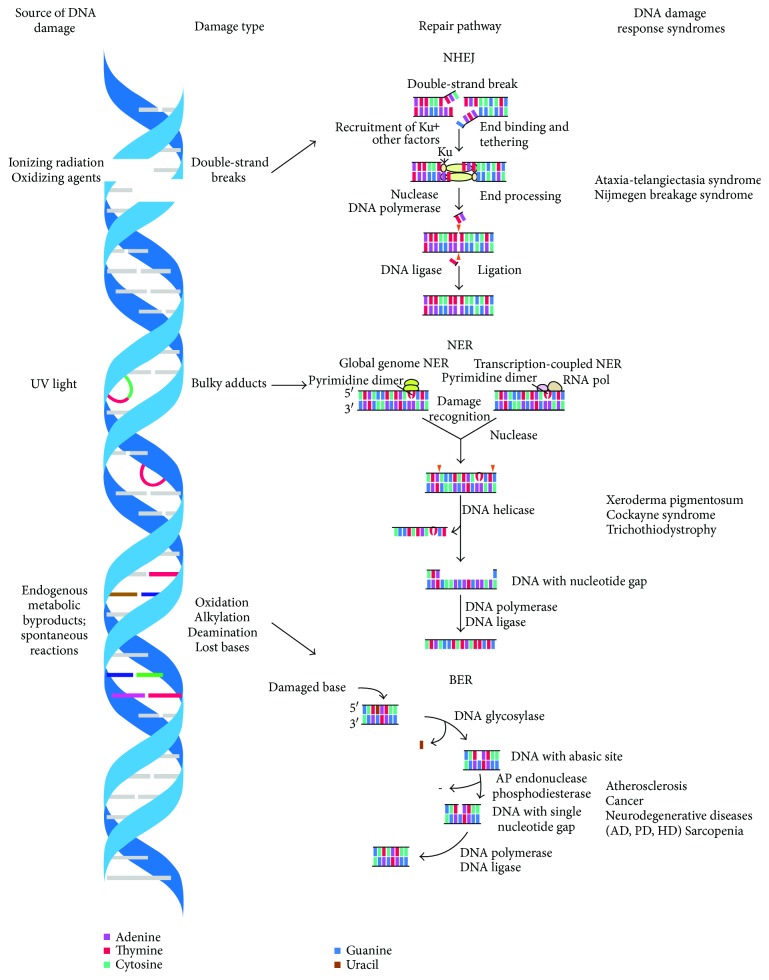
Examples of distinct DNA damage repair and response defects leading to genetic disorders in humans. Various damage types, including DNA double-strand breaks, bulky lesions, and base lesions, require nonhomologous end joining (NHEJ), nucleotide excision repair (NER), and base excision repair (BER), respectively. Defects in DNA-damage-response pathways lead to genome instability and, consequently, to complex syndromes characterized by tissue degeneration, cancer susceptibility, developmental defects, and premature aging. AD: Alzheimer's disease; PD: Parkinson's disease; HD: Huntington's disease.
Figure 3
Figure 3
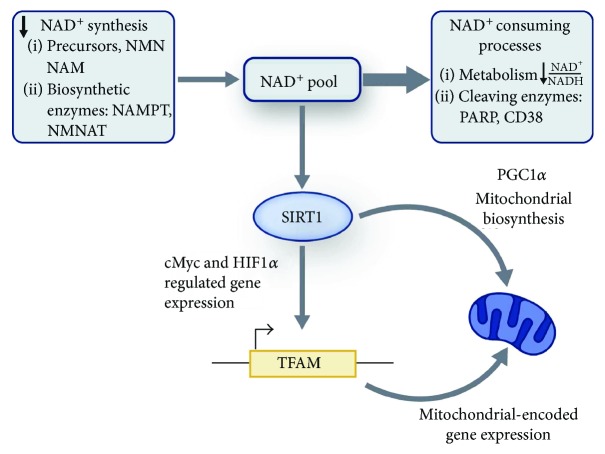
Age-dependent decline in NAD+. Decreased NAD+ synthesis and increased NAD+ consumption with age may both contribute to a decrease in the NAD+ pool. A reduction in NAD+ levels leads to an age-related reduction of SIRT1 activity. Reduced SIRT1 activity impacts mitochondrial function through at least two mechanisms: (1) a reduction in biogenesis secondary due to a reduction in PGC1-α activity and (2) an impairment of mitochondrial function due to a reduction in mtDNA replication and transcription. Reproduced with permission from Prolla, T.A. and Denu, J.M., 2014. NAD+ deficiency in age-related mitochondrial dysfunction. Cell Metabolism, 19(2), pp.178-180.
Figure 4
Figure 4
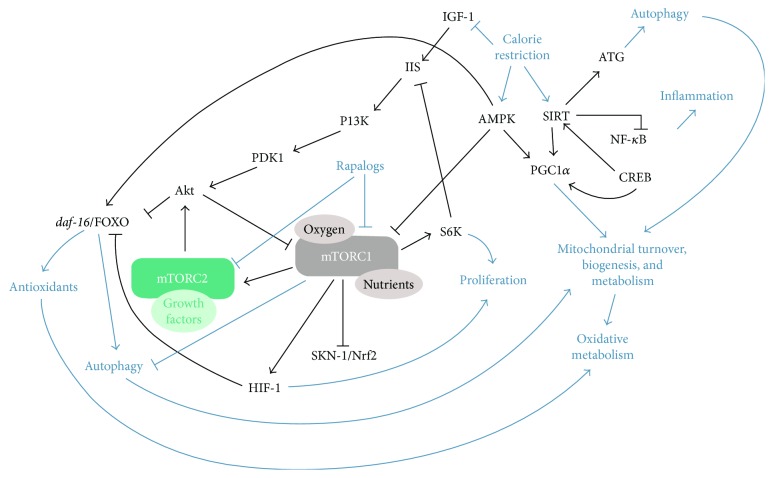
Crosstalk between mTOR and other longevity pathways. mTORC1 responds to a variety of environmental cues, including oxygen and nutrients, and communicates with several other known longevity factors in a complex network of interactions. Rapalogs inhibit mTORC and decrease its activity. Sensing of low oxygen levels stimulates mTORC1 to activate the hypoxic response by enhancing translation of HIF-1, which inhibits FOXO family members and increases longevity. mTORC1 inhibits the stress response transcription factor SKN-1/Nfr2, resulting in extended lifespan. Inhibition of the mTOR downstream effector ribosomal protein S6 kinase (S6K), involved in the regulation of protein translation, also results in extended lifespan. Caloric restriction can lower mTORC1 signaling partly through activation of AMPK, resulting in enhanced longevity, potentially via PGC1α-mediated increase in mitochondrial metabolism. Calorie restriction also inhibits IGF1-dependent signaling via PI3K/PDK1/Akt which inhibits FOXO, blocking the expression of antioxidants and autophagy. Calorie restriction leads to increased NAD+/NADH ratio, which activates sirtuins, that in turn induce mechanisms to enhance cell protection, including enhanced antioxidant production and autophagy. Calorie restriction can also block inflammation via the effects of sirtuins on NF-κB. cAMP response element binding proteins (CREB) can also upregulate the transcription of sirtuins, slowing aging.
Figure 5
Figure 5
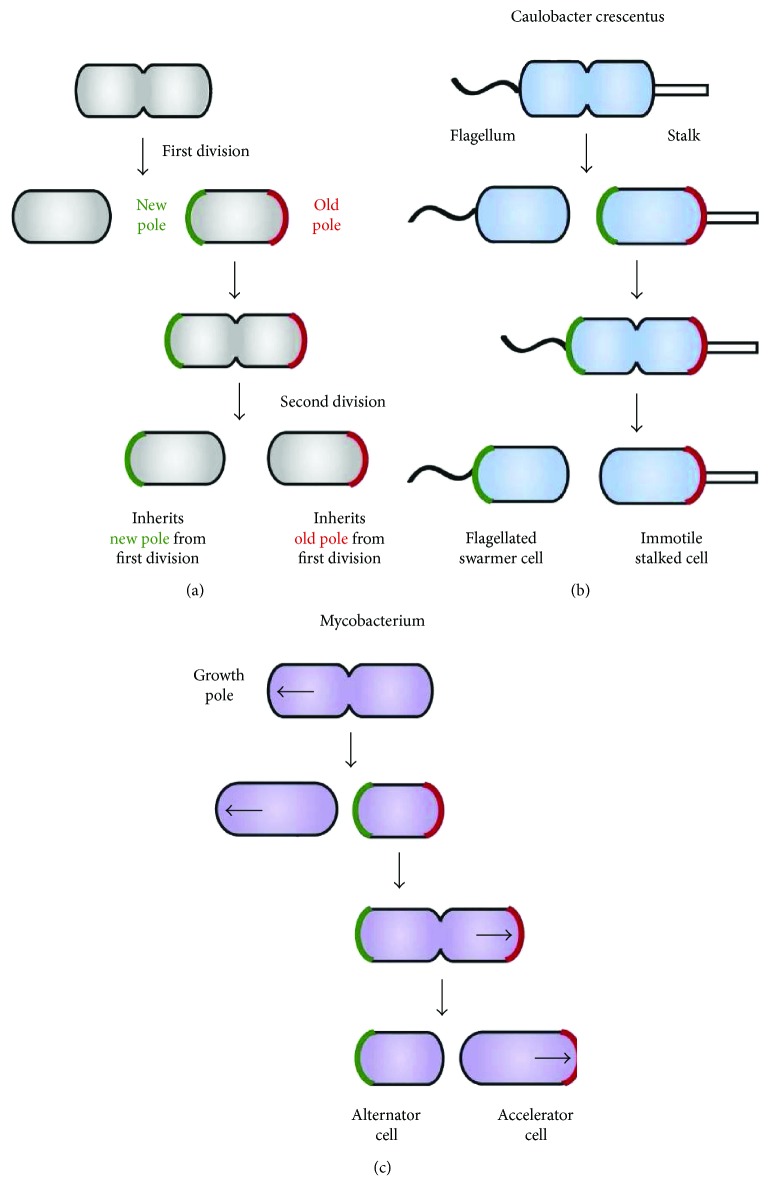
(a) All cell divisions in rod-shaped bacteria are asymmetric in that one daughter cell inherits the “new” pole (green) from a previous division and the other inherits the “old” pole (red). In some bacteria, this asymmetry is used to create functional specialization of daughter cells. (b) In C. crescentus, different polar appendages form at the new and old poles, leading to dimorphic daughter cells. (c) In Mycobacterium, cells preferentially grow at the old pole (marked with an arrow). Daughter cells that inherit the old pole, called accelerators, continue growing whereas those inheriting the new pole, called alternators, must form a new growth pole before elongating. Reproduced with permission from Aakre CD, Laub MT. Asymmetric cell division: a persistent issue? Developmental cell. 2012; 22 (2):235-236. doi:10.1016/j.devcel.2012.01.016.
Figure 6
Figure 6
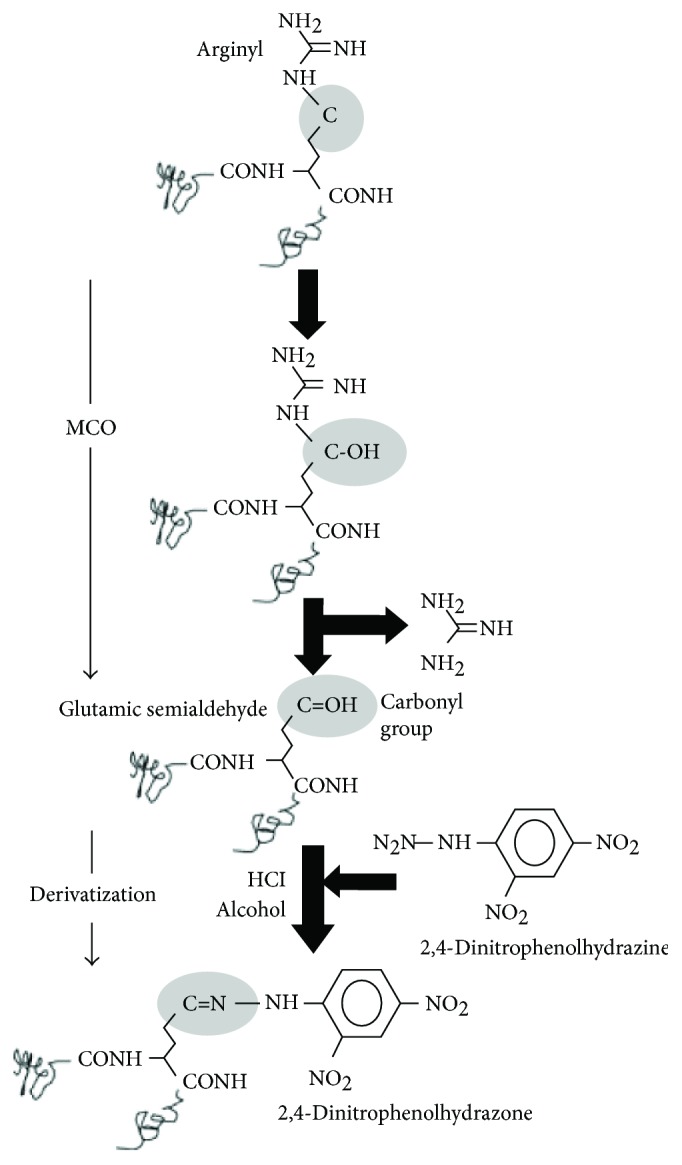
Carbonylation and derivatization of a protein amino acid side chain. A scheme for the formation of glutamic semialdehyde from an arginyl residue is depicted as a consequence of an MCO. For detection, the carbonyl group, in this case, glutamic semialdehyde, is subsequently derivatized by 2,4-dinitrophenolhydrazine. The resulting protein 2,4-dinitrophenolhydrazone can be detected by specific monoclonal or polyclonal antibodies [210]. Reproduced with permission from Nyström T. Role of oxidative carbonylation in protein quality control and senescence. The EMBO Journal. 2005; 24 (7):1311-1317. doi:10.1038/sj.emboj.7600599.
Figure 7
Figure 7
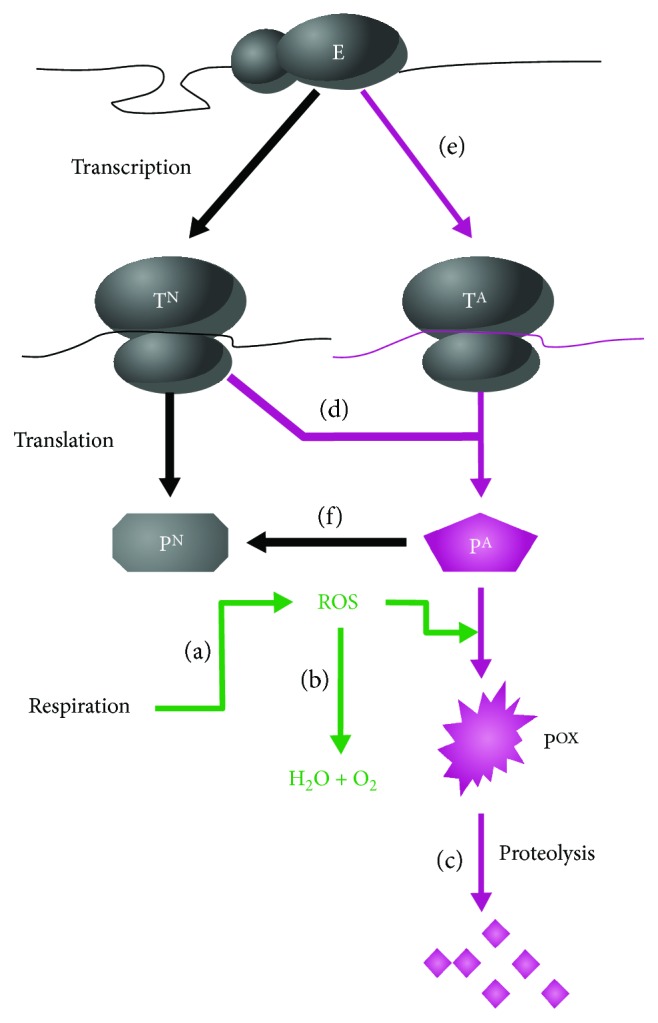
Activities of potential importance for stasis-induced oxidation of proteins. Traditionally, increased protein oxidation has been argued to be an effect of (a) increased production of reactive oxygen species (ROS), presumably derived from respiratory activity, (b) diminished activity or abundance of the antioxidant systems, or (c) reduced activity of the proteolysis or damage repair systems. Work on E. coli has highlighted the role of some alternative pathways in protein oxidation. These pathways relate to the production of aberrant proteins, which are highly susceptible to oxidative modification (carbonylation). Increased levels of such aberrant, malformed polypeptides can be the result of (d) reduced translational fidelity, (e) reduced transcriptional fidelity, or (f) diminished activity of the repair refolding apparatus. In the early stages of E. coli growth arrest, reduced translational fidelity appears to be the most important contributing factor to the elevated levels of oxidatively modified aberrant proteins. E, core RNA polymerase; PA, aberrant protein; PN, native protein; Pox, oxidized protein; TA, aberrant transcript; TN, native transcript. Reproduced with permission from Nyström, Thomas. “Aging in bacteria.” Current Opinion in Microbiology 5, no. 6 (2002): 596-601.

References

    1. Partridge L., Gems D. Mechanisms of ageing: public or private? Nature Reviews Genetic. 2002;3(3):165–175. doi: 10.1038/nrg753. - DOI - PubMed
    1. Davalli P., Mitic T., Caporali A., Lauriola A., D’Arca D. ROS, cell senescence, and novel molecular mechanisms in aging and age-related diseases. Oxidative Medicine and Cellular Longevity. 2016;2016:18. doi: 10.1155/2016/3565127.3565127 - DOI - PMC - PubMed
    1. World Health Organization. World report on aging and health. 2015
    1. Kikis E. A., Gidalevitz T., Morimoto R. I. Protein homeostasis in models of aging and age-related conformational disease. Experimental Medicine and Biology. 2010;694:138–159. doi: 10.1007/978-1-4419-7002-2_11. - DOI - PMC - PubMed
    1. Jin K., Simpkins J. W., Ji X., Leis M., Stambler I. The critical need to promote research of aging and aging-related diseases to improve health and longevity of the elderly population. Aging and Disease. 2015;6(1):1–5. doi: 10.14336/AD.2014.1210. - DOI - PMC - PubMed

Substances