


Diagnostic utility of FDG-PET in the differential diagnosis between different forms of primary progressive aphasia
- PMID: 29744573
- PMCID: PMC6061469
- DOI: 10.1007/s00259-018-4034-z
Diagnostic utility of FDG-PET in the differential diagnosis between different forms of primary progressive aphasia
Abstract
Purpose: A joint effort of the European Association of Nuclear Medicine (EANM) and the European Academy of Neurology (EAN) aims at clinical guidance for the use of FDG-PET in neurodegenerative diseases. This paper addresses the diagnostic utility of FDG-PET over clinical/neuropsychological assessment in the differentiation of the three forms of primary progressive aphasia (PPA).
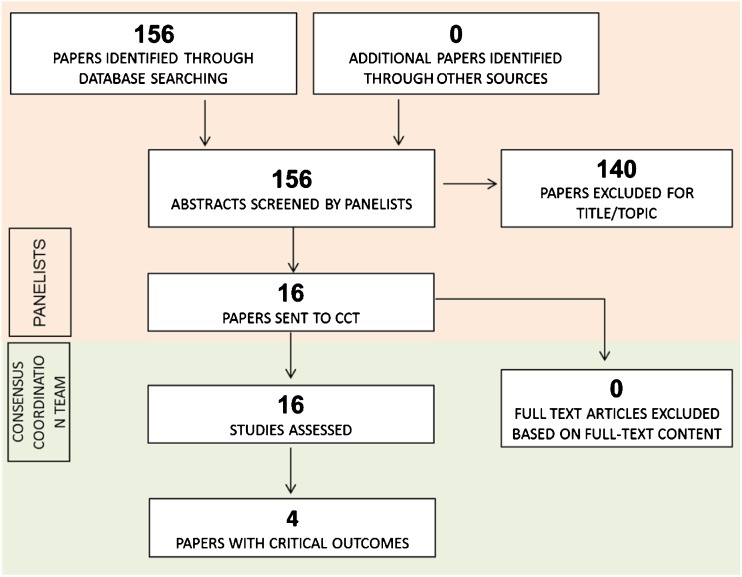
Methods: Seven panelists were appointed by the EANM and EAN and a literature search was performed by using harmonized PICO (Population, Intervention, Comparison, Outcome) question keywords. The studies were screened for eligibility, and data extracted to assess their methodological quality. Critical outcomes were accuracy indices in differentiating different PPA clinical forms. Subsequently Delphi rounds were held with the extracted data and quality assessment to reach a consensus based on both literature and expert opinion.
Results: Critical outcomes for this PICO were available in four of the examined papers. The level of formal evidence supporting clinical utility of FDG-PET in differentiating among PPA variants was considered as poor. However, the consensual recommendation was defined on Delphi round I, with six out of seven panelists supporting clinical use.
Conclusions: Quantitative evidence demonstrating utility or lack thereof is still missing. Panelists decided consistently to provide interim support for clinical use based on the fact that a typical atrophy or metabolic pattern is needed for PPA according to the diagnostic criteria, and the synaptic failure detected by FDG-PET is an earlier phenomenon than atrophy. Also, a normal FDG-PET points to a non-neurodegenerative cause.
Keywords: Agrammatic; Dementia; FDG-PET; Logopenic; Neurodegenerative; PPA; Primary progressive aphasia; Semantic.
Conflict of interest statement
Conflict of interest
Flavio Nobili: received personal fees and non-financial support from GE Healthcare, non-financial support from Eli-Lilly and grants from Chiesi Farmaceutici.
Cristina Festari: declares that she has no conflict of interest.
Daniele Altomare was the recipient of the grant allocated by the European Academy of Neurology (EAN) for data extraction and evidence assessment for the present project.
Federica Agosta: is Section Editor of NeuroImage: Clinical; has received speaker fees from Biogen Idec, Novartis, and Excellence in Medical Education; and receives or has received research supports from the Italian Ministry of Health, AriSLA (Fondazione Italiana di Ricerca per la SLA), and the European Research Council. She received personal fees from Elsevier INC.
Stefania Orini: declares that she has no conflict of interest.
Federica Gandolfo: declares that she has no conflict of interest.
Javier Arbizu: received grants from Eli-Lilly & Co, Piramal and GE Healthcare.
Femke Bouwman: none.
Peter Nestor: received radiotracer from Piramal at a discounted rate as part of a research collaboration.
Alexander Drzezga: received grants and non-financial support from Eli-Lilly & Co, Siemens and GE Healthcare; he also received non-financial support from Piramal.
Zuzana Walker: received from GE Healthcare grants and tracers, personal fees for consultancy and speaker’s fee.
Marina Boccardi has received funds from the European Association of Nuclear Medicine (EANM) to perform the evidence assessment and the global coordination of the present project. Moreover, she has received research grants from Piramal and served as a paid member of advisory boards for Eli Lilly.
Giovanni B. Frisoni is principal investigator of industry-sponsored trials funded by AbbVie, Acadia, Altoida, Amoneta, Araclon, Biogen, Janssen, Novartis, Piramal; has received funding for investigator-initiated trials from GE, Piramal, and Avid-Lilly; has received speaker’s fees from a number of pharma and imaging companies.
Ethical approval
This article does not contain any new studies with human participants or animals performed by any of the authors. The human studies discussed herein came exclusively from previously published research articles.
Informed consent
Not applicable, this is a review article. Informed consent statement is declared in each of the revised paper.
Figures
References
-
- Nobili F, Arbizu J, Bouwman F, Drzezga A, Filippi M, Nestor P, et al. EAN-EANM recommendations for the use of brain 18F-fluorodeoxyglucose positron emission tomography (FDG-PET) in neurodegenerative cognitive impairment and dementia: Delphi consensus. Eur J Neurol. 2018;(submitted) - PubMed
-
- Boccardi Marina, Festari Cristina, Altomare Daniele, Gandolfo Federica, Orini Stefania, Nobili Flavio, Frisoni Giovanni B. Assessing FDG-PET diagnostic accuracy studies to develop recommendations for clinical use in dementia. European Journal of Nuclear Medicine and Molecular Imaging. 2018;45(9):1470–1486. doi: 10.1007/s00259-018-4024-1. - DOI - PubMed
MeSH terms
Substances
LinkOut - more resources
Full Text Sources
Other Literature Sources
