


Association between perfluoroalkyl substances exposure and thyroid function in adults: A meta-analysis
- PMID: 29746532
- PMCID: PMC5945046
- DOI: 10.1371/journal.pone.0197244
Association between perfluoroalkyl substances exposure and thyroid function in adults: A meta-analysis
Abstract
Objective: Many people are exposed to perfluoroalkyl substances (PFASs) because these substances are widely used as industrial products. Although epidemiological studies suggest that PFASs can disrupt thyroid hormones, the association between PFAS exposure and thyroid function remains inconclusive. Therefore, we performed a comprehensive meta-analysis to investigate the association between PFASs exposure and thyroid hormones.
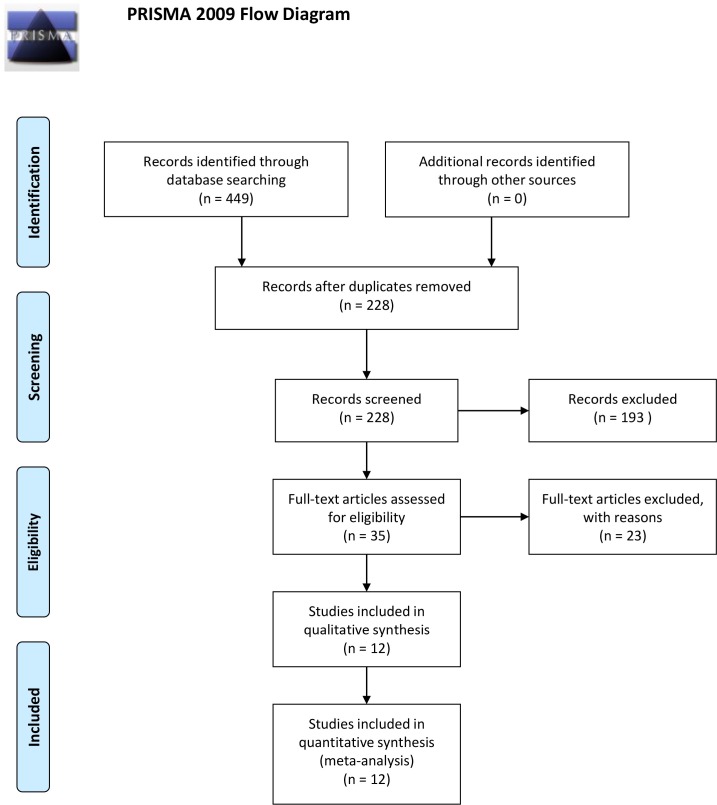
Methods: We searched medical literature databases for articles on the association between PFASs-perfluorooctanesulfonic acid (PFOS), perfluorooctanoic acid (PFOA), and perfluorohexane sulfonic acid (PFHxS)-and thyroid hormone levels in adults. Twelve articles were included in the meta-analysis, and the pooled z values were calculated with correlation or regression coefficients.
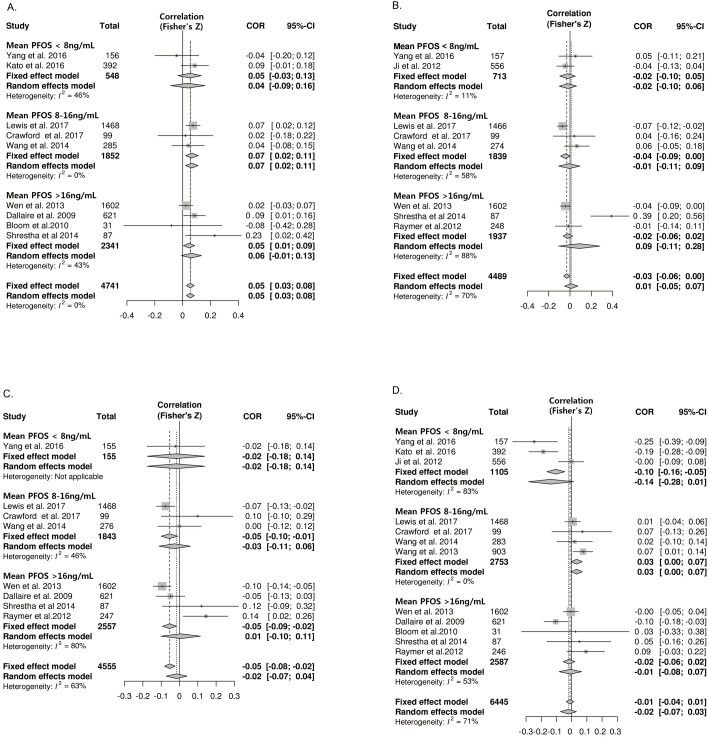
Results: The blood PFOS concentration was positively correlated with free T4. The pooled z value was 0.05 (95% confidence interval (CI): 0.03, 0.08). PFOS was negatively correlated with total T4 and total T3 when excluding outlier studies. In a subgroup analysis stratified by mean PFOS concentration, PFOS was observed to be positively associated with free T4 and TSH and negatively associated with total T3 in the intermediate concentration group (8-16 ng/mL). PFOA concentration was negatively correlated with total T4 (z value, -0.06; 95% CI: -0.09, -0.03) after omitting one outlier study. PFHxS also showed a negative correlation with total T4 (z value, -0.04; 95% CI: -0.07, -0.01). A subgroup analysis of pregnant women showed that there was no association between PFASs and thyroid hormones.
Conclusions: Our meta-analysis suggests that PFASs are negatively associated with total T4, and their effect can be different depending on the PFAS concentration.
Conflict of interest statement
Figures


References
-
- Fromme H, Tittlemier SA, Volkel W, Wilhelm M, Twardella D. Perfluorinated compounds—exposure assessment for the general population in Western countries. Int J Hyg Environ Health. 2009;212(3):239–70. doi: 10.1016/j.ijheh.2008.04.007 . - DOI - PubMed
-
- Calafat AM, Wong LY, Kuklenyik Z, Reidy JA, Needham LL. Polyfluoroalkyl chemicals in the U.S. population: data from the National Health and Nutrition Examination Survey (NHANES) 2003–2004 and comparisons with NHANES 1999–2000. Environ Health Perspect. 2007;115(11):1596–602. doi: 10.1289/ehp.10598 . - DOI - PMC - PubMed
-
- Environmental Protection Agency (EPA). Draft Risk Assessment of the Potential Human Health Effects Associated with Exposure to Perflouroctanoic Acids and Its Salts. 2005.
-
- Grandjean P, Clapp R. Perfluorinated Alkyl Substances: Emerging Insights Into Health Risks. New Solut. 2015;25(2):147–63. doi: 10.1177/1048291115590506 . - DOI - PMC - PubMed
-
- Bach CC, Bech BH, Brix N, Nohr EA, Bonde JP, Henriksen TB. Perfluoroalkyl and polyfluoroalkyl substances and human fetal growth: a systematic review. Crit Rev Toxicol. 2015;45(1):53–67. doi: 10.3109/10408444.2014.952400 . - DOI - PubMed
Publication types
MeSH terms
Substances
LinkOut - more resources
Full Text Sources
Other Literature Sources
