


Behavioral and genetic features of sleep ontogeny in Drosophila
- PMID: 29746663
- PMCID: PMC6047415
- DOI: 10.1093/sleep/zsy086
Behavioral and genetic features of sleep ontogeny in Drosophila
Abstract
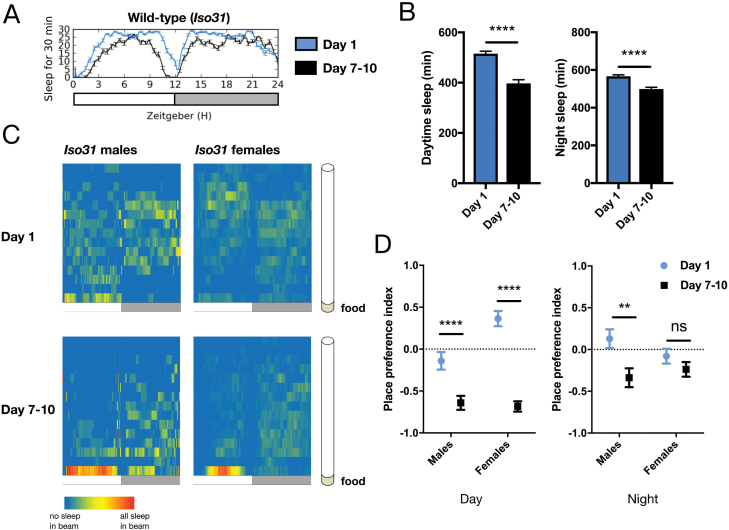
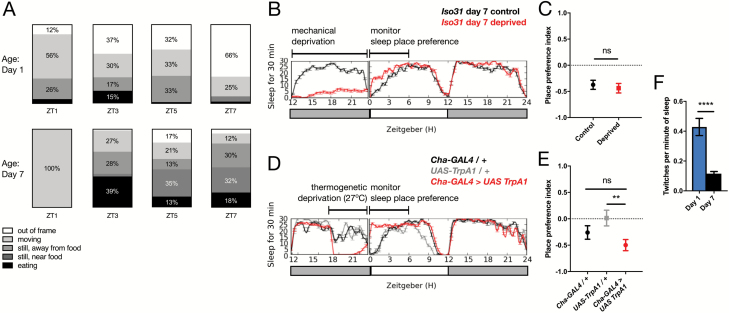
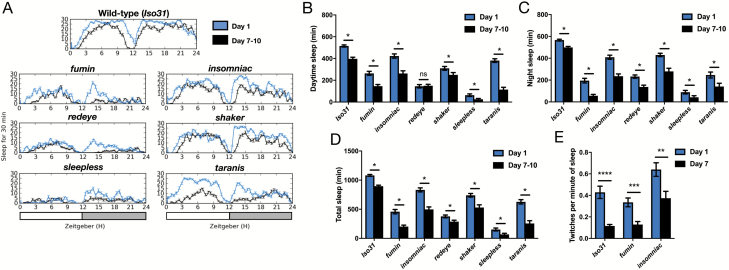
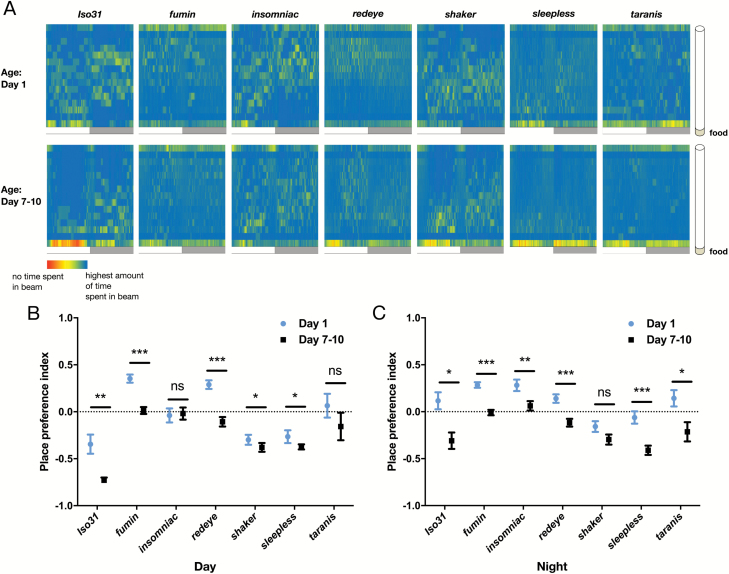
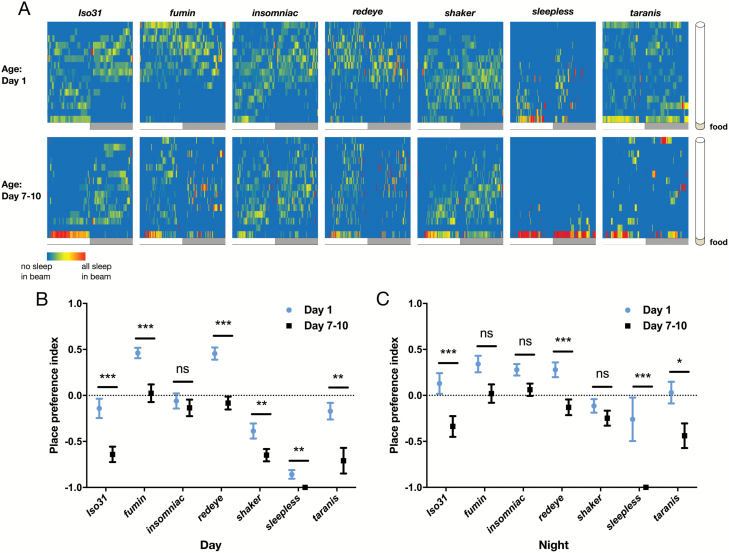
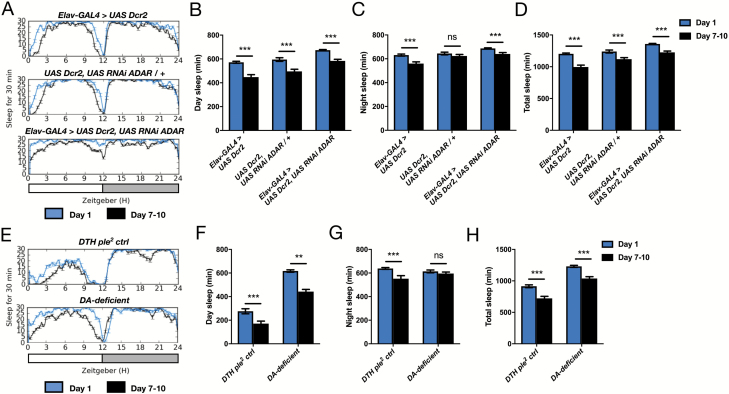
The fruit fly Drosophila melanogaster, like most organisms, exhibits increased sleep amount and depth in young compared to mature animals. While the fly has emerged as a powerful model for studying sleep during development, qualitative behavioral features of sleep ontogeny and its genetic control are poorly understood. Here we find that, in addition to increased sleep time and intensity, young flies sleep with less place preference than mature adults, and, like mammals, exhibit more motor twitches during sleep. In addition, we show that ontogenetic changes in sleep amount, twitch, and place preference are preserved across sleep mutants with lesions in distinct molecular pathways. Our results demonstrate that sleep ontogeny is characterized by multifaceted behavioral changes, including quantitative and qualitative alterations to sleep as animals mature. Further, the preservation of sleep ontogenetic changes despite mutations that alter sleep time suggests independent genetic control mechanisms for sleep maturation.
Figures
References
-
- Roffwarg HP, et al. Ontogenetic development of the human sleep-dream cycle. Science. 1966;152(3722):604–619. - PubMed
-
- Gregory AM, et al. Parent-reported sleep problems during development and self-reported anxiety/depression, attention problems, and aggressive behavior later in life. Arch Pediatr Adolesc Med. 2008;162(4):330–335. - PubMed
Publication types
MeSH terms
Substances
Grants and funding
LinkOut - more resources
Full Text Sources
Other Literature Sources
Molecular Biology Databases
