


Increased Expression of Transcription Factor SRY-box-Containing Gene 11 (Sox11) Enhances Neurite Growth by Regulating Neurotrophic Factor Responsiveness
- PMID: 29746989
- PMCID: PMC5972070
- DOI: 10.1016/j.neuroscience.2018.04.037
Increased Expression of Transcription Factor SRY-box-Containing Gene 11 (Sox11) Enhances Neurite Growth by Regulating Neurotrophic Factor Responsiveness
Abstract
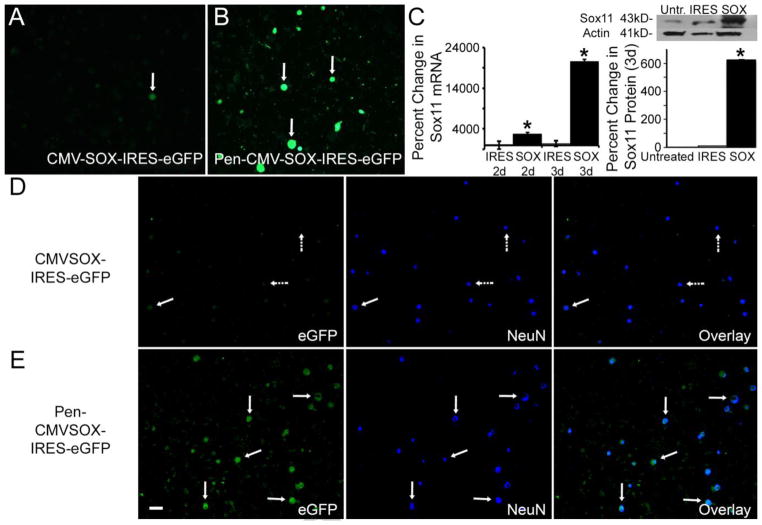
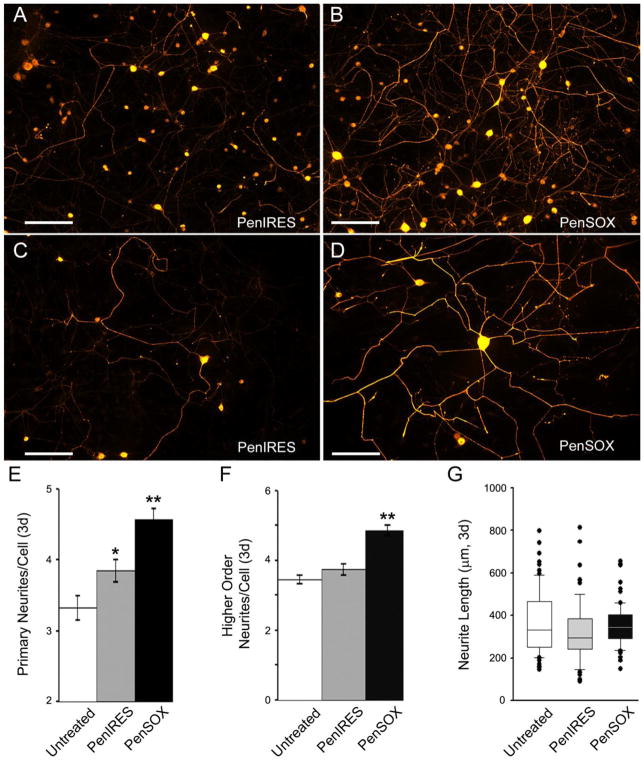
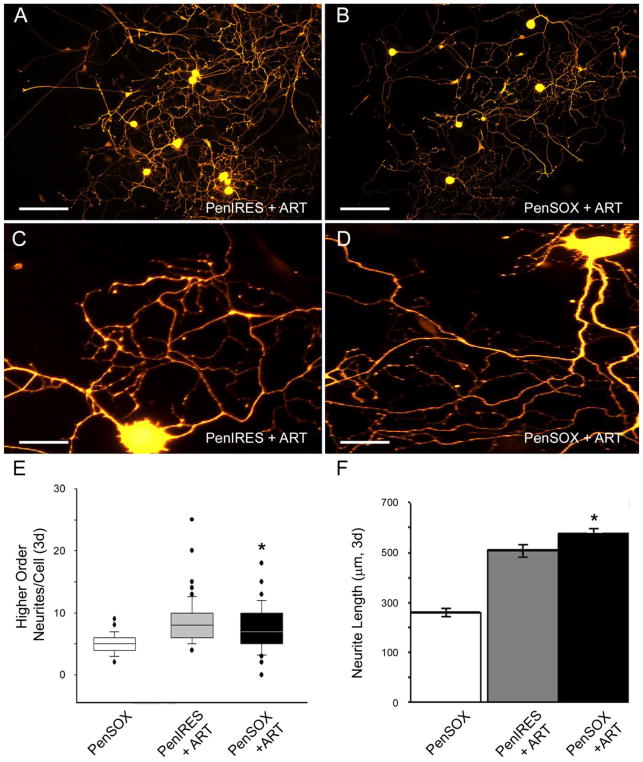
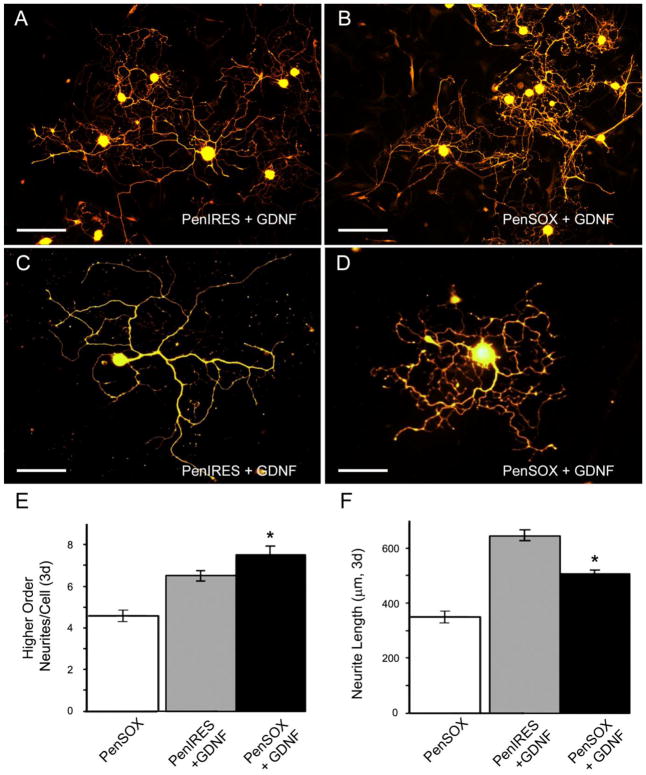
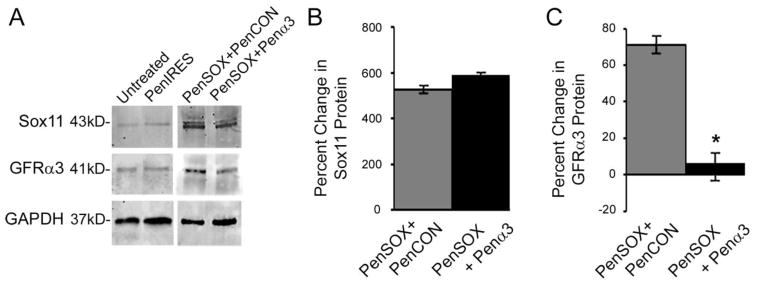
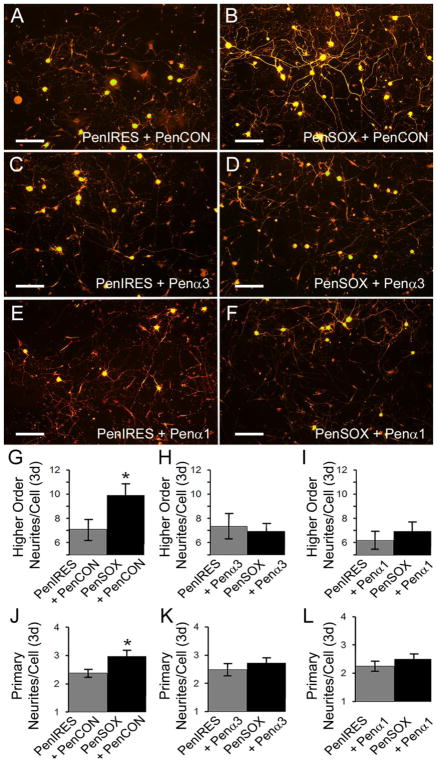
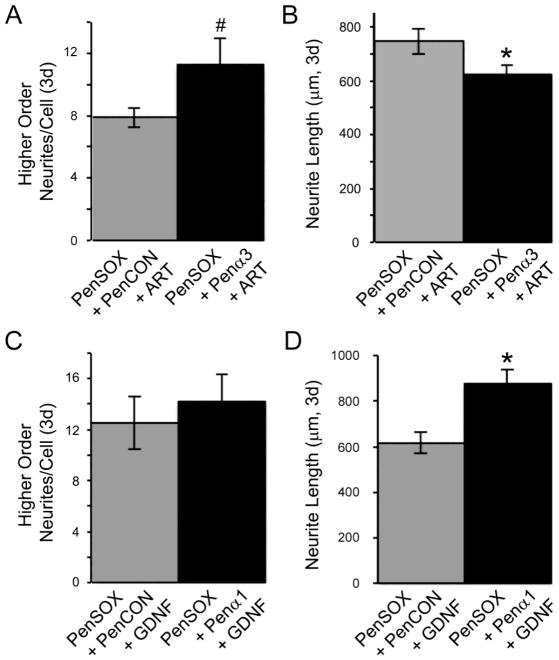
The peripherally projecting axons of dorsal root ganglion (DRG) neurons readily regenerate after damage while their centrally projecting branches do not regenerate to the same degree after injury. One important reason for this inconsistency is the lack of pro-regeneration gene expression that occurs in DRG neurons after central injury relative to peripheral damage. The transcription factor SRY-box-containing gene 11 (Sox11) may be a crucial player in the regenerative capacity of axons as previous evidence has shown that it is highly upregulated after peripheral axon damage but not after central injury. Studies have also shown that overexpression or inhibition of Sox11 after peripheral nerve damage can promote or block axon regeneration, respectively. To further understand the mechanisms of how Sox11 regulates axon growth, we artificially overexpressed Sox11 in DRG neurons in vitro to determine if increased levels of this transcription factor could enhance neurite growth. We found that Sox11 overexpression significantly enhanced neurite branching in vitro, and specifically induced the expression of glial cell line-derived neurotrophic factor (GDNF) family receptors, GFRα1 and GFRα3. The upregulation of these receptors by Sox11 overproduction altered the neurite growth patterns of DRG neurons alone and in response to growth factors GDNF and artemin; ligands for GFRα1 and GFRα3, respectively. These data support the role of Sox11 to promote neurite growth by altering responsiveness of neurotrophic factors and may provide mechanistic insight as to why peripheral axons of sensory neurons readily regenerate after injury, but the central projections do not have an extensive regenerative capacity.
Keywords: dorsal root ganglia; molecular biology; neurite growth; neurotrophic factor; regeneration; transcription factor.
Copyright © 2018 IBRO. Published by Elsevier Ltd. All rights reserved.
Figures
References
-
- Aigner L, Arber S, Kapfhammer JP, Laux T, Schneider C, Botteri F, Brenner HR, Caroni P. Overexpression of the neural growth-associated protein GAP-43 induces nerve sprouting in the adult nervous system of transgenic mice. Cell. 1995;83:269–278. - PubMed
-
- Baloh RH, Enomoto H, Johnson EM, Jr, Milbrandt J. The GDNF family ligands and receptors - implications for neural development. Curr Opin Neurobiol. 2000;10:103–110. - PubMed
-
- Bennett DL, Boucher TJ, Armanini MP, Poulsen KT, Michael GJ, Priestley JV, Phillips HS, McMahon SB, Shelton DL. The glial cell line-derived neurotrophic factor family receptor components are differentially regulated within sensory neurons after nerve injury. J Neurosci. 2000;20:427–437. - PMC - PubMed
Publication types
MeSH terms
Substances
Grants and funding
LinkOut - more resources
Full Text Sources
Other Literature Sources
Molecular Biology Databases
