


Global evolution and phylogeography of Brucella melitensis strains
- PMID: 29747573
- PMCID: PMC5946514
- DOI: 10.1186/s12864-018-4762-2
Global evolution and phylogeography of Brucella melitensis strains
Abstract
Background: Brucellosis is a bacterial zoonotic disease. Annually in the world more than 500,000 new cases of brucellosis in humans are registered. In this study, we propose an evolutionary model of the historical distribution of B. melitensis based on the full-genomic SNP analysis of 98 strains.
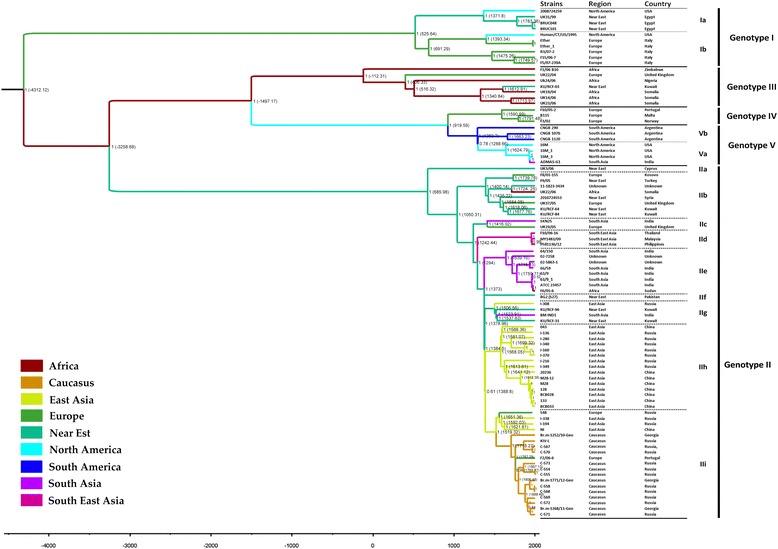
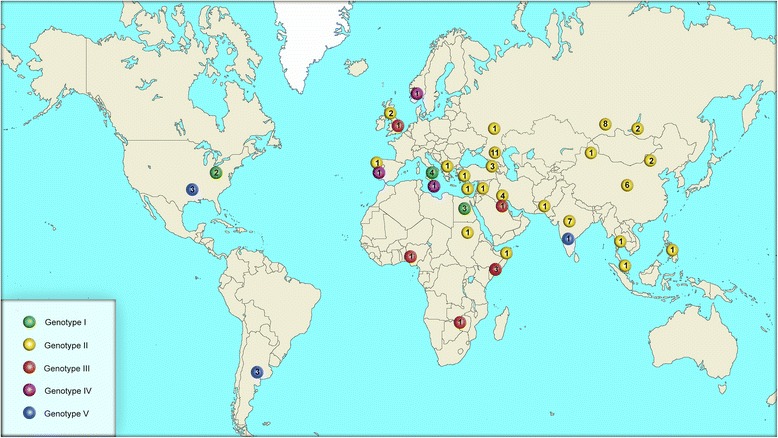
Results: We performed an analysis of the SNP of the complete genomes of 98 B. melitensis strains isolated in different geographical regions of the world to obtain relevant information on the population structure, genetic diversity and the evolution history of the species. Using genomic sequences of 21 strains of B. melitensis isolated in Russia and WGS data from the NCBI database, it was possible to identify five main genotypes and 13 species genotypes for analysis. Data analysis based on the Bayesian Phylogenetics and Phylogeography method allowed to determine the regions of geographical origin and the expected pathways of distribution of the main lines (genotypes and subgenotypes) of the pathogen.
Conclusions: Within the framework of our study, the model of global evolution and phylogeography of B. melitensis strains isolated in various regions of the planet was proposed for the first time. The sets of unique specific SNPs described in our study, for all identified genotypes and subgenotypes, can be used to develop new bacterial typing and identification systems for B. melitensis.
Keywords: Brucella melitensis; Evolution; Phylogeography; Single nucleotide polymorphism; Whole genome sequencing.
Conflict of interest statement
Ethics approval and consent to participate
Not applicable.
Competing interests
The authors declare that they have no competing interests.
Publisher’s Note
Springer Nature remains neutral with regard to jurisdictional claims in published maps and institutional affiliations.
Figures
References
-
- Nicoletty P. Brucellosis: past, present and future. Sec Biol Med Sci. 2010;31(Contributions 1):21–32. - PubMed
-
- Scholz HC, Revilla-Fernández S, Al Dahouk S, Hammerl JA, Zygmunt MS, Cloeckaert A, et al. Brucella vulpis sp. nov., isolated from mandibular lymph nodes of red foxes (Vulpes vulpes) Int J Syst Evol Microbiol. 2016;66:2090–2098. - PubMed
MeSH terms
LinkOut - more resources
Full Text Sources
Other Literature Sources
