


Using Mobile Health Gamification to Facilitate Cognitive Behavioral Therapy Skills Practice in Child Anxiety Treatment: Open Clinical Trial
- PMID: 29748165
- PMCID: PMC5968217
- DOI: 10.2196/games.8902
Using Mobile Health Gamification to Facilitate Cognitive Behavioral Therapy Skills Practice in Child Anxiety Treatment: Open Clinical Trial
Abstract
Background: Cognitive behavioral therapy is an efficacious treatment for child anxiety disorders. Although efficacious, many children (40%-50%) do not show a significant reduction in symptoms or full recovery from primary anxiety diagnoses. One possibility is that they are unwilling to learn and practice cognitive behavioral therapy skills beyond therapy sessions. This can occur for a variety of reasons, including a lack of motivation, forgetfulness, and a lack of cognitive behavioral therapy skills understanding. Mobile health (mHealth) gamification provides a potential solution to improve cognitive behavioral therapy efficacy by delivering more engaging and interactive strategies to facilitate cognitive behavioral therapy skills practice in everyday lives (in vivo).
Objective: The goal of this project was to redesign an existing mHealth system called SmartCAT (Smartphone-enhanced Child Anxiety Treatment) so as to increase user engagement, retention, and learning facilitation by integrating gamification techniques and interactive features. Furthermore, this project assessed the effectiveness of gamification in improving user engagement and retention throughout posttreatment.
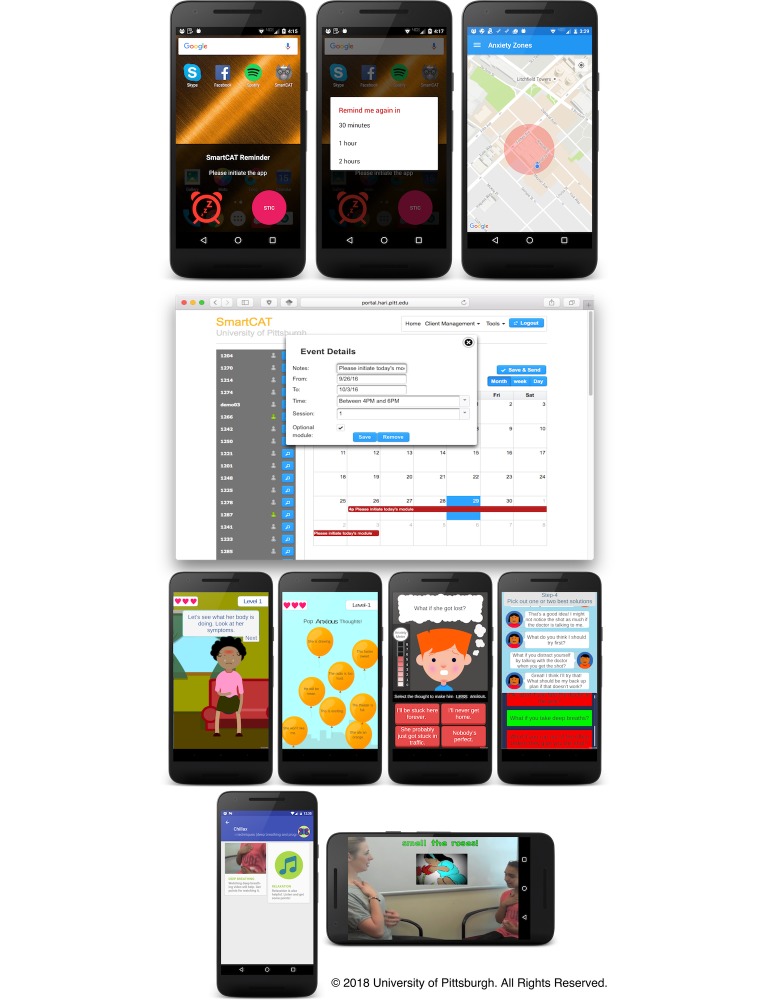
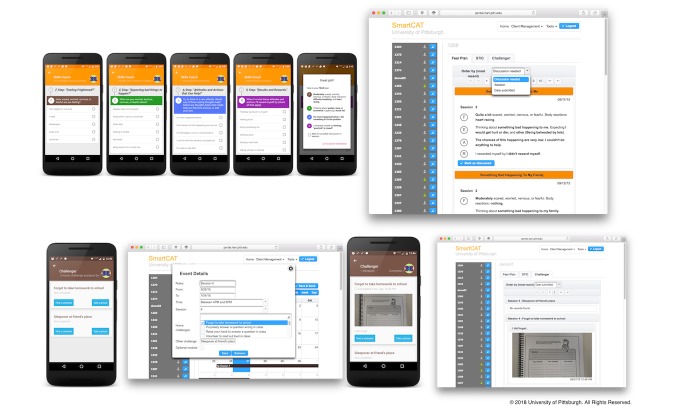
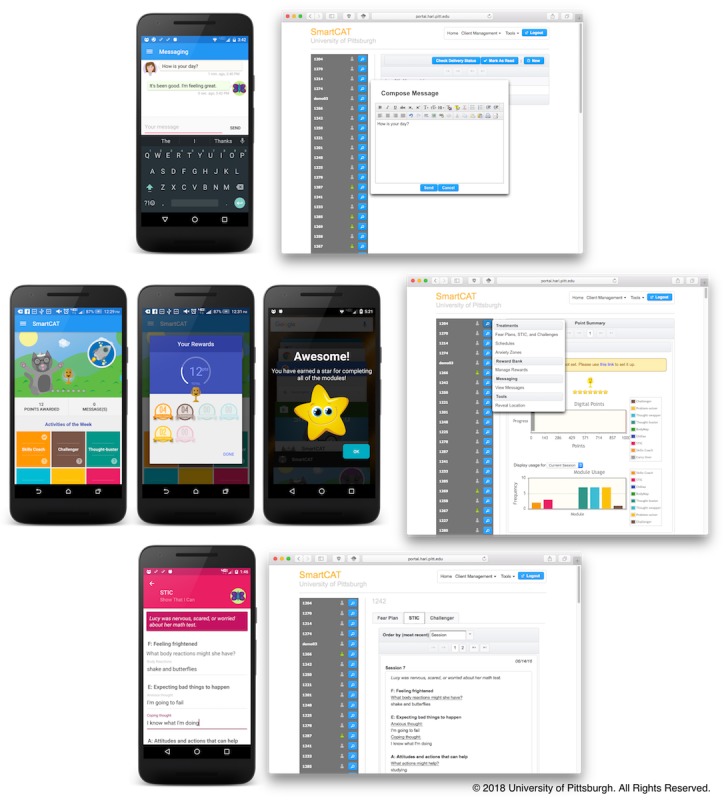
Methods: We redesigned and implemented the SmartCAT system consisting of a smartphone app for children and an integrated clinician portal. The gamified app contains (1) a series of interactive games and activities to reinforce skill understanding, (2) an in vivo skills coach that cues the participant to use cognitive behavioral therapy skills during real-world emotional experiences, (3) a home challenge module to encourage home-based exposure tasks, (4) a digital reward system that contains digital points and trophies, and (5) a therapist-patient messaging interface. Therapists used a secure Web-based portal connected to the app to set up required activities for each session, receive or send messages, manage participant rewards and challenges, and view data and figures summarizing the app usage. The system was implemented as an adjunctive component to brief cognitive behavioral therapy in an open clinical trial. To evaluate the effectiveness of gamification, we compared the app usage data at posttreatment with the earlier version of SmartCAT without gamification.
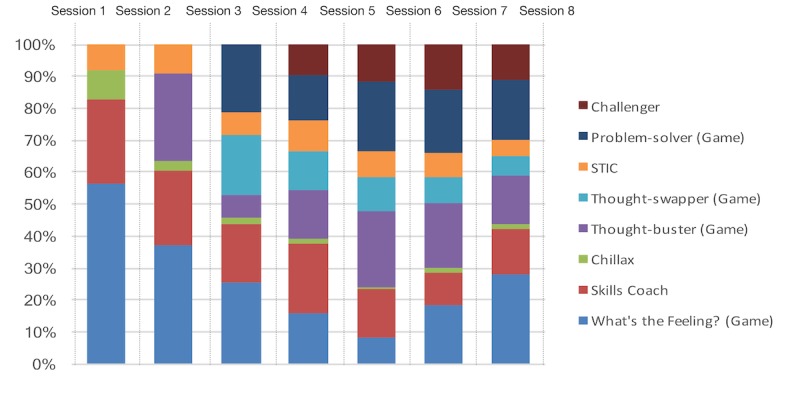
Results: Gamified SmartCAT was used frequently throughout treatment. On average, patients spent 35.59 min on the app (SD 64.18) completing 13.00 activities between each therapy session (SD 12.61). At the 0.10 significance level, the app usage of the gamified system (median 68.00) was higher than that of the earlier, nongamified SmartCAT version (median 37.00, U=76.00, P<.01). The amount of time spent on the gamified system (median 173.15) was significantly different from that of the earlier version (median 120.73, U=173.00, P=.06).
Conclusions: The gamified system showed good acceptability, usefulness, and engagement among anxious children receiving brief cognitive behavioral therapy treatment. Integrating an mHealth gamification platform within treatment for anxious children seems to increase involvement in shorter treatment. Further study is needed to evaluate increase in involvement in full-length treatment.
Keywords: SmartCAT; child anxiety treatment; childhood anxiety disorders; cognitive behavioral therapy; ecological momentary intervention; gamification; mobile health.
©Gede Pramana, Bambang Parmanto, James Lomas, Oliver Lindhiem, Philip C Kendall, Jennifer Silk. Originally published in JMIR Serious Games (http://games.jmir.org), 10.05.2018.
Conflict of interest statement
Conflicts of Interest: JS, BP, GP, and OL are the inventors of the SmartCAT mHealth system. JL is also the Chief Executive Officer (CEO) of Playpower Labs, Inc, which provided design and development services for SmartCAT games. He has no further ownership of the games or financial interest in the outcomes. PCK receives royalties from the sales of materials related to the treatment of anxiety in youth.
Figures

References
-
- Barrett PM, Dadds MR, Rapee RM. Family treatment of childhood anxiety: a controlled trial. J Consult Clin Psychol. 1996 Apr;64(2):333–42. - PubMed
-
- Beidel DC, Turner SM, Morris TL. Behavioral treatment of childhood social phobia. J Consult Clin Psychol. 2000 Dec;68(6):1072–80. - PubMed
-
- Kendall PC, Flannery-Schroeder E, Panichelli-Mindel SM, Southam-Gerow M, Henin A, Warman M. Therapy for youths with anxiety disorders: a second randomized clinical trial. J Consult Clin Psychol. 1997 Jun;65(3):366–80. - PubMed
Grants and funding
LinkOut - more resources
Full Text Sources
Other Literature Sources
