


Efficacy of Maternal Choline Supplementation During Pregnancy in Mitigating Adverse Effects of Prenatal Alcohol Exposure on Growth and Cognitive Function: A Randomized, Double-Blind, Placebo-Controlled Clinical Trial
- PMID: 29750367
- PMCID: PMC6028282
- DOI: 10.1111/acer.13769
Efficacy of Maternal Choline Supplementation During Pregnancy in Mitigating Adverse Effects of Prenatal Alcohol Exposure on Growth and Cognitive Function: A Randomized, Double-Blind, Placebo-Controlled Clinical Trial
Erratum in
-
Correction to "Efficacy of maternal choline supplementation during pregnancy in mitigating adverse effects of prenatal alcohol exposure on growth and cognitive function: a randomized, double-blind, placebo-controlled clinical trial".Alcohol Clin Exp Res (Hoboken). 2024 May;48(5):981. doi: 10.1111/acer.15297. Epub 2024 Mar 19. Alcohol Clin Exp Res (Hoboken). 2024. PMID: 38503545 No abstract available.
Abstract
Background: We recently demonstrated the acceptability and feasibility of a randomized, double-blind choline supplementation intervention for heavy drinking women during pregnancy. In this study, we report our results relating to the efficacy of this intervention in mitigating adverse effects of prenatal alcohol exposure (PAE) on infant growth and cognitive function.
Methods: Sixty-nine Cape Coloured (mixed ancestry) heavy drinkers in Cape Town, South Africa, recruited in mid-pregnancy, were randomly assigned to receive a daily oral dose of either 2 g of choline or placebo from time of enrollment until delivery. Each dose consisted of an individually wrapped packet of powder that, when mixed with water, produced a sweet tasting grape-flavored drink. The primary outcome, eyeblink conditioning (EBC), was assessed at 6.5 months. Somatic growth was measured at birth, 6.5, and 12 months, recognition memory and processing speed on the Fagan Test of Infant Intelligence, at 6.5 and 12 months.
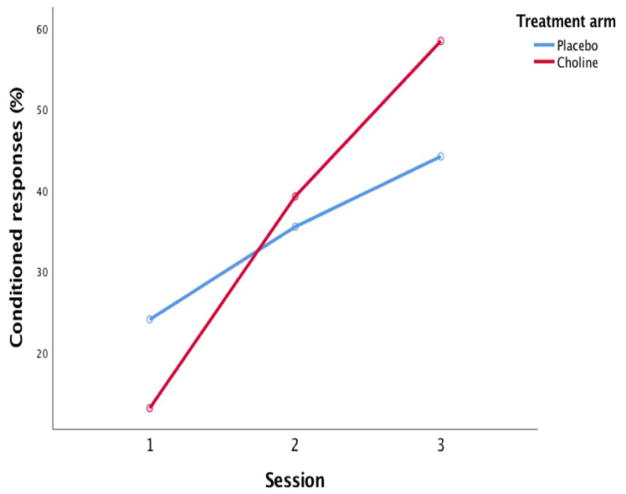
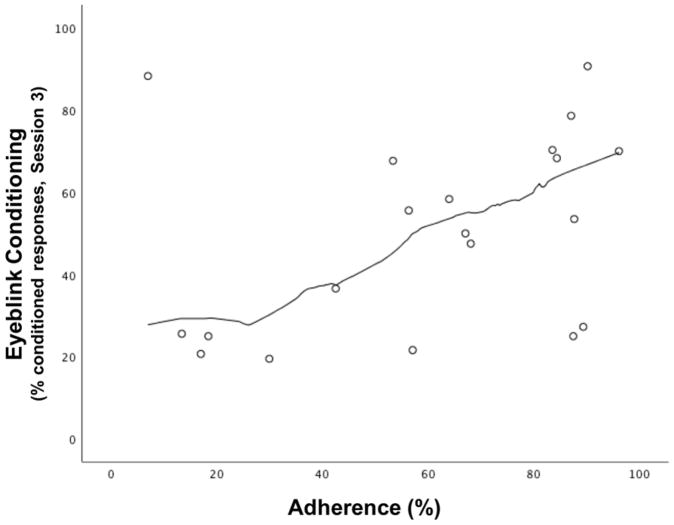
Results: Infants born to choline-treated mothers were more likely to meet criterion for conditioning on EBC than the placebo group. Moreover, within the choline arm, degree of maternal adherence to the supplementation protocol strongly predicted EBC performance. Both groups were small at birth, but choline-treated infants showed considerable catch-up growth in weight and head circumference at 6.5 and 12 months. At 12 months, the infants in the choline treatment arm had higher novelty preference scores, indicating better visual recognition memory.
Conclusions: This exploratory study is the first to provide evidence that a high dose of choline administered early in pregnancy can mitigate adverse effects of heavy PAE on EBC, postnatal growth, and cognition in human infants. These findings are consistent with studies of alcohol-exposed animals that have demonstrated beneficial effects of choline supplementation on classical conditioning, learning, and memory.
Keywords: Choline Supplementation; Eyeblink Conditioning; Fetal Alcohol Spectrum Disorders; Fetal Alcohol Syndrome; Growth; Prenatal Alcohol Exposure.
Copyright © 2018 by the Research Society on Alcoholism.
Conflict of interest statement
The authors declare no competing financial interests.
Figures
References
-
- Astley SJ, Clarren SK. Diagnosing the full spectrum of fetal alcohol exposed individuals: introducing the 4-digit diagnostic code. Alcohol Alcohol. 2000;35:400–410. - PubMed
-
- Bekdash RA, Zhang C, Sarkar DK. Gestational choline supplementation normalized fetal alcohol-induced alterations in histone modifications, DNA methylation, and proopiomelanocortin (POMC) gene expression in b-endorphin-producing POMC neurons of the hypothalamus. Alcohol Clin Exp Res. 2013;37:1133–1142. - PMC - PubMed
-
- Bornstein MH, Sigman MD. Continuity in mental development from infancy. In: Oates J, Sheldon S, editors. Cognitive Development in Infancy. Erlbaum; Hillsdale, NJ: 1987. pp. 249–284.
Publication types
MeSH terms
Substances
Grants and funding
LinkOut - more resources
Full Text Sources
Other Literature Sources
Medical
